
 By Rifan Muazin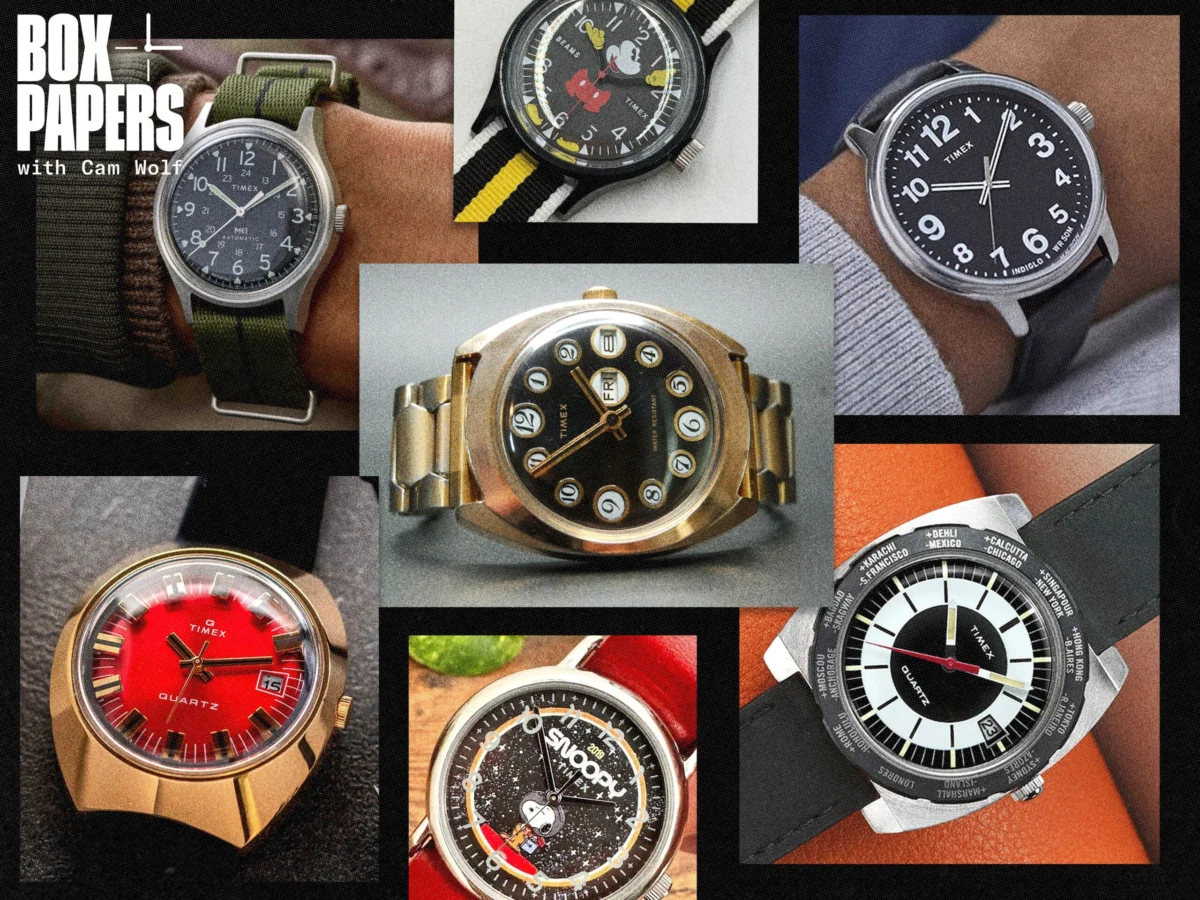
In the insular, often hyper-inflated world of horology, there is a quiet revolution happening on the digital fringes, specifically within the Timex forums. While enthusiasts of vintage Rolex and Patek Philippe grapple with auction prices that resemble telephone numbers, and vintage Seiko collectors watch their once-accessible "entry-level" pieces climb into the four-figure range, Timex devotees are enjoying a different experience. They are laughing, perhaps a bit smugly, because they have found a sanctuary of genuine heritage, iconic design, and rarity that remains shielded from the speculative fever of the broader market. For a brand that has manufactured hundreds of millions of timepieces, Timex remains paradoxically underrated—a sleeping giant that is only now beginning to stir in the eyes of the serious collecting community.

To understand the current appeal of Timex, one must first look at its foundational role in American industrial history. Long before it was a global household name, the company was born in 1854 as the Waterbury Clock Company in Connecticut’s Naugatuck Valley, an area once known as the "Brass Valley" of the world. The mission from the outset was radical for the 19th century: the democratization of time. In an era when a reliable timepiece was a luxury reserved for the elite, Waterbury set out to make clocks that the average working family could afford. This philosophy culminated in 1892 when the company partnered with Robert H. Ingersoll to produce the "Yankee" pocket watch. Priced at exactly one dollar—the equivalent of a day’s wages for many at the time—it became the "watch that made the dollar famous." By the time the production run ended, over 40 million Yankees had been sold, proving that scale and affordability were not enemies of utility.

The transition from Waterbury to the Timex we know today was forged in the fires of global conflict. During World War II, the company rebranded as The United States Time Corporation, pivoting its entire manufacturing infrastructure to support the Allied effort by producing precision bomb timers and various military instruments. When the war concluded, the company faced a surplus of manufacturing capacity and a public hungry for consumer goods. In 1950, the "Timex" brand was born. The name itself is a fascinating artifact of mid-century marketing, a portmanteau of Time magazine and Kleenex, two of the most dominant brands of the era. The goal was to imbue the watch with the authority of the former and the ubiquitous, everyday utility of the latter. This strategy was an overwhelming success; by 1962, the company’s dominance was so absolute that one out of every three watches sold in the United States bore the Timex logo.

Timex’s cultural footprint is equally massive. It was the first company to partner with Disney in 1933, creating the original Mickey Mouse watch that saved the company from the depths of the Great Depression. Its marketing campaigns became legendary, specifically the "Torture Tests" of the 1950s and 60s. Live on television, news anchor John Cameron Swayze would subject Timex watches to harrowing conditions—strapping them to outboard motors, dropping them from cliffs, or placing them in dishwashers—before triumphantly declaring that they "take a licking and keep on ticking." This rugged, blue-collar reliability made the brand a favorite of icons ranging from Martin Luther King Jr. and Louis Armstrong to modern figures like Jack Nicholson, Bill Murray, and even former President Bill Clinton, who famously wore an Ironman Triathlon during his inauguration.

However, the very factors that made Timex a success—economy of scale and affordability—created a unique set of challenges for modern collectors. Historically, Timex watches were viewed as semi-disposable. As Nick Ferrell of DC Vintage Watches notes, when a Timex broke, the cultural norm was to buy a new one rather than seek a costly repair. This "dollar watch" mentality meant that few people bothered to service their movements. Furthermore, to keep costs low, Timex utilized pin-lever movements, which used metal pins instead of the synthetic rubies found in higher-end "jeweled" movements. These movements were robust but were often designed to be encased in ways that made them difficult to disassemble. While modern horologists like Mark Rushworth, who manages an extensive vintage Timex database, argue that these watches are more durable than they get credit for, he cautions that they require a specific type of patience. Because Timex often used chrome-plated base metals or gold-plated brass instead of solid stainless steel, many vintage pieces have suffered from "pitting" or plating loss over the decades. Collecting Timex often requires becoming comfortable with "donor" watches—buying multiple copies of the same model to harvest the best hands, bezels, or mechanical components.

Despite these hurdles, the sheer variety of the Timex catalog is intoxicating. For those looking to start a collection, the "Core Collections" offer a roadmap through the brand’s greatest hits. The Marlin, for instance, is the quintessential 1960s dress watch. With its slim profile and hand-wound movement, it represents a time when Timex was competing directly with the aesthetics of Swiss brands. The archives are full of Marlin variants, including the whimsical "Telephone" dial—designed to look like an old rotary phone—and even a collaboration with Ritz Crackers where the hour markers are replaced by the iconic snack.

Then there is the Q Timex line. Launched in 1972, this represented the brand’s pivot into the "Quartz Crisis." The "Q" stood for Quartz, signaling a new era of precision. The modern reissues of the Q, with their integrated bracelets and functional battery hatches on the caseback, have been instrumental in the brand’s recent resurgence. Similarly, the Camper (or Mk1) has a storied military history. Originally designed as a disposable plastic "Mil-W" watch for the US military in the early 1980s, it was eventually repurposed for the civilian market. Its utilitarian, high-contrast dial made it a favorite for rugged characters in cinema, appearing on the wrists of MacGyver and Josh Brolin’s Llewelyn Moss in No Country for Old Men.

For the more adventurous collector, the "Special Lines" offer deep-cut horological history. The Timex Dorado Electric represents the "proto-quartz" era, running on a hybrid system of a battery and a traditional balance wheel. These were once the premium models in the catalog, marketed as watches that "never need winding." Then there is the Southampton, Timex’s first and only mechanical chronograph. Known as the "Snail Dial" due to its tachymeter scale spiraling in the center of the dial, it featured a unique slider at the 3 o’clock position rather than traditional pushers. It is a quirky, mechanical anomaly that highlights the brand’s willingness to experiment with unconventional engineering.

The brand also excelled at capturing the zeitgeist of specific eras. The Black Max of 1978, with its all-black aesthetic, was a clear nod to the high-concept Porsche Design chronographs of the time. The Fun Timer series embraced the graphic boldness of the 1970s with checkerboard patterns, while The Bandit (a Viscount model) gained fame as the watch worn by Burt Reynolds in Smokey and the Bandit. These watches aren’t just tools; they are wearable time capsules of pop culture.

In the modern era, Timex has leveraged this rich history through a series of high-profile collaborations. By partnering with designers like Todd Snyder, Nigel Cabourn, and brands like Beams and Huckberry, Timex has reinvented itself as a canvas for contemporary style. Whether it is a Snoopy-themed Weekender celebrating the Peanuts gang’s connection to the Apollo space missions or a Nigel Cabourn "Referee Watch" designed specifically to track the halves of a football match, these collaborations prove that the brand’s affordability is its greatest strength. It allows for a level of playfulness and experimentation that would be impossible for a brand burdened by the weight of "luxury" expectations.

Ultimately, the Timex revival is a testament to the idea that soul and history aren’t dictated by a price tag. While the rest of the watch world chases "investment pieces" and "status symbols," the Timex collector is chasing a feeling—the thrill of finding a rare "mystery dial" Kermit the Frog watch or a pristine 1960s skin diver for the price of a nice dinner. In a market that often feels increasingly out of reach for the average person, Timex remains true to the mission it started in 1854: keeping the world on time, one dollar (or a few more) at a time. It is a brand that takes the licking of market trends and keeps on ticking, proving that being "underrated" is sometimes the best place to be.
