
 By admin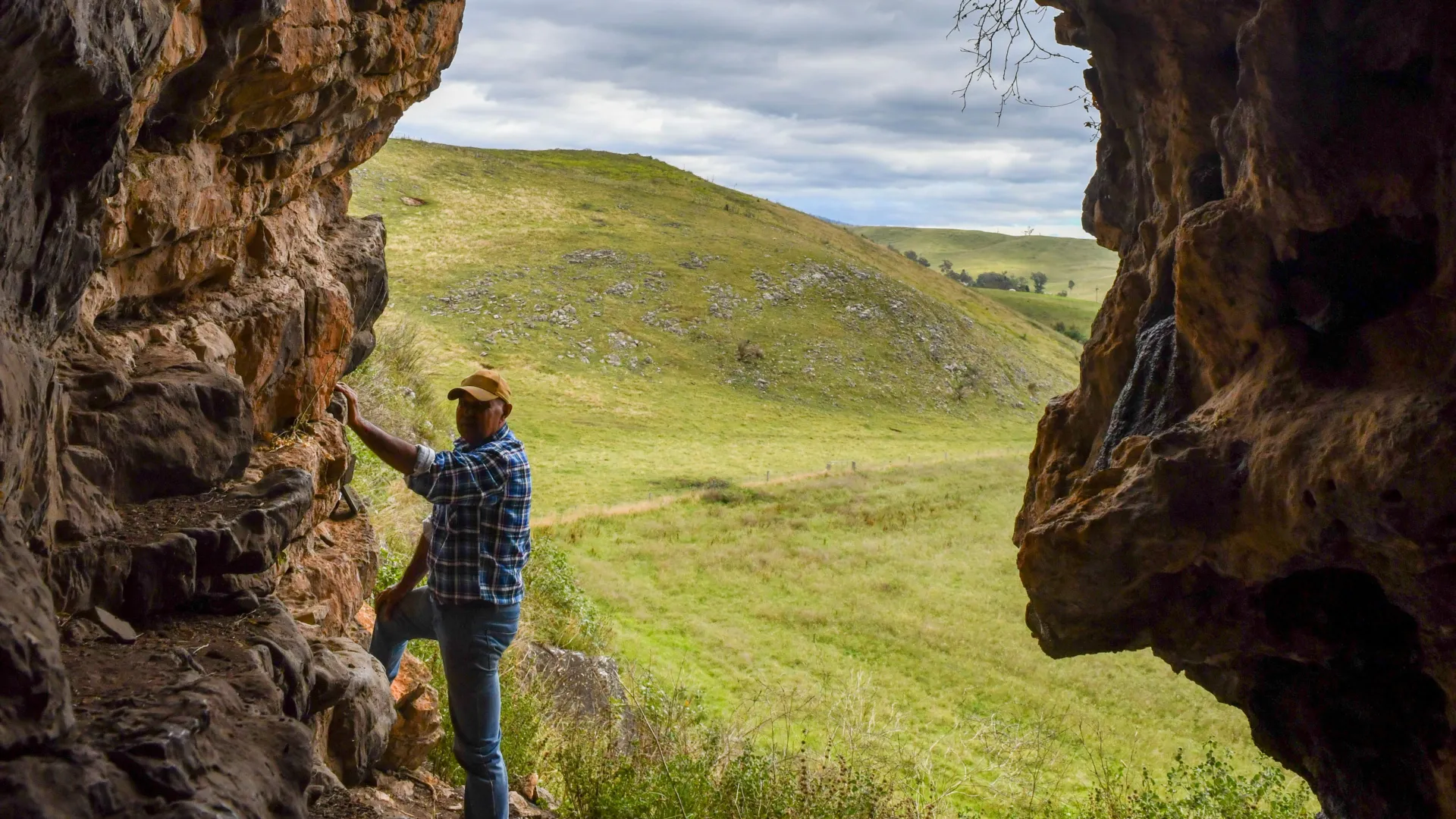
Now, groundbreaking archaeological evidence from one such revered site, Cloggs Cave, located near Buchan in eastern Gippsland, has brought these ancient traditions into astonishing focus. This research reveals that the cave was not merely a shelter or a temporary dwelling but a focal point for spiritual activities spanning an extraordinary and almost unparalleled period of roughly 25,000 years. This remarkable continuity underscores the enduring spiritual connection between the GunaiKurnai people and their land, demonstrating a depth of cultural practice rarely seen in the archaeological record globally.
"Our findings unequivocally demonstrate that the Old Ancestors of the GunaiKurnai meticulously selected whole grasses from the surrounding diverse landscape and painstakingly carried them into the depths of Cloggs Cave," explained Dr. Elle Grono, a postdoctoral researcher at the Australian National University and the corresponding author of this seminal new study, recently published in the esteemed journal Frontiers in Environmental Archaeology. "Once inside, these grasses were carefully spread out in thin, deliberate layers and then ritually burned. Over vast stretches of time, successive layers of sediment gently covered these burnt deposits, preserving each unique stratum on top of another, layer by layer, across tens of thousands of years. This meticulous layering provides an unparalleled chronological record of human activity."
Microscopic Clues From Ancient Plants Unlock Millennia of Ritual
The research team, a multidisciplinary collaboration of experts from Australia, France, and New Zealand, employed cutting-edge scientific techniques to unravel the mysteries hidden within the cave’s buried sediments. Their primary focus was on phytoliths – microscopic silica structures that form within the cells of plants. These robust structures are remarkably resilient, capable of surviving intact in archaeological contexts long after the organic plant material itself has decomposed and vanished. This makes them invaluable ‘microfossils’ that provide direct evidence of ancient plant presence and human interaction with flora.
The genesis of this pivotal research lies in archaeological excavations meticulously carried out in 2019 and 2020. These excavations were specifically designed with a crucial objective: to determine precisely how people collected, processed, and utilized plants within the confines of Cloggs Cave in the distant past. Crucially, this entire undertaking was not a unilateral academic endeavor. It was initiated and requested by the GunaiKurnai Land and Waters Corporation, a testament to the growing emphasis on Indigenous-led and collaborative archaeology. GunaiKurnai representatives were deeply and integrally involved at every stage of the research process, from the initial design of the study and the arduous fieldwork to the critical interpretation of the findings and the communication of their profound implications. This collaborative model ensures that the research respects and incorporates Indigenous knowledge systems and cultural protocols, fostering a more holistic and ethically sound understanding of the past.
Dr. Grono elaborated on the unique advantages of phytolith analysis in this context: "Unlike pollen, which can be widely dispersed by wind or insects, phytoliths generally accumulate precisely at the spot where a plant decays. This ‘in situ’ characteristic is particularly significant for Cloggs Cave because, due to the complete lack of natural light, no plants can grow naturally inside the cave. Therefore, the presence of any phytoliths within the cave sediments provides irrefutable proof that they must have been deliberately carried in by people, or, less likely for burnt material, by animals such as possums on their fur or through their scat." She further refined the methodology: "We specifically concentrated on half-burnt phytoliths found within the ashy layers. The presence of burning unequivocally indicates human agency, as unburnt phytoliths, while still indicating transport, might theoretically have arrived through either animal or human means. The charred state of these phytoliths provides the strongest possible evidence of intentional human activity within the cave." This crucial distinction allowed the researchers to definitively attribute the burnt plant remains to intentional human actions, providing a direct window into ancient ritual practices.
Layers of Ash and a Silent Standing Stone: Echoes of Ancient Ceremony
Utilizing advanced microscopy techniques, the research team painstakingly classified thousands of individual phytoliths extracted from two distinct excavation pits within the cave, reaching depths of 1.5 meters and 2.3 meters respectively. These depths represent thousands of years of accumulated history.
The upper sections of these pits yielded a remarkable discovery: 73 distinct, thin layers of ash, meticulously deposited by human hands between approximately 4,400 and 1,600 years ago. The precise ages of these layers were established through a combination of cutting-edge dating methodologies: optically stimulated luminescence (OSL), which determines the last time sediment grains were exposed to sunlight, and carbon dating via accelerator mass spectrometry (AMS), a highly accurate method for dating organic materials. These techniques provided a robust chronological framework for the ritual activities.
Hidden among these numerous ash layers, the excavators made another truly striking discovery: a carefully placed standing stone, measuring 28 centimeters high. Subsequent detailed analysis revealed that this stone was not a natural occurrence but had been intentionally placed within the cave by the Old Ancestors for profound ritual purposes around 2,000 years ago. This standing stone serves as a tangible monument to enduring spiritual beliefs and practices, an enduring sentinel within the sacred space. Its intentional placement further reinforces the interpretation of Cloggs Cave as a dedicated ritual precinct rather than a utilitarian habitation site.
Grasses Were Carefully Chosen, Not Randomly Gathered
The meticulous analysis of the phytoliths yielded a rich botanical inventory. The team successfully identified 29 different kinds of phytoliths, representing a diverse array of grasses, herbs, and woody plants. Many of these microscopic structures were exceptionally well-preserved, including delicate silica structures such as hair cells, providing an unprecedented level of detail about the ancient flora.
Significantly, grass phytoliths overwhelmingly dominated the samples, accounting for as much as 97% of the total. This prevalence alone strongly suggested a deliberate selection process. Further classification revealed a nuanced picture: the samples included members of the Pooideae subfamily, which typically thrive in temperate or cool conditions, alongside Panicoideae grasses, generally adapted to warmer and more humid environments. Phytoliths from Chloridoideae grasses, known for their tolerance to drought and adaptation to warm, dry arid conditions, appeared less frequently. Remains from herbs and woody plants were also comparatively uncommon.
This specific pattern of grass dominance and species representation strongly indicates that the Old Ancestors did not simply gather whatever vegetation was most readily available or nearby. Instead, they actively and deliberately selected particular types of grasses, a choice that likely held symbolic or practical significance within their ritual framework. Before European settlement irrevocably altered the landscape, the area surrounding Cloggs Cave was characterized by a rich tapestry of riparian forest and open woodland, teeming with a multitude of different plant species. Yet, remarkably, many of these locally abundant plants were conspicuously absent from the archaeological deposits within the cave. This suggests a highly selective process, where the people using the cave chose specific grasses, likely for their spiritual properties or their burning characteristics, even if other plants were closer.
"The phytoliths discovered at Cloggs Cave were sourced from various parts of the grass plants, including stems, leaves, flowers, and even roots," Dr. Grono explained. "This comprehensive representation indicates that entire grass plants, including their inedible parts, were carefully brought into the cave. This further supports the interpretation that these plants were intended for ritualistic burning rather than for consumption or everyday utilitarian purposes." The bringing of whole plants, including parts that offer no nutritional value, adds another layer of evidence for the ceremonial nature of the activities.
Evidence of Ritual Burning Across Millennia: A Deep Connection to Place
The most compelling evidence for sustained ritual activity comes from the phytoliths themselves. As much as 18% of the analyzed phytoliths exhibited clear signs of burning or melting, unequivocal indicators of exposure to fire. Crucially, these altered plant remains were not confined to a single layer or period but occurred consistently throughout all the dated deposits, spanning the entire remarkable timeline of the past 25,000 years. This continuous presence of burnt phytoliths suggests that people repeatedly carried vegetation into the cave and intentionally burned it there, not as an isolated event, but as a sustained and integral part of their cultural and spiritual practices over an immense expanse of time.
This extraordinary finding aligns perfectly with other archaeological evidence from Cloggs Cave, which collectively points to the site being a place of long-lasting and profound ritual activity, rather than an ordinary living site for daily habitation. The absence of extensive domestic refuse, food remains, or tools commonly associated with everyday life further reinforces its ceremonial function.
Professor Bruno David from Monash University, who co-led the excavations in close collaboration with the GunaiKurnai Land and Waters Corporation, provided a crucial cultural interpretation of these findings. "The repeated burning of grasses within Cloggs Cave is entirely consistent with documented GunaiKurnai traditional practices," Professor David affirmed. "These traditions describe the sacred use of ash in performing magic and various rituals, and also, significantly, in tracking the footsteps of anyone entering the sacred space, including powerful spirit-Beings. The practice of burning and using ash is deeply embedded in GunaiKurnai cosmology and spiritual interaction with the land."
He further added another layer of complexity to the ritual landscape of Cloggs Cave: "Beyond the phytolith evidence, other macro-botanical evidence, such as fat-smeared, carefully trimmed wooden sticks from Casuarina trees, was also unearthed in deeper and older deposits within the cave. These distinct artifacts indicate that a diverse range of other kinds of rituals, involving woody plants and specific preparations, were also performed by the Old Ancestors across millennia. This paints a picture of a rich and varied spiritual life, where different plants were employed for different ceremonial purposes, each holding its own specific power and meaning."
The revelations from Cloggs Cave provide an unparalleled window into the deep history of Indigenous spiritual practices in Australia. They underscore the incredible longevity and sophistication of GunaiKurnai culture and their profound, unbroken connection to their ancestral lands for tens of thousands of years. This research not only enriches our understanding of ancient human behavior but also stands as a powerful testament to the enduring cultural heritage of the GunaiKurnai nation, whose traditions continue to echo through the sacred chambers of Cloggs Cave.
