
 By admin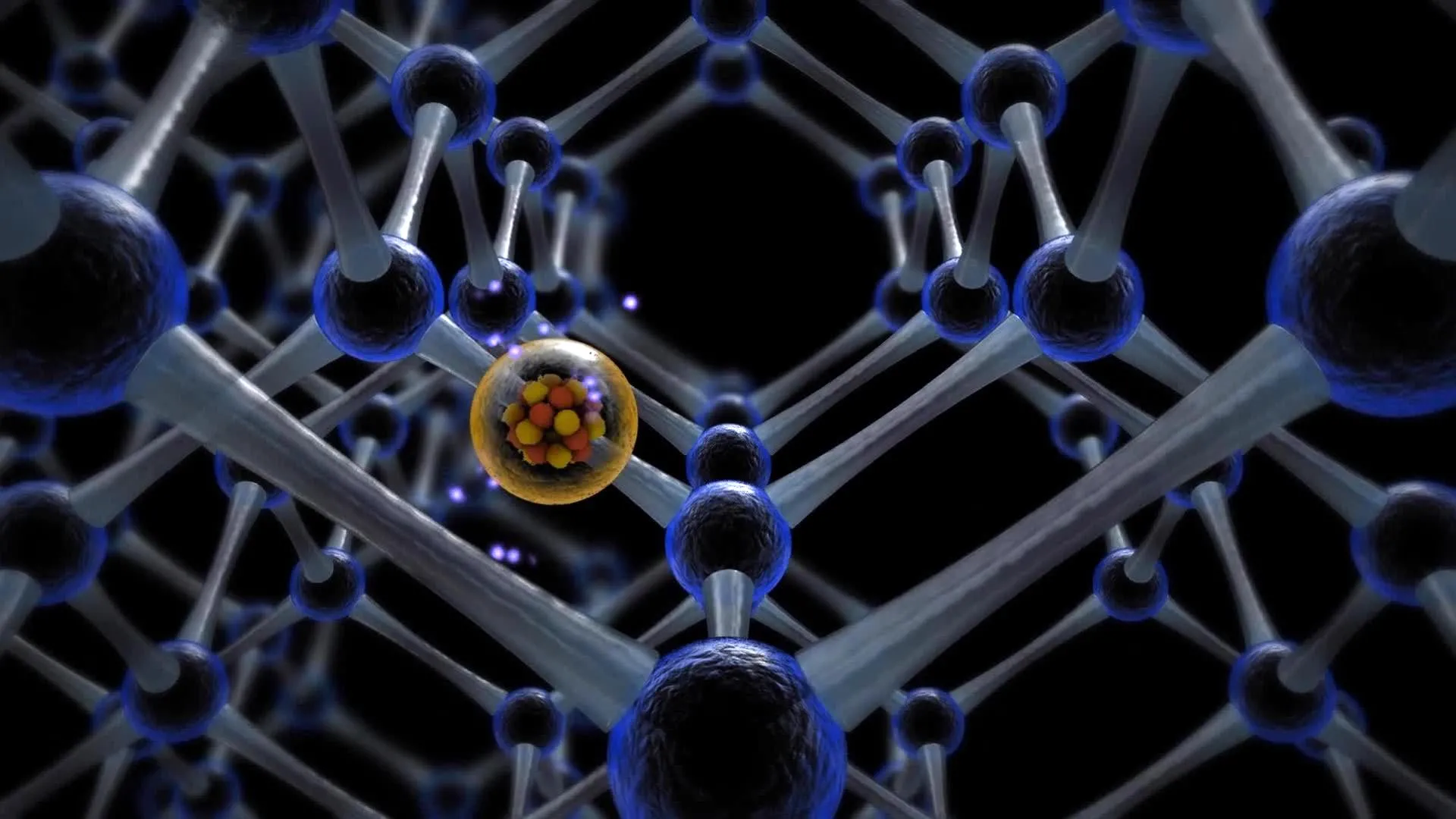
This groundbreaking advance, developed within the distinguished laboratory of Marko Lončar, the Tiantsai Lin Professor of Electrical Engineering, marks a significant stride toward the realization of compact quantum networks that can be integrated directly onto semiconductor chips. Furthermore, it holds immense promise for enabling the development of sophisticated hybrid quantum systems, which are designed to combine the unique strengths of various types of quantum bits, or qubits, into a single, more powerful architecture. The findings, which represent a confluence of cutting-edge physics and engineering, have been rigorously peer-reviewed and published in the prestigious journal Nature Physics. The experimental work was primarily spearheaded by Eliza Cornell, who recently earned her Ph.D. from the Lončar lab and is now contributing her expertise as a postdoctoral researcher at Boston University, alongside Zhujing Xu, a former postdoctoral scholar who was also an integral part of Lončar’s research group.
The Foundational Challenge of Quantum Information and the Promise of Phonons
At the heart of quantum computing and quantum information science lies the qubit, the quantum analogue of the classical bit. Unlike a classical bit, which can only be in a state of 0 or 1, a qubit can exist in a superposition of both states simultaneously, a property that underpins the immense computational power of quantum systems. However, this very characteristic—the quantum state—is incredibly fragile. Qubits are extraordinarily sensitive to environmental disturbances, such as stray electromagnetic fields, temperature fluctuations, or interactions with surrounding atoms. These interactions can cause the qubit to "decohere," losing its delicate quantum information and reverting to a classical state, rendering it useless for quantum computations or secure communications. Preserving this quantum state, known as coherence, for a sufficiently long duration is arguably the most formidable challenge in the quest to build practical quantum technologies.
One particularly promising avenue for building robust quantum networks involves leveraging the spin of an electron, specifically when it’s associated with an impurity within a diamond crystal lattice. These "solid-state spin qubits," often silicon-vacancy (SiV) centers in diamond, offer a stable and scalable platform for storing quantum information. To transmit this information between different qubit nodes within a network, researchers have traditionally explored photons (particles of light). However, the Lončar lab and others have been at the forefront of exploring an alternative, and potentially superior, carrier: phonons.
Phonons are quantized packets of mechanical vibration, essentially microscopic sound waves that propagate through a material. Imagine the atoms in a crystal lattice vibrating; these collective vibrations, when quantized, are phonons. In the context of quantum information, phonons can serve as effective messengers, moving quantum information between distant qubit nodes. The Lončar lab has been a pioneer in harnessing these mechanical vibrations, notably through their development of a specialized structure known as a phononic cavity. This cavity is engineered to meticulously trap mechanical vibrations, significantly enhancing their interaction with the electron spin residing within a qubit. By effectively localizing and concentrating these phonons, the cavity ensures that the qubit’s quantum state can be robustly coupled to the mechanical vibrations, facilitating efficient information transfer.
Advantages of Phonons Over Photons in Quantum Systems
While photons are the conventional choice for transmitting information in classical communication networks and have been widely explored in quantum optics, phonons present several compelling advantages when it comes to chip-scale quantum networks:
-
Miniaturization and Integration: At the same operational frequency, phonons possess significantly shorter wavelengths compared to photons. This fundamental physical difference has profound implications for device fabrication. Shorter wavelengths mean that the components designed to interact with phonons can be built considerably smaller and packed far more densely together on a microchip. This miniaturization is crucial for developing highly integrated, compact quantum processors and networks, where many qubits and their interconnects must coexist on a single silicon or diamond substrate. This dense integration is a cornerstone for scalability, allowing for the construction of more complex quantum circuits without increasing physical footprint.
-
Versatile Interaction: Phonons exhibit a remarkable versatility in their interactions. They readily interact with both solid-state spins (like the electron spins in diamond impurities) and electromagnetic fields. This dual interaction capability makes them exceptionally attractive for constructing hybrid quantum technologies. Hybrid systems aim to combine different types of qubits—for example, superconducting qubits with their fast operation speeds, trapped ion qubits with their long coherence times, or solid-state spins with their inherent scalability—each contributing its unique strengths to a single, integrated system. Phonons can act as a crucial interface, allowing seamless communication and information exchange between these disparate quantum components, thereby overcoming the limitations of any single qubit platform.
-
Low-Loss Transmission: In certain material systems, phonons can propagate with very low losses, especially at cryogenic temperatures. This means that quantum information carried by phonons can travel over short distances within a chip without significant degradation, which is essential for maintaining the fidelity of quantum operations.
The Persistent Challenge: Protecting Quantum Memory with Phonons
Despite their numerous advantages, the adoption of phonons as quantum information carriers has historically been hampered by a significant hurdle: the challenge of protecting quantum memory. As previously noted, qubits are extraordinarily delicate and susceptible to disturbances from their surrounding environment. To be useful for any practical application, they must maintain their quantum state—their coherence—for a duration long enough to store, process, and transmit information. This is where the difficulty arises.
Traditional methods for protecting quantum memories from environmental interference often involve the application of precisely timed microwave pulses. These pulses work by effectively "decoupling" the memory qubit from the surrounding noise, essentially creating a brief, protective shield that allows the qubit to retain its coherence. However, these established techniques do not perform optimally, or even adequately, for qubits that are intentionally placed inside phononic cavities. The very mechanism that makes phononic cavities so effective at enhancing interaction between qubits and phonons—the strong coupling to mechanical vibrations—also makes the qubit highly sensitive to environmental mechanical noise. Applying microwave pulses in such an environment can interfere with the phonon-mediated interactions, or simply be less effective at decoupling the qubit from the dominant mechanical noise sources.
This inherent limitation has created a difficult dilemma: achieving both a strong interaction with phonons (desirable for efficient information transfer) and a long-lasting quantum memory (essential for practical quantum operations) in the same device has proven exceptionally challenging. Researchers have often had to compromise on one aspect to optimize the other, slowing progress toward fully integrated quantum systems.
The Breakthrough: "Dressed" Qubits and All-Mechanical Coherence Protection
The SEAS team at Harvard directly confronted this fundamental problem and devised an ingenious solution, demonstrating what they term "all-mechanical coherence protection" for a silicon-vacancy spin embedded in diamond. Their approach represents a paradigm shift from conventional methods.
Instead of relying on the standard microwave pulses that prove ineffective in phononic environments, the researchers continuously applied a mechanical driving field, generated by phonons themselves. This continuous application of mechanical energy fundamentally alters the qubit’s state, transforming it into a different, more robust kind of quantum entity known as a "dressed" qubit.
The term "dressed" qubit vividly describes its new condition: the qubit effectively "wears" a continuous acoustic field, much like a protective garment. In this "dressed" state, the qubit becomes significantly less vulnerable to the low-frequency noise originating from its surroundings. This is a crucial distinction: traditional methods typically try to decouple the qubit from noise; the "dressed" qubit approach integrates a protective field directly into the qubit’s definition, making it inherently more resilient. The continuous mechanical field effectively shifts the qubit’s energy levels, making it less susceptible to small, fluctuating environmental perturbations that would otherwise cause decoherence.
The brilliance of this technique lies in its compatibility. Because the protection mechanism itself originates from a continuous mechanical field, it is inherently compatible with phononic cavities and the phonon-mediated interactions within them. This stands in stark contrast to microwave pulses, which often disrupt the delicate balance within such systems. This compatibility means that the "all-mechanical coherence protection" technique can operate seamlessly inside the very same structures—the phononic cavities—that are envisioned to eventually connect stationary quantum nodes within future quantum networks.
This innovation bestows phonons with a potentially powerful dual role, fundamentally altering their utility in quantum systems. They are no longer just carriers of quantum information between different parts of a network; they can simultaneously act as active agents, helping to protect that very information from environmental noise. This synergistic function addresses the core dilemma that has plagued phonon-based quantum systems.
Eliza Cornell, a lead researcher on the project, succinctly articulated the team’s achievement: "We are solving two problems. We want the spin to have strong interaction with phonons, and we want the spin to have a long coherence time. Our paper demonstrates a method of extending the coherence time that is compatible with the silicon-vacancy center being in a cavity." This statement underscores the dual triumph of the research: enhancing interaction while simultaneously preserving the fragile quantum state.
Tangible Results and Transformative Impact
The efficacy of this novel method was quantitatively demonstrated by the researchers. With the implementation of "all-mechanical coherence protection," they successfully increased the coherence time of the silicon-vacancy spin by a factor of approximately three. While this might seem like a modest gain in some contexts, in the hyper-sensitive realm of quantum information, a threefold increase in coherence time is a substantial leap forward. It provides a significantly longer window during which quantum operations can be performed reliably, paving the way for more complex algorithms and longer-duration quantum communications.
This compelling result unequivocally demonstrates that continuous-wave mechanical noise suppression is a viable and effective strategy for extending quantum coherence in real-world devices. It strongly suggests that microscopic sound waves, or phonons, are not merely a theoretical curiosity but could become an indispensable tool for constructing more reliable, compact, and ultimately, practical quantum systems.
Broader Implications and the Road Ahead
The implications of this research extend far beyond the laboratory bench, impacting several critical areas of quantum technology development:
-
Scalable Quantum Networks: By enabling robust coherence in phonon-coupled systems, this work directly accelerates the development of integrated quantum networks. These networks are crucial for distributed quantum computing, quantum cryptography (secure communication impenetrable to classical eavesdropping), and the eventual creation of a "quantum internet" that could revolutionize data transfer and security. The ability to pack smaller, more reliable components onto chips directly addresses the scalability challenges inherent in building such complex networks.
-
Advanced Hybrid Quantum Architectures: The versatility of phonons in interacting with various qubit types, combined with this new protection mechanism, makes hybrid quantum systems more feasible. Researchers can now envision integrating different quantum platforms—each optimized for a specific task (e.g., long-term storage, fast computation, efficient light-matter interface)—and using phonons as the reliable quantum bus that connects them all. This synergistic approach could unlock unprecedented capabilities in quantum information processing.
-
Solid-State Quantum Computing: The focus on silicon-vacancy centers in diamond is particularly significant. Diamond-based qubits are attractive due to their robustness and potential for room-temperature operation, though most high-coherence experiments are still performed at cryogenic temperatures. Enhancing their coherence time, even under phonon coupling, makes them more competitive with other qubit modalities and brings solid-state quantum computing closer to reality.
-
Error Correction: Longer coherence times directly simplify the task of quantum error correction. Quantum errors are inevitable, and sophisticated algorithms are needed to detect and correct them. A longer coherent lifespan for qubits means that these error correction protocols have more time to operate effectively, reducing the computational overhead and making fault-tolerant quantum computing more attainable.
While this research represents a significant breakthrough, the path to widespread quantum technology is still long. Future work will likely focus on further increasing coherence times, scaling up the number of interacting qubits, exploring different materials and impurity centers, and integrating these phonon-based systems with other quantum components. Manufacturing challenges for these nanoscale phononic devices also remain an active area of research.
The research paper, titled "All-mechanical coherence protection and fast control of a spin qubit," was a collaborative effort. In addition to Eliza Cornell and Zhujing Xu, the co-authors included Zhaoyou Wang, Hana K. Warner, Eliana Mann, Michael Haas, Smarak Maity, Graham Joe, Liang Jiang, Peter Rabl, and Benjamin Pingault.
This ambitious research received substantial U.S. federal support, highlighting its strategic importance. Key funding agencies included the National Science Foundation (under grant number EEC-1941583), the Air Force Office of Scientific Research (under award numbers FA9550-23-1-0333 and FA9550-23-1-0338), and Q-NEXT, one of the U.S. Department of Energy Office of Science National Quantum Information Science Research Centers (under award No. DE-FOA-0002253). Furthermore, the intricate experimental work was partially carried out at the Harvard Center for Nanoscale Systems, a distinguished member of the National Nanotechnology Infrastructure Network, which itself is supported by National Science Foundation award No. ECS-0335765.
Recognizing the immense potential of these innovations, the Harvard Office of Technology Development (OTD) is proactively engaged in pursuing patent protection and actively exploring commercialization opportunities for the groundbreaking technologies that have emerged from this pivotal research. This dual focus on fundamental discovery and practical application underscores the transformative nature of Harvard SEAS’s contribution to the burgeoning field of quantum information science. This work is a testament to the power of interdisciplinary research, pushing the boundaries of what is possible in the quest for truly revolutionary quantum technologies.
