
 By admin
Kyiv, Ukraine – Ukrainian President Volodymyr Zelensky revealed that key international partners have formally requested Kyiv to de-escalate its drone and missile strikes targeting Russia’s vital energy infrastructure. However, President Zelensky emphatically stated that such a cessation of Ukrainian attacks would only be considered if Russia reciprocates by ceasing its own relentless assaults on Ukraine’s energy facilities. This announcement comes at a critical juncture, with the global energy market already grappling with volatility and scarcity, and amidst a sustained campaign by Russia to cripple Ukraine’s power grid.
In a WhatsApp voice message obtained by BBC Monitoring, President Zelensky articulated Ukraine’s retaliatory stance. "We have received messages from some of our partners asking about how our responses against Russia’s oil sector – the energy sector – can be reduced," he stated. "If Russia is ready not to strike Ukraine’s energy, then we’ll respond by not attacking theirs." The president’s remarks underscore a delicate balancing act, as Ukraine seeks to impose economic pressure on Russia to curtail its war machine, while simultaneously navigating the concerns of international allies who are themselves deeply intertwined with global energy markets.
The specific countries that have conveyed these concerns to Kyiv remain undisclosed by President Zelensky. However, the geopolitical landscape provides significant clues. Nations such as China and India, historically significant consumers of Russian oil, continue to be heavily reliant on these imports, providing a crucial revenue stream for Moscow. Similarly, the European Union, despite concerted efforts to diversify its energy sources, still depends substantially on Russian natural gas and liquefied natural gas (LNG). The economic implications of any disruption to these flows are profound, potentially exacerbating inflation and impacting industrial output across major global economies.
President Zelensky’s statements follow a series of high-profile and seemingly successful Ukrainian long-range strikes targeting Russia’s energy sector. Notably, these attacks have included operations against the key oil export terminal at the port of Ust-Luga, located near St. Petersburg, a critical node in Russia’s global energy supply chain. While the precise operational details and impact of these strikes are, by necessity, kept confidential by Ukrainian authorities, their strategic intent is clear: to disrupt Russia’s financial capacity to wage war by targeting its primary source of export revenue.
The economic interdependencies highlight the complexity of the situation. According to data from the Centre for Research on Energy and Clean Air (CREA), China and India collectively accounted for a staggering 85% of Russia’s crude oil exports in February. This continued demand acts as a crucial lifeline for the Russian economy, enabling it to sustain its military operations despite extensive international sanctions. On the gas front, the EU remains the largest buyer, consuming 34% of Russian gas and 49% of its LNG, underscoring the significant challenge of completely decoupling from Russian energy supplies.
The context for Ukraine’s retaliatory strikes on Russian energy infrastructure is rooted in Russia’s sustained and brutal campaign against Ukraine’s own energy sector. For months, Russia has systematically targeted power plants, substations, and other critical energy facilities across Ukraine. These attacks have resulted in widespread blackouts, leaving millions of Ukrainians without electricity and heating, particularly during the harsh winter months. The damage has been severe, forcing Ukraine to heavily rely on fuel imports, primarily facilitated through transit routes via Poland, Greece, Lithuania, and Turkey. The psychological and practical impact of these attacks on the Ukrainian population has been immense, fostering a deep-seated desire for reciprocal action.
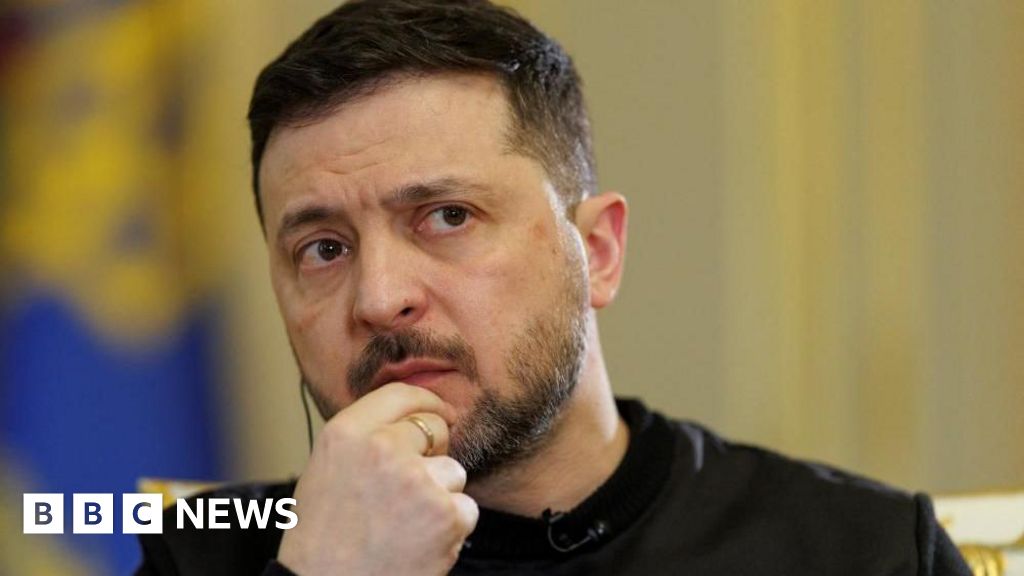
While the focus has often been on energy infrastructure, the scope of Russian attacks has also extended to defense factories and other industrial targets within Ukraine. Conversely, Ukraine’s strikes on Russian energy facilities are designed to inflict economic pain, aiming to degrade Russia’s ability to finance its war effort. The strategic value of these targets is immense, as Russia’s economy remains heavily reliant on oil and gas revenues. However, the effectiveness and long-term impact of these Ukrainian strikes are difficult to ascertain due to the secrecy surrounding them.
President Zelensky’s recent diplomatic tour, which included visits to Saudi Arabia, the United Arab Emirates, Qatar, and Jordan, provides further context for his remarks. These nations, themselves affected by regional instability, including Iranian aerial attacks, represent significant players in the global energy market and hold considerable diplomatic influence. During this tour, President Zelensky actively promoted Ukraine’s indigenous drone technology and expertise, seeking both collaboration and assistance in bolstering Ukraine’s defenses against Russian missile and drone attacks. The discussions likely touched upon regional security, energy cooperation, and the broader implications of the ongoing conflict.
The intertwined nature of global energy prices and the financing of the war cannot be overstated. Surging global oil prices, while a boon to Russia’s war chest, also present a significant challenge for Ukraine’s ability to sustain its defense. The cost of fuel for military operations, transportation, and essential services is a critical consideration for Kyiv. Responding to a BBC question on Saturday, President Zelensky acknowledged that while the Ukrainian army currently possesses sufficient fuel reserves, he had actively sought to secure additional supplies during his Gulf tour. This proactive approach highlights the ongoing logistical and financial pressures faced by Ukraine in its protracted defense.
Furthermore, President Zelensky drew a parallel between Ukraine’s success in unblocking grain exports via the Black Sea and the potential for applying similar expertise to navigate challenges in vital maritime trade routes, such as the Strait of Hormuz. This suggests a broader strategic vision, where Ukraine, despite being the direct victim of aggression, can offer valuable experience and solutions to global challenges that stem from geopolitical instability. The disruption of global supply chains, including food and energy, has far-reaching consequences, and Ukraine’s ability to secure its own trade routes can serve as a model for others.
The humanitarian toll of Russia’s attacks on Ukraine’s energy infrastructure remains a stark reality. The prolonged power outages and lack of heating have had devastating consequences, particularly for vulnerable populations and during the coldest months. The deliberate targeting of civilian infrastructure is a violation of international humanitarian law and has been widely condemned. Ukraine’s defensive actions, including strikes on Russian energy facilities, are framed by Kyiv as a necessary response to these egregious attacks, aimed at deterring further aggression and pressuring Russia to de-escalate.
The delicate dance between Ukraine’s strategic imperatives and the economic realities faced by its allies underscores the multifaceted nature of the ongoing conflict. While the international community supports Ukraine’s sovereignty and territorial integrity, the global economic ramifications of the war, particularly concerning energy, create complex diplomatic challenges. President Zelensky’s latest statements indicate a firm resolve to continue retaliatory measures as long as Russia’s aggression persists, while also acknowledging the international pressure to find a more stable energy future for all. The path forward likely involves a continuous dialogue between Kyiv and its partners, seeking solutions that balance Ukraine’s security needs with the global imperative for energy stability. The effectiveness of Ukraine’s strategy in disrupting Russia’s energy revenues, coupled with the international community’s efforts to manage energy market volatility, will be critical determinants in the trajectory of the conflict.