
 By admin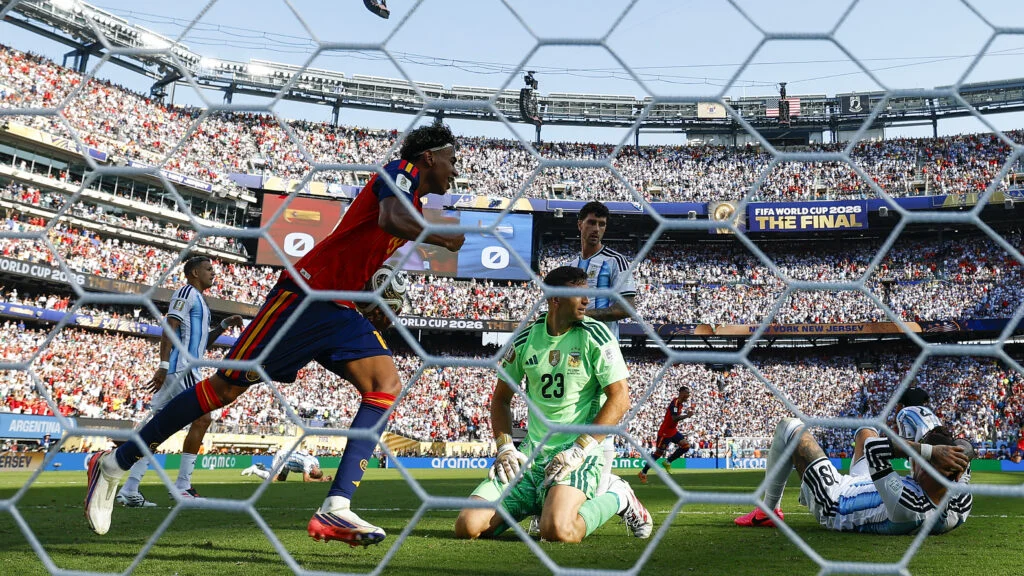
Fast forward to the most recent tournament cycle, and the landscape had shifted. Argentina returned to the final with the same legendary coach, Lionel Scaloni, the same iconic captain in Messi, and a roster largely comprised of the veterans who had tasted glory in 2022. On paper, they remained elite. Messi, even at 39, continued to defy the traditional limits of age, contributing moments of brilliance that reminded spectators why he is considered the greatest of all time. However, as the final against Spain progressed, a troubling trend emerged. Argentina had transitioned from a balanced system to a reactionary one. They became increasingly dependent on absorbing pressure, sitting deep in a defensive shell, and praying for an aging superstar to conjure a singular moment of magic. The statistics told a grim story: Argentina failed to register a single shot on target during the entire match. Their survival into extra time was not the result of a functional system, but rather the individual heroics of goalkeeper Emiliano Martínez, who made a series of desperate, world-class saves to mask the systemic deficiencies unfolding in front of him.
Spain, by contrast, represented the evolution of the sport. Under a philosophy of collective pressing and fluid movement, the Spanish side controlled the final with a stylistic dominance that felt both modern and relentless. While they possessed their own burgeoning superstars, such as the 19-year-old sensation Lamine Yamal, these individuals did not operate in a vacuum. They were integrated into a cohesive unit where the ball moved faster than any individual runner, and where the loss of one player did not result in the collapse of the strategy. Spain eventually secured a 1-0 victory in extra time, a result that felt less like a lucky break and more like the inevitable outcome of a superior organizational structure.
As a physician, hospital administrator, and bioethicist, I found it impossible to watch this match without drawing parallels to the healthcare industry. Hospitals frequently fall into the "Argentina trap." We often confuse continuity with progress, assuming that because a specific leadership team or clinical strategy was successful four years ago, it remains the optimal path forward today. We retain the same hierarchies, recycle the same quality improvement plans, and continue to lean heavily on the "mythology of the indispensable physician." In American medicine, we are particularly susceptible to this cult of personality. We celebrate the renowned surgeon, the brilliant diagnostician, or the influential department chair as the "Messis" of our organizations—individuals who are expected to rescue the hospital through sheer force of will and personal excellence.
The reality, however, is that while extraordinary physicians are vital, their brilliance is a poor substitute for a system that functions in their absence. In a modern hospital, a patient’s experience is rarely the result of a single clinician’s expertise. Instead, it is the cumulative result of a thousand micro-interactions. It depends on whether a nurse accurately interprets a physician’s nuanced plan, whether a pharmacist catches a subtle contraindication in a high-pressure environment, and whether the case management team is synchronized with the surgical floor regarding a discharge timeline. When a patient stays an extra day in a high-cost acute care bed, it is rarely because their doctor lacked the medical knowledge to treat them; it is more often because the system failed to communicate a discharge destination or failed to coordinate a simple handoff between shifts. A "Messi" in the operating room cannot fix a fragmented communication loop in the recovery ward.
The strongest healthcare institutions are not necessarily those with the highest concentration of "star" doctors, but those where information flows with such transparency and efficiency that no single individual is required to play the role of the constant rescuer. Argentina’s 2022 victory actually proves this point. Messi did not win that trophy alone; he won because the 2022 squad was willing to do the "un-glamorous work"—the tracking back, the tactical fouling, and the selfless running—that created the space for his genius to manifest. In 2022, they were a team with a common purpose. By the most recent final, they had become a collection of stars waiting for a miracle.
Organizations, including hospitals, often respond to success by ossifying. They preserve the visible components—the branding, the star hires, the physical infrastructure—while neglecting the underlying conditions that made the initial success possible. They assume culture is a static inheritance rather than a dynamic practice that must be rebuilt every single day. This is a dangerous form of institutional complacency. When hospitals copy last year’s strategic plan without accounting for shifts in nursing labor markets, changes in patient demographics, or the rapid integration of artificial intelligence in diagnostics, they are essentially playing an outdated tactical formation against a faster, more modern opponent.
The World Cup final also offered a sobering lesson on organizational composure and accountability. As the match slipped away from Argentina, their discipline evaporated. Enzo Fernández received a second yellow card, leaving his team a man down during the most critical juncture of the game. After the final whistle, the frustration boiled over into a physical confrontation between the two teams, leading to a FIFA investigation. The sight of the Argentine players turning their backs as Spain lifted the trophy was a stark departure from the grace they showed in victory years prior. This "defensive" posture is a common symptom of declining organizations.
In the healthcare sector, when performance metrics dip or patient safety incidents rise, leaders often retreat into a similar defensiveness. Instead of radical transparency, we see a "circle the wagons" mentality. Departments begin to blame one another for "length of stay" delays; clinicians dismiss patient satisfaction scores as being skewed by "unrealistic expectations"; and administrators point toward external factors like staffing shortages or unfavorable reimbursement rates. While these external pressures are real, using them as a shield against internal accountability stops the learning process entirely. High-performing organizations, much like championship-caliber sports teams, must know how to "lose" constructively. They must be able to admit when a long-standing strength has hardened into a limitation and acknowledge when another institution’s model has surpassed their own.
Furthermore, the World Cup highlighted the critical role of consistency and justice in institutional decision-making. Throughout the tournament, fans and players alike were infuriated by the inconsistency of officiating. Similar tackles were penalized differently depending on the referee or the stakes of the moment. This perceived arbitrariness undermines the integrity of the game. Patients and their families respond to hospital policies in much the same way. A family can often accept a difficult medical outcome if the process leading to it was transparent and fair. What destroys trust in the healthcare system is the perception of "arbitrariness"—the sense that one "VIP" patient receives immediate access while others wait weeks, or that one surgeon is allowed to bypass safety protocols while others are held to the letter of the law. Consistency in a hospital is not just an operational goal; it is a moral imperative and an expression of justice.
The contrast between the aging Argentina squad and the vibrant Spanish system is a warning for every hospital board and executive suite in America. Excellence is not a permanent state; it is a temporary achievement that requires constant re-evaluation. Hospitals rarely decline because their staff suddenly becomes incompetent; they decline because they fall in love with their own history. They become the hospital that "still has Messi"—the legacy reputation, the historic building, the famous names—while failing to realize that their competitors have built a better system.
American hospitals must move beyond the "hero" model of medicine. We must focus on building high-reliability organizations (HROs) where the system itself is the star. This requires a shift in how we train leaders, how we reward collaboration over individual achievement, and how we respond to failure. As the global landscape of healthcare continues to shift under the weight of rising costs and aging populations, the institutions that survive will be those that prioritize the "Spanish model" of collective excellence over the "Argentine model" of individual dependence. The lesson from the pitch is clear: yesterday’s winning formula is often the very thing that prevents you from winning tomorrow.
Basel Tarab, M.D., is a physician, health care executive, and bioethicist. He serves as director of patient experience at Winchester Hospital, teaches health care administration at Boston College, and is a teaching affiliate at Harvard Medical School’s Center for Bioethics. His observations remind us that in both sports and medicine, the most dangerous version of an organization is the one whose past success has become its primary argument for changing nothing.
