
 By Rifan Muazin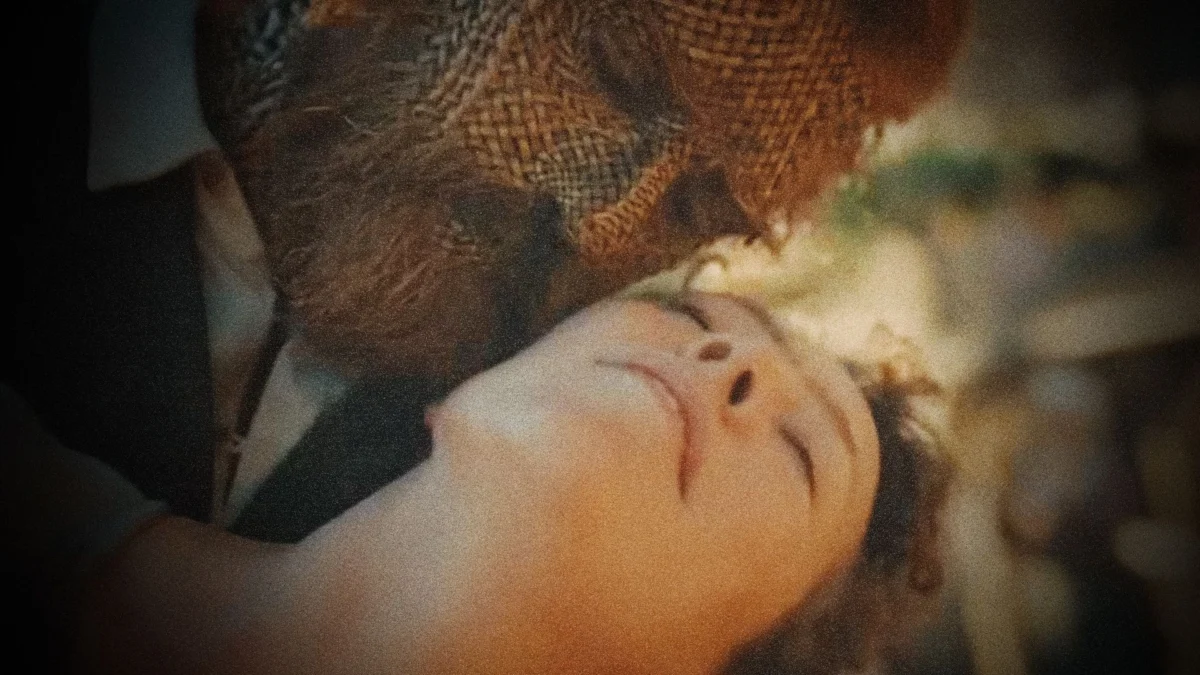
The cinematic landscape of 2024 and 2025 was initially framed as a battle of the heavyweights, a return to the traditional summer blockbuster era defined by established leading men in high-concept action roles. Audiences were primed for the return of Matt Damon, trading his Bourne-esque grit for a battle against abyssal sea monsters, and Tom Holland, once again donning the spandex to swing through the urban canyons of the Marvel Cinematic Universe. For months, these were the tentpoles holding up the industry’s expectations. However, the cultural conversation shifted violently and irreversibly with the release of a single trailer—a trailer that introduced the world to a magic wooden sex god. This film, titled simply Wicker, has bypassed traditional hype cycles to become a viral obsession, promising a blend of medieval folk-horror aesthetics and high-concept erotic comedy that feels entirely singular in the modern movie-going experience.
Set to debut this October, Wicker transports audiences to a coastal village that feels plucked from a grime-streaked medieval tapestry. The narrative centers on a local fisherwoman, portrayed by the incomparable Academy Award winner Olivia Colman. Colman, known for her ability to infuse even the most absurd premises with profound human pathos, plays a woman marginalized by her community. She is mocked not only for her lack of a husband but for the literal stench of her profession—an occupational hazard of medieval fishing that the film reportedly leans into with olfactory realism. In a desperate bid for companionship and a pointed retort to the village’s cruelty, she commissions the local basket-maker, played by Peter Dinklage, to weave her a spouse. The result is a full-sized, anatomically detailed, and sentient husband made entirely of wicker.
This "wicker husband," played by Alexander Skarsgård, is not the lumbering, terrifying effigy of pagan sacrifice seen in the 1973 cult classic The Wicker Man. Instead, he is a "looksmaxxed" marvel of craftsmanship—a buff, obedient, and sexually proficient entity designed to cater to the fisherwoman’s every whim. Skarsgård, who has increasingly sought out roles that challenge his "leading man" physicality, undergoes a startling transformation. Utilizing a sophisticated array of facial and body prosthetics, he resembles an Ent from The Lord of the Rings reimagined as a high-fashion model or a fertility deity. The internet has already dubbed the character’s specific anatomy the "wicker peen," a phrase that has rapidly ascended into the collective consciousness of social media. British tabloids, never ones to miss a pun, have greeted the film’s trailer with typical subtlety; The Sun famously screamed "WOOD PECKER" across its front page, detailing Olivia Colman’s "steamy sex scenes" with a "BASKET man."
While the premise may sound like a late-night sketch, the creative pedigree behind Wicker suggests something far more substantive. The film is being positioned as a "sprightly sex comedy," a genre that has seen a resurgence in recent years but rarely with this level of folkloric texture. The presence of Richard E. Grant in a supporting role further anchors the film’s tonal ambition, providing the kind of eccentric, high-society wit that contrasts with the muddy, rustic setting. The score, as teased in the trailer, is upbeat and whimsical, signaling to the audience that while there may be "wood" involved, this is not a dark descent into ritualistic murder.
Alexander Skarsgård’s involvement in Wicker feels like a logical progression for an actor who has recently embraced the "sex freak" archetype with gusto. Following his role in the BDSM-themed romantic comedy Pillion, Skarsgård seems to be exploring the boundaries of human—and non-human—kink. In an interview with Entertainment Weekly, Skarsgård joked about his career aspirations, stating, "Most male actors dream of playing Hamlet at some point in their career. I never did. My dream was always to have nipples made out of wicker." This commitment to the bit is evident in the trailer, where the wicker man’s movements are accompanied by a distinct, rhythmic creaking.
The auditory experience of the film is, in fact, one of its most discussed elements. In an era where many blockbusters rely on generic digital soundscapes, Wicker appears to be a masterclass in foley artistry. Every time the wicker man moves his "muscles," the audience hears the woody stretching of willow and reed. This sound design is reportedly pushed to its limit during the film’s more intimate sequences. The logistics of "human-on-anthropomorphic-handicraft" intimacy raise immediate questions about comfort and safety—specifically regarding splinters and chafing. The trailer addresses this through a sultry montage of Peter Dinklage’s basket-maker oiling the wood, a scene that acts as both a practical explanation for the wicker man’s flexibility and a heavy-handed sexual metaphor. When Colman’s character asks if he has a "scheme going with the natural world," Dinklage’s character replies with the gravitas of a sex-positive Gandalf: "Mother Nature provides."
Beyond the surface-level humor and the "horny" headlines, Wicker invites a deeper analysis of modern relationships and the "loneliness epidemic." The film’s protagonist creates a partner because the available human men in her village are deficient—cruel, judgmental, and lacking in both empathy and physical prowess. The wicker man, by contrast, is a servile, customizable ideal. He is strong, he is "hard as a tree," and he is capable of fixing the very furniture he breaks during his more vigorous activities. This narrative arc mirrors the contemporary rise of AI chatbots and digital companions. Just as today’s users turn to ChatGPT or specialized "AI girlfriends/boyfriends" for a simulated, conflict-free version of intimacy, Colman’s fisherwoman opts for a woven surrogate. The wicker man even mimics the slightly "off" cadence of an AI; when his creator attempts to teach him romantic speech, he refers to his wife as his "soft-bodied female… animal."
This metaphorical layer suggests that Wicker might be the most topical film of the year. It touches upon "heteropessimism"—the growing sense of disillusionment and exhaustion within heterosexual dating dynamics. In the village, the women are described as being "all aflutter" over the wicker man’s DIY skills and sexual stamina. "I heard he’s strong as a tree and just as hard," one villager remarks, while another adds, "I don’t blame her, I’d climb that." These lines highlight the "unrealistic expectations" placed on men made of mere flesh and blood, while simultaneously satirizing the female gaze in a way that feels fresh and subversive.
The film also stands as a fascinating counterpoint to Guillermo del Toro’s The Shape of Water. While that film explored a soulful, mute romance between a human and an amphibian man, Wicker strips away the poetic melancholy in favor of ribaldry. Del Toro’s creature was a product of nature; Skarsgård’s is a product of labor. The wicker man is a literal object of craft, raising existential questions about his own identity in a world made of wood. One scene in the trailer shows him inspecting a thatched roof—a moment that could be interpreted as him looking at a structure made of his own "flesh." How he maintains his psychological integrity in a village of wooden furniture remains one of the film’s more intriguing mysteries.
Logistically, the production of Wicker is a testament to the power of practical effects. In a Hollywood landscape dominated by green screens, the decision to build a "looksmaxxed Ent" through prosthetics and latticework gives the film a tactile, grounded quality. This physical presence is essential for the chemistry between Colman and Skarsgård to work. The audience needs to believe in the weight and texture of the wicker man for the comedy—and the romance—to land.
As the October release date approaches, Wicker stands as a bold experiment in genre-blending. It is a film that asks us to laugh at the absurdity of a "wicker peen" while simultaneously pondering the nature of companionship, the art of the foley artist, and the lengths to which a person will go to find a partner who isn’t "smelly" or mean. Whether it becomes a legitimate Oscar contender for its sound design and Colman’s performance, or simply remains a viral curiosity, Wicker has already succeeded in doing the impossible: it made the world forget about sea monsters and spider-webs, focusing instead on the romantic potential of a very well-oiled basket. In the end, Wicker may prove that while human relationships are complicated and prone to rot, a husband made of willow is forever—or at least until the woodworm sets in.
