
 By admin
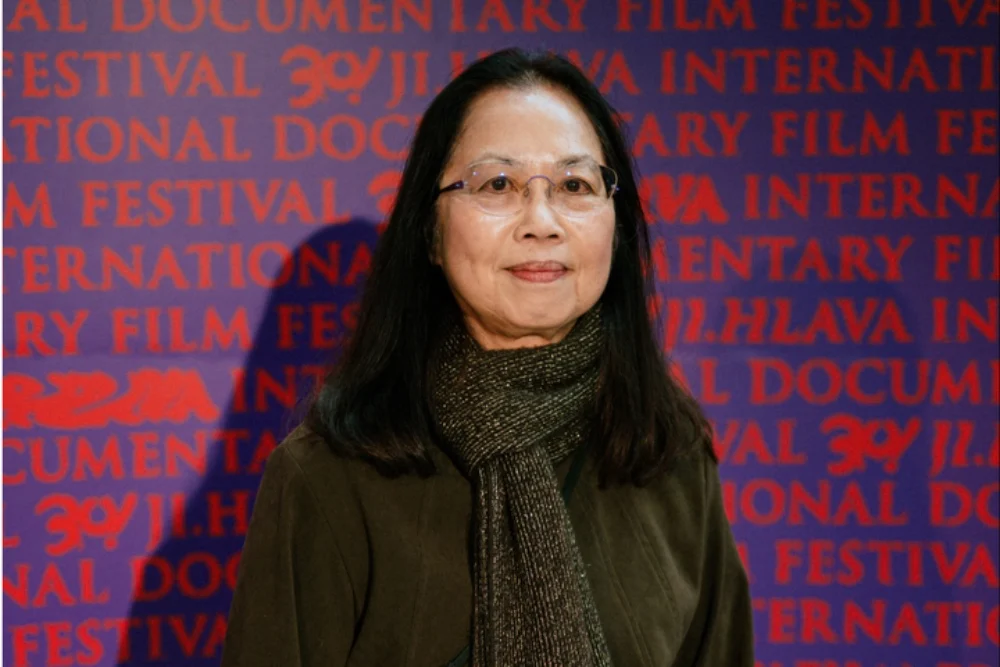
Renowned Vietnamese-American filmmaker, writer, feminist, and post-colonial theorist Trinh T. Minh-ha is poised to release her latest cinematic endeavor, "The Undying Desert," a project that has occupied her creative energies for nearly two decades. This deeply personal yet universally resonant film, recently completed with the final edits, marks a significant return to a landscape that has profoundly shaped her artistic vision. Trinh T. Minh-ha, a figure celebrated for her groundbreaking work that challenges conventional narratives and interrogates the very fabric of representation, shared this exciting news with Variety during the Ji.hlava International Documentary Film Festival. The festival is currently honoring the influential filmmaker with a comprehensive retrospective titled "Transparent Being: Trinh T. Minh-ha," a testament to her enduring impact on documentary filmmaking and critical thought.
The genesis of "The Undying Desert" stems from a persistent question posed to Trinh T. Minh-ha throughout her illustrious career: "When are you going to make a film about the U.S.?" Having previously directed films in diverse locales such as Africa, China, Vietnam, and Japan, she acknowledges the validity of this inquiry, recognizing that the United States is not only where she resides but also a complex tapestry of experiences that warrant cinematic exploration. Her chosen canvas for this exploration is the vast and awe-inspiring Great Basin Desert, a region she has been intimately documenting for close to twenty years. This extended immersion underscores her commitment to delving deeply into subjects, allowing them to unfold organically through her unique lens.
Trinh T. Minh-ha’s perception of the desert transcends simplistic, often prejudiced, definitions. "A desert is huge, majestic and beautiful," she explains, contrasting this with the colonial gaze that often labels it as merely "arid." She critiques the enduring biases embedded within language that diminish the desert’s intrinsic vitality, asserting, "All these prejudices about what a desert is still exist in our language. But it’s actually very lively." This assertion is not merely an observation but a central tenet of her filmmaking philosophy: to uncover the hidden life, the often-overlooked dynamism, within landscapes and cultures that have been stereotyped or marginalized. "The Undying Desert" seeks to unravel the multifaceted relationship between humanity and this seemingly desolate yet profoundly alive environment.
At its core, the film examines the profound connection between people and the desert, a connection Trinh T. Minh-ha links intrinsically to the lifeways of indigenous communities, particularly Native Americans. She observes that the desert serves as a powerful catalyst for self-discovery, stripping away societal artifice and external pressures. "For me, this film is closely related to the way of life of indigenous people, especially Native Americans," she states. "The other theme has to do with why we go to the desert in the first place. It wipes away every notion that allows us to conform to certain ways of life. Suddenly, you don’t have to be polite or compete with others. You go there to be with your true self." This introspective dimension of the desert experience is a key theme, highlighting its capacity to foster authenticity and a shedding of performative social behaviors.
However, Trinh T. Minh-ha acknowledges that this profound encounter with oneself is not universally embraced. She notes that some individuals approach the desert with a superficial engagement, treating it merely as a recreational space. "Some just use it as a terrain for sports. They’re there, but they are not with the desert." This distinction between mere presence and genuine communion is crucial. In stark contrast, she highlights the indigenous perspective: "Native Americans see the desert as layers and layers of life, but it’s even more radical. They always remember that their ancestors are with them too. Life and death go together." This deeply spiritual and ancestral connection, where the past is not absent but palpably present, enriches the desert’s narrative and underscores its profound cultural significance.
Trinh T. Minh-ha’s exploration of the Great Basin Desert is far from over. Immediately following the completion of "The Undying Desert," she has embarked on another film set in the same region. Co-directed with her long-standing collaborator Jean-Paul Bourdieu, this new project delves into another compelling aspect of human interaction with this arid landscape. "In the Great Basin Desert, there are groups of people who isolate themselves and turn this location into a research center for Mars," she reveals. "They plan to go there and colonize another planet." This striking juxtaposition of terrestrial desert exploration with extraterrestrial ambitions provides fertile ground for Trinh T. Minh-ha to examine humanity’s persistent drive to explore, conquer, and potentially replicate itself in new frontiers, all while drawing parallels to historical patterns of colonization.
Her personal journey of making these films has been transformative. "With every one of these trips to the desert, I could see myself changing," she reflects. "I was learning how I feel and what the desert actually brings me." This introspective growth is a hallmark of her approach, demonstrating that filmmaking is not just an external observation but an internal process of becoming.
Throughout her career, Trinh T. Minh-ha has consistently eschewed traditional narrative structures that focus on individual protagonists. Her celebrated works, including "Forgetting Vietnam," "Surname Viet Given Name Nam," "Reassemblage," and "What About China?," are characterized by a collective "I," inviting viewers into a shared experience rather than presenting a singular perspective. "It’s like poetry, where the ‘I’ is collective. You’re inviting people to come in," she explains. This poetic approach allows for a broader engagement with themes of identity, culture, and politics, resonating on a more universal human level.
Her engagement with politics is nuanced and deeply integrated into her understanding of everyday life. Citing Jean-Luc Godard, she distinguishes between "the political and politics," emphasizing that "everything we do can be political." This is particularly pertinent for women, who, she argues, are often more attuned to the political implications of daily activities. She cautions against a superficial understanding of political filmmaking, stating, "If you remain blind to that, you might make a political film about a progressive subject. But the way you treat it can be very regressive. When you turn the camera toward someone else, you also have to turn it toward yourself." This call for self-reflexivity is a cornerstone of her ethical filmmaking practice.
For Trinh T. Minh-ha, cinema transcends a purely visual experience. "Cinema is not just an experience for the eyes," she asserts. She advocates for a multisensory engagement with film, a concept beautifully articulated by a viewer’s comment on her film "Reassemblage": "I’m hearing this film with my eyes and seeing it with my ears." Her enthusiastic reply, "Perfect," encapsulates her belief in the interconnectedness of the senses, a notion deeply rooted in East Asian artistic traditions. "In East Asia, the senses are not that separate. They overlap. A painter is also a musician and a poet. I think it’s the same with film," she elaborates. She encourages audiences to approach her work with an open mind, allowing the film to speak to them holistically rather than seeking to categorize it within rigid documentary conventions or searching for a singular message. "It’s better to come with an open mind and see how it speaks to you, rather than focusing on what constitutes a ‘good documentary,’ or what its story or message is."
This philosophy extends to her advice for emerging filmmakers. She champions artistic autonomy and self-definition: "You set up the rules for yourself. I’m very glad that I was able to stick with the path I chose and not be intimidated by all these oppressive regulations." While acknowledging that documentary filmmakers today possess greater freedom, she cautions against complacency. "On the contrary, you have to be much more responsible because you are the one setting the rules." She addresses the common query about the classification of her films, posing a rhetorical question: "When people ask if your film is fiction or documentary, you have to find a way to talk to them. And say: ‘Why do you need to know?’" This challenges the audience’s need for easy categorization and encourages a more open engagement with the work itself. Despite the challenges of navigating the industry and building an audience that appreciates her distinct approach, Trinh T. Minh-ha remains committed to her artistic vision, a testament to her unwavering dedication to pushing the boundaries of cinematic expression and fostering a deeper understanding of ourselves and the world around us. Her enduring practice, marked by intellectual rigor, artistic innovation, and a profound commitment to challenging dominant narratives, continues to inspire and provoke.
