
 By admin
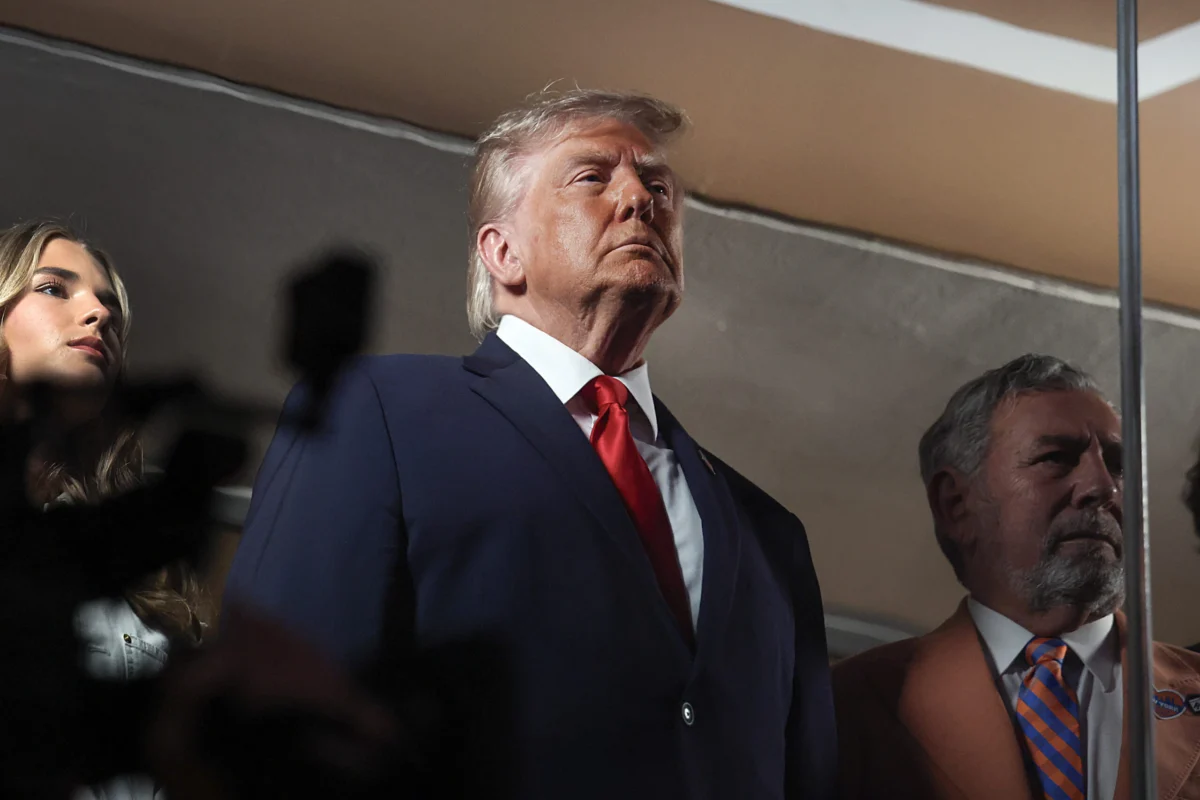
A federal judge has definitively dismissed former President Donald Trump’s defamation lawsuit against The Wall Street Journal, marking the second time the case has been thrown out and this time with prejudice, meaning Trump cannot refile the claim. The lawsuit, which sought a staggering $20 billion in damages, centered on a 2025 report by the newspaper that suggested a 2003 birthday letter to convicted sex offender Jeffrey Epstein was purportedly written by Trump. U.S. District Judge Darrin P. Gayles, in his scathing opinion delivered on Saturday, concluded that Trump’s legal team had failed to meet the stringent "actual malice" standard required to prove defamation in such cases.
Judge Gayles explicitly stated that Trump’s lawsuit "falls short of pleading actual malice." He further elaborated on the deficiencies, writing, "Indeed, the allegations regarding malice are conclusory, vague, sometimes inconsistent with the Article, and often irrelevant to whether Defendants knew or should have known that the statements in the Article were purportedly false." This unequivocal rejection underscores the significant legal hurdles Trump faced in demonstrating that The Wall Street Journal, its parent companies Dow Jones & Co. and News Corp, the reporters involved, and even media mogul Rupert Murdoch acted with knowing falsity or reckless disregard for the truth when publishing the story.
This latest dismissal with prejudice is a significant development, effectively closing the door on Trump’s attempt to seek monetary redress from the publication. It follows a similar ruling in April of the same year, where Judge Gayles had also found that the lawsuit "fails to adequately allege actual malice." At that initial juncture, the court dismissed the complaint "without prejudice," a crucial distinction that allowed Trump an opportunity to amend his filing and attempt to rectify the legal shortcomings. However, his subsequent efforts proved insufficient to overcome the legal bar.
The initial lawsuit, filed in July 2025, was an aggressive legal maneuver by the former president. It named not only The Wall Street Journal but also its parent companies, Dow Jones & Co. and News Corp, as well as the journalists who authored the report and Rupert Murdoch himself. The sheer scale of the damages sought – at least $20 billion – highlighted the gravity with which Trump viewed the publication’s reporting and his determination to exact a substantial financial penalty.
Trump’s public reaction to the initial lawsuit filing was characteristically emphatic. He took to his social media platform, Truth Social, to announce the legal action, labeling it a "POWERHOUSE Lawsuit" against "everyone involved in publishing the false, malicious, defamatory, FAKE NEWS ‘article’ in the useless ‘rag’ that is, The Wall Street Journal." He expressed his anticipation of extensive legal proceedings, stating, "I hope Rupert and his ‘friends’ are looking forward to the many hours of depositions and testimonies they will have to provide in this case." This bravado, however, has now been met with a decisive legal rebuff.
Understanding the "actual malice" standard is critical to grasping the significance of Judge Gayles’ rulings. Established in the landmark Supreme Court case New York Times Co. v. Sullivan (1964), this legal doctrine requires public figures, like a former president, to prove that a defamatory statement was made with knowledge that it was false or with a reckless disregard for whether it was false or not. This is a far higher burden of proof than that faced by private individuals in defamation cases. The rationale behind this standard is to protect robust public debate and prevent the chilling effect that fear of litigation could have on investigative journalism concerning public figures.
In the context of Trump’s lawsuit, the core of the dispute revolved around the authenticity and implications of a letter purportedly written by Trump to Jeffrey Epstein. The Wall Street Journal’s report in 2025 presented evidence and reporting suggesting a connection between Trump and Epstein, specifically referencing this birthday letter. Trump vehemently denied any such authorship or association, framing the report as a malicious fabrication intended to tarnish his reputation.
The legal arguments presented by Trump’s legal team likely focused on demonstrating that The Wall Street Journal knew the letter was not from him or acted with extreme recklessness in attributing it to him. However, Judge Gayles’ repeated findings indicate that these arguments failed to present sufficient evidence to meet the high bar of actual malice. The judge’s critique that the allegations were "conclusory, vague, sometimes inconsistent with the Article, and often irrelevant" suggests a fundamental lack of persuasive evidence in Trump’s filings.
The nature of the alleged letter itself is a significant element of the backstory. Jeffrey Epstein’s conviction for sex trafficking and his subsequent death in custody in 2019 cast a long shadow. Any association, however tangential, with Epstein became a sensitive issue for public figures. Trump’s previous acknowledgments of knowing Epstein, though he has largely distanced himself from the convicted sex offender in recent years, have been a recurring point of scrutiny. The existence and attribution of a birthday letter would, if proven to be from Trump, have added a new dimension to this already complex and controversial relationship.
The Wall Street Journal, as a reputable and established news organization, would have likely defended its reporting by demonstrating its journalistic rigor, including the sources and evidence used to verify the letter’s authenticity or the basis for attributing it to Trump. The newspaper’s legal team would have emphasized that their reporting was based on thorough investigation and was not made with any intent to deceive or harm Trump’s reputation.
This case also highlights the broader challenges faced by media organizations in reporting on powerful individuals and the potential for high-stakes litigation. While defamation laws are in place to protect individuals from false and harmful statements, the "actual malice" standard is designed to safeguard the press’s ability to report on matters of public interest without undue fear of reprisal.
The dismissal of this lawsuit for a second time, and with prejudice, represents a significant legal victory for The Wall Street Journal and a considerable setback for Donald Trump’s efforts to hold the publication accountable for its reporting. It reinforces the legal protections afforded to the press under the First Amendment of the U.S. Constitution when reporting on public figures, provided they adhere to journalistic standards and avoid knowingly publishing false information or acting with reckless disregard for the truth. The finality of this dismissal means that the legal battle over this specific report has concluded, leaving Trump’s claims against the newspaper unresolved in the courts. The implications of this ruling extend beyond this individual case, serving as a reminder of the high legal threshold required to prove defamation against media outlets when public figures are involved.
