
 By admin
The Oued Beht Archaeological Project (OBAP), a collaborative initiative involving institutions like Italy’s National Research Council (CNR) and the University of Cambridge, has been at the forefront of these revelations. Prior to the latest findings, OBAP had already unearthed what is considered the earliest and largest agricultural complex in Africa outside the Nile Valley, dating back approximately 5,400 to 4,900 years ago. This earlier discovery, detailed in previous publications, highlighted a sophisticated farming society cultivating staples such as barley and wheat, alongside the exploitation of wild plants and the rearing of livestock. It established Oued Beht as a pivotal site for understanding the origins and development of agriculture in North Africa.
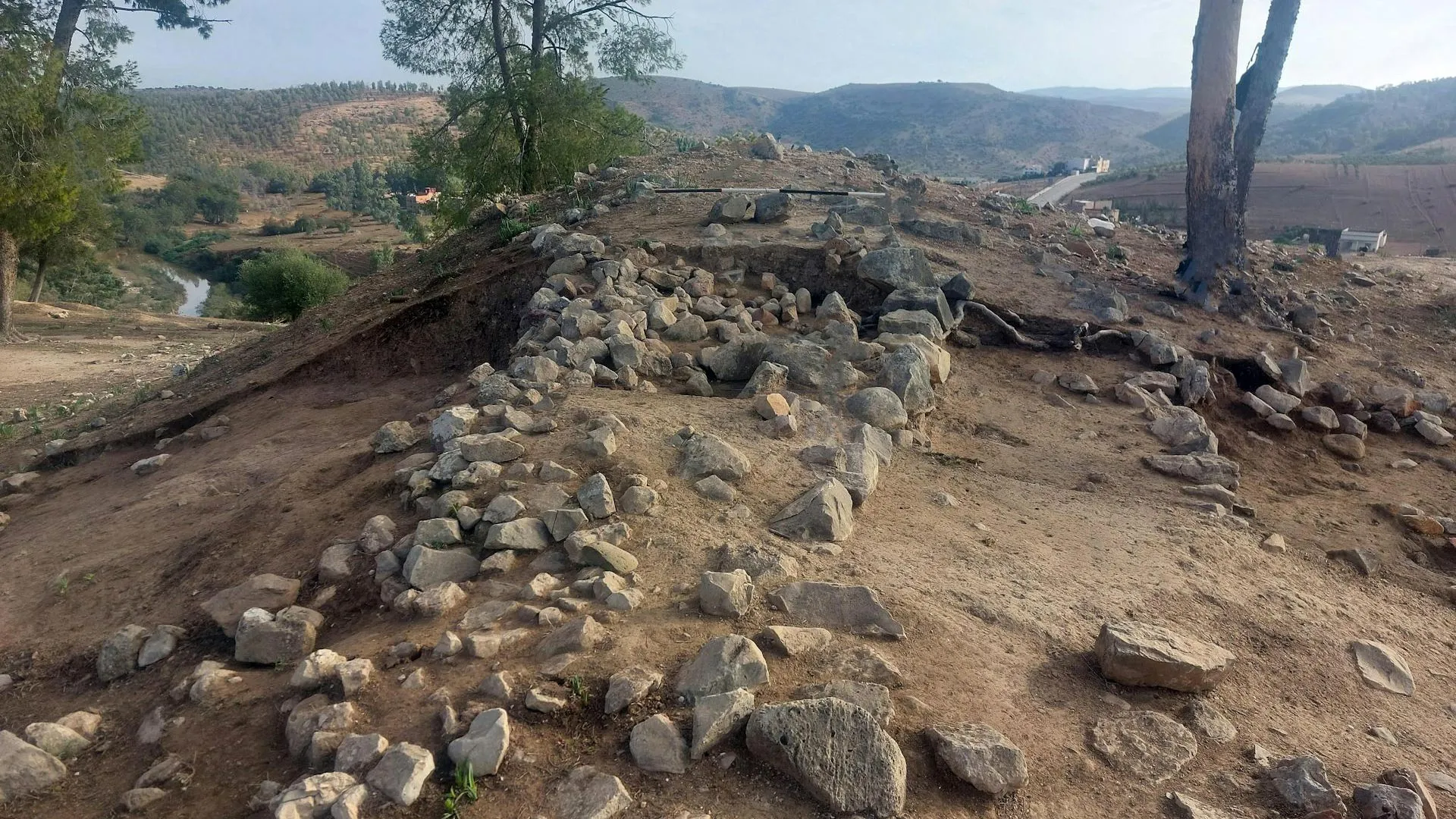
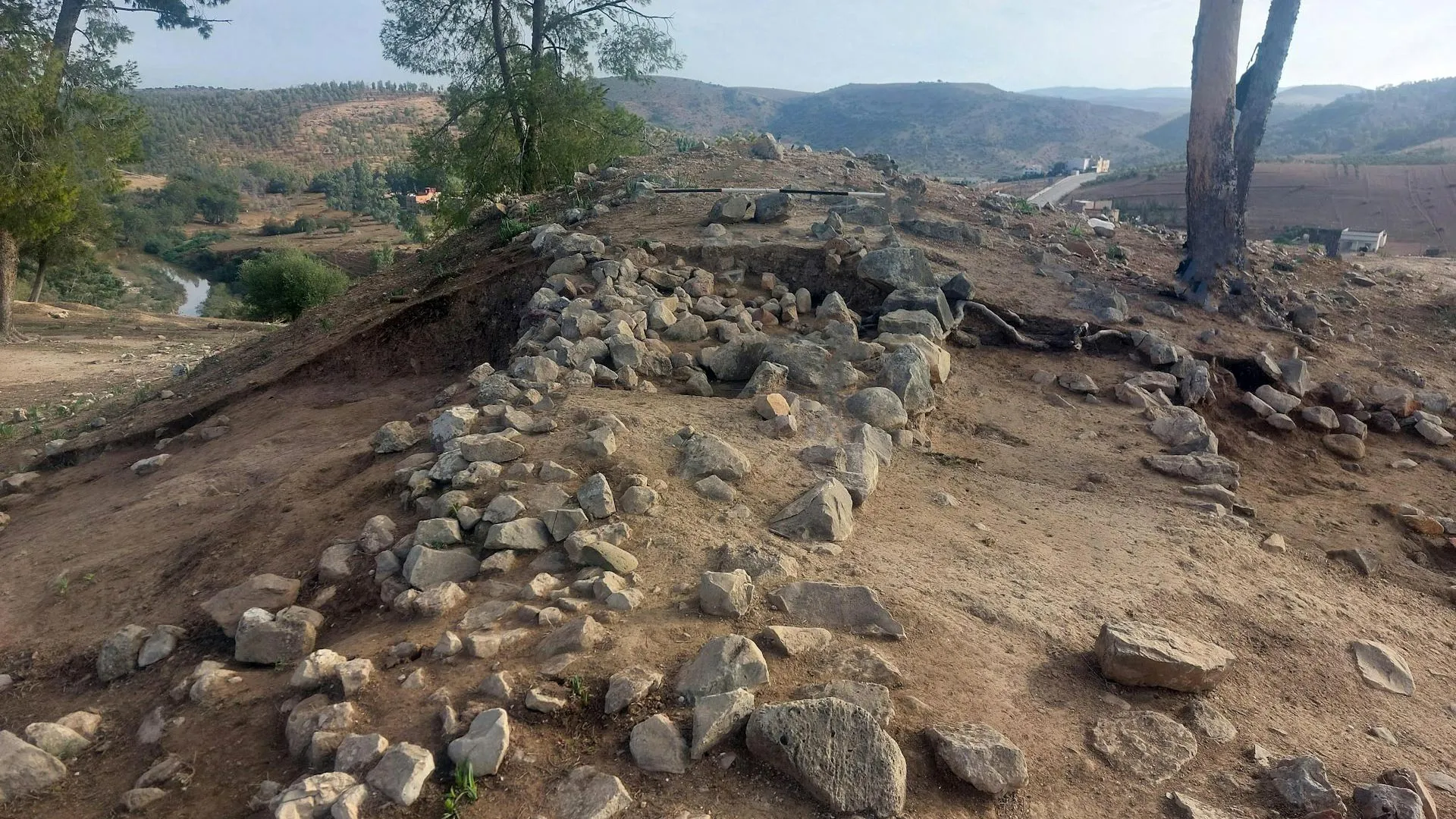
However, new excavations conducted in 2023 have dramatically deepened this understanding, pushing the chronological boundaries of advanced societal organization in the region. These recent digs have uncovered the earliest known large-scale construction of a probably defensive nature in North Africa beyond the Nile Valley, dating to a period roughly 4,000 to 3,500 years ago. This monumental structure, a multi-phase ditch, rampart, and wall system, signifies a profound shift in societal organization, resource management, and potentially, inter-community relations.
The precise threats that necessitated such formidable fortifications remain a subject of ongoing research. Experts hypothesize that these wall-like structures were not primarily designed to counter external "invaders" in the traditional sense, but rather to manage increasing internal competition. This competition likely revolved around control over prime agricultural land, vital natural resources like water, and strategic routes for trade and movement through the landscape. The construction of such a significant defensive work implies that communities in the region felt a tangible need to protect their assets, assert their power over strategic locations, or consolidate their territorial claims. This discovery decisively pushes back the evidence for organized defensive architecture in the Maghreb, indicating that societies in this region during the second millennium BC were far more complex, structured, and capable of large-scale collective action than previously believed.
The strategic importance of the Oued Beht ridge appears to have transcended millennia. The new study also reveals that the site became a focal point once again in the medieval period, specifically between the 11th and 13th centuries AD. During this era, the very same defensive structure was rebuilt and repurposed, suggesting a long-term recognition of the site’s strategic value. Concurrently, a hamlet or farm was established on a nearby hilltop, and a cemetery emerged between these two areas, indicating a sustained rural community. These medieval findings provide rare archaeological insights into rural life during a later, yet often equally understudied, period in North African history. Together, the prehistoric and medieval discoveries illuminate the continuous human engagement with this landscape, helping us understand how societies developed, adapted, and maintained themselves in a region too often marginalized in global historical narratives.
A Prehistoric Hub in the Maghreb: Challenging the Narrative of Isolation
For an extended period, the later prehistory of North Africa’s Maghreb region—encompassing the modern-day Mediterranean countries of Morocco, Algeria, and Tunisia—was poorly understood. Compared to neighboring regions such as Iberia in south-western Europe or the vibrant centers of the eastern Mediterranean, archaeological evidence in the Maghreb was often fragmentary, leading to assumptions of slower development or relative isolation. This perception is now being completely overturned by the wealth of discoveries emerging from sites like Oued Beht.
Excavations at Oued Beht have revealed a vast concentration of human activity spread across at least ten hectares, making it one of the most significant prehistoric sites in the region. The earliest major phase of occupation dates to the mid-fourth and early third millennia BC, a period known as the Final Neolithic. During this era, environmental evidence from meticulously analyzed plant and animal remains indicates a flourishing farming community. They cultivated domesticated crops such as barley and wheat, supplemented their diet with wild plants, and maintained various types of livestock, showcasing a sophisticated understanding of their environment and agricultural practices.
Beyond subsistence, the site was also a crucial center of craft production. Archaeologists have unearthed thousands of polished stone axes and other tools, testaments to skilled craftsmanship and possibly specialized production. Furthermore, finely made pottery, sometimes adorned with intricate painted patterns, points to a developed aesthetic sense and potentially complex social rituals or trade networks. While it remains uncertain whether prehistoric Oued Beht functioned as a permanent village, a seasonal aggregation center, or a less familiar type of settlement, its sheer scale and the intensity of activity unequivocally mark it as a major focus in the landscape of north-west Morocco during the Neolithic period.
The Unveiling of the Defensive Wall: Engineering and Organization
The presence of potentially ancient earthworks and walls at Oued Beht had been observed as early as the 1930s. The pioneering French archaeologist Armand Ruhlmann first documented a configuration of three walls, with the fourth side naturally protected by the steep scarp of the ridge. He described this as a defensive éperon barré (barred spur), a common term for fortifications that cut off a spur of land from the main plateau. However, the precise nature, construction methods, and, crucially, the chronological date of these structures remained enigmatic for decades, awaiting the application of modern archaeological techniques.
The recent excavations have finally clarified these mysteries. Researchers have confirmed the existence of a multi-phase defensive system comprising a ditch, a rampart, and a substantial wall, strategically built across a narrow section of the Oued Beht ridge between the river and a ravine. This formidable construction effectively cut off and protected the southern tip of the ridge, transforming it into a highly defensible enclave. Radiocarbon dating of organic materials recovered from deposits directly associated with these structures has provided the precise timelines detailed in the study. These dates firmly place its original construction in a period equivalent to the Bronze Age of the wider western Mediterranean, making it the earliest confirmed defensive construction of this scale and complexity in North Africa outside the immediate vicinity of the Nile Valley. This finding significantly re-calibrates the timeline for advanced architectural and societal development in the Maghreb.
Societal Implications: What Did This Construction Signify?
The very existence of such a structure raises profound questions about the society that conceived, planned, and executed its construction. Building an embankment, ditch system, and wall of this magnitude required a significant investment of labor, resources, and sophisticated organizational capacity. This suggests a community capable of advanced planning, coordinated effort, and the mobilization of a substantial workforce – hallmarks of a more complex, hierarchical, and possibly politically structured society than previously attributed to Bronze Age Maghreb.
Interestingly, during the earlier Final Neolithic phase, human activity at Oued Beht was primarily concentrated in the larger and more open northern area of the site. By the period of the new study, corresponding to the Bronze Age equivalent, the focus had clearly shifted to the narrower, more naturally defensible southern ridge. This geographical relocation of settlement suggests a conscious strategic decision, likely reflecting a shift in settlement strategies driven by factors such as increased population density, greater competition for resources, or heightened inter-group tensions. It indicates a society adapting its living arrangements to perceived threats or opportunities, a testament to its dynamic nature.
Mediterranean Connections: The Maghreb as an Active Participant
The second millennium BC was a period of immense dynamism and interconnectedness across the Mediterranean basin. In southern Iberia, for instance, the Argaric societies (flourishing between approximately 2200-1550 BC) were developing highly complex, often hilltop settlements. These societies were characterized by meticulously planned architecture, advanced metallurgy (particularly bronze production, giving the period its name), and distinct social hierarchies evident in their burial practices and material culture. Crucially, Argaric communities frequently constructed fortified sites, strategically located to control surrounding territories and vital resources.
The discoveries at Oued Beht provide increasing evidence that communities in north-west Africa were not isolated entities but were actively connected to these wider Mediterranean networks, including those in today’s Spain and Portugal. While direct trade goods might still be under investigation, the shared architectural strategies and the emergence of organized defense suggest a parallel development, possibly influenced by, or in response to, trends across the Strait of Gibraltar. Oued Beht indicates that the Maghreb was not merely a passive recipient of cultural diffusion but an active participant in the broader processes shaping the western Mediterranean.
This defensive system at Oued Beht may therefore reflect not just local developments but also wider transformations in social organization and regional interaction. It could signify growing competition over increasingly valuable resources, the establishment of more formalized leadership structures capable of commanding large-scale projects, and the need to control critical points of movement across the landscape. The Maghreb, through sites like Oued Beht, is emerging as a central player in the intricate tapestry of Bronze Age Mediterranean history.
Rewriting History: A Legacy of Complexity and Resilience
The discoveries at Oued Beht unequivocally highlight how much remains to be learned about the deep history of North Africa. The monumental defensive wall demonstrates that communities here possessed the capacity to coordinate large-scale construction projects, pointing towards social transformations and an advanced level of organization that are only now beginning to be recognized. This challenges long-held assumptions of a largely undifferentiated and less complex prehistoric Maghreb, placing it firmly within the trajectory of significant societal development observed elsewhere in the ancient world.
Furthermore, the medieval remains demonstrate a profound continuity, showing that the ridge was strategically re-used many centuries after the prehistoric settlement had been abandoned. This illustrates that Oued Beht was not simply a single-period settlement but a landscape repeatedly selected by different communities across millennia, each recognizing and adapting to its inherent advantages.
As research continues, Oued Beht is poised to become a key location for understanding how societies in the Maghreb evolved, from early farming communities of the Neolithic to the dynamic rural world of the medieval period. It underscores the importance of regional archaeological research in constructing a more inclusive and accurate global history, one that fully acknowledges the agency, innovation, and complexity of ancient North African peoples.
