
 By Lina Irawan
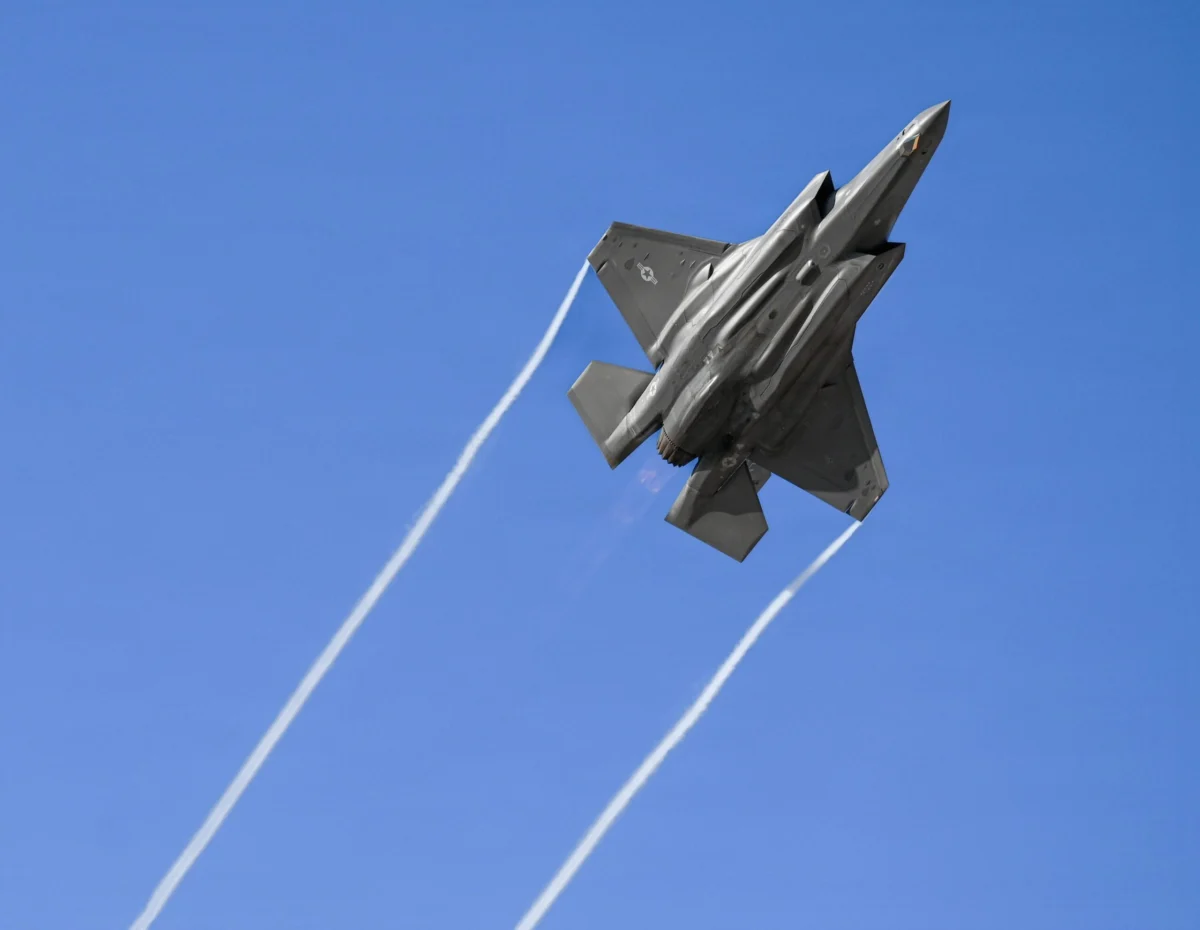
President Donald Trump has fueled these anxieties by stating his contemplation of “another little Epic Fury” following the U.S. midterm elections. This rhetoric, coupled with significant military deployments, signals a readiness for decisive action that could shatter the fragile equilibrium in the Middle East. The U.S. has already reinforced its presence in the region, dispatching a third aircraft carrier strike group and a Marine expeditionary unit. These deployments represent a substantial projection of power, enhancing offensive capabilities and signaling to both allies and adversaries the potential for sustained operations. Furthermore, Washington has reportedly alerted its regional allies, urging them to brace for a potentially short but intense renewal of hostilities, a warning underscored by reporting from the Wall Street Journal. Such a pre-emptive alert suggests a deliberate strategy to prepare for a rapid and impactful military intervention.
The Iranian regime has met these overtures with equally hardened threats, aiming to deter any U.S. attack by promising a disproportionate and unrestricted retaliation. This shift in Iranian rhetoric marks a significant departure from previous postures, signaling a willingness to engage in a broader, more unpredictable conflict. On a recent Saturday, Ayatollah Mojtaba Khamenei issued a stark warning that Iran’s response would be “without any geographical limitations.” He further elaborated that the “data bank of targets should be updated so that the armed forces could hit all kinds of financial and non-financial assets.” This ominous statement suggests a comprehensive targeting strategy that extends far beyond conventional military installations, encompassing critical infrastructure, economic nodes, and potentially even global assets.
In recent weeks, Iranian officials have specifically highlighted undersea internet cables and data centers as potential targets, illustrating the regime’s growing focus on cyber warfare and disruption of digital infrastructure. This threat is particularly concerning in an increasingly interconnected world, where the severing or compromise of these vital arteries could have cascading effects on global communications, finance, and commerce. Adding to these concerns, a foiled attack on a British air base frequently utilized by U.S. forces has been attributed to Tehran, demonstrating Iran’s capability and willingness to project force against targets associated with its adversaries, even on foreign soil.
The evolving nature of modern conflict, particularly in the cyber domain, adds another layer of complexity. While North Korean state-sponsored hackers have been blamed for the staggering $6.3 billion crypto heist from Binance, this incident starkly illustrates the vulnerability of such digital assets. Iran, with its sophisticated cyber capabilities, is equally adept at launching disruptive and destructive cyberattacks. Experts widely recognize various Iranian state-backed groups as formidable actors in the digital realm, capable of targeting everything from industrial control systems to financial institutions. Concurrently, the Pentagon is reportedly investigating potential vulnerabilities after reports of hackers pushing freezers at hundreds of French supermarkets to extreme temperatures, potentially demonstrating a novel and disruptive form of cyber-physical attack that could theoretically be applied to critical logistical systems, including those on U.S. military bases. Such incidents, whether real or hypothetical, underscore the expanding and unpredictable landscape of modern threats.
The global reach of Iranian influence and activity is not limited to the digital sphere. The RAND think tank, in a recent analysis, observed that hostile Iranian activity “spans the globe,” citing the presence and operational capabilities of its proxy, Hezbollah, in Latin America, alongside reported plots against civilians in various European countries. This extensive network of proxies and covert operations provides Tehran with a broad spectrum of asymmetric tools to project power and retaliate against perceived aggressions, far from its immediate borders. RAND analysts concluded, "Unbound and bent on revenge, Iran is unlikely to be contained to just one corner of the globe," advocating for a continuation of the U.S. naval blockade as the "least bad option," rather than initiating new attacks that could trigger a wider, uncontainable conflict.
Despite the escalating rhetoric and military posturing, diplomatic channels remain open, with the U.S. and Iran exchanging messages through intermediaries. However, these efforts have yielded little progress, as neither side has shown a willingness to budge from their entrenched initial demands. This diplomatic impasse dampens hopes for a breakthrough in the immediate future, leaving the door open for further escalation.
Given the increasingly hardened rhetoric from the Iranian regime and its explicit threats of unrestricted retaliation, experts now detect a significant shift in Iran’s strategic calculus against the U.S., leading to a higher probability of renewed conflict. Hamidreza Azizi, a senior Iran analyst at the Crisis Group, highlighted Ayatollah Khamenei’s recent message as a pivotal development. “This language suggests a further evolution in Iran’s military strategy,” Azizi posted on X, explaining, “Since the beginning of the war, Tehran has increasingly moved away from its traditional emphasis on proportionate response and retaliation toward a more offensive approach aimed at imposing costs on adversaries. The latest statements appear to take this logic a step further.”
Azizi further cited remarks from another top Iranian official who indicated that Iran could initiate a preemptive strike if concrete preparations for hostile action by adversaries were confirmed. This represents a significant doctrinal shift, moving from a reactive defense to a proactive offense. Furthermore, Khamenei’s insistence that Iran would determine the timing and nature of any renewed conflict’s conclusion underscores Tehran’s ambition to control the escalation ladder and dictate terms, rather than merely reacting to U.S. actions.
Iran’s wariness of further diplomatic efforts is also rooted in past experiences. Previous U.S. attacks, or escalations, have occurred even amidst ongoing talks with Washington, both earlier this year and last summer. “Iran appears increasingly determined to prevent a repetition of previous scenarios in which negotiations or temporary ceasefires were followed by renewed military conflict,” Azizi added. “From Tehran’s perspective, the objective is to make another attack so costly and unpredictable that Washington would have to reconsider the option altogether.” This indicates a strategic intent to build a credible deterrent through the threat of overwhelming and geographically unconstrained retaliation.
Meanwhile, Iran maintains a formidable arsenal of thousands of missiles and drones, capable of inflicting catastrophic damage on its neighbors in the Persian Gulf region. These include various types of ballistic and cruise missiles, as well as an increasingly sophisticated array of unmanned aerial vehicles (UAVs) that have demonstrated precision and range in previous attacks. The effectiveness of these weapons is further compounded by the current state of U.S. and allied defenses. Stockpiles of U.S. interceptors, crucial for countering such aerial threats, have reportedly been depleted to critically low levels, partly due to ongoing support for other conflicts and the high cost of production. Simultaneously, newer Iranian missiles have showcased advanced capabilities, including the ability to evade existing air-defense systems, raising serious concerns about the region’s vulnerability.
The Persian Gulf’s critical energy infrastructure has already sustained significant damage in earlier phases of the conflict. Amir Handjani, a board member at the Quincy Institute for Responsible Statecraft, warns that the region simply cannot absorb another round of fighting. The vast oil and gas facilities, shipping lanes, and export terminals are not only vital for regional economies but are also cornerstones of global energy supply. Any renewed conflict could severely disrupt these flows, triggering a global energy crisis with far-reaching economic consequences. Indeed, even U.S. military bases across the Middle East have previously been heavily damaged by Iranian drone and missile attacks, demonstrating the effectiveness of Tehran’s asymmetric capabilities against well-defended targets.
Handjani elaborated on the broader implications: “Gulf producers spent five decades persuading the world that their supply could withstand regional wars. Eight months of fighting on two fronts have badly weakened that case. A negotiated end to the war would give the region time to rebuild it.” The intertwined conflicts, including the ongoing Saudi-Houthi war, have already strained regional stability and energy markets. “Another round, on top of the Saudi-Houthi war, would leave damage to infrastructure and to importers’ confidence that markets are likely to carry for a generation.” The potential for long-term economic instability and a fundamental shift in global energy perceptions underscores the profound risks associated with any further escalation. The stakes are not merely regional stability but the very foundations of the global economy and international security order.
