
 By admin
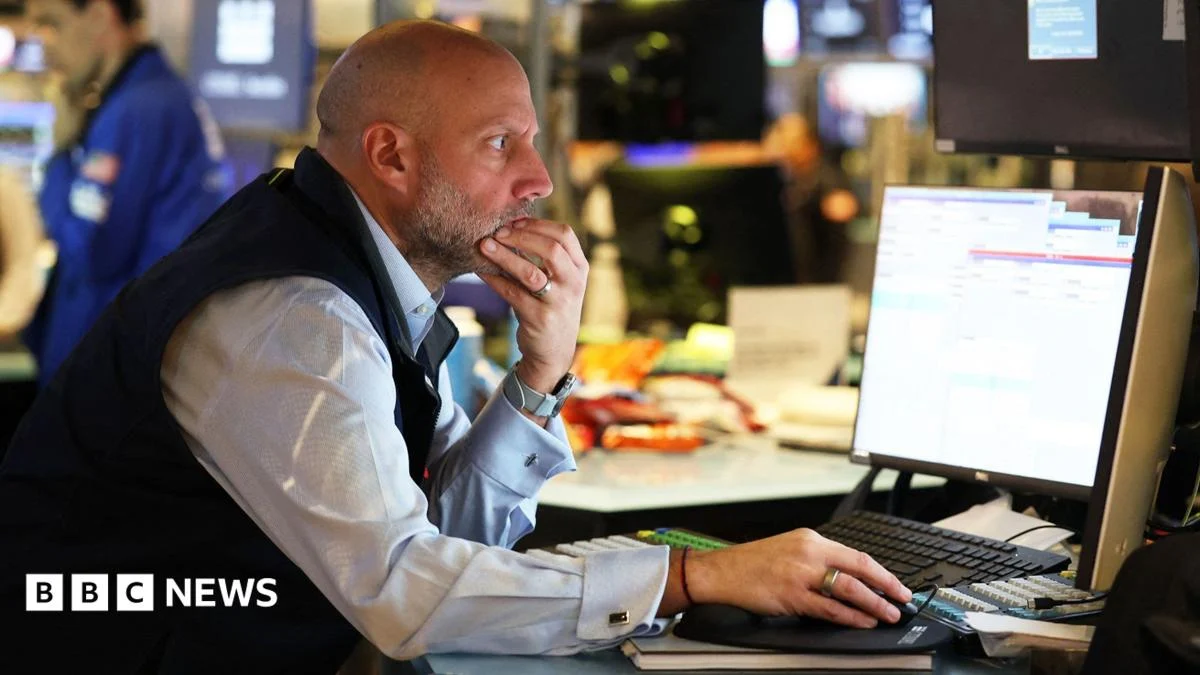
Shares in artificial intelligence and technology firms have staged a modest recovery, offering a glimmer of hope after an unprecedented sell-off that erased trillions of dollars from global stock valuations. The tech-heavy Nasdaq Composite index, a bellwether for the sector, closed in positive territory on Friday, marking a slight reversal from a significant market rout that originated in the United States on Thursday and subsequently rippled through Asian and European markets into Friday.
The initial wave of selling pressure on tech stocks was partly fueled by investor apprehension surrounding the implications of a Democratic victory in the US midterm elections. Concerns were raised that a Democrat-controlled Congress might usher in a more regulated environment for artificial intelligence development, potentially slowing its pace and profitability. This sentiment was amplified by the fact that many leading AI companies have experienced exponential growth in recent years, leading some analysts to believe that the market was due for a recalibration.
However, a mixed economic picture emerged on Friday morning with the release of the latest US employment figures. The Bureau of Labor Statistics reported that the US economy added a surprisingly robust 165,000 jobs in September, a figure that exceeded many economists’ expectations. This strong jobs report, while generally positive for the broader economy, introduced a layer of complexity for investors attempting to gauge the overall market sentiment and the Federal Reserve’s future monetary policy decisions. A stronger labor market can sometimes signal inflationary pressures, potentially leading to further interest rate hikes, which can be detrimental to growth-oriented tech stocks.
The previous day, Thursday, had witnessed a significant battering of businesses closely tied to artificial intelligence development. Chip and semiconductor makers, the foundational providers of the hardware essential for AI advancements, bore the brunt of the sell-off. Companies like Nvidia, a dominant player in AI chip manufacturing, and other semiconductor giants saw their market capitalizations plummet by billions of dollars in a single trading session. The interconnectedness of the tech supply chain meant that any perceived threat to AI growth had a cascading effect on its key enablers.
Despite the severe downturn, the Nasdaq Composite managed a notable rebound on Friday, ending the day with a gain of 1.1%. This partial recovery, while not erasing the previous day’s losses entirely, demonstrated a degree of resilience in the tech sector. The S&P 500, which comprises the share prices of the 500 largest publicly traded US companies, also closed higher, up 0.3%. The Dow Jones Industrial Average, a more industrially focused index, experienced a flatter trading day, ultimately ending slightly down by 0.4%. This divergence in performance underscores the fact that while the broader market showed some stability, the tech sector remained a focal point of investor attention and volatility.
The market’s swift reversal of fortunes on Friday saw companies that had lost hundreds of billions in market value on Thursday begin to recover some ground. Notable among these were Nvidia, whose stock showed signs of life after its substantial decline; SpaceX, the innovative aerospace company with significant AI ambitions; and Tesla, the electric vehicle and energy company that heavily integrates AI into its operations and future plans. This partial recovery suggests that the initial sell-off may have been an overreaction, or that investors are beginning to differentiate between companies and their long-term prospects.
However, the recovery was not uniform across global markets. Stock markets in Asia and Europe fared considerably worse, indicating that the sell-off had a more profound and lasting impact in these regions. The Kospi index in South Korea, a significant hub for semiconductor manufacturing, closed down a substantial 6% on Friday. Shares in SK Hynix, a major global chipmaker, plunged by more than 10%, highlighting the direct correlation between AI sentiment and the fortunes of its key suppliers. European markets also experienced widespread declines, with the main stock indexes in Germany, France, and Spain ending the day lower. In the United Kingdom, the FTSE 100, representing the largest companies on the London Stock Exchange, declined by 1.01%.
Adding to the economic uncertainties for UK traders was the Bank of England’s recent decision to raise interest rates. This move, aimed at curbing persistent inflation, was accompanied by signals that further rate hikes could be on the horizon. Higher interest rates can increase borrowing costs for companies, potentially impacting their investment plans and profitability, and can also make equities less attractive compared to fixed-income investments. This backdrop of rising interest rates in key global economies further complicated the investment landscape for technology stocks, which often rely on readily available capital for growth.
The market fluctuations also followed the significant Democratic victories in the US midterm elections. A number of Democratic candidates had campaigned on platforms advocating for new regulations concerning artificial intelligence and data centers. With the party securing control of both houses of Congress and winning key contests in states that have become central to the AI data center race, the prospect of increased regulatory scrutiny became a tangible concern for investors. This has led to discussions about how these new regulations might impact the pace of AI innovation, the cost of doing business, and the overall profitability of AI-driven companies.
In a notable statement on Friday, US President Donald Trump reiterated his support for what he termed "super intelligence," asserting that only "foolish leadership" would reject the economic benefits it promises. This stance from a prominent political figure, even as a former president, underscores the ongoing debate about the strategic importance and economic potential of AI. However, alongside this optimistic outlook, there remain significant concerns about whether the enormous sums of money currently being invested in AI development will ultimately yield the expected returns. The high valuations of many AI companies are built on the promise of future growth, and any perceived roadblocks to that growth can trigger sharp market corrections.
Russ Shaw, founder of the global tech advocacy firm Tech London Advocates, observed that the election results were sending a clear message that a reassessment of AI strategies was necessary. He told the BBC’s Business Today program that the incoming Congress would "really focus on AI in a very dramatic way." Shaw, a self-proclaimed "big fan of AI," expressed concern about the current communication strategies of AI companies, particularly in the US, stating that they are "not communicating effectively at all… about what the benefits of AI are all about." This suggests a need for greater transparency and clearer articulation of AI’s value proposition to the public and policymakers alike.
Pierre Baqué, chief executive of AI platform Neural Concept, characterized the recent share movements as a "necessary market correction." He believes these fluctuations reflect a legitimate concern regarding the substantial capital being channeled into AI infrastructure. Baqué emphasized that the industry must move beyond "unchecked infrastructure investment and demonstrate greater financial discipline." He articulated that the sector is entering a "critical transition phase, a market purgatory where raw tech must prove its widespread economic value." This perspective highlights a shift from a focus on pure technological advancement to a demand for tangible economic outcomes and sustainable business models.
Dan Coatsworth, head of markets at AJ Bell, described the past week as "brutal" for market participants. He identified the key question moving forward as whether the recent surge in the S&P 500 and Nasdaq would be sustained. Coatsworth suggested that the upcoming week would provide a clearer indication of the tech sector’s trajectory. "Once investors have had the weekend to catch their breath, next week could give a clearer indication of whether the tech trade is going down the pan or fighting back," he commented. This sentiment encapsulates the current uncertainty and the anticipation surrounding the market’s next moves as investors digest the confluence of economic data, political developments, and evolving investor sentiment. The interplay between technological innovation, regulatory oversight, and economic realities will continue to shape the future of AI and its impact on global markets.
