
 By Rifan Muazin
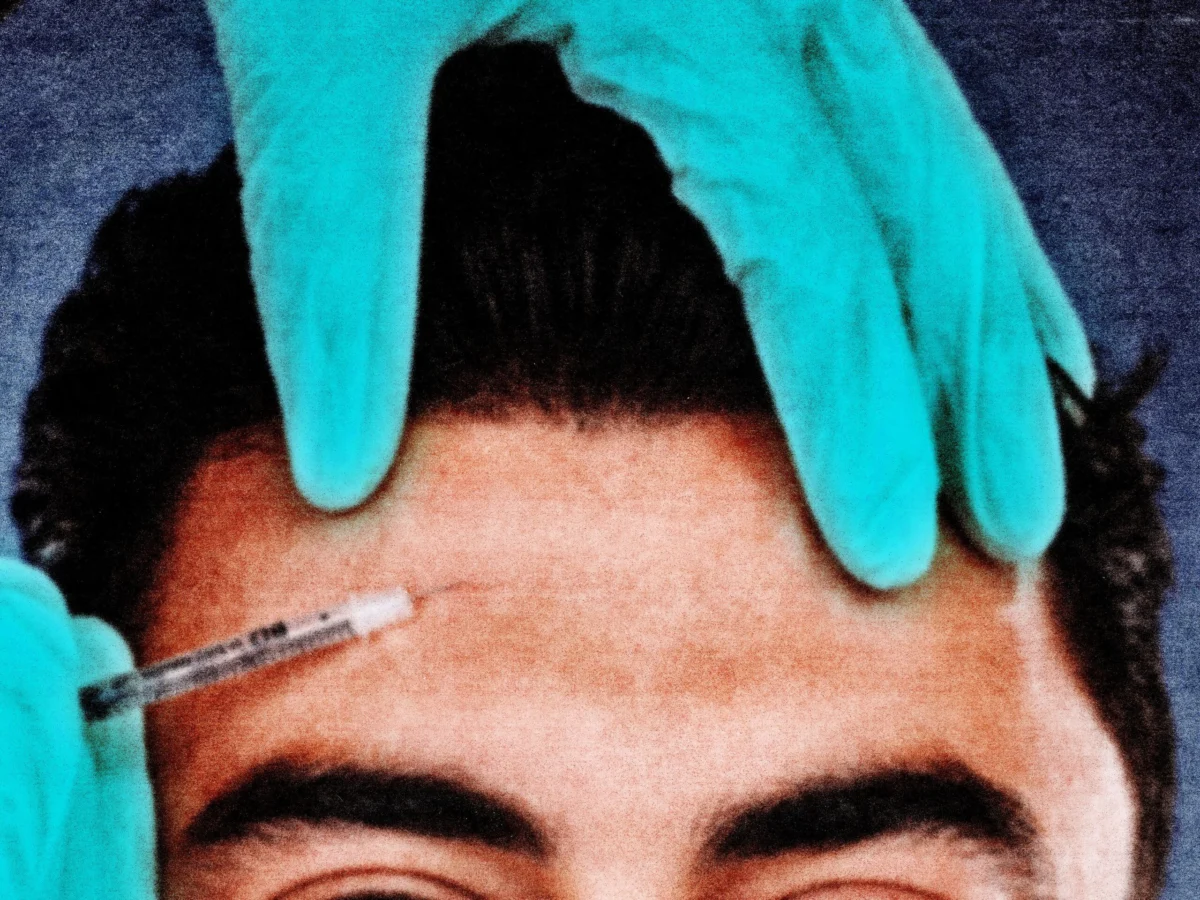
The landscape of male self-improvement is undergoing a radical and somewhat clinical transformation, moving far beyond the traditional confines of the gymnasium or the barber’s chair. In recent years, a subculture known as "looksmaxxing" has gained significant traction online, encouraging men to go to increasingly wild lengths to achieve a hyper-idealized version of masculinity. This movement ranges from the relatively benign—meticulous skincare and hair routines—to the borderline barbaric, including "bonesmashing" to chasten the jawline, surgical procedures to reshape the eyes for a "hunter" look, and even agonizing limb-lengthening surgeries that involve breaking the legs to gain a few inches of height. Yet, amidst these fringe and often dangerous trends, an "OG" of the cosmetic world is experiencing a massive, mainstream resurgence among men: Botulinum toxin, popularly known as Botox.
While Botox has long been the cornerstone of the multi-billion-dollar aesthetic industry, it was historically marketed toward and consumed almost exclusively by women. However, the tide has turned. Recent data indicates that the "Brotox" boom is not just a passing fad but a fundamental shift in how men approach aging and self-presentation. According to an October 2026 report by Guidepoint Qsight, a leading medical aesthetics data and intelligence provider, a surprising economic milestone has been reached: men are now outspending women per visit for neurotoxin treatments. The report highlights that in the third quarter of 2026, men spent an average of $529 per neurotoxin visit, compared to $455 for women. These figures encompass not only the household name Botox but also its primary competitors like Daxxify, Xeomin, and Dysport.
The reasons behind this spending gap are rooted in both biology and shifting social norms. From a physiological standpoint, men typically possess larger, stronger facial muscles than women. Because neurotoxins work by temporarily paralyzing or relaxing the muscles that cause wrinkles, a stronger muscle requires a higher dose—or more "units"—to achieve the desired effect. Consequently, while a woman might require 20 units for a forehead treatment, a man might require 30 or 40, naturally driving up the price per session. Beyond the biology, there is a burgeoning psychological drive. For many men, Botox is viewed as a "low-friction" entry point into cosmetic enhancement. Unlike the high-risk "looksmaxxing" trends involving hammers or bone saws, Botox is virtually painless, requires zero downtime, and offers results that can be finely tuned to look entirely natural.
The statistical growth is backed by global trends in plastic surgery. A 2025 survey conducted by the International Society of Aesthetic Plastic Surgery (ISAPS), which polled 2,900 aesthetic plastic surgeons, found that men accounted for over 15% of all Botox cases globally that year. Perhaps more tellingly, Botox was ranked as the number one non-surgical treatment for men by a significant margin. This suggests that the "grooming gap" is closing, as men increasingly view neurotoxins not as an act of vanity, but as a standard component of professional and personal upkeep.
Dermatologists and practitioners on the front lines are witnessing this demographic shift firsthand. Nancy Samolitis, MD, a board-certified dermatologist in Los Angeles and co-founder of Facile, has noted a distinct uptick in male clientele ranging in age from 35 to 70. According to Dr. Samolitis, the modern male patient is more educated about skincare and more open to clinical interventions than previous generations. Interestingly, the "gateway" to the injector’s chair is often a domestic one; many men book their first appointment at the gentle nudge of a spouse or partner who is already a patient. Others arrive with a vague sense of dissatisfaction—wanting to look "better" or "less tired"—without knowing exactly which tool in the aesthetic arsenal they need. In these cases, Botox often provides the most immediate and satisfying "refresh."
The aesthetic goals for men, however, differ significantly from those of women. While the "glass skin" look—characterized by a perfectly smooth, poreless, and somewhat shiny forehead—is a common request among female patients, most men find that look undesirable. Bell Yoo, a board-certified nurse practitioner and founder of Mimo Aesthetics in West Hollywood, explains that male patients often fear looking "waxy" or "oily." They generally prefer to soften their deep-set lines rather than erase them entirely. Preserving natural movement is paramount; a man who cannot furrow his brow during a business meeting or a social interaction may feel his expressions look "uncanny" or less masculine.
Furthermore, the technical application of the needle must be adjusted for the male anatomy. A common request among women is the "Botox brow lift," which uses injections to slightly arch the eyebrow for a more "open" eye appearance. For men, this can be a disaster. "Men would much rather maintain a slightly heavier, lower-set brow than end up with an overly arched or ‘Spock’ brow," says Yoo, referring to the pointed, unnatural eyebrow shape associated with the Star Trek character. To avoid this, practitioners like Dr. Samolitis and Dr. David Kim, founder of Soho Dermatology in New York City, use different injection points and tailored dosages. Dr. Kim emphasizes the importance of leaving some "crow’s feet" around the eyes. He argues that a few fine lines in that area actually make a man look more approachable and natural, whereas a completely smooth eye area can look overdone and artificial.
The utility of Botox for men also extends far beyond the traditional "wrinkle-smoothing" applications. Men are increasingly utilizing neurotoxins for functional and structural improvements. For instance, Dr. Kim frequently treats the chin to provide more projection, creating a stronger profile without the need for a permanent implant. He also uses Botox to treat hyperhidrosis, or excessive sweating, in the underarms—a common concern for men who wear suits or work in high-pressure environments. Another growing trend is the injection of the masseter and temporalis muscles. This is particularly popular among men who suffer from bruxism (teeth grinding) or jaw clenching due to stress. By relaxing these muscles, Botox not only alleviates dental wear and headaches but can also slightly slim a bulky jawline that has become over-developed from constant clenching, providing a more streamlined appearance.
For the modern patient, the narrative surrounding Botox is shifting from "secrecy" to "routine." Kyle Waldrop, a 37-year-old product designer based in Los Angeles, serves as a prime example of this new mindset. Waldrop, who began getting Botox three years ago, views the procedure as a logical extension of his existing self-care routine. "I’ve always been good about keeping up with a skincare routine and taking care of myself, so Botox felt like a natural extension of what I was already doing," he says. His primary focus is preventative: slowing down the formation of forehead lines, crow’s feet, and neck lines before they become permanent "static" wrinkles.
Despite the transparency of men like Waldrop, a lingering stigma remains in some circles. Bell Yoo notes that many of her male patients remain "tight-lipped" about their treatments, preferring to let friends and colleagues assume their refreshed look is the result of a good vacation or a new moisturizer. However, as the "looksmaxxing" culture continues to normalize the idea that a man’s appearance is a project to be managed, the "shame" associated with cosmetic work is evaporating. Waldrop argues that the distinction between Botox and other grooming habits is arbitrary. "Guys are already spending money on skincare, haircuts, hair transplants, working out, and all sorts of things to look and feel better, so I don’t really see why Botox should be treated any differently," he notes.
The economic implications of this shift are profound. As men enter the market in record numbers and spend more per visit, the aesthetics industry is pivoting its marketing strategies. We are seeing more "men’s clinics" and gender-neutral branding in dermatology offices. The rise of "Brotox" reflects a broader societal acceptance of the "Maintenance Man"—an individual who recognizes that in a visual-heavy world, looking well-rested and rejuvenated is a form of social and professional currency.
Ultimately, the surge in male Botox usage is a testament to the procedure’s efficacy and its ability to deliver subtle, high-impact results. For most men, the goal isn’t to turn back the clock by thirty years or to transform into a different person; it is to look like the best version of themselves. As Waldrop puts it, "it’s really not that deep." In an era where some men are literally breaking their bones to fit an aesthetic ideal, a few precisely placed needles to look a little less tired seems not only reasonable but remarkably practical. The era of the "frozen" face is giving way to the era of the "refreshed" man, and if the current spending trends are any indication, the business of Brotox is only just getting started.
