
 By Titik Puspa
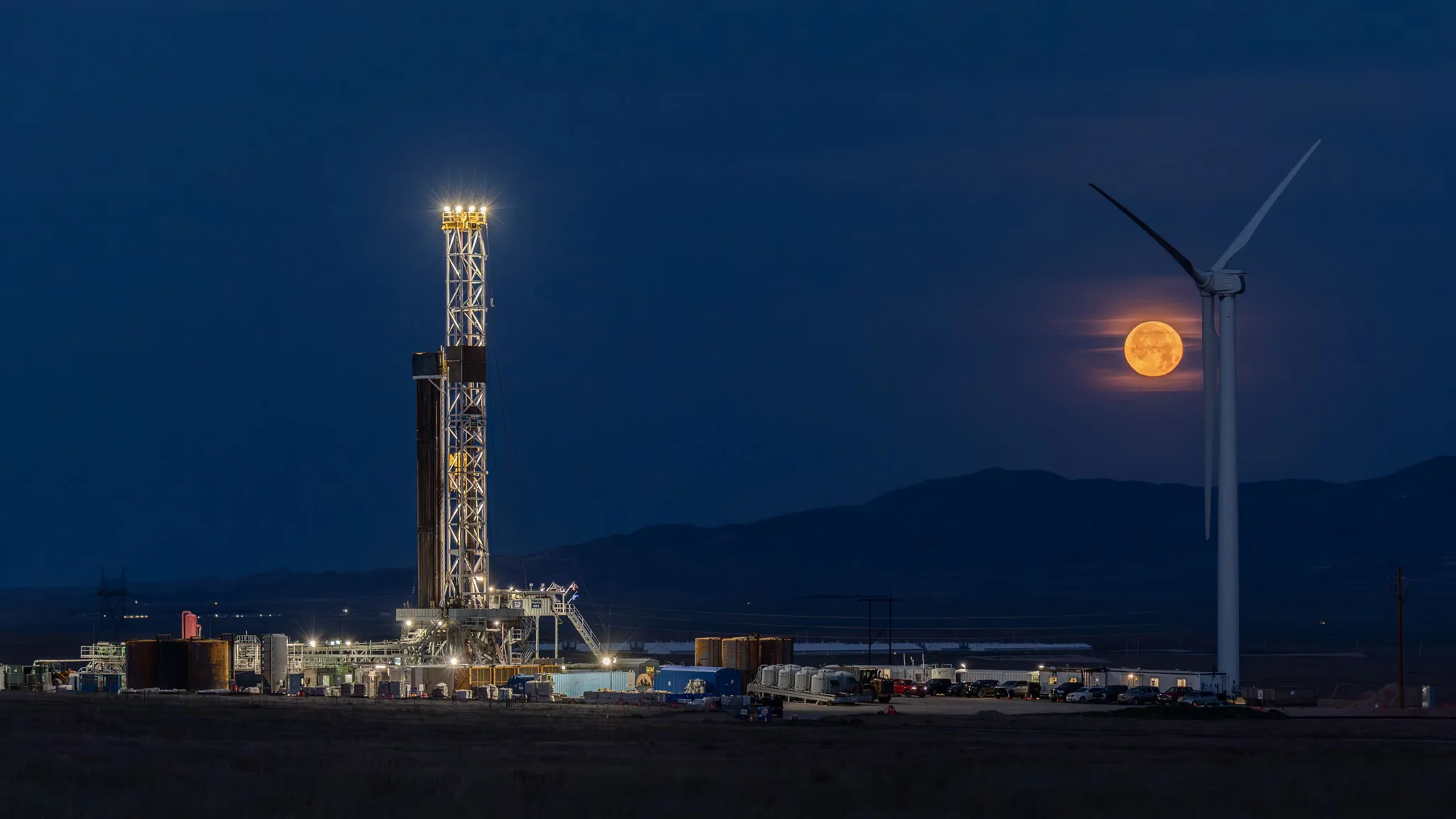
In a move perfectly timed to capitalize on the insatiable demand for electricity driven by the artificial intelligence revolution, Fervo Energy, a pioneering geothermal company, has announced a significant expansion of its contracted revenue. The company revealed in its third-quarter earnings report that its backlog has swelled to an impressive $11.9 billion, a substantial leap from the $7.2 billion recorded in the previous quarter. This surge in secured revenue underscores Fervo’s successful execution and its growing reputation for reliability in delivering critical energy infrastructure.
The recent string of successful project completions by Fervo has undoubtedly been a key catalyst for this impressive growth. Hyperscale technology companies, the titans of the digital age, are engaged in a global race to secure vast amounts of electricity to power their burgeoning AI data centers. Fervo is strategically positioned to meet this demand, with its ambitious plan to complete a 396-megawatt power plant for Google by the end of 2028. This is in addition to the company’s prior achievement of connecting its groundbreaking 100-megawatt enhanced geothermal power plant to the grid earlier this year, a project that was completed in a remarkably short 23 months, setting a new benchmark for the industry.
Both of these significant projects are situated at Cape Station in Utah, a location that Fervo’s extensive geological surveys have revealed to be a potential powerhouse for electricity generation. Initial expert assessments suggested the site could yield approximately 4 gigawatts of electricity. However, Fervo’s advanced drilling and reservoir engineering techniques have revised this estimate upwards, indicating a potential generation capacity of a staggering 8.4 gigawatts. This significant upward revision highlights the transformative potential of enhanced geothermal systems (EGS) when coupled with innovative technological approaches.
The Google project, now officially designated as Cape Google 400, will be directly connected to the grid, providing Google with a flexible and reliable power source. As explained by Fervo’s co-founder and CEO, Tim Latimer, during a recent earnings call, this grid-connected arrangement offers a distinct advantage. It allows Google the flexibility to draw power from the deal as needed for its data centers, or to sell surplus power to other customers if their immediate consumption requirements are not yet at full capacity. This dynamic capability ensures optimal utilization of the generated energy and enhances the overall economic efficiency of the project.
"We built Cape Station on our schedule. Google can develop a potential data center on their schedule, and neither party is waiting on the other," Latimer stated, emphasizing the decoupled development timelines that Fervo’s project structure enables. This agility is a crucial differentiator, particularly when compared to the often lengthy and complex construction phases of traditional large-scale power generation facilities.
Latimer’s assertion also points to a fundamental advantage that geothermal energy, particularly Fervo’s EGS model, holds over competing energy sources such as massive nuclear or conventional natural gas power plants: the inherent phased nature of its construction and deployment. Unlike monolithic power stations that require years of coordinated construction before generating any power, Fervo’s modular approach allows for a more agile and scalable build-out.
Fervo’s commitment to innovation is evident in its newer wells, which are designed to reach deeper and hotter geological formations. Each of these advanced wells is engineered to generate a gross power output of 15 megawatts. These individual wells are then interconnected to form what Fervo terms a "GeoBlock." The company’s initial GeoBlock successfully generated 33 megawatts, while more recent deployments have achieved outputs of 50 megawatts. Critically, these GeoBlocks are intentionally sized to align with the power demands of a typical data center hall. This deliberate design allows hyperscalers to bring new power capacity online incrementally, as their data center infrastructure expands and their energy needs grow, fostering a symbiotic development process.
From a business perspective, Fervo is still navigating the early stages of its growth trajectory. The company concluded the quarter with an operating loss of $43.7 million. However, this is counterbalanced by a robust financial position, with $1.9 billion in cash and cash equivalents and a manageable long-term debt of $301.6 million. This substantial liquidity provides Fervo with ample "runway" to continue its expansion and research and development efforts without immediate financial constraints.
The long-term success of Fervo hinges significantly on its ability to further reduce the cost of its power plants. While hyperscalers are currently exhibiting an urgent and somewhat price-agnostic demand for electricity, this situation may evolve. As the AI boom matures and energy markets stabilize, a greater emphasis on cost-effectiveness will likely emerge. Fervo’s current cost trajectory, however, suggests it is well-positioned to win on price in the future.
The initial phase of Fervo’s Cape Station project was completed at a cost of $7,000 per kilowatt of installed capacity. For the more recent Google project, this cost has seen a significant reduction to $5,500 per kilowatt. This substantial improvement indicates that Fervo is effectively implementing lessons learned and driving down capital expenditures through technological advancements and optimized construction processes. When factoring in available subsidies, this cost is roughly equivalent to that of a new natural gas power plant operating on fuel priced at $6 per million British thermal units (BTUs). While this is still approximately double the current market price of natural gas, the downward trend in Fervo’s costs suggests it is rapidly closing the economic gap.
The company’s ambitious long-term target is to achieve a cost of $3,000 per kilowatt. If Fervo can successfully meet this goal, it would position its geothermal power as a significantly more cost-effective option than natural gas, even at today’s historically low fuel prices. This represents a formidable challenge, but Fervo’s demonstrated progress in achieving substantial cost reductions within just a few years is compelling. This impressive track record and clear path toward cost competitiveness are likely key factors driving Google’s early and significant investment in Fervo’s technology. The strategic partnership with a major technology player like Google not only provides Fervo with substantial financial backing but also validates its technology and business model on a global scale, paving the way for further adoption and expansion in the rapidly evolving energy landscape. The implications for the broader energy sector are profound, as Fervo’s success could accelerate the transition to cleaner, more sustainable energy sources, particularly in regions with abundant geothermal resources. The ability to deliver reliable, baseload power from the earth’s heat, without the intermittency challenges of solar and wind, offers a compelling solution for the energy-intensive future of artificial intelligence and beyond.
