
 By Lina Irawan
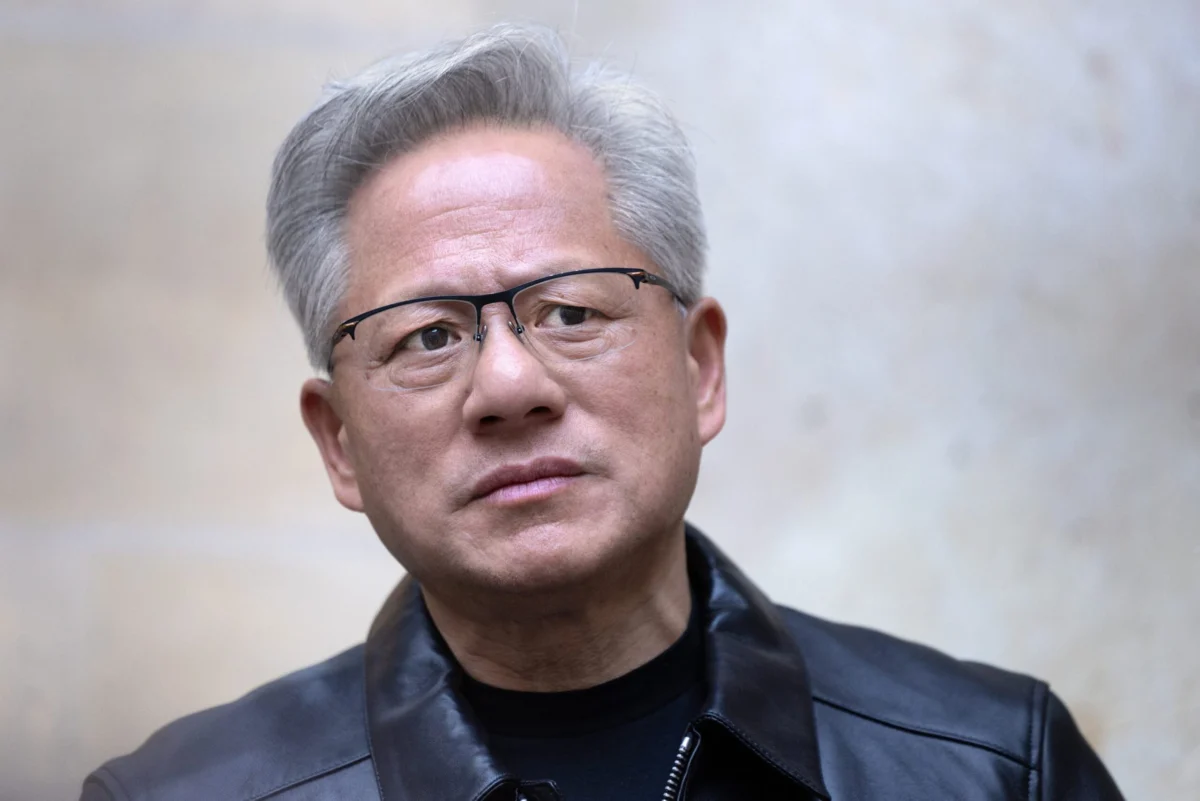
The immediate aftermath of Huang’s admission saw a flurry of activity across various prediction markets, reflecting a collective attempt by thousands of individuals to forecast the future of one of Silicon Valley’s most influential leaders and his company. Kalshi, a regulated prediction market, quickly launched an event contract focusing on Huang’s tenure. This market, asking when Huang will leave as Nvidia’s CEO, has already attracted a substantial trading volume exceeding $266,000. Current probabilities suggest a significant likelihood of his departure, with traders pegging the chance of him leaving before January 2029 at 54%. This figure is only marginally higher than the 52% probability assigned to a departure before January 2028, indicating that market participants see a relatively stable, albeit not indefinite, near-term future for Huang at the helm. For a more immediate exit, the probability drops to 33% before July 2027, suggesting that while the scandal is serious, an abrupt departure within the next few months is not the market’s primary expectation.
Beyond his corporate role, the scandal has also raised questions about Huang’s potential involvement in governmental inquiries. Another Kalshi market, with a trading volume of approximately $2,500, gauges the probability of Huang testifying before Congress. Traders currently put this chance at 46% by next January, rising sharply to 79% by next July. This reflects a widespread anticipation that the national security implications of an affair with a suspected foreign intelligence operative will likely draw scrutiny from Capitol Hill, especially given Nvidia’s critical role in advanced technology.
Meanwhile, Polymarket, a decentralized prediction market, has seen even higher engagement on the question of Huang’s leadership. A market on when his resignation or removal as CEO will be announced has drawn more than $305,000 in trading volume. Traders on Polymarket currently assess a 16% probability of an announcement by year-end, which increases to 22% by the end of March 2027. These figures, while not overwhelmingly high, nonetheless indicate a measurable segment of the market believes Huang’s long-term position is precarious. The relatively lower probabilities for immediate departure across both platforms, despite the severity of the allegations, might suggest that investors are weighing the stability of Nvidia under Huang’s leadership against the potential for significant disruption if he were to be replaced quickly.
In a more personal turn, Polymarket is also offering wagers concerning Huang’s marital status. Approximately $159,000 in bets have been placed on the probability of a divorce by March 2027, with current odds standing at 23%. This illustrates the comprehensive nature of prediction markets, which often delve into the personal lives of public figures when such matters become intertwined with their professional standing and public perception.
These event contracts surfaced barely a day after Nvidia publicly announced an internal investigation into Huang. The company’s board confirmed that Huang had acknowledged to them an intimate relationship with a business executive whom U.S. intelligence officials reportedly identified as a Chinese spy. This revelation sent shockwaves through the tech and financial worlds. Nvidia shares, a bellwether for the semiconductor and AI industries, plummeted nearly 10% since Monday morning, wiping billions off the company’s market capitalization and underscoring the severe investor apprehension stemming from the unfolding crisis.
The core of the controversy lies in the alleged identity of Huang’s extramarital partner. The accusation that she is a suspected Chinese spy elevates what would ordinarily be a private matter into a national security concern. Nvidia is not just any technology company; it is a global leader in designing graphics processing units (GPUs) that are foundational to artificial intelligence, high-performance computing, and advanced data centers. Its technology is considered vital for national competitiveness and defense, especially in the context of the intense technological rivalry between the United States and China. Any compromise of information, even seemingly benign, could have far-reaching strategic implications, potentially impacting U.S. technological superiority and economic security. The Pentagon, reportedly involved in identifying the individual as part of its broader efforts to counter economic espionage, would be acutely aware of the risks posed by such a relationship involving a CEO of a critical technology company.
Jensen Huang, as co-founder and CEO, has been synonymous with Nvidia’s meteoric rise. His visionary leadership transformed the company from a gaming graphics card manufacturer into an AI powerhouse. He is not merely an executive; he is the public face and strategic architect of Nvidia. His personal brand is deeply intertwined with the company’s identity and its market valuation. The prospect of his departure, therefore, carries significant weight, potentially destabilizing investor confidence, disrupting long-term strategic initiatives, and raising questions about succession planning at a critical juncture for the company and the industry.
This corporate scandal, with its geopolitical undertones, has provided a fertile ground for prediction markets to demonstrate their utility as real-time forecasting tools. Unlike traditional polls or expert analyses, these platforms allow users to trade on outcomes across a vast spectrum of events, from sports and politics to economic indicators and, now, high-profile corporate crises. The prices on these markets are designed to reflect the aggregated expectations of a diverse pool of traders, providing a dynamic and often prescient indicator of how events might unfold.
Prediction markets gained substantial attention during last week’s midterm elections, where they offered compelling insights into public sentiment. Traders on platforms like Kalshi, for instance, placed over $1.4 billion in wagers during that period, largely favoring Democrats to win control of both chambers of Congress. While this broad prediction ultimately proved accurate in the context of Democratic overperformance relative to initial expectations, the results further bolstered prediction markets’ reputation as robust forecasting mechanisms. They rose to particular prominence during the 2024 presidential election cycle, where early trading consistently favored Donald Trump to win, even as traditional polls indicated a closer race between him and Democratic candidate Kamala Harris. This divergence highlighted their potential to capture nuances and shifts in sentiment that might be missed by conventional polling methodologies.
However, the forecasting accuracy of prediction markets is not infallible. There have been instances where their collective wisdom did not align with the ultimate outcomes, reminding observers that they are tools reflecting current beliefs, not absolute certainties. For example, while they broadly anticipated Democratic gains in the midterms, prediction markets incorrectly favored Republicans in the Texas governor’s race and South Carolina’s Senate race, both of which Democrats ultimately won. An earlier surprise in Brazil’s presidential election also raised questions about the platforms’ reliability, where market predictions diverged from the final results. These discrepancies underscore that while prediction markets harness the "wisdom of crowds," they are still susceptible to biases, herd mentality, and unexpected real-world events that can shift probabilities dramatically.
In the case of Jensen Huang and Nvidia, the ongoing prediction markets serve as a live barometer of investor sentiment and public speculation. They are tracking not just the fate of a CEO but also the broader implications for a company at the forefront of technological innovation and the potential fallout for national security. The unfolding narrative combines elements of corporate governance, personal ethics, geopolitics, and market dynamics, creating a complex scenario that will continue to be watched closely by stakeholders worldwide. The board’s investigation, the potential for governmental intervention, and the long-term impact on Nvidia’s strategic direction remain key uncertainties, all of which are being actively priced and predicted by an eager cohort of traders across these burgeoning platforms.
