
 By admin
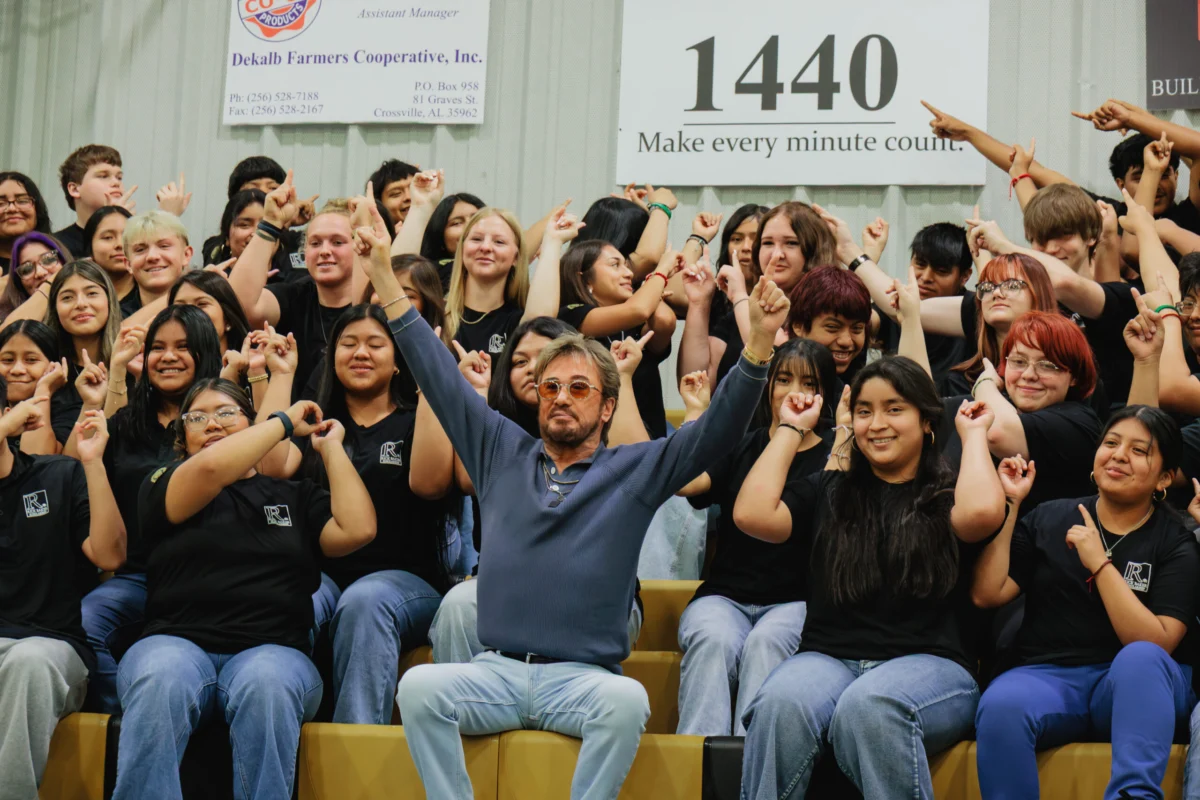
In the dazzling and often unpredictable world of Hollywood, where fortunes are made and lost with breathtaking speed, Rick Baker stands as a beacon of financial wisdom. As a distinguished wealth management expert, Baker has dedicated his career to guiding some of the industry’s most prominent figures through the complexities of managing their finances for long-term prosperity in a notoriously volatile market. His clientele, comprised of Hollywood’s elite, trust his acumen to navigate the intricate pathways of investment, wealth preservation, and strategic financial planning. Yet, for Baker himself, the true essence of wealth management extends far beyond the balance sheets of his high-profile clients. It embodies a profound commitment to philanthropy, a principle he has actively championed for over a decade through a scholarship program deeply rooted in his humble origins in rural Alabama.
This inspiring facet of Baker’s life was recently highlighted on the latest episode of Variety’s acclaimed podcast, "Strictly Business." As the winter holidays approach, Baker shared a compelling narrative that illustrates the transformative power of giving back, offering listeners a roadmap for those with the means to make a tangible difference in the lives of others. Complementing Baker’s heartfelt account, Sean Weissbart, a distinguished tax expert and partner at Blank Rome in New York, provided crucial insights into significant shifts in federal tax rules governing charitable giving, set to take effect for the 2026 tax year.
The full "Strictly Business" podcast episode, offering an in-depth exploration of these themes, is available for listeners to experience.
Baker’s personal journey is a testament to the profound impact of seizing educational opportunities. Hailing from modest beginnings, his own life trajectory was irrevocably altered when he received a scholarship to Auburn University. This pivotal moment set him on a path that would eventually lead him to establish a highly respected wealth management practice in Beverly Hills, a career he has meticulously cultivated over the past 35 years and continues to build upon. The memories of his formative years, spent on a small farm in Crossville, Alabama, remain indelibly etched in his mind, serving as a constant reminder of the challenges and triumphs of his upbringing.
"I grew up in rural Alabama with two parents who were Depression kids," Baker recounted, his voice tinged with the echoes of his past. "My dad could not read or write. I was fortunate enough to get an academic scholarship to Auburn University, and then later I attended the Wharton Business School. During that path, I learned firsthand how important education was. And so I decided to go back and start giving back in my hometown of Crossville, Alabama. A very, very rural community, about 3,000 in population. It has one red light that’s actually not even a red light. It’s a blinking yellow light. And I go back and I try to do things that will change that community and make it better and just pay it forward."
The scholarship program, spearheaded by Baker, is designed to provide essential support for secondary education tuition. Beyond direct academic funding, the foundation has established a comprehensive mechanism to assist local youth with the ancillary costs that often present significant barriers to education. These vital supports include assistance with food, housing, and transportation, addressing the practical realities that can hinder a student’s ability to attend school. Baker’s deep emotional connection to this initiative is palpable as he articulates the profound satisfaction derived from helping to remove even the smallest obstacles to achievement for underprivileged children.
"I remember what it was like in rural Alabama and not having anything," Baker shared, his voice resonating with empathy. "I remember what it was like. And I never forget that because there’s such a thin line between being mega rich and mega, mega successful and not having anything – being the guy that’s struggling from paycheck to paycheck. It’s a thin line. And we just have to remember that if we are fortunate enough to be able to do something for others, we need to do that because it could easily be taken away." This sentiment underscores the fragility of fortune and the moral imperative to share prosperity.
In a separate, yet equally crucial, discussion, Sean Weissbart offered expert analysis on the forthcoming changes to charitable giving tax rules. These regulations, enshrined in legislation enacted last year, commonly referred to as the "Big Beautiful Bill," are poised to reshape the landscape of philanthropic contributions.
"There are a whole new set of rules that were enacted in 2026 that changed the landscape for how one goes about getting an income tax deduction for charitable giving," Weissbart explained, setting the stage for a complex but vital subject.
A particularly significant stipulation introduced by these new rules is the non-deductibility of the first half-percent of an individual’s adjusted gross income (AGI) for charitable contributions. Weissbart elaborated on the practical implications of this change: "A half-percent of a person’s adjusted gross income is taken off the top of any tax deduction for a charitable donation." To illustrate, he provided a concrete example: "For a person making $500,000 a year, one-half percent is $2,500. Therefore, if the person makes $10,000 in charitable donations, only $7,500 qualifies for a write-off." This adjustment means that a portion of every charitable donation will no longer be eligible for tax deductions, a change that could impact the net cost of giving for many individuals.
Against the backdrop of a volatile stock market, which recently saw the Anthropic IPO generate substantial wealth and a surge of paper millionaires, Weissbart also highlighted the strategic advantages of donating appreciated stock. He emphasized that such contributions can serve as a highly effective means to support worthy causes while simultaneously mitigating the impact of high capital gains taxes.
"We’re talking about a very, very significant savings that actually mitigates the loss of that asset on your balance sheet," Weissbart stated, underscoring the dual benefit of this philanthropic strategy. For individuals holding significant unrealized gains in their stock portfolios, donating these assets directly to charity offers a way to realize those gains tax-free, effectively reducing their tax liability while making a meaningful contribution. This approach is particularly advantageous in an environment where capital gains taxes can be substantial.
The practice of donating appreciated securities has become an increasingly popular and tax-efficient method for charitable giving. When an individual donates stock that has increased in value since purchase, they can typically deduct the fair market value of the stock at the time of donation, provided they have held it for more than one year. Crucially, they also avoid paying capital gains tax on the appreciation. This can result in a far greater charitable impact compared to selling the stock and then donating the cash proceeds, as the donor effectively receives a tax deduction on the full appreciated value, and the charity receives the full market value without incurring brokerage fees or taxes.
Weissbart’s insights also touch upon the broader economic context that influences charitable giving. The ability of individuals to contribute to charitable causes is often closely tied to their financial well-being, which in turn is influenced by market performance and economic stability. Periods of significant wealth creation, such as those following successful IPOs, can present opportune moments for increased philanthropic activity. However, as Baker’s own story illustrates, the motivation to give back is not solely dependent on personal affluence; it stems from a deep-seated sense of empathy and a recognition of shared humanity.
The ongoing dialogue surrounding tax policy and its intersection with philanthropy is critical for both donors and charitable organizations. As Weissbart points out, understanding the nuances of tax laws, especially as they evolve, is essential for maximizing the impact of charitable contributions. The upcoming changes for 2026, while potentially introducing new complexities, also serve as a catalyst for renewed discussion and strategic planning around giving. Financial advisors like Baker and tax experts like Weissbart play a vital role in helping individuals navigate these complexities, ensuring that their philanthropic endeavors are both impactful and tax-efficient.
Baker’s commitment to his hometown of Crossville, Alabama, a community facing its own unique set of challenges, is a powerful reminder that philanthropy is not confined to metropolitan centers or the exclusive domain of the ultra-wealthy. It is a principle that can be enacted anywhere, by anyone, with the intention to make a positive difference. His foundation’s multifaceted approach, addressing not only tuition but also the fundamental needs of students, demonstrates a holistic understanding of the barriers to educational success. This comprehensive support system is designed to foster a more equitable environment where talent and determination can flourish, regardless of socioeconomic background.
The juxtaposition of Baker’s personal narrative of overcoming adversity through education and his current role as a financial architect for Hollywood’s elite creates a compelling synergy. It highlights the cyclical nature of opportunity and the profound responsibility that comes with success. His unwavering dedication to "paying it forward" is a beacon of inspiration, encouraging a broader societal engagement with philanthropy. The "Strictly Business" podcast episode, featuring both Baker and Weissbart, serves as a timely and valuable resource for anyone seeking to understand the motivations behind giving and the practicalities of making charitable contributions in an evolving financial and regulatory landscape.
The image of wealth manager Rick Baker with students at his hometown high school in Crossville, Ala., encapsulates the heart of his philanthropic mission. It is a visual representation of bridging worlds – the sophisticated financial realm of Beverly Hills and the earnest aspirations of rural youth. This connection underscores Baker’s belief that education is the ultimate equalizer and that investing in the future of young people is one of the most impactful forms of wealth management. His story is a powerful reminder that true wealth is not solely measured by financial assets but by the positive legacy one leaves behind and the lives one touches. As the holiday season encourages reflection and generosity, Baker’s example provides a potent call to action, urging individuals to consider how they, too, can leverage their resources to create lasting change.
