
 By admin
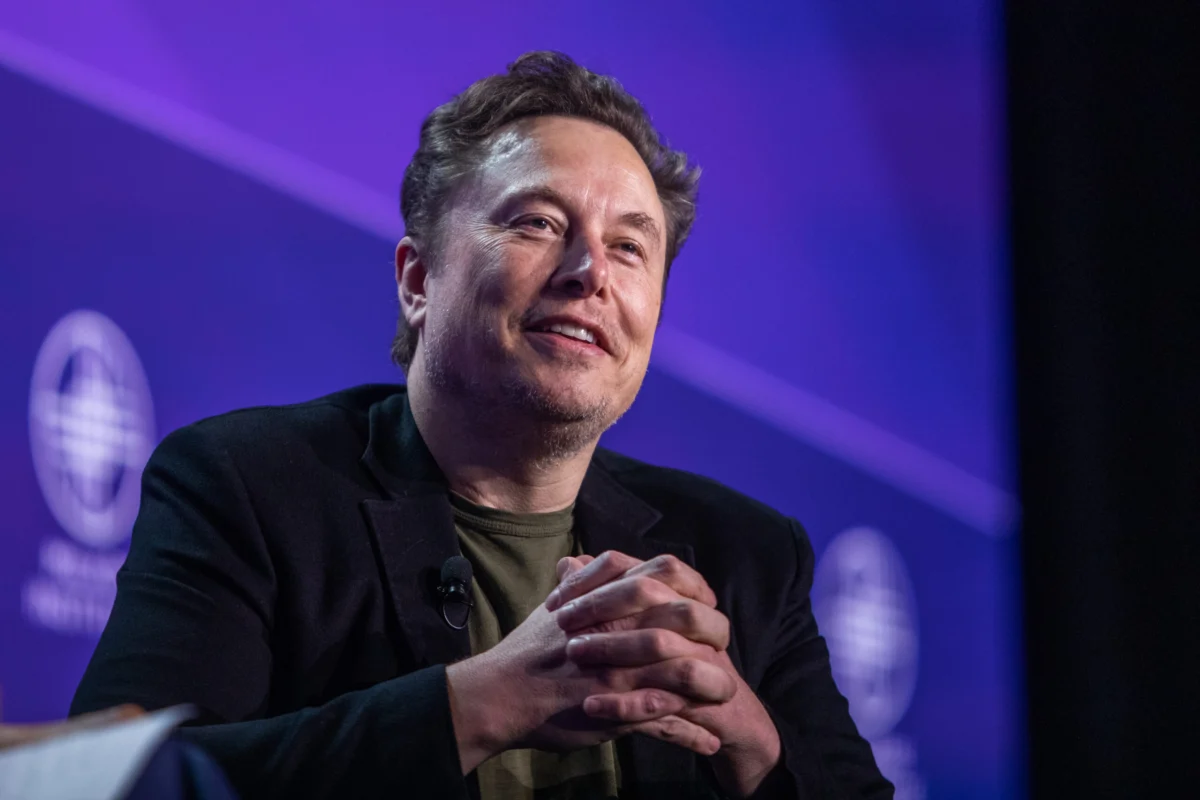
In a stunning electoral upset that defied massive financial investment, billionaire Elon Musk’s substantial backing of Republican candidates in the 2026 midterm elections proved to be a costly miscalculation. The GOP faced a sweeping defeat, ceding control of both the House and the Senate to the Democratic Party, according to preliminary results that indicate a significant shift in the American political landscape. Musk, a figure whose influence often extends beyond his vast business empire, poured an estimated $500 million into Republican campaigns, a sum that now represents a colossal return on investment in the negative. A significant portion of this expenditure, approximately $200 million, was specifically targeted at unseating Senator-elect James Talarico in Texas, a race that ultimately saw the Democratic challenger prevail.
The repercussions of this electoral setback were palpable in Musk’s own public commentary. Appearing virtually from China at the prestigious New York Times 2026 DealBook Summit, the tech mogul, who is part of President Donald Trump’s American delegation to the region, expressed a stark acknowledgment of his failed political gambit. "I feel pretty foolish about having spent so much money and not seeing much for it," Musk conceded, his words carrying the weight of a significant financial and political misjudgment. He tempered his admission with a caveat, adding, "or maybe it would have been much worse without that." This statement, delivered via videoconference, offered a rare glimpse into the personal reflection of a man accustomed to charting his own course with often unpredictable outcomes.
The DealBook Summit, a platform for influential figures in business and technology, also saw Skydance CEO David Ellison discuss Musk’s multifaceted business interests. Ellison revealed that Musk, whose leadership roles span the helm of SpaceX as founder, CEO, and chief engineer, and Tesla as CEO, is an investor in Skydance. This revelation comes in the wake of Skydance’s significant corporate maneuver, the megamerger that formed the new entity from Paramount and Warner Bros. Discovery, a deal that has reshaped the entertainment industry. While the details of Musk’s investment in Skydance were not a focal point of his own appearance at the summit, it underscored the interconnectedness of his ventures and his broader financial footprint across various sectors.
Shifting his focus back to the political arena, Musk offered a nuanced perspective on the newly elected governor of Texas, Gina Hinojosa. Despite his Republican-aligned spending, Musk expressed a degree of optimism regarding Hinojosa’s tenure. "I think she is going to be quite moderate," he stated. "I don’t think she’s sort of a far-left governor, and based on everything I’ve heard about her, I think things will be fine in Texas with [Hinojosa] as governor." This assessment suggests a pragmatic approach to state-level politics, even in the face of a national electoral tide that ran counter to his preferred party. It also hints at a potential willingness to engage with political figures across the aisle, provided their policies align with his perceptions of moderation and stability.
Musk, who consistently ranks as the world’s wealthiest individual, also took the opportunity to distance himself from the "MAGA" movement, despite past associations. "I’m not MAGA," he declared, a statement that may surprise many given his previous public appearances, including wearing "Make America Great Again" hats. He also recalled his brief tenure as head of DOGE, an ad-hoc cost-cutting department within the Trump administration in 2025, which he exited as a "special government employee" amidst a dispute with the former president. His current assertion of not being "MAGA" appears to be a deliberate attempt to redefine his political identity, or at least to avoid being narrowly categorized.
Elaborating on his political stance, Musk articulated a critique of what he perceives as the tribal nature of modern politics. "I’m not sure what MAGA means," he admitted, before elaborating on his broader view. "But if that means sort of blind adherence to a set of policies by the Republican Party then I certainly don’t have that. I think there are positives and negatives in both parties… but politics is very tribal, and for a lot of people. A lot of people cannot see any good in the other party, and they cannot see any bad in their own party because they’re more or less invested in their party like it’s their hometown sports team, and it’s just their team, and they won’t accept that there’s anything that the other team can do that’s good or anything that their team can do that’s bad." This analogy highlights his concern about the erosion of critical thinking and objective analysis in political discourse, a phenomenon he sees as hindering productive dialogue and compromise.
Beyond the political arena, Musk touched upon significant developments within the business world. He revealed that SpaceX and Tesla are actively exploring a potential merger, a proposition that marks a significant shift from his previous stance. "There’s more and more areas of interaction or overlap with SpaceX and Tesla that didn’t exist before," he explained. "So if you’d asked me five years ago, do I ever think there’s any purpose in SpaceX and Tesla getting together? I would have said no." This evolving perspective is driven by an increasing synergy between the two companies, particularly in areas of technological development and operational efficiency. Musk framed the decision as a matter of shareholder value, stating, "Really, it’s just a question of do SpaceX and Tesla execute better together and create more value than if they’re apart… and that would be up to the shareholders to decide." This indicates a potential move towards greater integration, a decision that could have profound implications for both companies and the broader industries they operate in.
The summit also provided a platform for Musk to weigh in on the recent resignation of Nvidia CEO Jensen Huang. Huang stepped down following revelations of extramarital affairs, including one with an alleged Chinese spy and an Nvidia employee. Musk, who has publicly suggested Huang should be reinstated as CEO, likened the departure of the AI company’s chief executive to "kicking Michael Jordan off your team." While acknowledging that Huang "certainly made some mistakes," Musk’s sentiment suggests a belief in Huang’s indispensable talent and leadership, even amidst personal transgressions. This perspective highlights Musk’s tendency to prioritize performance and innovation, sometimes seemingly over personal conduct, a trait that has characterized his own career.
During his interview with Andrew Ross Sorkin of the New York Times, Musk also addressed the controversy surrounding Starlink’s recent restrictions on satellite internet access for the Ukrainian military. The conflict, exacerbated by Russia’s ongoing war in Ukraine, had led to Starlink’s services being curtailed in certain offensive operations. Musk reiterated his initial position, stating, "From the beginning, I’ve said that Starlink is a civilian system. It is not meant to be used for offensive drone strikes that kill people." He emphasized the distinction between Starlink and Starshield, a separate system controlled by the U.S. government, and expressed his reluctance to be personally responsible for decisions that could lead to casualties. "If you want to do that you need to do Starshield, which is a separate system that is controlled by the U.S. government, but do not ask me as a private individual to make kill decisions that sometimes result in the loss of innocent lives, not just soldiers," he asserted. This stance underscores the ethical complexities of deploying advanced technology in active conflict zones and Musk’s discomfort with playing a direct role in lethal decision-making.
Reflecting on his participation in past DealBook conferences, the article recalls Musk’s fiery remarks at the 2023 event. There, he vehemently criticized advertisers who had withdrawn their support from X (formerly Twitter) in response to his endorsement of an antisemitic conspiracy theory. He characterized their actions as "blackmail" and, directly addressing then-Disney CEO Bob Iger by name, issued a blunt and expletive-laden dismissal: "Go fuck yourself." This past incident serves as a reminder of Musk’s often confrontational style and his willingness to engage in public spats, even when facing significant backlash. The contrast between his past defiance and his current more reflective tone at the 2026 summit suggests a possible evolution in his public persona, or at least a strategic adjustment in how he navigates public scrutiny. The political and business landscapes continue to be shaped by Musk’s pronouncements and actions, and the 2026 midterms have undoubtedly added another complex chapter to his already eventful public life.
