
 By admin
The debut of the new Legend of the Seas comes at a time when the global cruise market is projected to reach unprecedented heights. According to recent industry reports from the Cruise Lines International Association (CLIA), passenger volume is expected to hit 40 million annually by 2027, driven largely by a surge in multi-generational travel and a renewed interest in "destination-immersion" itineraries. Royal Caribbean has positioned the Legend of the Seas specifically to capture this demographic, offering a ship that is large enough to provide the "wow" factors the brand is known for, yet refined enough to compete with the likes of Celebrity Cruises or Viking.
Architectural Innovation: The Modern "Ship of Glass"
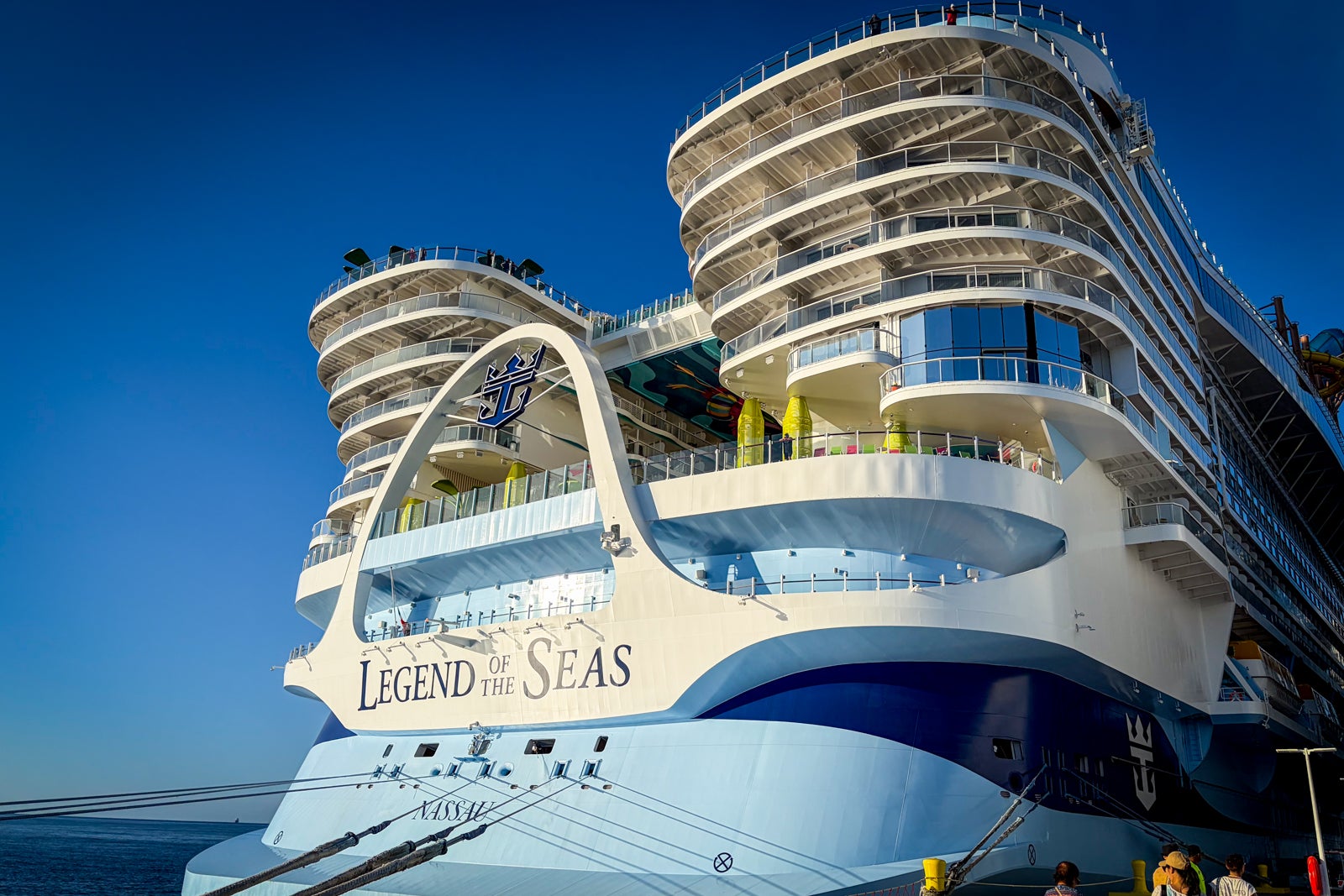
The design philosophy of the 2026 Legend of the Seas pays homage to its predecessor’s nickname by utilizing over 120,000 square feet of reinforced, energy-efficient smart glass. This is not merely an aesthetic choice; the ship’s "Aura" exterior allows for panoramic views from nearly 90% of the public spaces, creating a seamless visual connection between the passengers and the ocean. The centerpiece of this architectural feat is the "Grand Atrium," a five-deck vertical space that uses transparent OLED technology embedded within the glass walls to display digital art, real-time navigational data, or celestial maps during night sailings.
Beyond the aesthetics, the hull design of the Legend of the Seas utilizes the latest in air lubrication technology. By creating a layer of microscopic air bubbles between the hull and the water, the ship reduces drag significantly, leading to a 10% reduction in fuel consumption compared to ships of similar tonnage built just five years ago. This engineering marvel is paired with a dual-fuel propulsion system capable of running on Liquefied Natural Gas (LNG) and green methanol, signaling the company’s aggressive push toward its "Destination Net Zero" goal by 2050.
Accommodations: The Evolution of the Suite Life
Onboard the Legend of the Seas, the traditional cabin has been reimagined as a "smart sanctuary." Each of the 2,100 staterooms is equipped with the "StarLink Maritime" ecosystem, providing gigabit speeds that allow for seamless remote work or high-definition streaming—a necessity in the post-pandemic digital nomad era. However, the true highlight is the "Royal Collection," an exclusive enclave of suites that occupies the ship’s upper three decks.
The "Solaris Penthouse," the ship’s premier accommodation, features a private cantilevered infinity pool that hangs over the side of the vessel, offering an unobstructed view of the horizon. These suites also come with "Genie 2.0" service—a dedicated concierge team trained in high-end hospitality and local cultural expertise, ensuring that every shore excursion and onboard request is handled with surgical precision. For the first time, Royal Caribbean has also introduced "Solo-Plus" studios, recognizing the growing trend of solo travelers who desire high-end amenities without the "single supplement" financial burden.
Culinary Excellence and Gastronomic Diversity
The dining landscape on the Legend of the Seas reflects a shift away from the massive, centralized dining rooms of the past toward "Micro-Kitchens" and "Chef-Led Ateliers." While the ship retains its signature Windjammer marketplace, it has been transformed into a series of live-cooking stations where the menu changes daily based on the ship’s current port of call. If the ship is docked in Cozumel, the marketplace features authentic Yucatecan cuisine sourced from local farmers; if in Civitavecchia, the focus shifts to Roman trattoria staples.
One of the most anticipated additions is "The Alchemist’s Table," an experimental dining venue that utilizes molecular gastronomy and augmented reality (AR) to tell a story through food. Guests wear lightweight AR glasses that project historical narratives or ingredient origins onto the table as they eat. Furthermore, the ship features the "Zero-Waste Galley," a specialty restaurant where every ingredient is utilized to its fullest potential, and all organic waste is processed via an onboard biodigester to produce energy for the ship’s hydroponic garden, which grows microgreens and herbs used across all 15 dining venues.
Entertainment and the "Experience Economy"
In 2026, entertainment is no longer just about Broadway-style shows; it is about immersion. The Legend of the Seas introduces the "Sphere Theatre," a 360-degree performance space that combines live acrobatics with holographic projections. Unlike the AquaTheater found on Oasis-class ships, the Sphere is an all-weather indoor venue that uses kinetic flooring to simulate different environments, from the rolling waves of a storm to the stillness of a mountain peak.
For the younger demographic, the "Tech-Quarium" replaces traditional arcade spaces. This area serves as a STEM-focused learning hub where children and teenagers can participate in drone racing, underwater robotics, and VR reef exploration. Royal Caribbean’s partnership with major tech firms has also resulted in the "Legend Quest," an enterprise-grade alternate reality game that spans the entire ship, encouraging guests to solve puzzles and interact with the environment to unlock "Crown & Anchor" loyalty points.
Sustainability: Leading the Green Revolution
The maritime industry faces increasing pressure from global regulators, including the International Maritime Organization (IMO), to drastically reduce carbon emissions. The Legend of the Seas is a testament to what is possible when capital investment meets environmental stewardship. In addition to its LNG capabilities, the ship is one of the first in the fleet to feature a large-scale hydrogen fuel cell battery array. This system allows the ship to operate entirely on battery power while in port, eliminating "hot-docking" emissions that contribute to local air pollution in sensitive coastal ecosystems.
Water conservation is another pillar of the ship’s operations. The onboard desalination plant is 30% more efficient than previous models, and a state-of-the-art "Advanced Wastewater Purification" (AWP) system ensures that any water returned to the sea is cleaner than the surrounding ocean water. These initiatives are not just about compliance; they are a response to the "conscious traveler" who, in 2026, scrutinizes the environmental footprint of their vacation choices as much as the price tag.
Market Impact and the "Points Guy" Perspective
For savvy travelers and loyalty enthusiasts, the Legend of the Seas offers new ways to maximize value. With the integration of the "Royal Way" payment system, guests can now use a combination of cash and "Crown & Anchor" points for onboard purchases, including specialty dining and spa treatments, at a fixed valuation. This move mimics the "Pay with Points" systems found in the airline industry, providing more flexibility for frequent cruisers.
Expert analysis suggests that the Legend of the Seas is Royal Caribbean’s answer to the "premium-plus" segment. While the Icon of the Seas remains the king of family-oriented "mega-vacations," the Legend is designed for the traveler who wants the amenities of a large ship but the atmosphere of a private club. "The industry is bifurcating," says maritime analyst Dr. Elena Rossi. "We are seeing a move toward either massive floating cities or highly curated luxury experiences. The Legend of the Seas is trying to inhabit the sweet spot in the middle, and if the early booking numbers are any indication, they have succeeded."
Navigating the Future
As the Legend of the Seas embarks on its inaugural season, it carries with it the weight of a legacy and the promise of a high-tech future. The 8-minute read of a review or a glance at a brochure cannot fully capture the sensory experience of standing in the "Ship of Glass" as it cuts through the Mediterranean or the Caribbean. It is a vessel that honors its history while refusing to be defined by it.
For Royal Caribbean, the stakes are high. The competition from Disney’s expanding fleet and the entry of new luxury players like Ritz-Carlton Yacht Collection has forced the brand to elevate its game. By focusing on sustainability, technological integration, and a more refined aesthetic, the Legend of the Seas is not just a new ship; it is a blueprint for the next decade of cruising. Whether you are a loyalist who remembers the original 1995 vessel or a first-time cruiser looking for the pinnacle of 2026 travel, the Legend offers a compelling argument that the best days of cruising are not behind us, but rather just over the horizon.
Ultimately, the success of this new era will be measured by more than just occupancy rates or environmental metrics. It will be measured by the stories told in the Grand Atrium, the memories made in the Sphere Theatre, and the quiet moments of reflection on a glass-walled balcony at sunset. As the world becomes more digital and disconnected, the Legend of the Seas seeks to provide the one thing technology cannot replicate: the profound, ancient human connection to the sea. Through this lens, Royal Caribbean hasn’t just built a ship; they have built a bridge to the future of travel.
