
 By Rifan Muazin
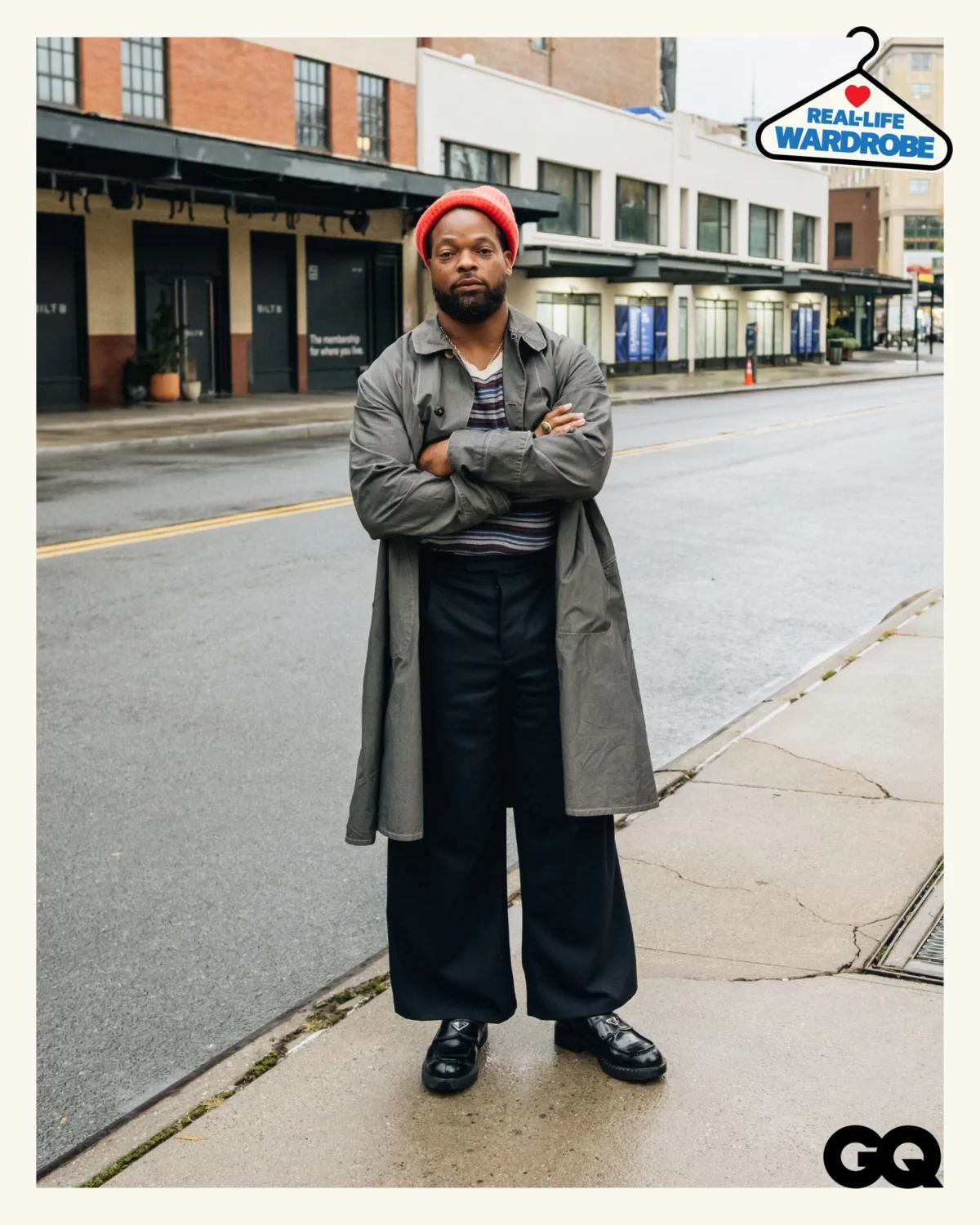
When you have reached the absolute summit of professional football—securing a Super Bowl ring, earning three consecutive Pro Bowl selections, and serving as a foundational pillar of the Seattle Seahawks’ "Legion of Boom," arguably the most terrifying defensive unit of the 21st century—the traditional trajectory involves a comfortable transition into broadcasting or coaching. For Michael Bennett, however, the path of least resistance was never an option. After an 11-year NFL career that concluded in 2020, the 41-year-old defensive end chose to trade his helmet for a drafting compass, enrolling in the University of Hawaii to study architecture and Seattle’s Heritage School of Interior Design to master the nuances of spatial aesthetics. This was not a hobby; it was a total recalibration of identity. Bennett’s metamorphosis from a disruptive force on the line of scrimmage to a thoughtful creator at the helm of Studio Kër represents a profound case study in how elite athletes can successfully navigate the "death" of their first career to find a second, perhaps more meaningful, life in the arts.

The decision to walk away from the NFL at age 34 was rooted in a calculated assessment of the "body versus the mind." While many players struggle with the loss of the spotlight, Bennett was preoccupied with the preservation of his future. The NFL’s "Legion of Boom" era, roughly spanning 2011 to 2018, was characterized by a brand of physical dominance that left an indelible mark on the league, but it also took a staggering toll on its participants. Statistics from the Department of Veterans Affairs and various neurological studies suggest that the repetitive head impacts inherent in defensive line play carry long-term risks. For Bennett, the question wasn’t just about whether he could still play, but what kind of man would be left for his family if he continued. He describes the transition as a choice between chasing the "ego" of the athlete or embracing the "growth" of the human. He sought to conquer the mind with the same ferocity he once used to conquer offensive tackles, refusing to leave his wife and three daughters with a "broken man."

This intellectual pursuit led him to the intersection of politics, social justice, and design. During his playing days, Bennett was one of the league’s most vocal activists, frequently using his platform to address systemic inequality and police brutality. As his career wound down, he began to view these issues through the lens of the built environment. Inspired by the ideological debates between Booker T. Washington and W.E.B. Du Bois—specifically the concept of the "Talented Tenth" and the necessity of Black intellectualism being tethered to the act of "making"—Bennett realized that the systems he sought to change were, at their core, designed systems. He posits that architecture is essentially "empathy for space," and that low-income, non-gentrified neighborhoods often suffer from a lack of empathetic design. Through Studio Kër, Bennett aims to use the language of the African diaspora as a form of resistance, reclaiming forms and materials that have been historically marginalized or ignored by the Western architectural canon.

The debut of Studio Kër’s first collection, "We Gotta Get Back to the Crib," signaled Bennett’s arrival as a serious contender in the design world. The 11-piece avant-garde furniture line moved beyond the trauma-centric narratives often associated with Black history, focusing instead on the "essence of Blackness"—the warmth of a grandmother’s home, the geometry of West African dwellings, and the communal love inherent in the culture. His sophomore effort, which he is currently developing, delves into the concept of "African Brutalism." Traditionally, Brutalism is an architectural style characterized by raw, exposed concrete and massive, monolithic forms—a style often associated with institutional coldness. Bennett’s reinterpretation seeks to find the "sweetness" and "abstraction" in the raw materials found in both West Africa and the urban American "ghetto," turning these references into high-end furniture. He cites the late Virgil Abloh as a spiritual predecessor, particularly in Abloh’s ability to leave "crumbs" of the unspoken past within modern objects.

Bennett’s creative output is not limited to furniture. He is currently finalizing a spoken-word album titled E-Nigg-Ma, a project that he distinguishes sharply from the stereotypical "athlete-turned-rapper" trope. Drawing inspiration from Gil Scott-Heron and The Last Poets, Bennett utilizes the medium to humanize the Black experience and critique the ways in which American society "suffocates" Blackness. He argues that while many athletes rap about the wealth they gained through play, his spoken-word project is an intellectual hustle, a deliberate effort to breathe life into cultural features that are often suppressed. This sonic exploration is a natural extension of his daily rituals; he credits Miles Davis’s "Flamenco Sketches" as a mandatory daily listen, a piece of music that provides the "in-between" sounds and riffs necessary for his design process.

Central to Bennett’s evolution is his role as a father to three daughters: Peyton, Blake, and Ollie. He credits fatherhood with teaching him a brand of vulnerability that the hyper-masculine world of the NFL often discourages. In the league, masculinity is often equated with the "hunt," but Bennett has adopted the philosophy of the "true samurai"—one who knows he can strike but chooses to remain gentle. Seeing his daughters grow and witnessing his wife’s resilience has provided him with a new metric for success. To Bennett, a Super Bowl trophy is a fleeting, replaceable object; his children are his "greatest accomplishments" and his most significant "makes." This shift in perspective has allowed him to embrace a more holistic humanity, one that values the "PhD of the craft" over the raw ego of the scoreboard.

Style, for Bennett, is another arena of rigorous practice rather than superficial display. Known as "Runway Mike" among his peers, he has long been a devotee of high fashion, though his approach is far more cerebral than the "tunnel style" currently popularized in the NBA and NFL. Bennett is a vocal critic of the manufactured nature of athlete fashion, where players often appear to be "worn by the clothes" rather than expressing a genuine identity. He favors the "Birth of the Cool" aesthetic—the impeccable, tailored grace of Sidney Poitier and Miles Davis—and incorporates pieces from Issey Miyake, Maison Margiela, Prada, and Wales Bonner. His preference for Issey Miyake stems from the designer’s commitment to innovation and uniformity, qualities Bennett seeks to emulate in his own work. He has even begun designing his own bespoke garments, including jumpsuits and studio attire, with plans to release limited-run "studio shirts" for other designers.

Bennett’s transition is supported by a broader trend of "professional pivoters" in the modern economy, where the average person will change careers multiple times in their life. However, for a professional athlete, this change is compounded by the loss of a very specific, high-adrenaline lifestyle and a public identity formed in their youth. Psychologists often point to the "identity foreclosure" that athletes face, where they commit to the role of "player" so early that they fail to explore other facets of their personality. Bennett’s success lies in his refusal to be "boxed in." He understands that public perception is often a static image of who a person used to be, whereas growth requires the courage to "say fuck everybody" and practice a new craft with obsessive dedication.

As he looks toward the future, Michael Bennett is building a legacy that transcends the 100-yard field. Whether he is sketching furniture in his studio, playing tennis five days a week with the ambition of a Wimbledon contender, or writing spoken-word poetry, he remains a "student of whatever he does." His life is a testament to the idea that the end of a sports career is not a retirement, but a graduation. In the world of design, where empathy and resistance meet, the former defensive end has found a new way to impact the world—not by tackling opponents, but by shaping the spaces they inhabit. Through Studio Kër, Bennett is proving that the most dominant defensive players are often the most sensitive observers of the human condition, and that the greatest "boom" one can create is the silent, steady expansion of the mind.
