
 By admin
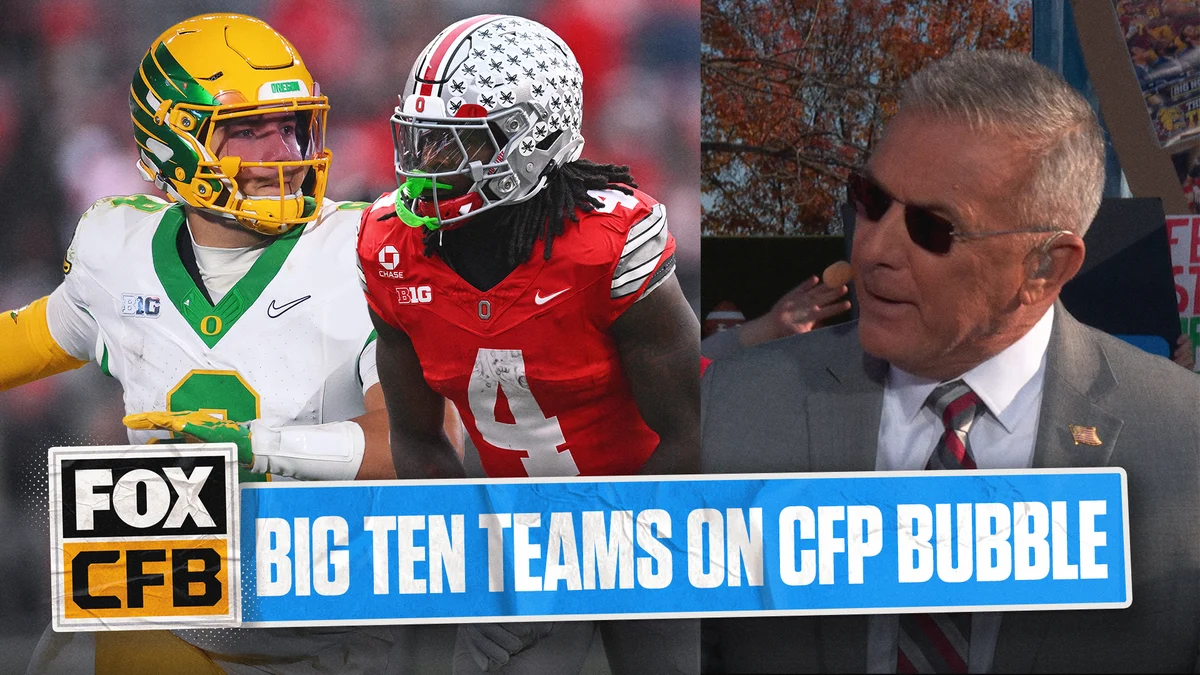
The landscape of the College Football Playoff picture, as revealed in the latest rankings, presents a compelling narrative for the Big Ten Conference, with only two teams currently holding spots within the coveted top 10. No. 4 UCLA and No. 8 Indiana, both formidable contenders, represent the conference’s current stronghold. However, the question lingers: can another Big Ten program defy the odds and carve out a path to the postseason elite? Tuesday’s rankings offered a tantalizing glimpse into this possibility, showcasing three additional Big Ten teams clustered within the 13-15 range: Oregon, Ohio State, and Iowa. While the Ducks and Buckeyes each carry three losses on their respective records, the Iowa Hawkeyes, boasting an impressive 8-2 standing, are still in pursuit of their program’s inaugural College Football Playoff berth. This begs a crucial question for college football enthusiasts and analysts alike: which of these three teams, should they navigate a challenging path to victory and benefit from favorable outcomes elsewhere, possesses the most potent ability to disrupt the playoff field and potentially "wreak havoc"?
On the latest installment of "Big Noon Kickoff," a panel of esteemed football minds – Mark Ingram, Urban Meyer, and Chris "The Bear" Fallica – delved into this very question, dissecting the strengths and potential of each of these Big Ten hopefuls. Their insights offer a nuanced perspective on who might emerge as the most dangerous dark horse from this intriguing group.
Mark Ingram: The Resurgent Oregon Ducks
Mark Ingram, a former Heisman Trophy winner and current college football analyst, threw his support behind the Oregon Ducks, arguing that they have transformed into the team many anticipated at the season’s outset. "This is the team that we expected from the start of the season," Ingram declared. He pointed to the significant impact of Jay Johnson taking over playcalling duties, which has evidently ignited an "explosive and dynamic" offense. A key factor in this resurgence, according to Ingram, is the confident play of quarterback Dylan Raiola. "Dylan Raiola is playing confidently and pushing the ball downfield," Ingram noted, highlighting Raiola’s ability to stretch defenses and make critical throws.
Beyond the offensive fireworks, Ingram emphasized the defensive transformation Oregon has undergone. "But then, defensively, this team has been dominant the last three-to-four games during this win streak," he observed. This dual-threat capability, with an offense firing on all cylinders and a defense playing at a high level, positions the Ducks as a legitimate playoff contender. Ingram concluded his assessment with a bold statement: "So, you talk about Oregon and getting the best 12 teams into the playoff, Oregon looks like they’re certainly that right now."
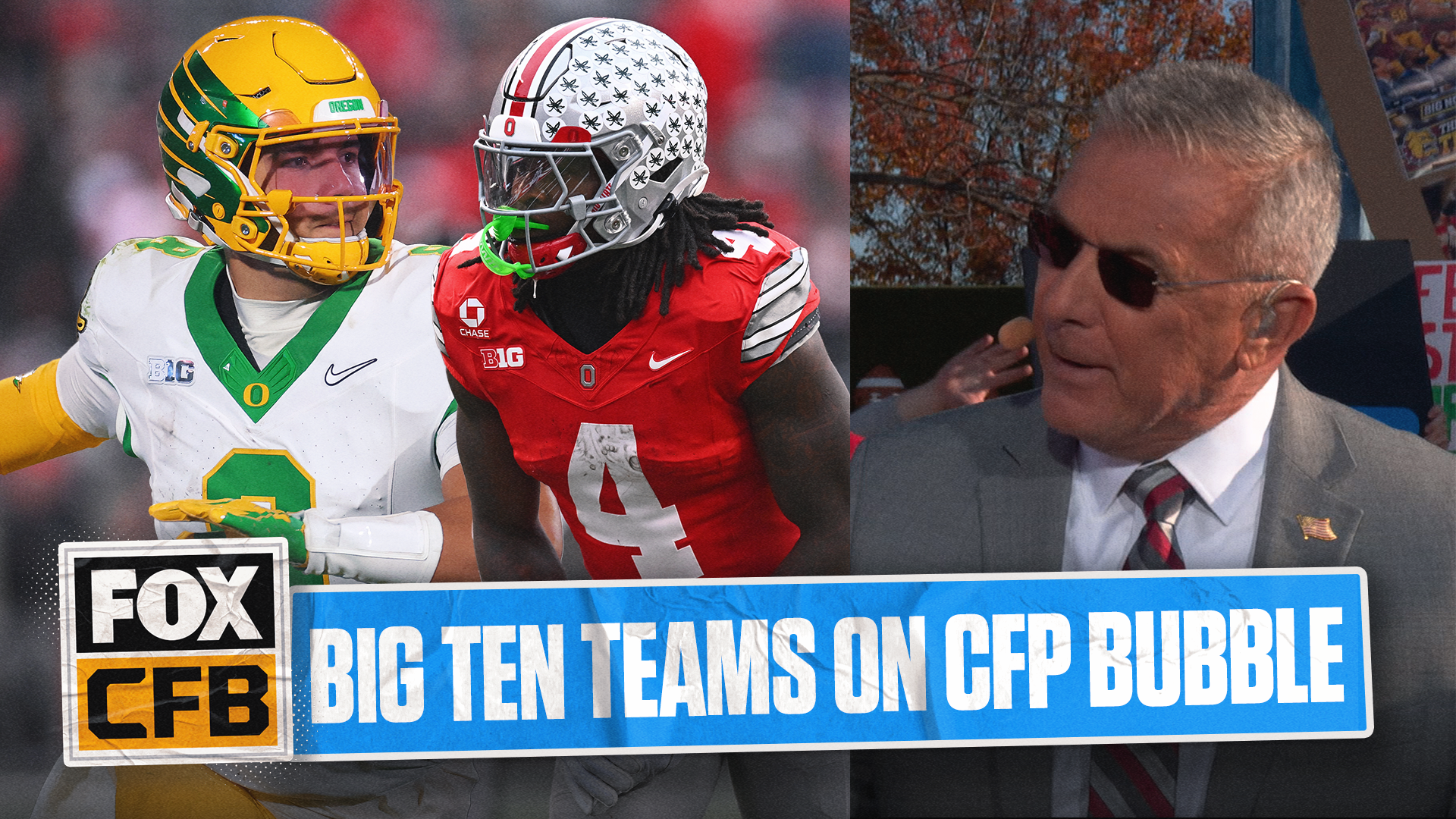
The context provided for Oregon’s resurgence paints a vivid picture of their current form. The Ducks have strung together an impressive four-game winning streak, a testament to their recent dominance. This streak includes a significant road victory over the Buckeyes, a win that surely boosts their resume. Furthermore, their last two outings against Michigan and Michigan State have been nothing short of emphatic, with a combined score of 76-14, showcasing an overwhelming superiority. Digging deeper into the statistics, over their last four contests, Raiola has been exceptional. He has amassed an impressive 1,168 passing yards, tossed 10 touchdowns, and, critically, thrown zero interceptions. His passer rating of 164.7 and a completion percentage of 66.2% underscore his efficiency and effectiveness at the helm of this resurgent offense. This sustained high level of play, particularly in critical conference matchups, makes Oregon a formidable opponent for any team, playoff-bound or otherwise.
Urban Meyer: The Underrated Ohio State Buckeyes
Urban Meyer, a legendary coach with multiple national championships to his name, advocated for the Ohio State Buckeyes, albeit with a caveat regarding their ranking. "Ohio State, obviously, they can’t jump Oregon, and they won’t jump Oregon," Meyer conceded, acknowledging the current pecking order. However, he passionately argued against the committee’s potential to "keep penalizing these teams that play the real games out of conference." Meyer drew a parallel to the Buckeyes’ non-conference schedule, specifically their narrow loss to Texas. "Ohio State went to Texas, lost in the final seconds, and they’re going to be penalized," he stated. He contrasted this with a hypothetical scenario: "If they would’ve played Akron and beat them by 50 points, they’d be in the playoff."
Meyer’s critique extended to the broader implications of schedule strength and its impact on playoff perception. He invoked the example of last year’s playoff race, where Texas also suffered a close loss to Ohio State and was subsequently kept out of the playoff. "Last year, Texas went to Ohio State, lost in the final seconds of the game, and they got kept out," he recalled. Meyer expressed concern about a potential trend where teams might opt for weaker non-conference schedules to bolster their playoff chances, suggesting that "You think last year’s schedules were bad in the non-conference? Wait until what’s going to start happening. You’re going to see mercy rules in college football." He firmly believes that a tough, hard-fought loss on the road against a quality opponent like Texas should carry more weight than a blowout victory against a significantly weaker opponent. "To me, a loss to Texas at Texas is better than a win by 55 points against Akron. Somehow, you have to do that," Meyer emphasized, calling for a more nuanced evaluation of team performance.
The contextual data surrounding Ohio State’s season further illuminates Meyer’s perspective. Each of their three defeats has come against teams ranked at the time of the contest: Texas, USC, and Oregon. This demonstrates a pattern of playing high-caliber opponents and, despite the losses, remaining competitive. Following consecutive setbacks against USC and Oregon, the Buckeyes managed to rebound with a victory over Northwestern at home. However, their offensive capabilities have been somewhat hampered by the absence of starting quarterback Julian Sayin, who sustained an elbow injury on October 17th against Indiana and is expected to miss the remainder of the regular season. This injury adds another layer of complexity to their season, raising questions about their offensive ceiling and consistency in the crucial latter stages of the year.
Chris "The Bear" Fallica: Oregon’s Resurgence and Committee Perception

Chris "The Bear" Fallica, a seasoned college football analyst known for his sharp insights, also aligned with Mark Ingram in identifying Oregon as a significant playoff threat. Fallica’s analysis focused on the strategic adjustments made by the Ducks, particularly concerning their offensive scheme. "I think they’ve simplified things for Dylan Raiola," he observed. "They’ve made it quick, don’t think, just get the ball out to all those wide receivers." This streamlined approach, he suggests, has allowed Raiola to thrive and leverage the talent of Oregon’s receiving corps.
Fallica then turned his attention to Oregon’s overall resume, highlighting the quality of their wins. "If you look at their résumé, as a whole, only three teams have five wins over top-40 teams: Texas, Georgia and Oregon," he stated, placing the Ducks in elite company. While acknowledging their "bad losses," Fallica offered explanations for each. He attributed one significant loss to a seven-turnover performance against UCLA, an anomaly that can skew results. Another loss was against a "Power Four team on the road in the non-conference," indicating a challenging early-season test. The third was against Illinois, where the Ducks were reportedly depleted of "every wide receiver," suggesting a significant disadvantage.
Crucially, Fallica interpreted the committee’s recent ranking of Oregon at No. 13 as a strong signal of their continued consideration for the playoff. "I think the committee told you this week by moving them to No. 13 that they are very much in the mix," he asserted. He believes the committee is evaluating the current iteration of the Oregon team, recognizing their impressive turnaround under a new offensive coordinator and with Raiola at the helm. "The Oregon team we see now, I think, is the Oregon team that the committee is judging them on because they’ve shown they can do it with a new coordinator and Raiola," Fallica concluded.
Further context for Oregon’s playoff aspirations lies in their remaining schedule. Their final regular-season game is a highly anticipated home matchup against Washington on November 28th. This game presents a significant opportunity for the Ducks to solidify their resume with a victory over a ranked opponent, potentially influencing their final playoff standing and perception among committee members. The presence of these three teams—Oregon, Ohio State, and Iowa—within striking distance of the playoff picture injects an element of intrigue and uncertainty into the final weeks of the college football season. Their performances in the coming games, coupled with outcomes in other conferences, will ultimately determine whether another Big Ten team can indeed crash the prestigious College Football Playoff party. The narrative is far from settled, and the race for a coveted spot in the postseason promises to be a captivating one.
