
 By admin
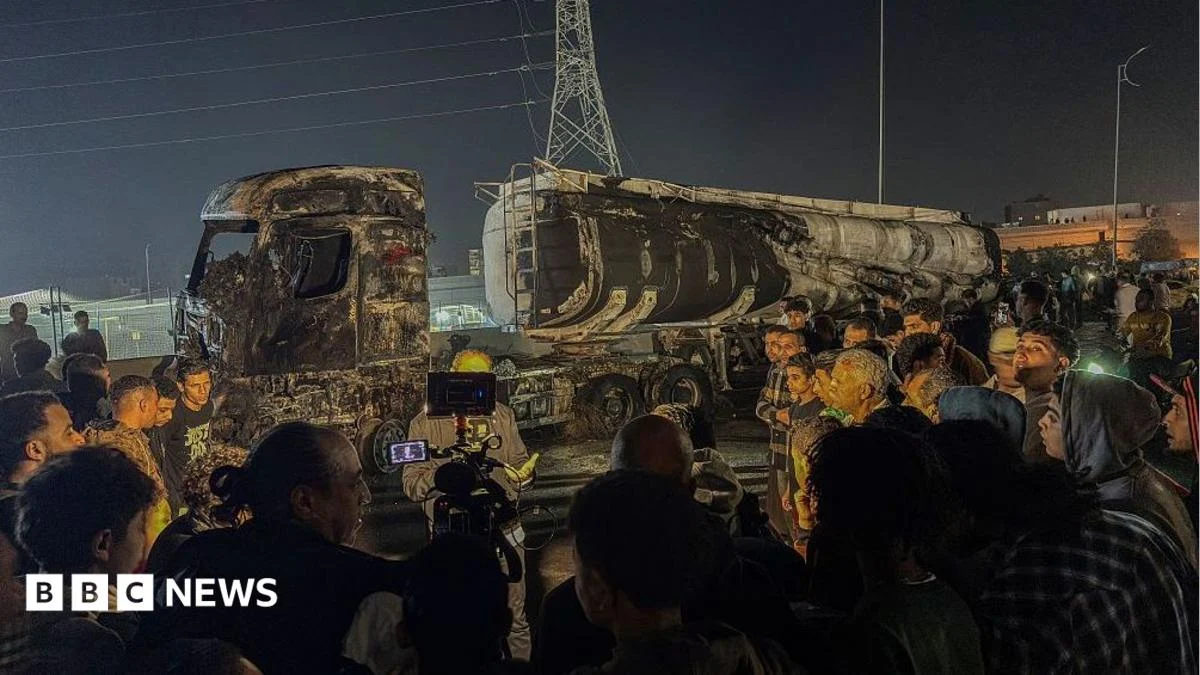
A catastrophic inferno erupted on a vital Cairo highway Wednesday evening, claiming the lives of at least 31 individuals and leaving 21 others with severe injuries, according to an official statement from Egypt’s Ministry of Health. The devastating incident unfolded after a fuel tanker collided with another vehicle, triggering a colossal fire that engulfed a significant stretch of the Ring Road in the Warraq district, a bustling artery north of the city’s historic core. Hospitals in the vicinity were overwhelmed with patients suffering from extensive burns and acute smoke inhalation, stark testaments to the ferocity of the blaze.
Unverified but harrowing footage that rapidly disseminated across social media platforms depicted an apocalyptic scene: towering columns of black smoke and incandescent flames clawing at the night sky, illuminating the chaos below. Multiple vehicles, caught in the conflagration’s path, were reduced to smoldering husks. While official accounts detailing the precise ignition sequence remained elusive in the immediate aftermath, state-owned media outlets reported that the tanker had overturned, spewing a torrent of flammable petrol onto adjacent vehicles. This initial report suggests a chain reaction of catastrophic proportions, where the tanker’s cargo became the accelerant for a widespread disaster.
In response to the scale of the tragedy, the regional public prosecutor has launched a comprehensive investigation into the incident. A critical component of this investigation involves the meticulous collection of DNA samples from the deceased, a somber but essential step to aid in their identification and provide some measure of closure to grieving families. The state-owned Al-Ahram newspaper, citing sources privy to the unfolding investigation, provided a more detailed, albeit preliminary, account of the tanker’s final moments. According to these reports, the tanker, operated by a private contractor, was traversing the highway when a high-voltage electrical cable inexplicably fell onto the roadway directly in its path. This sudden and unforeseen obstacle reportedly caused the driver to lose control of the massive vehicle.
The loss of control led to a horrific trajectory: the tanker veered across the central reservation, a physical barrier designed to prevent such cross-traffic collisions, before overturning. The subsequent rupture of its fuel tanks unleashed a catastrophic cascade, igniting the spilled petroleum and initiating the inferno. The sheer volume of fuel involved, coupled with the speed of the collision and subsequent overturn, would have created an immediate and overwhelming firestorm. The heat generated by such a blaze, fueled by a tanker’s capacity, can be unimaginably intense, capable of melting asphalt and igniting vehicles with terrifying speed.
This tragic incident serves as a stark reminder of Egypt’s ongoing struggle with fire safety, a complex issue exacerbated by a confluence of factors. In recent years, the nation has witnessed a disturbing pattern of deadly fires, many of which have occurred in densely populated informal residential areas and districts characterized by aging and often compromised infrastructure. These environments, where building codes may be less rigorously enforced and emergency services face significant logistical challenges, create a fertile ground for such disasters. The response to these incidents is frequently hampered by slow emergency response times, particularly in the sprawling and congested urban landscape of Cairo. Furthermore, locally improvised rescue efforts, while often born of necessity and community spirit, can be insufficient to combat fires of this magnitude, underscoring the need for enhanced professional emergency preparedness.
The aftermath at the scene was a tableau of devastation and human resilience. Images captured after the flames had been subdued revealed a vast expanse of the highway cordoned off by emergency services, their vehicles forming a grim perimeter. A large crowd of onlookers had gathered, a silent testament to the shock and grief that had gripped the capital. The sight of so many people drawn to the scene, even after the immediate danger had passed, speaks to the profound impact of such a public and devastating event on the collective consciousness of a city. The sheer scale of destruction evident in the torched vehicles and the blackened remnants of the tanker would have been a chilling sight.
The socio-economic context of Cairo, a megacity grappling with rapid population growth and a significant informal housing sector, is crucial to understanding the broader implications of this tragedy. The Ring Road, a critical transportation artery, carries an immense volume of traffic daily, connecting various parts of the sprawling metropolis. An incident on such a vital route not only causes immense human suffering but also significant economic disruption. The closure of such a major highway can lead to extensive traffic jams, impacting businesses, daily commutes, and the delivery of essential goods. The location of the incident in Warraq, a district that has seen significant development and population density, further amplifies the potential for casualties and the complexity of emergency response.
Experts in urban planning and disaster management have long highlighted the vulnerabilities inherent in cities like Cairo. Dr. Amina Hassan, a professor of Urban Studies at Cairo University, commented, "The constant pressure of urbanization, coupled with the challenges of maintaining and upgrading infrastructure, creates a precarious situation. Incidents involving hazardous materials, like fuel tankers, are particularly dangerous in densely populated areas where escape routes can be limited and the proximity of residential buildings to major transportation arteries increases the risk of collateral damage. The effectiveness of emergency response is paramount, and this incident unfortunately points to potential shortcomings in preparedness and rapid deployment capabilities."
The investigation into the fallen high-voltage cable is of particular interest. Such an event, if confirmed, raises questions about the maintenance and safety protocols of the electrical infrastructure in proximity to major roadways. The Egyptian Electricity Holding Company, responsible for the nation’s power grid, would likely be scrutinizing its own procedures and the condition of its equipment along the Ring Road. Power outages, electrical surges, and the physical integrity of transmission lines are all critical factors in preventing such accidents. The timing of the cable fall, directly in front of the tanker, suggests a confluence of unfortunate events, but the investigation will seek to determine if any negligence or systemic failures contributed to the situation.
The economic implications extend beyond immediate traffic disruption. The loss of life represents a profound human cost, but also a loss of productive members of society. The injured will require extensive medical care, placing a strain on healthcare resources. The damaged infrastructure, including the road itself and any affected utility lines, will necessitate costly repairs. Furthermore, businesses that rely on the smooth flow of traffic on the Ring Road will experience losses. Insurance claims, if applicable and adequate, will add another layer of financial complexity.
The role of private contractors in managing hazardous materials like fuel is also under scrutiny. While private companies are often contracted for their efficiency and specialized expertise, rigorous oversight and adherence to safety regulations are essential. The investigation will undoubtedly examine the operational procedures of the contractor responsible for the tanker, including driver training, vehicle maintenance, and route planning. The report of the tanker being privately owned, as stated by Al-Ahram, shifts some focus to the accountability of the private entity involved in transporting such volatile cargo.
The long-term impact of such a disaster on public confidence and safety perceptions is also significant. Incidents of this nature can erode trust in governmental oversight and the effectiveness of emergency services. The government will be under pressure to not only provide support to the victims and their families but also to implement measures that prevent similar tragedies in the future. This could involve enhanced road safety regulations, stricter oversight of transportation of hazardous materials, investment in improved emergency response infrastructure, and potentially, a re-evaluation of urban planning policies to mitigate risks in densely populated areas.
The harrowing images and the sheer number of casualties paint a grim picture of a city grappling with a profound tragedy. As the investigation unfolds, the focus will remain on understanding the precise sequence of events, assigning accountability where necessary, and ultimately, on preventing such a devastating loss of life from recurring on Egypt’s busy roadways. The resilience of the Egyptian people will undoubtedly be tested as they mourn their lost and begin the arduous process of recovery and rebuilding. The incident serves as a critical case study for urban safety and disaster preparedness, not just in Egypt, but for cities facing similar developmental and infrastructural challenges worldwide. The lessons learned from this inferno must be translated into tangible actions to safeguard lives and enhance the safety of public spaces.
