
 By admin
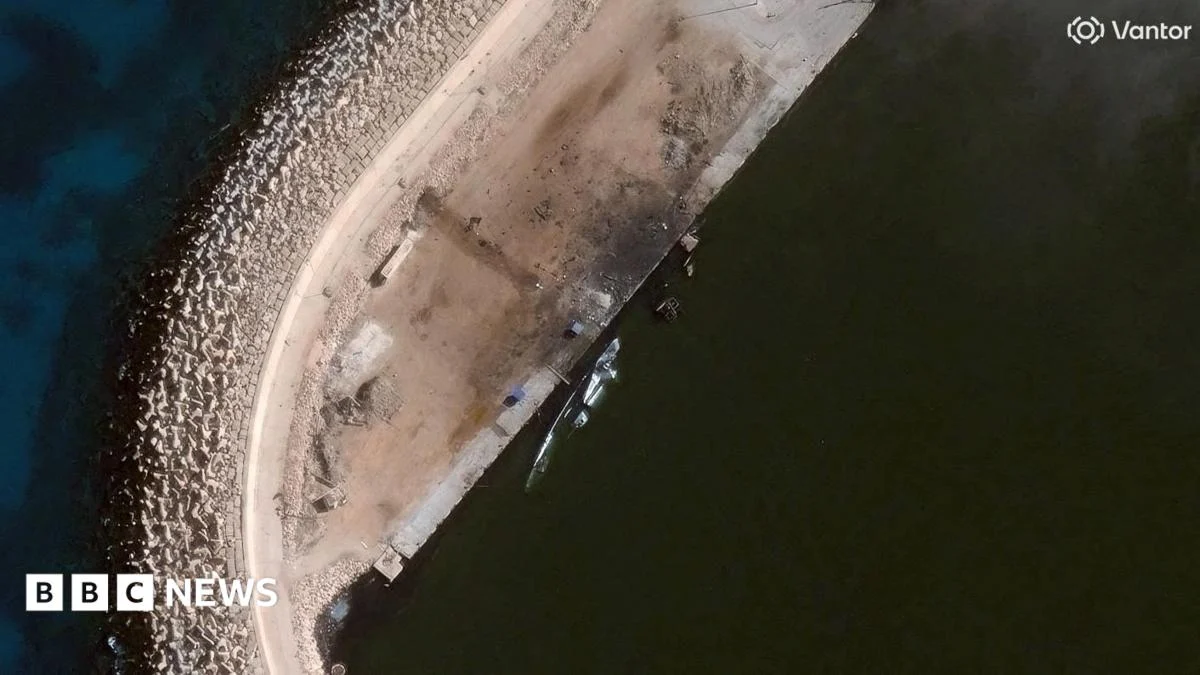
Anchored in a Mediterranean harbour nearly 2,000 miles from Moscow, the Captain of Russia’s corvette Merkury might well have thought his ship was safe from attack. It wasn’t. This audacious and successful night-time strike in Benghazi, meticulously co-ordinated by Ukraine’s SBU intelligence agency and its armed forces, has ignited a critical question: is the Ukraine war now spreading well beyond its established geographical confines? The unsettling answer is a resounding yes, though this latest operation, hailed by Ukrainian President Volodymyr Zelensky as "an exemplary operation," will undoubtedly escalate the conflict’s stakes to a new and potentially more volatile level.
Russia, currently embroiled in a relentless campaign to subjugate Ukraine’s civilian population through a continuous barrage of daily missile and drone strikes, has unequivocally denounced the Benghazi attack as "a dangerous escalation." This condemnation follows closely on the heels of a suspected Ukrainian drone attack on a Russian dry-cargo ship in the Gulf of Finland just days prior, an incident the Kremlin characterized as an act of terrorism. These incidents are not isolated events but rather indicative of a broader, evolving Ukrainian strategy to project its strike capabilities far beyond its own territory.
Ukraine’s proficiency in deploying long-range drones has been demonstrated previously, most notably in a strike on Russia’s Baltic oil terminal at Ust-Luga. This facility, a crucial hub for Russia’s energy exports, suffered significant damage, underscoring Ukraine’s capacity to target vital economic infrastructure. President Zelensky has himself referred to these long-range drone attacks as "long-range sanctions," a potent metaphor for Ukraine’s efforts to impose economic and strategic costs on Russia, even at great distances. The reach of these operations is truly remarkable, with some strikes targeting locations thousands of kilometers beyond Ukraine’s borders, extending even into the vast expanse of Siberia.
One of the most striking examples of this extended reach was "Operation Spider’s Web" last year. This elaborate operation involved a specially adapted lorry that was driven perilously close to a Russian strategic nuclear bomber airbase. From this vulnerable position, the lorry released a "swarm" of explosive drones, which managed to damage or destroy several highly valuable strategic bombers. This audacious maneuver not only demonstrated Ukraine’s technical capabilities but also its willingness to undertake high-risk operations against deeply entrenched Russian military assets. The psychological impact of such an attack, on a base housing the very instruments of Russia’s nuclear deterrence, cannot be overstated.
The Ukrainian theatre of operations has also expanded southward into Africa, where its forces have reportedly targeted Russian mercenaries operating under the banner of the "Africa Corps." This group is widely considered the successor to the notorious Wagner Group, a private military company that has been extensively documented as carrying out numerous human rights abuses across the continent. By targeting these mercenaries, Ukraine is not only disrupting Russian influence in Africa but also potentially dismantling networks that have been instrumental in supporting Russian foreign policy objectives. This expansion into Africa suggests a multi-pronged approach by Ukraine, aiming to counter Russian interests on multiple continents.
The implications of the Benghazi operation extend beyond Moscow’s immediate concerns. The United Nations mission in Libya has already voiced its "deep concern" regarding the incident. Libyan officials, while asserting that their country is not a direct party to the Russia-Ukraine war, highlighted the sensitive geopolitical context of the attack. The Merkury and an accompanying cargo ship that also sustained damage were berthed in the eastern part of Libya, a region under the control of Khalifa Haftar. Haftar, a pro-Moscow warlord and self-styled "Field Marshal," has been a significant player in the ongoing Libyan civil conflict, and his alignment with Russia adds another layer of complexity to the maritime incident. The presence of Russian naval assets, even in a seemingly neutral port in North Africa, demonstrates the far-reaching tentacles of Russian military presence and its entanglement in regional conflicts.
The successful attack on the Merkury, a Kilo-class corvette, represents a significant blow to Russia’s naval capabilities in the region and a considerable intelligence and operational triumph for Ukraine. While the specific details of the weaponry and tactics employed are still emerging, the precision and effectiveness of the strike suggest a high level of planning and execution. The fact that a Russian warship could be targeted in a Mediterranean harbour, ostensibly a safe haven far from the Ukrainian front lines, sends a clear message about Ukraine’s evolving capacity for asymmetric warfare.
The strategic importance of the Merkury cannot be overlooked. As a Kilo-class corvette, it is a modern diesel-electric submarine hunter and an anti-surface warfare vessel, equipped with advanced sonar systems and a formidable array of weaponry, including anti-ship missiles. Its presence in Benghazi likely served multiple purposes, potentially including intelligence gathering, logistical support for pro-Haftar forces, or as a projection of Russian naval power in the Mediterranean. The disruption of its operations, and potentially its operational readiness, has implications for Russia’s naval posture in the region.
Furthermore, the targeting of a Russian naval vessel in a non-belligerent state’s port raises serious questions about maritime security and the potential for the conflict to destabilize other regions. While Libya is not formally involved in the Ukraine war, the presence of Russian military assets within its territory, and the subsequent Ukrainian strike, highlights the interconnectedness of global security. The international community will be closely watching the response from both Russia and Libya, as well as the broader implications for regional stability.
The inclusion of a cargo ship in the attack suggests that the operation may have had broader objectives beyond simply disabling the Merkury. This could involve disrupting Russian logistics, targeting specific supplies, or sending a more comprehensive message about Ukraine’s ability to interdict Russian assets at sea. The economic implications of such attacks, even on a single cargo ship, can be substantial, impacting supply chains and increasing insurance costs for maritime trade.
The escalating reach of the Ukraine war is a phenomenon that geopolitical analysts have been anticipating. As Russia’s conventional military capabilities have been tested and strained by the prolonged conflict in Ukraine, it has become increasingly reliant on asymmetric strategies and the projection of power through unconventional means. Ukraine, in turn, has been forced to adapt and innovate, developing its own asymmetric capabilities to counter Russia’s advantages.
The "long-range sanctions" strategy, as coined by President Zelensky, is a multifaceted approach. It aims to inflict tangible damage on Russian military and economic assets, thereby raising the cost of the war for Moscow. It also seeks to achieve a significant psychological impact, demonstrating to the Russian population that the war is not confined to the battlefield in Ukraine and that the Kremlin’s actions have far-reaching consequences. By striking targets deep within Russia and abroad, Ukraine aims to erode public support for the war and create internal pressure on the Russian leadership.
The implications of these strikes for international law and the principles of state sovereignty are also significant. While Ukraine argues that it is acting in self-defense, the targeting of assets in third-party countries raises complex legal questions. The involvement of Libyan territory, even if controlled by a pro-Russian faction, complicates matters further. The international community will need to grapple with these evolving dynamics as the conflict continues to transcend traditional geopolitical boundaries.
Expert analysis of this evolving situation suggests that Ukraine is leveraging its technological advancements and intelligence capabilities to compensate for its numerical and matériel disadvantages. The development and deployment of sophisticated drones, coupled with a willingness to undertake high-risk operations, have become hallmarks of its defense strategy. This approach is not without its own risks, as it could provoke retaliatory strikes or unintended consequences in other regions.
However, the strategic imperative for Ukraine is clear: to prevent the conflict from becoming a protracted war of attrition on its own territory and to exert maximum pressure on Russia to cease its aggression. By extending the battlefield and targeting Russian interests globally, Ukraine aims to achieve a more favorable outcome than would be possible through purely defensive measures.
The Benghazi attack, therefore, is not merely an isolated incident but a significant marker in the ongoing evolution of the Ukraine war. It signals a new phase of the conflict, characterized by increased global reach and a greater potential for regional instability. The international community’s response to these developments will be crucial in shaping the future trajectory of the war and its broader implications for global security. The question is no longer whether the Ukraine war is spreading, but rather how far it will spread and what the ultimate consequences will be for all involved. The audacious strike on the Merkury serves as a stark reminder that the echoes of this conflict are now reverberating far beyond the borders of Ukraine.
