
 By admin
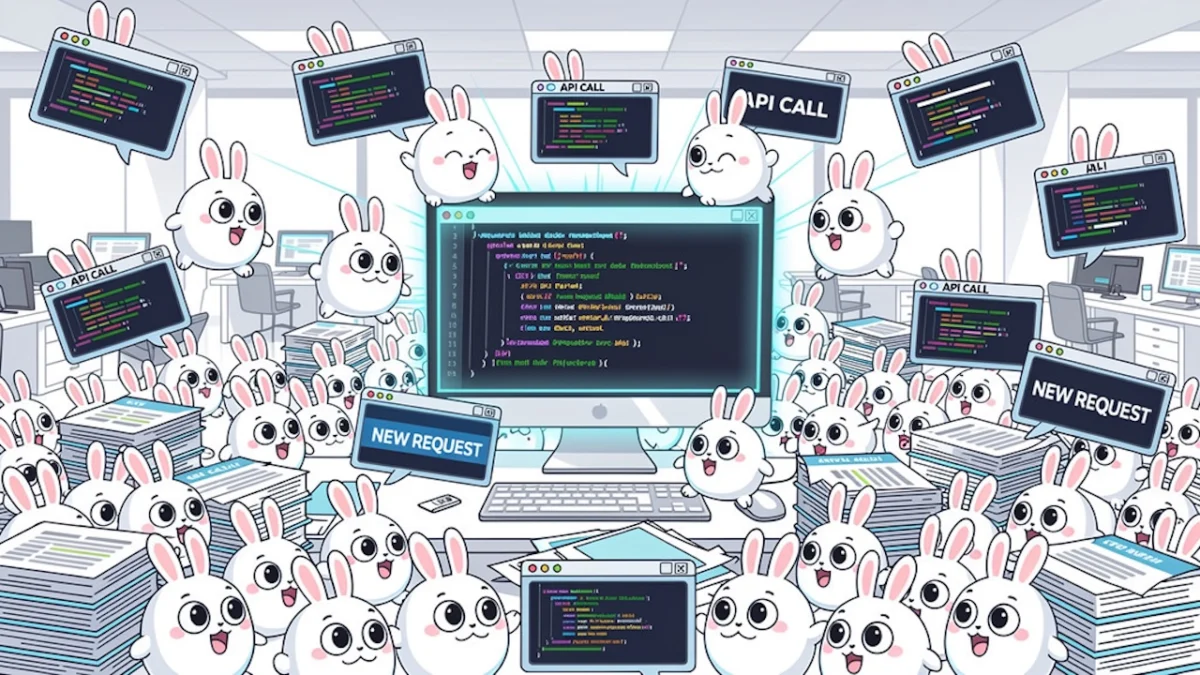
The rapid proliferation of Artificial Intelligence (AI) coding tools has undeniably accelerated the pace of software development, but this surge in code generation has concurrently created a significant bottleneck in the critical process of code review, ultimately hindering how quickly that code can be deployed to production. A comprehensive new survey reveals a stark reality: a mere 26% of respondents express high confidence in their thorough understanding of AI-generated code changes, a sentiment that casts a long shadow over the perceived quality and reliability of software produced with AI assistance. This erosion of confidence is particularly concerning given the increasing reliance on AI in the development lifecycle, a trend that is reshaping the very nature of engineering workflows.
The findings, meticulously detailed in the "LeadDev AI Code Review Report 2026," underscore the profound impact AI coding tools are having on engineering teams. The report indicates that since adopting these AI tools, a significant half of all surveyed respondents have witnessed an at least 25% increase in the number of pull requests opened per developer. This dramatic rise in code contributions, while a testament to AI’s productivity gains, has strained existing review processes to their breaking point. Further amplifying the concern, a substantial 45% of participants identified code review capacity as the single most significant impediment to efficient software delivery. This highlights a critical misalignment: while AI empowers developers to write code faster, the human capacity to thoroughly vet that code has not scaled proportionally, creating a chasm in the development pipeline.
The authoritative report is the culmination of a detailed survey administered to 377 engineers and engineering leaders across the United States and Europe, with a robust 325 participants completing the entirety of the questionnaire. The research was generously sponsored by CodeRabbit, a prominent vendor specializing in AI-powered code review solutions, whose insights into the evolving landscape of software development are invaluable. The survey’s findings also shed light on an intriguing and potentially concerning practice: a notable 47% of respondents indicated that their organizations are currently relying on AI coding agents to review the very code that those same agents generated. This self-review mechanism raises questions about the independence and objectivity of the review process. Compounding this, a mere 14% of organizations reported having clearly defined and consistently applied standards for reviewing AI-generated code, suggesting a widespread lack of a structured and uniform approach to this crucial aspect of software quality assurance.
Harjot Gill, CEO and co-founder of CodeRabbit, articulated the fundamental shift in development philosophy that has led to this current predicament. "There used to be a gate before code got written; product managers groomed the backlog because engineering time was expensive. That gate is gone," Gill explained to VentureBeat. He elaborated on how the accessibility of AI tools has democratized the creation of code: "Anyone can go from idea to code now, so review is the only gate left, and everything piles up there." This observation points to a historical evolution of development workflows. In the past, the high cost and scarcity of engineering resources necessitated a rigorous upfront filtering process. Product managers and project leads would meticulously prioritize and refine feature requests and bug fixes, ensuring that engineering time was allocated to the most impactful and well-defined tasks. This "gate" served as a crucial quality control mechanism, ensuring that only thoroughly vetted ideas reached the development stage. However, with AI tools drastically lowering the barrier to entry for code creation, this initial gate has effectively dissolved. The ease with which developers can now translate ideas into functional code has shifted the burden of quality assurance downstream, concentrating it almost exclusively on the code review process.
The report further substantiates the strain on review capacity, revealing that a significant 67% of respondents observed an increase in the size of their pull requests. This escalating volume and complexity of code changes present an insurmountable challenge for human reviewers attempting to maintain thoroughness. "Nobody can read all of that line by line while still doing the rest of their job, so people skim," Gill lamented, illustrating the practical consequences of this overload. The sheer volume of code within a single pull request often forces reviewers to adopt a superficial approach, prioritizing speed over meticulous examination. This is a dangerous compromise, as it increases the likelihood of subtle bugs and architectural flaws slipping through the cracks.
The consequences of this overwhelming review workload are evident in the reported slowdowns. More respondents indicated that review cycles have decelerated since the adoption of AI (38%) than those who reported an acceleration (25%). This counterintuitive outcome underscores the fact that while AI accelerates code writing, it has not necessarily streamlined the verification process. Additional research corroborates this trend, with the "BairesDev’s 2026 developer survey" revealing that 67% of developers now spend more time reviewing AI-generated code than they did a year ago. This indicates a growing disparity between the speed of code generation and the speed of its validation.
Paul Nashawaty, principal analyst at Efficiently Connected, offered a concise yet powerful observation on this phenomenon: "We’re seeing developers move faster, but that doesn’t necessarily mean the entire software delivery lifecycle is moving faster." This statement encapsulates the core of the problem: the illusion of speed created by AI code generation can be misleading if the downstream processes, particularly code review, cannot keep pace. The overall efficiency of the software delivery lifecycle is a complex interplay of various stages, and a bottleneck in one critical area can negate the gains made in others.
The persistent reliance on manual review, even in the face of overwhelming volume and size of code changes, is another critical finding. The LeadDev report indicates that a staggering 82% of respondents still manually review most or all AI-generated code before it is merged. This highlights a deep-seated commitment to human oversight, yet it also exposes the inherent limitations of this approach when faced with the current scale of AI-driven development. The survey further reveals a significant gap in reviewer comprehension: while 58% of respondents claim to understand the intent behind AI-generated code, only a fraction feel they grasp every detail. Even more concerning, 11% admitted to primarily checking only that the code runs and passes automated tests, a superficial level of scrutiny that falls far short of comprehensive quality assurance.
The implications for architectural integrity and potential downstream impact are equally alarming. Only 18% of reviewers consistently possess enough context to accurately assess a change’s architectural impact and its potential "blast radius" – the extent of damage a failure could cause. Conversely, a significant 68% of respondents acknowledged that their reviewers do not consistently know which changes warrant deeper scrutiny. This indicates a systemic failure to identify and prioritize critical code reviews, leaving the system vulnerable to widespread disruption. In a related question within the survey, a compelling 74% of respondents stated that a human always or usually verifies what an AI review tool flags, underscoring a lack of full trust in AI’s independent review capabilities.
Despite these challenges, AI review tools are recognized as having a role to play. "AI can absolutely help review code, but I wouldn’t rely on the same agent that generated the code to be the final validator," Nashawaty cautioned. This perspective suggests that AI tools are best utilized as an augmentative force, assisting human reviewers rather than replacing them, and crucially, that the same AI agent responsible for creation should not be the sole arbiter of quality.
The report also uncovers significant gaps in the metrics, standards, and accountability surrounding AI code review processes. A striking 24% of respondents indicated that their organizations track no code review metrics whatsoever. Among those that do track metrics, the focus is often on ancillary aspects rather than defect detection: 30% track AI token usage, and a mere 22% track escaped defects – those that make it to production. This lack of focus on critical quality indicators is a major concern for maintaining robust software.
Gill emphasized the importance of comprehensive tracking: "Alongside spend, I’d want every engineering team tracking how many defects reach production, how often changes fail or get rolled back, and how stretched their reviewers are." This holistic view of review performance is essential for identifying and addressing systemic issues.
The question of accountability in an increasingly automated review pipeline is also complex. When an AI agent writes code, another AI agent reviews it, and an automated system merges it, the responsibility for production behavior becomes blurred. In such a scenario, a concerning 48% of respondents believe the person who requested the change is accountable, while only 14% assign accountability to the person who approved it, leaving a significant portion of the responsibility undefined.
The inconsistency in standards for reviewing AI-generated code is equally problematic. Forty-two percent of respondents stated that their organizations apply guidelines for reviewing AI-generated code inconsistently, while another 42% leave the decision entirely to individual teams. This decentralized approach breeds a lack of uniformity and can lead to varying levels of quality depending on the team’s specific practices.
Nashawaty succinctly summarized the overarching challenge: "The real issue isn’t whether AI can review code; it’s whether enterprises have the governance, context, accountability, and engineering standards to trust the outcome." This highlights that the technical capability of AI is not the sole determinant of success; the organizational framework and strategic implementation are equally, if not more, critical.
For enterprises grappling with these challenges, the report offers actionable insights and best practices to navigate the evolving landscape of AI-assisted software development. The core problem remains the sheer volume of code generation outpacing the capacity for rigorous and consistent review, compounded by a lack of standardized approaches to identifying code requiring deeper scrutiny. Developers, engineering leaders, and CIOs can proactively address these issues by implementing the following strategies:
Escalation: The implementation of intelligent escalation rules, tailored to the specific nature and potential impact of code changes, is paramount. "I’d sort it by the failure mode and blast radius, regardless of who wrote the code," Gill advises. This means that changes affecting critical systems such as payment or ledger logic, authorization rules, database schemas and migrations, or shared API contracts should be automatically routed to engineers with specific domain expertise. This risk-based approach ensures that the most sensitive code receives the highest level of attention, irrespective of whether it was written by a human or an AI.
Accountability: Establishing clear lines of accountability is crucial for fostering a culture of responsibility. CodeRabbit, as a sponsor of the report, implements a risk-based review system within its own engineering team. "Most of our low-risk and low-impact changes ship without a human review," Gill explained. "We track the defects each engineer introduces, and if someone ships risky changes without asking for a review, their changes go to a human reviewer until their record improves." This performance-based accountability model incentivizes careful development and review practices, ensuring that individuals are directly responsible for the quality of the code they introduce.
Layers: The report advocates for a multi-layered approach to code review, integrating AI tools as one component within a broader quality assurance framework. "Enterprises should combine independent AI review, automated testing, security scanning, policy enforcement, and human review based on the risk and complexity of the change," Nashawaty recommends. This layered strategy ensures that code is subjected to a comprehensive battery of checks, from automated tests and security scans to independent AI analysis and targeted human oversight. By combining these diverse validation mechanisms, organizations can build a more resilient and trustworthy software development process, mitigating the risks associated with over-reliance on any single method and ensuring that the speed of AI-driven code generation does not come at the expense of critical quality and security.
