
 By Lina Irawan
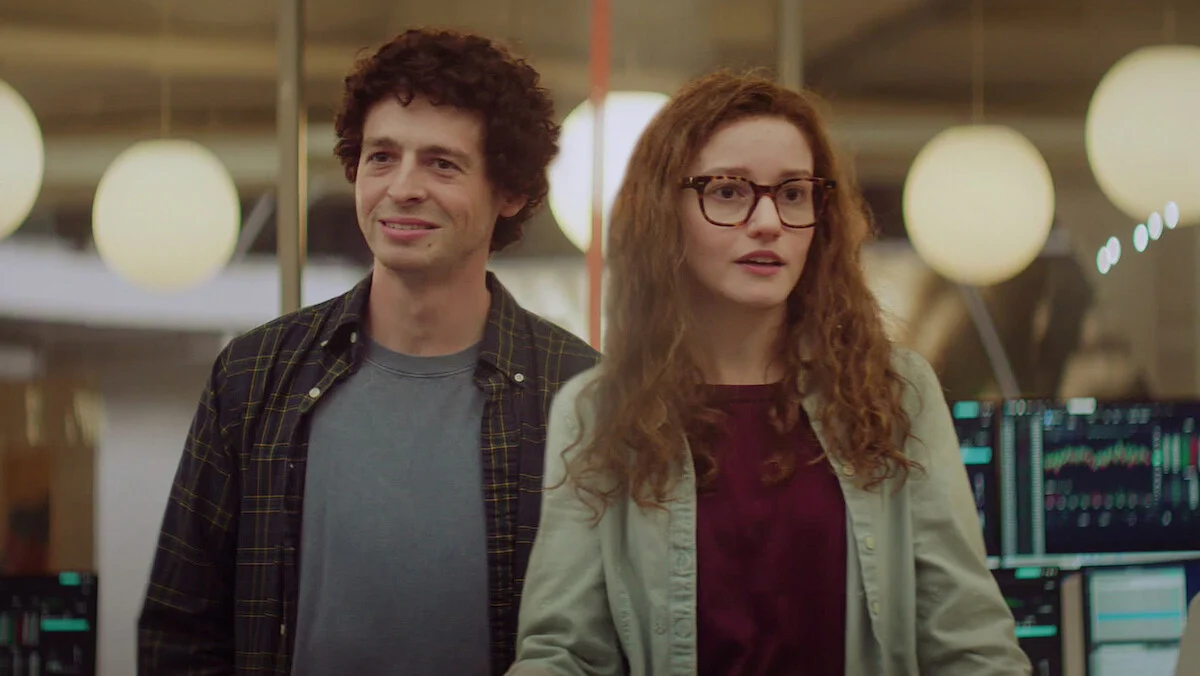
The series is ostensibly based on the real-world events that culminated in the dramatic 2022 collapse of Bankman-Fried’s multi-billion-dollar crypto exchange, FTX, and its sister hedge fund, Alameda Research. This catastrophic downfall triggered a swift FBI investigation, leading to a cascade of legal proceedings. Caroline Ellison, former CEO of Alameda Research and Bankman-Fried’s on-again, off-again romantic partner, pleaded guilty to multiple charges of fraud and conspiracy and became a key cooperating witness, testifying extensively against her former boyfriend. Sam Bankman-Fried himself was subsequently convicted on seven counts of fraud and conspiracy, and is currently serving a substantial 25-year sentence in federal prison for defrauding customers of billions of dollars. The core of his criminal enterprise involved secretly siphoning customer funds from FTX to cover losses and make risky investments at Alameda Research, a scheme he meticulously orchestrated and concealed.
While filmmakers regularly take liberties to heighten dramatic impact and craft compelling narratives, critics argue that “The Altruists” crosses a line from creative license into outright falsehoods. The series stands accused of minimizing Bankman-Fried’s grave crimes and portraying him as a victim who acted under duress, specifically from Binance’s Changpeng Zhao. This narrative deeply offends those familiar with the meticulous evidence presented during SBF’s trial, which painted a clear picture of his culpability and leadership in the fraud.
Don Wilson, the CEO of the prominent crypto market-making firm DRW, was among the first and most vocal critics. He posted a widely-shared clip from “The Altruists” on X (formerly Twitter) showing Zhao interacting with Bankman-Fried and Ellison, describing it as “preposterous” and “an epic fail.” Wilson’s tweet succinctly captured the frustration: “This is an epic fail by Netflix. Recasting this as something @SBF_FTX and Caroline were forced to do in order to placate @cz_binance – instead of highlighting the effective altruist ethos that drove them to commit yet another crime is preposterous.” This criticism points to a fundamental misrepresentation of the motivations behind FTX’s downfall. Bankman-Fried and his inner circle frequently espoused "effective altruism," a philosophical and social movement advocating for using evidence and reason to determine the most effective ways to benefit others. However, prosecutors and critics argued that SBF used this philosophy as a public relations shield, a means to attract investors and talent while secretly engaging in massive fraud. The series’ alleged depiction, suggesting external coercion, thus fundamentally misinterprets the internal, self-serving logic that prosecutors successfully argued drove Bankman-Fried.
The specific clip highlighted by Wilson depicts Zhao’s character telling Ellison and Bankman-Fried that FTX is failing to grow fast enough to justify an early investment he made in the exchange. In a dramatic escalation, the fictional Zhao then declares he will financially destroy the exchange if the pair fail to collude with him in a criminal trading scheme. This scene is a major point of contention. While Zhao was indeed an early investor in FTX, even helping to launch it in 2019 and holding a significant stake, and their relationship did sour significantly over time, the issue of coercion or a demand for criminal collusion never came up at Bankman-Fried’s criminal trial. There is no evidence whatsoever that the exchange depicted in the clip, or any similar scenario, ever took place. The real-world dynamic between Binance and FTX was one of fierce rivalry, culminating in CZ’s decision to liquidate Binance’s FTT holdings (FTX’s native token) in November 2022 after reports surfaced about Alameda Research’s precarious balance sheet. This move triggered a massive "bank run" on FTX, exposing its insolvency, but it was a consequence of FTX’s internal failings, not an act of criminal coercion.
Another crypto industry veteran, Stacy Muur, likewise objected strongly to another scene from the series, tweeting: “Netflix portrayed @cz_binance as a complete moron in its new FTX movie while making SBF and Caroline look like innocent victims who were bullied. Who the hell wrote this script?” This sentiment underscores the perception that the series deliberately attempts to soften the image of convicted criminals while unfairly demonizing a rival figure. The implications of this narrative shift are profound, potentially distorting public understanding of complex financial crimes and the motivations of those involved.
Beyond the narrative distortions, the portrayal of Zhao’s character itself has drawn sharp criticism, with many pointing to potential racial bias. Terry Chen, the actor playing Zhao, affected a heavy Cantonese accent, which many on social media complained promoted harmful stereotypes. One user, @vivilinsv, complained about this specific detail. Zhao himself, a Canadian citizen who grew up in various international settings, including Canada, New York, and Tokyo, responded to the backlash on X, writing, “hmm… I grew up in Canada, worked in the New York, Tokyo, many places. I almost never felt being targeted by racism. But something to think about…” This subtle yet pointed remark highlighted the stark contrast between the character’s stereotypical portrayal and his real-life background. Veteran crypto journalist Laura Shin expressed a stronger sentiment, stating publicly, “I’m just going to say it: Racism has to have played a role in how they portrayed [Zhao]. There’s no other explanation.” Such accusations are particularly damaging for a production backed by prominent public figures like the Obamas, raising questions about cultural sensitivity and due diligence in casting and character development. The use of a caricatured accent for a prominent Asian character, especially when contrasted with the more nuanced (albeit allegedly sympathetic) portrayals of the white protagonists, fuels accusations of racial stereotyping and contributes to a problematic narrative that villainizes the "other."
Aside from the depictions of Zhao, other viewers complained that “The Altruists” wrongly portrayed Ellison as the mastermind behind a series of accounting frauds used to conceal gaping holes in the balance sheet of FTX and Alameda Research. This portrayal directly contradicts contemporary news accounts, the comprehensive evidence presented during the criminal trial, and the sworn testimony of multiple witnesses, which unambiguously pointed to Bankman-Fried as the architect and primary decision-maker responsible for the multi-billion-dollar fraud. While Ellison was a willing participant and pleaded guilty to her role, the trial established Bankman-Fried as the ultimate authority and instigator of the criminal enterprise. This alleged shift in responsibility not only misrepresents the historical record but also risks undermining the legal process that led to Bankman-Fried’s conviction.
Among those weighing in to complain about these factual depictions was FTX’s former COO, Constance Wang, who shared a poignant reflection: “Maybe you’ll enjoy The Altruists as a romantic comedy. For those of us who watched it together, it felt like someone else’s story with our names attached.” This insider perspective speaks volumes about the emotional impact of such creative liberties on those who lived through the traumatic events. It suggests a complete disconnect between the fictionalized drama and the painful reality, trivializing the suffering of victims and the gravity of the crimes committed.
Meanwhile, some critics of “The Altruists” suggested that the numerous inaccuracies and the series’ sympathetic framing of SBF could be explained, in part, by political motivations. Lawyer Hailey Lennon explicitly pointed to the production’s ties to the Obamas and Bankman-Fried’s hefty donations to the Democratic party. She wrote on X: “The Altruists was produced by Michelle and Barak Obama. SBF publicly donated $39.8 million to Democratic candidates and aligned outside groups during the 2021–2022 election cycle. The framing of the movie as some love story and to make SBF look more innocent is even more calculated than I initially realized. Always follow the money.” This argument suggests a cynical interpretation: that the series’ narrative might be an attempt to sanitize the image of a major political donor, or at least to shift blame away from him, thereby mitigating potential political fallout for recipients of his illicitly gained funds. Bankman-Fried’s political contributions were indeed extensive, including a reported $5.2 million to former President Joe Biden’s campaign, making him one of the largest individual donors to Democratic causes in that election cycle. The optics of a Netflix series, executive produced by prominent Democratic figures, presenting a sympathetic or distorted view of a convicted felon who was a massive Democratic donor, has naturally fueled suspicions of political bias and influence. Others on social media likewise amplified this connection, drawing a direct line between the Obamas’ involvement and Bankman-Fried’s substantial donations to the Democratic party as a potential explanation for the film’s controversial depictions.
The debate surrounding “The Altruists” highlights the perennial tension between artistic license and journalistic accuracy, especially when adapting recent, high-profile criminal events for entertainment. While dramatic storytelling often requires simplification or embellishment, critics argue that the series’ alleged distortions fundamentally alter the public’s understanding of a significant financial crime and the individuals involved. Such narratives, particularly on platforms with global reach like Netflix, have the power to shape public perception and potentially rewrite history for those unfamiliar with the actual events and legal proceedings.
Sam Bankman-Fried, who remains incarcerated in federal prison in California, has consistently failed to express genuine remorse for stealing over $8 billion from FTX customers and investors. His legal team is currently pursuing an appeal, but as it stands, he is slated to be released around 2047, a testament to the severity of his crimes. The controversy surrounding “The Altruists” serves as a potent reminder of the responsibility that creators bear when dramatizing real-world events, particularly those involving massive fraud and severe consequences for countless victims. The public and the crypto community, it seems, are demanding not just entertainment, but a narrative that respects the facts and the gravity of what transpired.
