
 By admin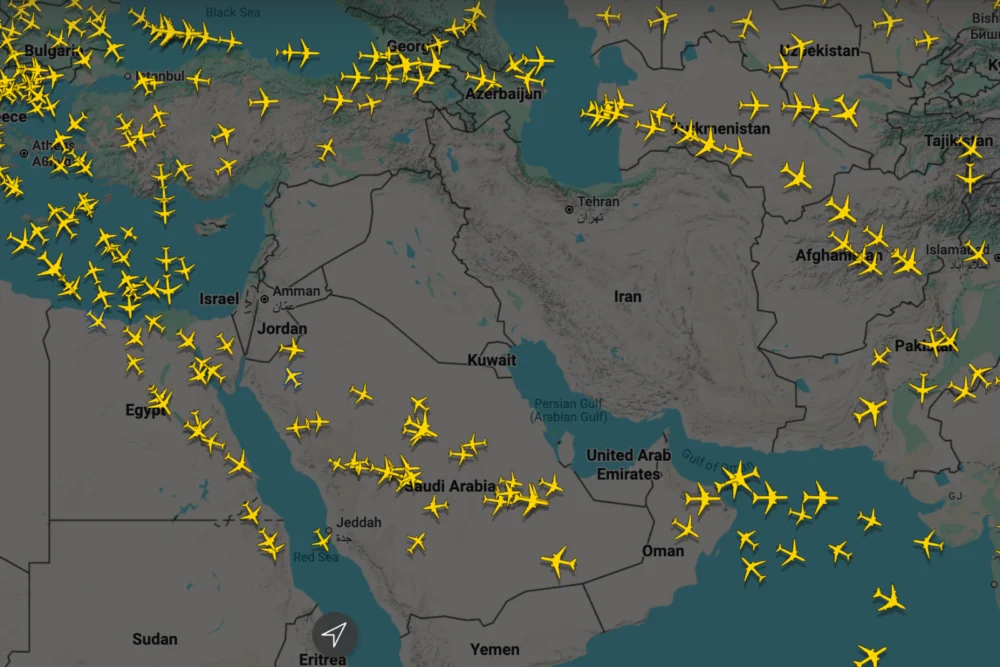
The geopolitical landscape of the Middle East shifted dramatically following a series of coordinated military strikes by the United States and Israel against Iranian targets on February 28, an event that has sent shockwaves through the global aviation industry. As the smoke cleared from the initial kinetic engagements, a different kind of paralysis took hold: the total closure of critical air corridors that serve as the connective tissue between the East and the West. This unprecedented disruption has effectively severed the primary aerial arteries of global commerce, grounding thousands of flights and leaving hundreds of thousands of passengers stranded across multiple continents.
Real-time flight tracking data from FlightRadar24 on Saturday revealed a stark and haunting image of the region’s skies. Where there are typically dense swarms of digital icons representing the world’s busiest long-haul routes, a vast "no-fly" void has emerged. Airspace closures have been confirmed across a massive swathe of the Middle East, including the United Arab Emirates (UAE), Qatar, Jordan, Iran, Iraq, Syria, Israel, Kuwait, and Bahrain. For an industry that relies on the predictable flow of traffic through the Persian Gulf and the Levant, these closures represent a "black swan" event of staggering proportions.
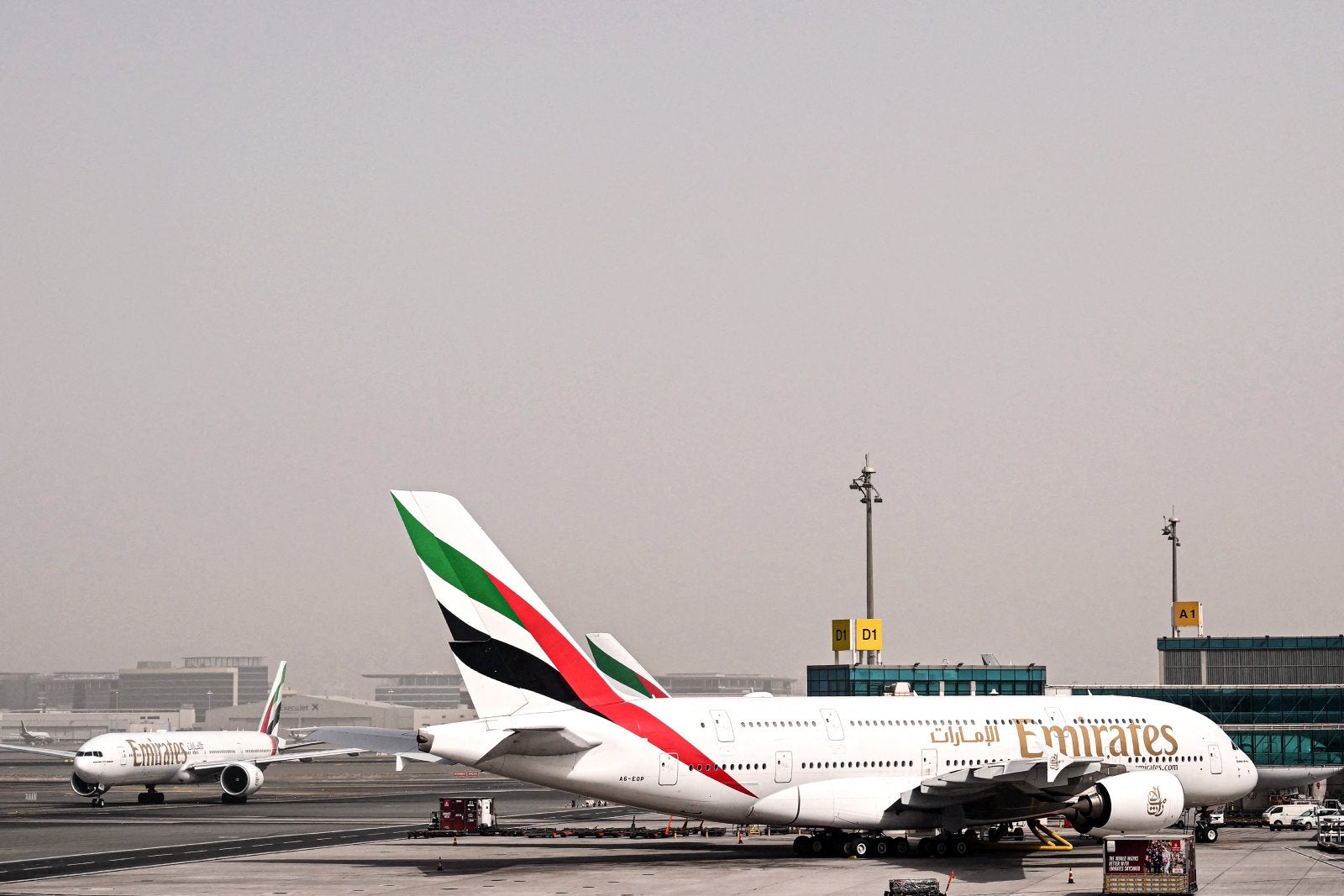
The immediate impact is most visible at the region’s mega-hubs. Dubai International Airport (DXB), currently ranked as the world’s second busiest airport and the primary gateway for international transit, has suspended all operations until further notice. This move has effectively neutralized the operational heart of Emirates, the world’s largest international airline. Similar suspensions are in effect at Zayed International Airport (AUH) in Abu Dhabi and Hamad International Airport (DOH) in Doha, Qatar. These three airports serve as the central nodes for the "hub-and-spoke" model that dominates modern long-haul travel, particularly for passengers moving between Europe, North America, and the Asia-Pacific region.
Aviation analysts suggest that the closure of these hubs will result in a logistical nightmare that could take weeks, if not months, to fully resolve. When a hub like Dubai shuts down, the "ripple effect" is instantaneous. A flight scheduled from London to Sydney via Dubai doesn’t just lose its connection; the aircraft itself is displaced, the crew’s legal working hours are exceeded, and the downstream capacity for the next three days of flights is compromised. Industry experts estimate that for every hour these airports remain closed, the global aviation network loses millions of dollars in lost productivity and operational costs.
The strategic importance of Middle Eastern airspace cannot be overstated. The region sits at the intersection of three continents. Most flight paths between major European cities like London, Paris, and Frankfurt and Asian powerhouses like Singapore, Hong Kong, and Tokyo traditionally pass directly over the now-closed zones of Iraq, Iran, and the Persian Gulf. With these routes unavailable, airlines are forced to engage in "ultra-long" rerouting. Some carriers are opting for a northern "Great Circle" route over the North Pole or through heavily congested corridors in Turkish and Central Asian airspace. Others are pushing southward, traversing Egyptian and Saudi Arabian skies (where still permitted) and then crossing the Indian Ocean.
These detours come with a significant physical and financial price. Rerouting can add anywhere from two to five hours to a flight’s duration. This necessitates massive increases in fuel consumption—often the largest single expense for any airline—and may require some aircraft to make unscheduled refueling stops, further delaying arrivals. Furthermore, the increased flight time puts immense strain on flight crews, many of whom are hitting their maximum "duty days" as defined by international safety regulations, leading to further cancellations even on routes that are technically still flying.
In response to the escalating crisis, major Gulf carriers and international airlines have begun issuing comprehensive travel waivers. Emirates, Qatar Airways, and Etihad have been proactive in allowing passengers to rebook or cancel their itineraries without the usual financial penalties. Western carriers, including United Airlines, Lufthansa, British Airways, and Air France, have followed suit, particularly for their routes that transit the region. However, the sheer volume of affected travelers has overwhelmed customer service centers. Travel experts advise that passengers should prioritize using airline mobile apps and official websites for changes, as phone wait times are reportedly exceeding eight hours in some jurisdictions.
The disruption extends far beyond the tarmac and into the regional hospitality sector. The Middle East, particularly the UAE and Qatar, has invested billions in becoming a global destination for luxury tourism and business conferences. The sudden closure of borders and skies has left luxury properties in a state of crisis management. According to reports from the BBC, iconic establishments such as Fairmont The Palm in Dubai have already felt the impact, dealing with a dual crisis of guests unable to leave and new arrivals unable to reach the property.
Major hotel conglomerates, including Accor, Hilton, Hyatt, IHG, and Marriott, are currently assessing the safety of their staff and the viability of their operations in the conflict zone. Many travelers with upcoming reservations are finding themselves in a difficult position. While some hotels are offering flexible cancellation policies due to the "force majeure" nature of the conflict, others are still operating under standard terms. Travelers are urged to monitor hotel websites for specific crisis-related updates and to avoid calling front desks directly unless absolutely necessary, as staff are prioritized for on-site emergency management.
For those who had the foresight to purchase travel insurance prior to the commencement of hostilities on February 28, there may be a path to financial recovery. Most comprehensive travel insurance policies include "Trip Cancellation" and "Trip Interruption" benefits that are triggered by terrorist incidents or the sudden outbreak of war, provided the policy was purchased before the event became a "known peril." However, the fine print is crucial. Many standard policies have exclusions for "acts of war" or "civil unrest."
Those with high-end credit cards, such as the Chase Sapphire Reserve or the American Express Platinum Card, may have built-in protections. These cards often provide secondary insurance that covers non-refundable expenses when a trip is cancelled due to circumstances beyond the traveler’s control. Nonetheless, insurance experts warn that "Cancel for Any Reason" (CFAR) upgrades are the only surefire way to guarantee a refund in such a volatile geopolitical climate. Without CFAR, travelers are often at the mercy of the airline’s willingness to provide a cash refund versus a travel voucher.
The broader geopolitical implications of these airspace closures are profound. The Middle East has long been a "choke point" for global energy and trade, but this crisis highlights its role as a "choke point" for the movement of people. The decision by the U.S. and Israel to strike Iranian assets was likely calculated with military objectives in mind, but the collateral economic damage to the global aviation industry is a significant unintended (or perhaps anticipated) consequence. Iran’s central location makes it a vital corridor for flights between Europe and India; without it, the "Kangaroo Route" from London to Australia becomes nearly untenable for many existing aircraft configurations.
As the international community watches for a potential de-escalation or further retaliation, the aviation industry remains in a defensive crouch. The International Civil Aviation Organization (ICAO) and various national aviation authorities, such as the FAA in the United States and EASA in Europe, are issuing urgent NOTAMs (Notices to Air Missions) warning pilots of the risks of GPS jamming, misidentification by anti-aircraft systems, and the danger of stray missiles in the region. The memory of Malaysia Airlines Flight MH17 and Ukraine International Airlines Flight 752 looms large in the minds of safety regulators, ensuring that airspace will likely remain closed until a definitive and verifiable ceasefire is established.
For the millions of travelers currently caught in this web of cancellations, the message is one of patience and persistence. The global travel infrastructure is facing its most significant challenge since the total lockdowns of the 2020 pandemic. As airlines scramble to reposition aircraft and hotels manage dwindling occupancy or stranded guests, the economic cost of the February 28 attacks continues to climb, proving once again that in a globalized world, a conflict in one corner of the map can ground the entire planet. Travelers are encouraged to document all expenses, keep copies of all communications from carriers, and stay informed through reputable news outlets as this fluid situation continues to evolve.
