
 By admin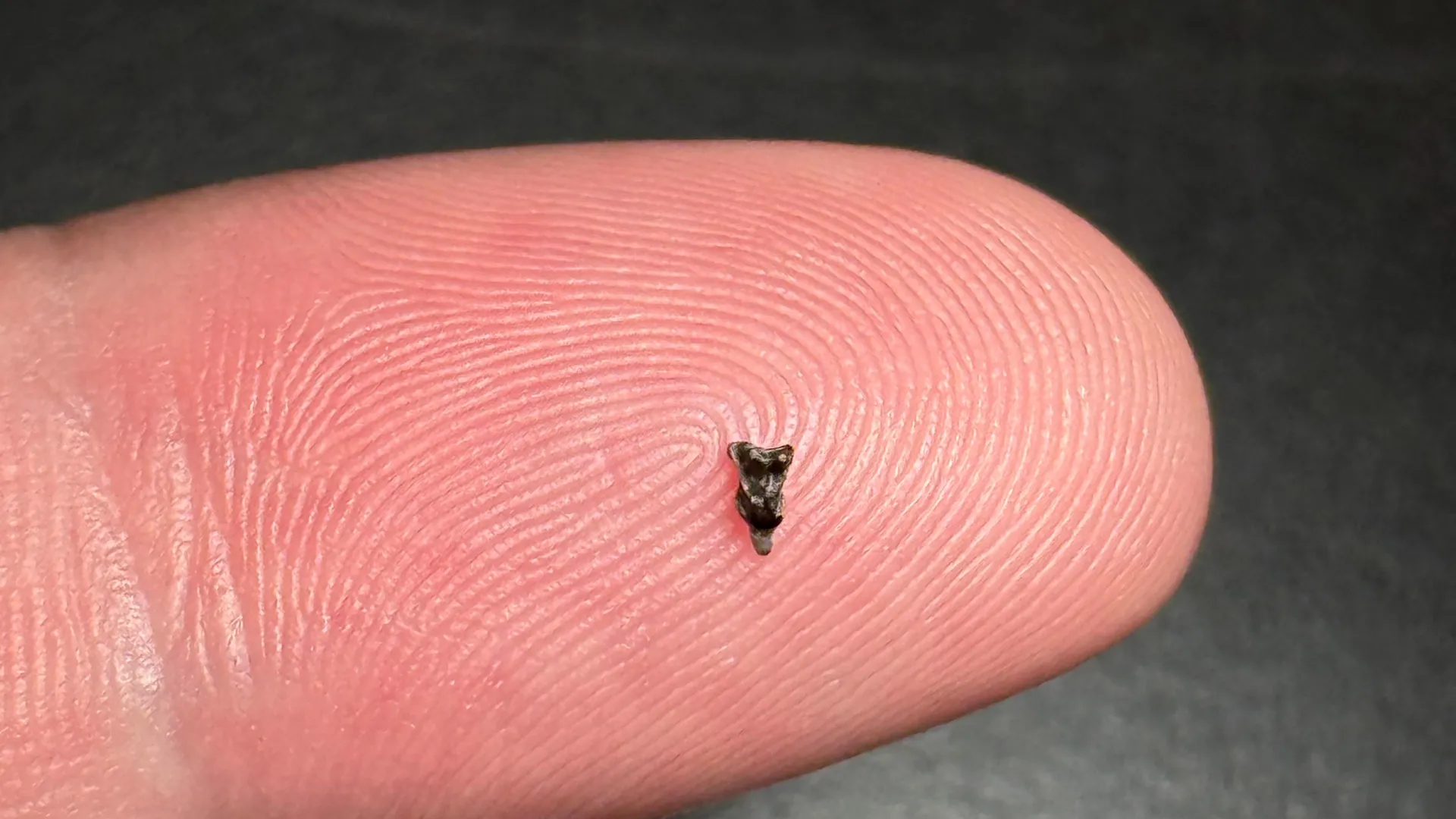
Scientists have made a groundbreaking discovery, uncovering tiny new fossils of Purgatorius, the earliest known relative of all primates—including humans—in a more southern part of North America than ever before. This pivotal find, located in Colorado, is not merely a geographic extension of a known species; it’s offering fresh, critical insight into how primates first evolved, diversified, and spread across the continent in the immediate aftermath of the cataclysmic event that ended the age of dinosaurs. The discovery effectively bridges a significant gap in the fossil record, challenging previous assumptions about early primate distribution and the speed of ecological recovery following mass extinction.
For decades, the origins and early geographic history of primates have been a source of intense debate and persistent mystery among researchers. Purgatorius, a small, unassuming mammal comparable in size to a modern-day shrew, holds a unique place in this evolutionary saga. It makes its initial appearance in the fossil record remarkably shortly after the devastating asteroid impact that rendered dinosaurs extinct approximately 65.9 million years ago, marking the Cretaceous-Paleogene (K-Pg) boundary. This timing is crucial, positioning Purgatorius as widely considered the oldest archaic primate, representing the foundational branch from which all later primates, including our own lineage, would eventually diverge. Its very existence provides a tantalizing glimpse into the nascent stages of mammalian evolution in a world newly opened for diverse life forms.
Despite the fact that rock layers from this critical time period, known as the Paleocene epoch, are extensively found across vast swathes of North America, fossil evidence of Purgatorius had previously been confined to a limited geographic range, primarily Montana and specific parts of southwestern Canada. This narrow distribution posed a considerable challenge to understanding the broader picture of early primate dispersal. While other, slightly more derived early primate relatives have been unearthed in the southwestern United States, their dates typically place them roughly two million years later than the earliest Purgatorius specimens. This chronological and spatial disparity created a perplexing gap in the fossil record—a silent period in primate history that had puzzled paleontologists for generations, hinting at missing chapters in our evolutionary narrative, until now.
The newly unearthed fossils, meticulously documented and published in the peer-reviewed Journal of Vertebrate Paleontology, represent the southernmost definitive record of Purgatorius to date. These invaluable specimens were recovered from Colorado’s Denver Basin, specifically within the renowned Corral Bluffs study area. This region has increasingly become a hotspot for understanding life’s recovery after the K-Pg extinction, offering a unique window into the rapid ecological shifts that shaped the modern world. The Colorado discovery not only pushes the geographic boundaries of Purgatorius but also provides compelling evidence for a more widespread and dynamic early primate radiation than previously imagined.
Evidence of Southward Spread After the Dinosaur Extinction
“The discovery helps fill the gap in understanding the geography and evolution of our earliest primate relatives,” explains lead author Dr. Stephen Chester, an associate professor at Brooklyn College and The Graduate Center, City University of New York (CUNY). Dr. Chester spearheaded this significant study in collaboration with a dedicated team of colleagues from the Denver Museum of Nature & Science (DMNS). Their interdisciplinary approach combined meticulous fieldwork with cutting-edge analytical techniques, allowing for a more complete reconstruction of this ancient primate’s journey. The K-Pg extinction event, triggered by a massive asteroid impact, plunged Earth into a period of global darkness and environmental collapse, wiping out approximately 75% of all species, including the non-avian dinosaurs. However, for surviving mammals, this catastrophe presented an unprecedented evolutionary opportunity, leading to a phenomenon known as adaptive radiation, where new ecological niches opened up, allowing for rapid diversification.
Dr. Chester further elaborates on the implications of the find, stating, “The presence of these fossils in Colorado suggests that archaic primates originated in the north and then spread southward, diversifying soon after the mass extinction at the end of the Cretaceous Period.” This hypothesis paints a vivid picture of a rapid post-extinction expansion, where these small, agile creatures capitalized on newly available resources and habitats. The southward migration could have been driven by a combination of factors, including the availability of food sources, favorable climatic conditions, or the expansion of specific forest types that provided ideal arboreal environments. This model of northward origin and southward dispersal provides a crucial framework for understanding the initial geographic spread of the primate order.
Detailed analysis of fossilized ankle bones, previously found in northern sites, provides crucial clues about the lifestyle of Purgatorius. These bones exhibit features characteristic of arboreal adaptations, strongly suggesting that Purgatorius likely spent a significant portion of its life in trees, navigating through branches and foraging for food within the forest canopy. Because of this suspected arboreal nature, researchers initially entertained the idea that its apparent absence from southern parts of North America might have been directly linked to widespread forest destruction caused by the asteroid impact 66 million years ago. The logic was compelling: if forests were devastated, a tree-dwelling creature would struggle to survive and spread.
However, this initial hypothesis began to unravel as new evidence emerged from the field of paleobotany. Dr. Chester explains, “Ankle bones of Purgatorius exhibit features that indicate it lived in trees, so we initially thought its absence south of Montana could be related to the sweeping devastation of forests from the asteroid impact 66 million years ago. However, our paleobotanical colleagues suggested the recovery of plants in North America was fast, leading us to believe that Purgatorius should also be in more southern regions and perhaps we simply hadn’t looked hard enough.” This interdisciplinary dialogue proved transformative, shifting the research paradigm from assuming absence due to ecological devastation to considering the possibility of a sampling bias. The rapid rebound of plant life, evidenced by fossilized flora, indicated that forests quickly re-established themselves, providing ample habitat for arboreal creatures. This realization prompted a more intensive and targeted search in previously underexplored southern localities.
Screen Washing Reveals Tiny Teeth
To address the challenge of finding exceptionally small fossils and to search more thoroughly, Dr. Chester and his dedicated colleagues at DMNS employed an intensive screen washing process. This specialized technique involves systematically sifting through vast quantities of sediment using fine-mesh screens, allowing researchers to recover even the tiniest fragments of bone and teeth that would be invisible during traditional surface collecting. This meticulous effort was significantly supported by a nearly $3 million collaborative grant from the National Science Foundation (NSF). This funding underpins a broader, ambitious research initiative led by Dr. Tyler Lyson at DMNS, which is focused on understanding the intricate processes of how life recovered and diversified after the mass extinction that abruptly ended the age of dinosaurs. The NSF grant underscores the profound scientific importance of unraveling the mysteries of post-extinction recovery.
The screen washing process itself is a testament to perseverance and scientific dedication. Students and volunteers, many of whom are aspiring paleontologists, painstakingly washed and sorted through prodigious amounts of sediment, often in challenging field conditions. This labor-intensive work, performed with incredible precision, gradually yielded a treasure trove of microfossils. Their efforts uncovered numerous fossils of various fauna, including fish, crocodilians, and turtles, providing a holistic view of the ecosystem’s recovery. Critically, amidst these diverse finds, they eventually discovered several tiny Purgatorius teeth—fossils so minute that some are small enough to comfortably sit on the very tip of a baby’s finger. These teeth, though minuscule, carry an immense amount of information, acting as diagnostic markers for species identification and providing clues about diet and evolutionary relationships.
Dr. Jordan Crowell, a postdoctoral fellow at DMNS and a key member of the research team, expresses the profound excitement surrounding these particular teeth. He notes that what makes them especially "exciting" is the possibility that they may belong to an even earlier or perhaps entirely new species of Purgatorius. This prospect holds significant implications for understanding the diversification rate of early primates. “The specimens have a unique combination of features compared to known species of Purgatorius,” Dr. Crowell adds, highlighting the morphological distinctiveness of the Colorado finds. However, he prudently emphasizes the scientific caution required, stating, “but we are awaiting the recovery of additional material to assess whether these fossils represent a new species.” Should these additional fossils confirm a new species, it would further enrich our understanding of the early evolutionary radiation of primates, potentially revealing a more complex and diverse initial branching event than previously recognized.
Overlooked Fossils and New Insights
This groundbreaking discovery also serves as a powerful reminder that the apparent absence of early primate relatives in more southern parts of the Western Interior of North America may have been significantly influenced by sampling bias. For nearly 150 years, paleontologists working in this vast region have largely relied on traditional surface collecting methods. While effective for finding larger, more easily visible fossils, this approach inherently overlooks the tiny specimens that are critical for understanding the evolutionary history of small-bodied animals like Purgatorius, leaving them hidden beneath layers of earth, awaiting more sophisticated recovery techniques. The Colorado discovery demonstrates that a lack of evidence is not always evidence of absence, but rather an indication that the right search methods haven’t been applied.
Dr. Lyson, a co-author on the study and the lead for the broader NSF-funded initiative, passionately underscores the collaborative nature and long-term commitment behind these revelations. “Thanks to our long-term partnership with the City of Colorado Springs, who own the land where the fossils were collected, as well as countless hours of work by our volunteers and interns picking through the dirt for the precious vertebrate fossils, we are building some incredible datasets that provide insights on how life, including our earliest primitive primate ancestors, rebounded after the single worst day for life on Earth.” This statement highlights the synergy between scientific institutions, local government, and dedicated citizen scientists, all contributing to a monumental effort to piece together the narrative of life’s resilience. The phrase "single worst day for life on Earth" evocatively captures the catastrophic scale of the K-Pg extinction, making the story of recovery and the rise of mammals all the more compelling.
In concluding remarks that resonate with profound implications for future paleontological research, Dr. Chester reaffirms, “Our results demonstrate that small fossils can easily be missed.” This observation is not merely a statement of fact but a call to action for the scientific community. He further asserts, “With more intensive searching, especially using screen-washing techniques, we will undoubtedly discover many more important specimens.” This forward-looking perspective suggests that many more evolutionary secrets, perhaps even earlier primate ancestors or other pivotal transitional forms, lie hidden within the sedimentary layers of North America and beyond, waiting to be unearthed by diligent application of advanced paleontological methods. The discovery of Purgatorius in Colorado is not just an end to a long-standing mystery, but a new beginning for understanding the very dawn of primate evolution.
The study also included significant contributions from co-author Dr. David Krause, who holds the esteemed position of Senior Curator of Vertebrate Paleontology at the Denver Museum of Nature & Science, further cementing the collaborative strength and expertise brought to bear on this pivotal scientific endeavor.
