
 By admin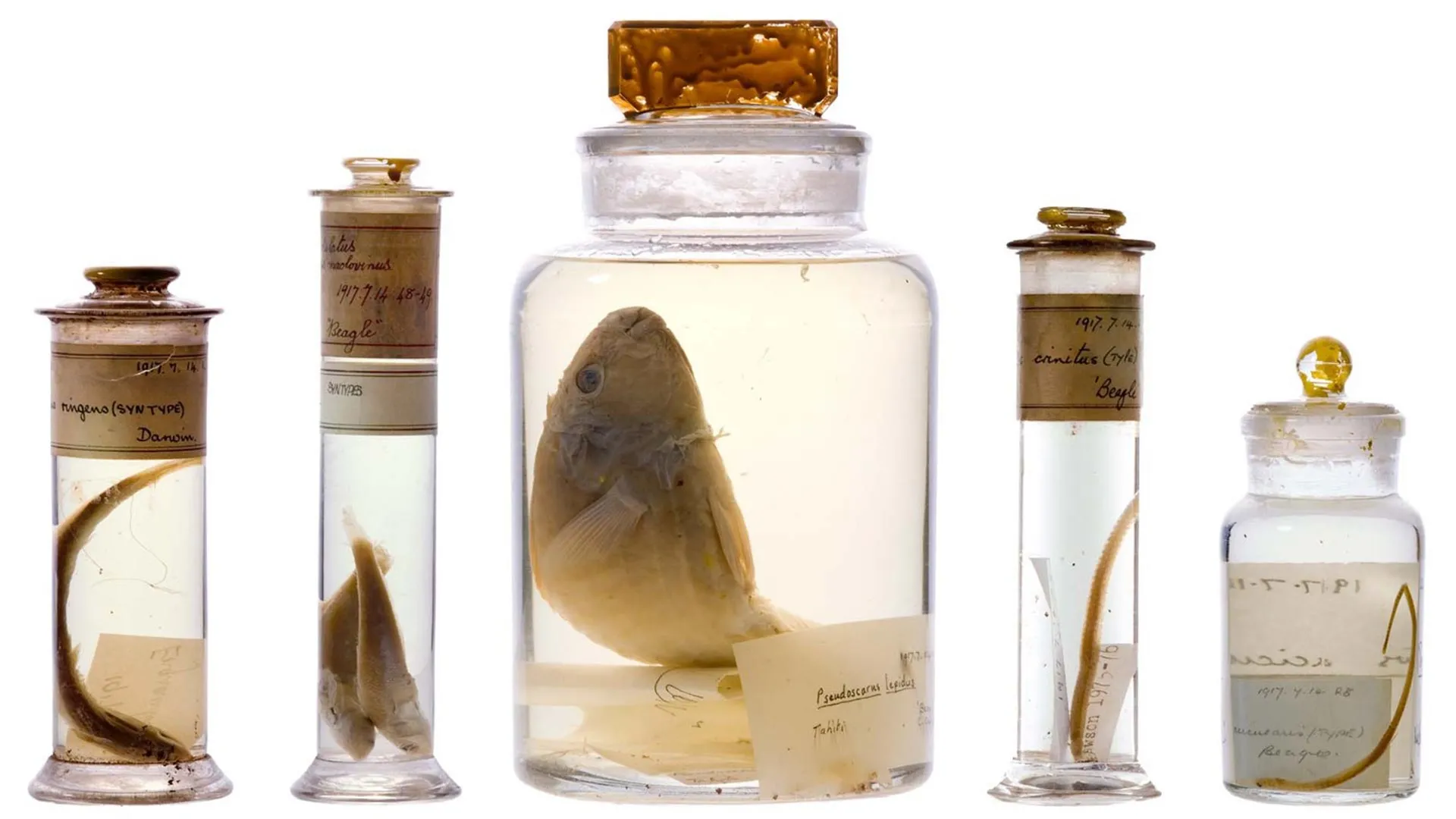
This groundbreaking achievement marks a significant leap forward in the field of natural history conservation and research. For centuries, the priceless collections gathered by pioneers like Darwin have been housed in sealed containers, their delicate contents suspended in often-unknown preservation fluids. Now, thanks to a sophisticated, non-invasive laser technology, researchers have peered inside these nearly 200-year-old jars without ever breaking their seals, unlocking secrets about both the specimens themselves and the historical methods used to preserve them.
The research focused on a meticulously selected cohort of 46 historic specimens, all integral parts of the vast collections at the Natural History Museum in London. These samples represent a cross-section of the biological diversity Darwin and other early naturalists meticulously documented during their expeditions, encompassing an array of life forms including mammals, reptiles, fish, jellyfish, and various crustacean species like shrimp. The ability to examine these irreplaceable artifacts without direct intervention represents a paradigm shift, allowing for unprecedented insight into scientific practices of the past while safeguarding them for future generations.
A Glimpse into 19th-Century Preservation
The meticulous analysis of these specimens has begun to reveal a fascinating tapestry of preservation practices, highlighting the ingenuity and evolving methodologies of 19th-century naturalists. It became evident that the choice of preservation fluid was not arbitrary but varied significantly, influenced by both the biological characteristics of the organism and the specific time period in which the specimen was prepared and stored.
For instance, larger, more complex organisms such as mammals and reptiles were frequently subjected to an initial treatment with formalin, a powerful fixative, before being transferred for long-term storage in ethanol. Formalin’s role was primarily to "fix" tissues, preventing decomposition and maintaining cellular structure, while ethanol served as a robust, long-term preservative, inhibiting microbial growth. In stark contrast, invertebrates, a remarkably diverse group, presented a wider range of preservation challenges and, consequently, a more varied approach to their storage. These delicate creatures were found immersed in an assortment of liquids, including pure formalin, buffered solutions designed to maintain specific pH levels, or complex mixtures that often contained additives such as glycerol. Glycerol, for example, might have been included to prevent specimens from becoming brittle over time, maintaining their flexibility and anatomical integrity.
The ability to precisely identify these historical preservation fluids is more than just an academic exercise; it has profound implications for the ongoing care and conservation of these invaluable collections. Understanding the chemical environment in which a specimen has resided for nearly two centuries is crucial for assessing its current condition, predicting potential degradation pathways, and developing targeted conservation strategies.
Precision Through the Glass: Identifying Preservation Fluids
The core of this scientific triumph lies in the deployment of a cutting-edge portable laser spectroscopy method known as Spatially Offset Raman Spectroscopy (SORS). This revolutionary technology enabled researchers to accurately determine the chemical composition of the preservation fluids without requiring direct access to the liquid itself. Through the seemingly impenetrable barriers of sealed containers, SORS offered a non-invasive window into the chemical world within.
The success rate of this technique was remarkably high. Researchers were able to correctly identify the specific preservation fluids in approximately 80% of the specimens they tested, providing a comprehensive chemical fingerprint. In another 15% of cases, the technique offered partial but still highly valuable identification, shedding light on key components of the preserving medium. This level of accuracy is transformative for museum curators who often inherit collections with incomplete or lost documentation regarding their original preservation methods.
Beyond identifying the liquids, the SORS method also provided an unexpected but equally valuable piece of information: it accurately revealed whether the containers themselves were made from glass or plastic. While most of Darwin’s original specimens would undoubtedly be housed in glass, the ability to differentiate container materials is crucial for broader museum collections, which span various eras and storage practices. This information helps scientists better understand how storage practices have evolved over time and contributes to a more complete historical context for each specimen.
The Ingenuity of SORS: From Airports to Ancient Specimens
Spatially Offset Raman Spectroscopy (SORS) is a testament to interdisciplinary scientific innovation. The technology works by directing a low-power laser beam into the wall of a sealed container. As the laser light interacts with the molecules of the container and the fluid inside, it undergoes subtle shifts in wavelength, a phenomenon known as Raman scattering. Crucially, SORS is designed to collect scattered light not just from the surface but also from deeper layers within the material. By offsetting the detection point from the laser illumination point, it effectively filters out signals from the outer layers of the container, allowing for a clearer chemical signature from the contents within. These subtle wavelength shifts, unique to specific chemical bonds, are then analyzed to reveal the precise chemical composition of substances inside the container.
Originally developed at the Science and Technology Facilities Council’s (STFC) Central Laser Facility in the UK, SORS has already proven its versatility and robustness in a completely different, high-stakes application: airport security scanners worldwide. Through a collaboration with Agilent Technologies, this same principle is employed to non-invasively detect hazardous liquids in passenger luggage, demonstrating its reliability and safety. The successful adaptation of this technology from a security context to the delicate realm of museum conservation highlights the profound impact that cross-disciplinary scientific development can have.
Dr. Sara Mosca, a leading researcher at the STFC Central Laser Facility, emphasized the transformative nature of this breakthrough: "Until now, understanding what preservation fluid is in each jar meant opening them, which inherently carries significant risks. This process could lead to irreversible evaporation of volatile components, introduce potential contaminants into the pristine environment of the specimen, and expose these invaluable artifacts to environmental damage from changes in humidity or temperature. This new technique allows us to monitor and meticulously care for these invaluable specimens without compromising their integrity in any way." Her words underscore the delicate balance between scientific inquiry and the paramount need for conservation.
A New Tool for Global Museum Collections
The implications of this research extend far beyond Darwin’s personal collection. Museums and natural history institutions around the globe collectively house an astonishing more than 100 million specimens preserved in liquid. This colossal treasure trove represents the accumulated knowledge of biodiversity over centuries, a living library of life on Earth. However, managing and preserving such vast collections presents immense challenges.
For curators, knowing the exact chemical makeup of the preservation fluid is not merely a matter of curiosity; it is absolutely essential for the long-term monitoring and maintenance of these irreplaceable collections. Over time, preservation fluids can degrade, change their chemical properties, or, most commonly, evaporate. A drop in fluid level or a shift in pH can have catastrophic consequences, leading to the drying out, discoloration, or even complete decomposition of the specimen. Before SORS, identifying these issues often required opening the jars, which, as Dr. Mosca pointed out, is a risky endeavor.
Being able to analyze these liquids non-invasively gives museum professionals a powerful new way to proactively track the health of their collections. Curators can now assess the stability of preservation fluids, identify potential problems before they escalate, and intervene with targeted conservation measures, such as topping up or replacing fluids, only when absolutely necessary and with full knowledge of the original chemical context. This preventive conservation approach not only saves countless hours of labor but, more importantly, drastically reduces the risk of damage to fragile specimens.
Transforming Natural History Research and Conservation
Wren Montgomery, a dedicated research technician at the Natural History Museum, articulates the profound impact this work will have on the institution’s mission. "As part of NHM Unlocked, here at the Museum we can analyze jars containing specimens without opening and disturbing their integrity," she explains. NHM Unlocked is an initiative aimed at making the museum’s vast collections more accessible for research and public engagement, and this SORS technology is a perfect embodiment of its goals.
Montgomery continues, "This work is the next step in demonstrating the Museum’s commitment to transforming the study of natural history. Analyzing the storage conditions of precious specimens, and understanding the fluid in which they are kept, could have huge implications for how we care for collections and preserve them for future research for years to come." Her statement highlights not just the immediate benefits for conservation but also the potential for unlocking new avenues of scientific inquiry.
Knowing the precise chemical environment of a specimen can inform future analytical techniques. For example, if a specimen was preserved in a solution known to be compatible with ancient DNA extraction, researchers might be more confident in attempting such delicate procedures. Conversely, identifying harsh or degrading preservation methods might prompt new research into non-destructive DNA or protein recovery methods. This technology bridges the gap between historical scientific practice and cutting-edge molecular biology, promising a deeper understanding of evolutionary processes, biodiversity, and even the impacts of climate change over historical timescales.
This pioneering collaboration, bringing together the expertise of the Natural History Museum, the STFC Central Laser Facility, and the technological prowess of Agilent Technologies, represents a benchmark for interdisciplinary science. It exemplifies how physics and chemistry can serve biology and history, ensuring that the legacy of scientists like Charles Darwin continues to inspire and inform discovery for centuries to come.
The full details of this groundbreaking study were officially published in ACS Omega, a prestigious journal of the American Chemical Society, and were notably featured as the ACS Editors’ Choice on January 13, 2026, underscoring its significant contribution to scientific methodology and conservation.
