
 By Isnaini Azizah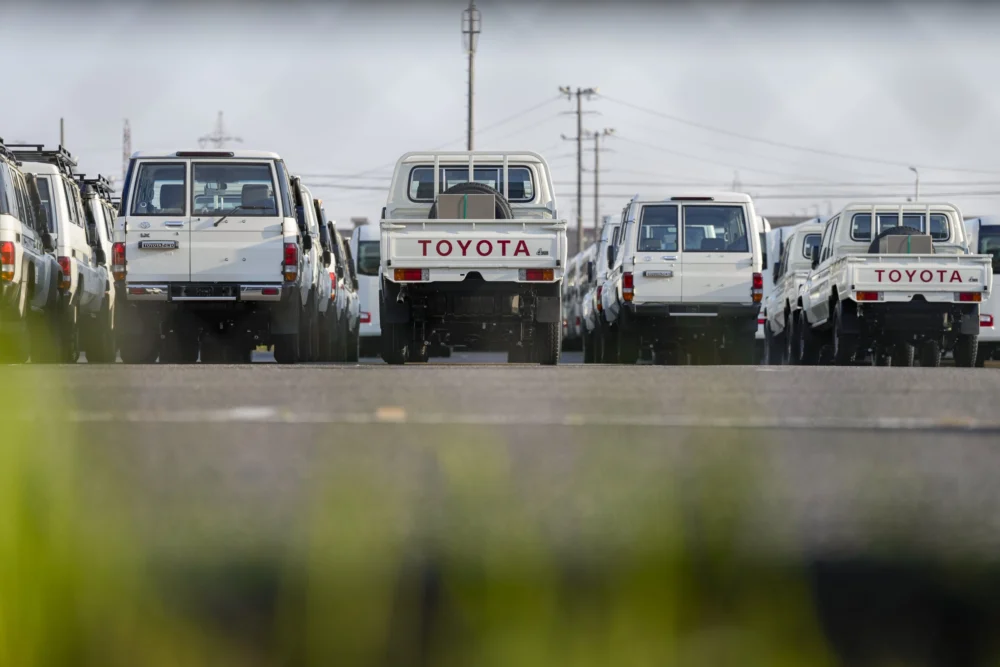
The escalating geopolitical tensions between the United States, Israel, and Iran have sent shockwaves through the global financial markets, but perhaps nowhere is the anxiety more palpable than in the boardrooms of the world’s leading automotive manufacturers. As the conflict threatens to destabilize one of the most critical energy and logistics corridors on the planet, a new comprehensive analysis from Bernstein suggests that the industry is facing a multifaceted crisis that could derail the post-pandemic recovery. According to the report, non-domestic automakers, particularly those with significant footprints in the Middle East, are bracing for a period of intense volatility that could redefine market shares and supply chain strategies for years to come.
At the heart of the exposure are three major players: Japan’s Toyota Motor Corp., South Korea’s Hyundai Motor, and China’s Chery. These international giants collectively account for approximately one-third of all vehicle sales in the Middle East, a region that has become a vital growth engine for the industry. Toyota leads the pack with a commanding 17% market share, followed by Hyundai at 10% and Chery at 5%. For these companies, the Middle East is not merely a peripheral market; it is a high-margin stronghold where brand loyalty and demand for rugged, reliable vehicles—particularly SUVs and trucks—have traditionally been high.
In Iran, the domestic landscape is dominated by local champions Iran Khodro and SAIPA, which have long benefited from protectionist policies and international sanctions that limited Western competition. However, Bernstein’s report highlights that Chery has managed to carve out a significant niche in the Iranian market, holding a 6% share. This makes the Chinese automaker uniquely vulnerable to the internal economic disruptions within Iran that are likely to follow any sustained military engagement.
The broader impact on Chinese automakers cannot be overstated. Over the last decade, Beijing has aggressively pushed its automotive exports as domestic demand slowed, and the Middle East has emerged as a primary destination. In 2025, the region accounted for a staggering 17% of China’s total passenger vehicle exports. The current conflict threatens to shutter this vital outlet, potentially leaving Chinese manufacturers with a massive surplus of inventory and nowhere to send it, thereby depressing global prices and squeezing profit margins.
The most immediate and visceral threat to the industry, however, lies in the potential closure of the Strait of Hormuz. This narrow waterway, which links the Persian Gulf to the Gulf of Oman and the Indian Ocean, is the world’s most important oil chokepoint. According to data from the consulting firm AlixPartners, roughly 20 million barrels of crude oil—nearly a fifth of global consumption—pass through the strait every day. But for the automotive industry, the strait is also a "critical passage" for the delivery of finished vehicles and the specialized parts required for local assembly plants.
Bernstein analyst Eunice Lee warned in a Wednesday investor note that any disruption to this passage would be catastrophic for logistics. "Closure of the Strait of Hormuz adds 10 to 14 days to transit times as ships are forced to reroute around the Cape of Good Hope," Lee noted. This delay is more than just a scheduling inconvenience; it represents a massive spike in fuel costs, insurance premiums, and labor expenses. For an industry that has spent decades perfecting "just-in-time" manufacturing, a two-week delay in the delivery of components can lead to factory shutdowns thousands of miles away from the actual conflict zone.
The ripple effects extend far beyond the physical movement of goods. The mere threat of a closure has already sent energy markets into a tailspin. U.S. crude oil prices recently topped $90 per barrel, a psychological and economic threshold that historically triggers a slowdown in consumer spending. In the United States, retail gasoline prices jumped nearly 27 cents in a single week, reaching an average of $3.25 per gallon. If the conflict escalates, analysts fear gasoline could quickly approach the $4.00 mark, a level that Julian Emanuel of Evercore ISI has previously described as an "economic tipping point" for the American consumer.

This spike in energy costs has placed a spotlight on the strategic decisions of major automakers, most notably Stellantis. The parent company of Chrysler, Jeep, and Ram has recently come under fire for what some analysts call an "inauspiciously timed" pivot. While competitors have continued to invest heavily in electrification and fuel efficiency, Stellantis has doubled down on high-margin, gas-guzzling HEMI V8 engines and scaled back some of its more ambitious EV targets.
The market reaction has been swift and unforgiving. Stellantis’ stock price has slumped 11% since the end of last week, reflecting investor fears that the company is ill-equipped for a world of $90 oil. "Writing off its electrification efforts seems particularly poorly timed at the moment," Lee wrote, suggesting that Stellantis’ exposure is the largest among European automakers due to its product mix and existing operational challenges. In a statement, Stellantis said it is "closely monitoring developments" but admitted it is not yet possible to fully assess the potential impact on its local and global operations.
Toyota, by contrast, has adopted a more cautious and transparent stance. In an emailed statement, the Japanese giant clarified that it does "not conduct business in Iran and do not have any resident employees there." However, the company acknowledged the broader regional risks, stating that it is prioritizing the safety of its personnel in neighboring Middle Eastern countries. While Bernstein suggests that the direct effect on Japanese automakers appears limited for now, the interconnectedness of global supply chains means that no company is truly insulated.
The situation for Hyundai and Chery remains more opaque, as neither company has provided an immediate response to requests for comment. Their silence highlights the delicate balancing act required of international corporations operating in geopolitical hotspots. For Chery, in particular, the conflict poses a diplomatic challenge, as China seeks to maintain its role as a major economic partner to both Iran and the broader Arab world.
Beyond the immediate concerns of sales and logistics, the U.S.-Israel-Iran conflict threatens to reignite the inflationary pressures that central banks have been struggling to tame. High energy prices act as a regressive tax on consumers, reducing the disposable income available for large purchases like new vehicles. Furthermore, the cost of raw materials used in auto manufacturing—such as aluminum, steel, and plastics—is heavily dependent on energy prices. A sustained period of high oil prices will inevitably lead to higher vehicle MSRPs, further dampening demand in a market that is already grappling with high interest rates.
There is also the matter of regional stability and its impact on the "emerging market" narrative that has driven automotive investment for twenty years. The Middle East was supposed to be a cornerstone of the industry’s future, a region with a young, growing population and a desire for modernization. A prolonged conflict risks turning the region into a "no-go zone" for capital, leading to a pull-back in infrastructure projects and a freeze on the development of new dealership networks.
As the situation unfolds, the industry is looking for signs of de-escalation, but the rhetoric remains heated. The closure of the Strait of Hormuz remains the "nuclear option" of economic warfare, one that Iran has threatened in the past but has rarely acted upon due to the mutual destruction it would cause to its own economy. However, in a full-scale war involving the U.S. and Israel, the traditional rules of economic self-interest may no longer apply.
For the global automotive industry, the lesson of the current crisis is a familiar but painful one: the era of global stability that allowed for hyper-efficient, borderless manufacturing is under siege. Whether it is a semiconductor shortage in Taiwan, a war in Ukraine, or a conflict in the Persian Gulf, the modern car is a product of a global system that is increasingly fragile. As Toyota, Hyundai, Chery, and Stellantis navigate the coming months, their ability to adapt to a high-cost, high-risk environment will determine who emerges as a leader in the next era of mobility. For now, the world watches the Strait of Hormuz, knowing that the price of a gallon of gas and the availability of the next new car are tied inextricably to the volatile politics of the Middle East.
