
 By admin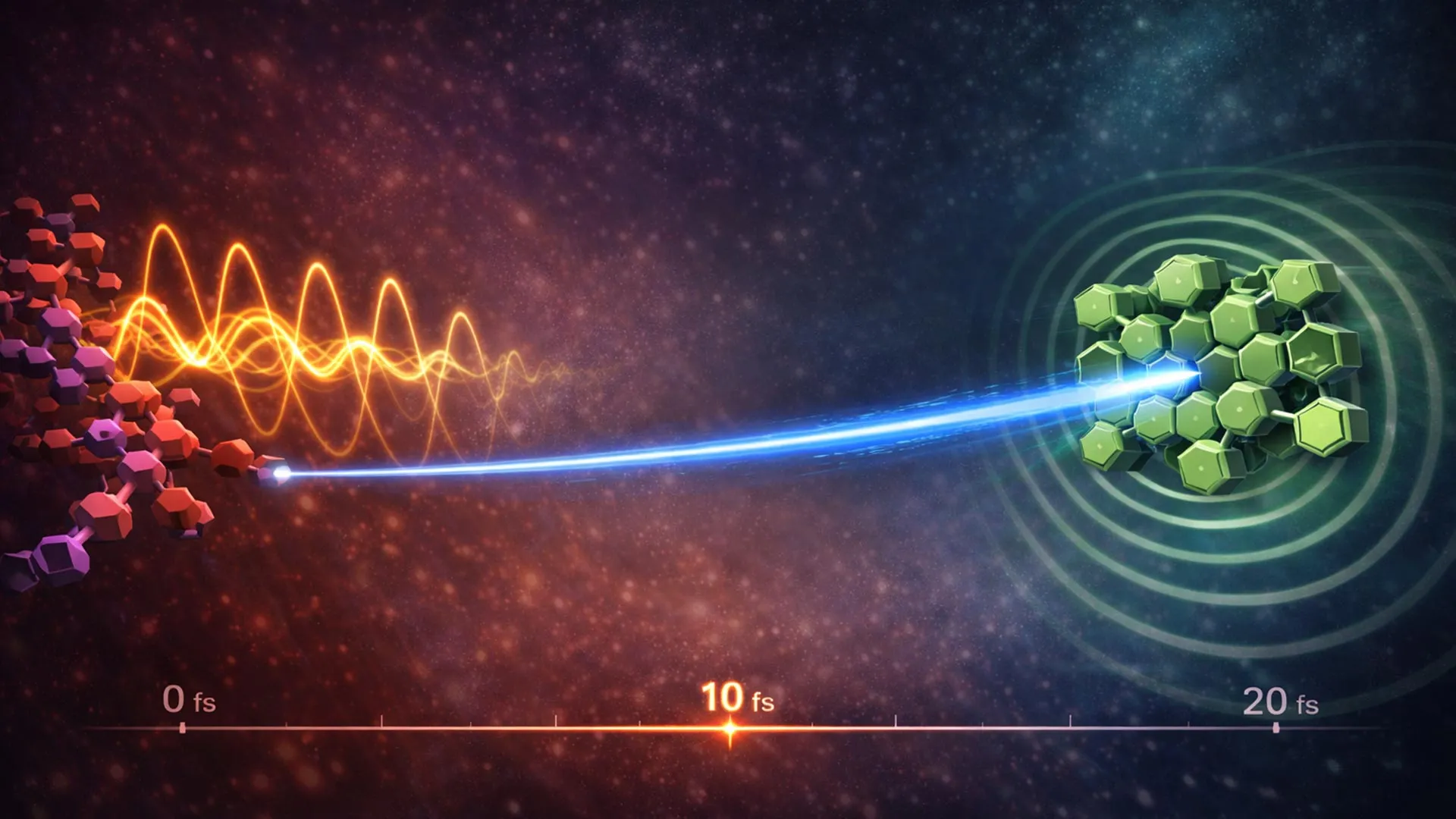
The discovery, meticulously detailed in laboratory experiments, recorded events lasting a mere 18 femtoseconds – an almost unfathomably short duration, less than 20 quadrillionths of a second. This blink-and-you-miss-it timescale is precisely where the action happens, revealing a process where electrons are not merely drifting but are actively launched with coherent, ballistic motion. This challenges the long-held scientific consensus that efficient charge transfer in organic materials necessitated specific, often restrictive, conditions that could inadvertently limit the overall efficiency of solar energy capture and conversion.
Dr. Pratyush Ghosh, a Research Fellow at St John’s College, Cambridge, and the study’s lead author, underscored the deliberate nature of their experimental design. "We deliberately engineered a system that, according to conventional theory, should not have transferred charge this fast," Dr. Ghosh explained. "Based on existing design principles, this particular configuration should have been inherently slow, which is precisely what makes our observation so startling and significant." He further elaborated on the mechanism: "Instead of the electron moving in a random, diffusive manner, it is launched in one coherent, directed burst. The molecular vibration acts much like a precisely timed catapult, propelling the electron. Crucially, these vibrations are not passive accompaniments to the process; they are the active driving force behind it."
Witnessing Electrons on the Timescale of Atoms
To truly grasp the magnitude of this discovery, one must appreciate the incredible timescales involved. A femtosecond is one quadrillionth of a second – to put it into perspective, there are more femtoseconds in a single second than there have been hours since the universe is believed to have begun. At such an incredibly minuscule timescale, the very atoms within molecules are in constant, frenetic motion, vibrating at their natural frequencies. It is within this dynamic atomic dance that the researchers observed electrons migrating between materials, astonishingly, at essentially the same pace as these fundamental atomic motions. As Dr. Ghosh aptly put it, "We’re effectively watching electrons migrate on the same clock as the atoms themselves." This synchronization points to an intimate and direct coupling between the vibrational energy of the molecules and the electronic charge transfer process.
The research, published in the prestigious journal Nature Communications on March 5, 2026, directly confronts and overturns long-standing design assumptions prevalent in solar energy science. For decades, the scientific community largely operated under the premise that achieving ultrafast charge transfer – a critical step for high-efficiency solar energy systems – required two primary conditions: large energy differences between the interacting materials and strong electronic coupling between them. While these conditions can indeed facilitate charge transfer, they often come with inherent trade-offs. Large energy differences can lead to a reduction in the photovoltage that a solar cell can generate, effectively limiting its maximum power output. Similarly, overly strong electronic coupling can sometimes increase the likelihood of charge recombination, where the separated electron and ‘hole’ (the positively charged vacancy left behind) snap back together before they can be harvested, leading to energy loss as heat. These perceived requirements, therefore, often presented a Catch-22 for materials scientists: optimize for speed, and you might compromise on efficiency elsewhere.
Understanding How Light Creates Energy in Solar Materials: The Exciton Challenge
To fully appreciate the implications, it’s vital to understand the initial stages of light-to-electricity conversion, particularly in the context of organic (carbon-based) materials used in advanced solar technologies. When a photon of light strikes many of these materials, it doesn’t immediately create free, mobile electrons. Instead, it generates a tightly bound packet of energy known as an "exciton." An exciton is essentially an electron and a ‘hole’ (the positively charged vacancy where the electron used to be) that are electrostatically attracted to each other, much like tiny orbiting partners. For devices such as organic solar cells, photodetectors, and photocatalytic systems to function effectively, this tightly bound exciton pair must rapidly separate into free, mobile charges – an independent electron and an independent hole – that can then be collected and directed to produce an electric current.
The speed at which this separation occurs is paramount. The faster the exciton splits into free charges, the less time the electron and hole have to recombine, which would waste the absorbed light energy as heat. This ultrafast separation is therefore a critical determinant of how efficiently solar panels and other light-harvesting technologies convert incoming sunlight into usable electrical power. Slow separation translates directly into lower efficiency. The conventional wisdom suggested that to achieve this rapid split, significant energetic "driving forces" were necessary to overcome the binding energy of the exciton and push the charges apart, along with strong electronic overlap to facilitate the electron’s jump.
To investigate whether this perceived trade-off between ultrafast charge transfer and potential efficiency losses was truly unavoidable, the Cambridge researchers embarked on a highly counter-intuitive experimental design. They intentionally created a system that, by all conventional metrics, should have been a poor performer. They selected a polymer as the electron "donor" material and paired it with a non-fullerene acceptor (NFAs are a newer class of organic acceptor materials, distinct from traditional fullerenes). Crucially, they designed this interface with almost no energetic difference between the relevant electronic states of the donor and acceptor, and engineered only a weak electronic interaction between the two materials. Under the prevailing theories, these conditions – minimal energy difference and weak coupling – should have significantly slowed down the charge transfer process, perhaps even preventing it from occurring efficiently.
Instead, the experimental results defied expectations: the electron crossed the interface in an astonishingly short 18 femtoseconds. This speed is not only faster than many previously studied organic systems but remarkably, it matches the natural, intrinsic rhythm of atomic motion. "Seeing it happen on this timescale, effectively within the duration of a single molecular vibration, is truly extraordinary and fundamentally alters our understanding of these processes," remarked Dr. Ghosh.
Molecular Vibrations: The Unsung Drivers of Ultrafast Electron Motion
The key to unraveling the mechanism behind this unexpected result lay in sophisticated ultrafast laser experiments, specifically using pump-probe spectroscopy. This technique involves using an initial "pump" laser pulse to excite the material and then a precisely timed, subsequent "probe" pulse to observe the material’s response on femtosecond timescales. These experiments revealed that when the polymer donor material absorbed light, it didn’t just passively await charge transfer; instead, it began vibrating in specific, high-frequency patterns.
It is these particular molecular vibrations that play the role of the "molecular catapult." The vibrations actively "mix" the electronic states of the donor and acceptor molecules, a phenomenon known as vibronic coupling. This dynamic mixing effectively creates a transient pathway or a "slope" that pushes the electron across the boundary with incredible speed. Rather than a slow, random diffusion process where the electron gradually hops or tunnels across the interface, the vibrations induce a directional, ballistic motion, akin to being shot across a short gap. The electron doesn’t just wander; it is coherently driven.
Further evidence for this novel mechanism came from another remarkable observation: once the electron successfully reaches the acceptor molecule, it immediately sets off a new, distinct coherent vibration within that acceptor. This specific "coherent vibration" signal is rarely observed in organic materials and serves as a direct and unambiguous fingerprint of how quickly and cleanly the charge transfer event occurred. Dr. Ghosh emphasized its significance: "That coherent vibration is an undeniable fingerprint, telling us precisely how fast and how cleanly the transfer occurs. It’s direct evidence of the vibronic mechanism in action."
This led Dr. Ghosh to a profound conclusion: "Our results unequivocally show that the ultimate speed of charge separation isn’t determined solely by the static electronic structure of the materials – that is, their inherent energy levels or how strongly they are coupled when still. Instead, it critically depends on how molecules dynamically vibrate and interact. This revelation gives us an entirely new design principle for solar materials. In a way, this gives us a completely new rulebook for materials science. Instead of attempting to suppress or ignore molecular vibrations, which were often considered a source of energy loss, we can now learn how to harness and utilize the right ones to drive desired processes."
Profound Implications for Solar Energy and Light Harvesting Technologies
The implications of this discovery are far-reaching, promising to open up entirely new strategies for designing more efficient light-harvesting technologies across various applications. Ultrafast charge separation is not just an academic curiosity; it is a fundamental, rate-limiting step in a wide array of systems crucial for our transition to a sustainable future.
For organic solar cells, which offer the promise of flexible, lightweight, and low-cost photovoltaics, this research could lead to significant breakthroughs. By engineering materials that leverage specific molecular vibrations, scientists could dramatically improve the efficiency of charge separation, thereby boosting the overall power conversion efficiency of these devices. This could make organic solar cells more competitive with traditional silicon-based panels.
Beyond electricity generation, the principles apply to photodetectors, where faster charge separation translates directly into faster response times and higher sensitivity, vital for applications ranging from imaging to telecommunications. Similarly, in photocatalytic devices, which utilize light energy to drive chemical reactions, such as splitting water to produce clean hydrogen fuel or converting carbon dioxide into useful chemicals, efficient charge separation is paramount. By preventing charge recombination, more of the absorbed light energy can be channeled into driving the desired chemical transformations.
Intriguingly, the researchers also draw parallels to natural processes. Similar ultrafast charge separation mechanisms are known to occur during photosynthesis, the marvelously efficient process by which plants convert sunlight into chemical energy. Understanding and mimicking nature’s strategies could lead to highly bio-inspired energy solutions.
Professor Akshay Rao, Professor of Physics at the Cavendish Laboratory and a former St John’s College Research Associate, who also co-authored the study, articulated the shift in scientific perspective: "For a long time, molecular motion, or vibrations, were often viewed as a limitation – something that causes energy loss or needs to be suppressed in materials design. Our findings demonstrate the exact opposite. We can now envision designing materials that actively use these vibrations, effectively turning what was once considered a hindrance into a powerful tool for enhanced energy conversion."
This ambitious project was a testament to the collaborative spirit of modern scientific research, bringing together diverse expertise from within the University of Cambridge, including scientists from the Cavendish Laboratory and the Yusuf Hamied Department of Chemistry. Dr. Rakesh Arul, a St John’s College Research Fellow, was also a key contributor. Furthermore, the international scope of the research was evident through the involvement of collaborators from leading institutions in Italy, Sweden, the United States, Poland, and Belgium, pooling their collective knowledge in areas such as advanced materials synthesis, theoretical modeling, and cutting-edge spectroscopic techniques to achieve this remarkable breakthrough. The collective effort underscores the global drive towards more efficient and sustainable energy solutions, propelled by fundamental discoveries that redefine the boundaries of what is possible.
