
 By admin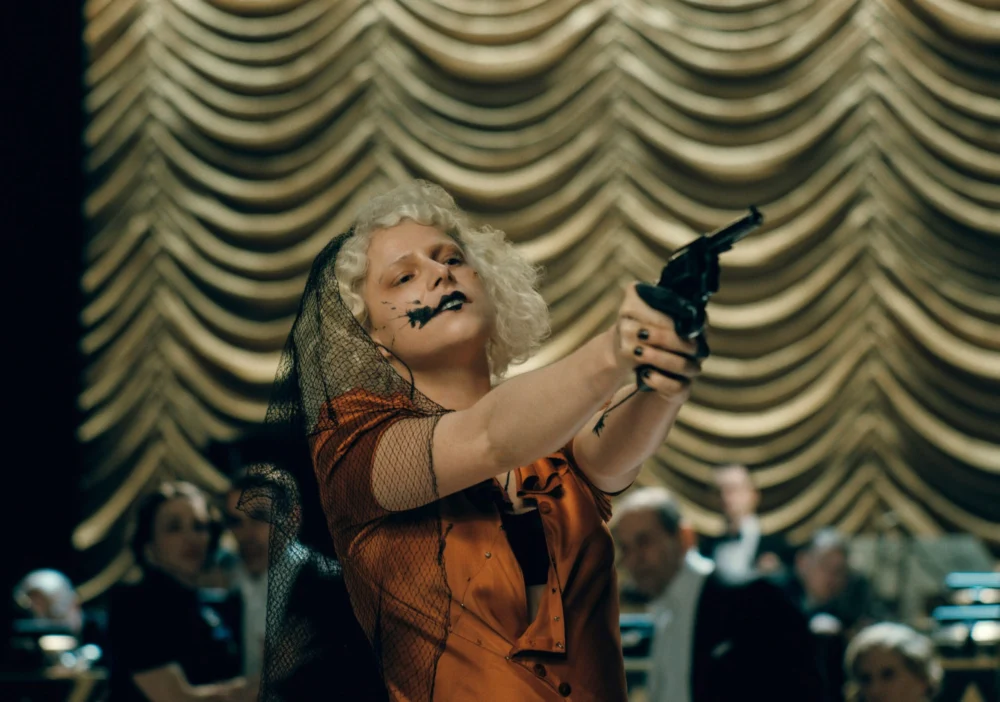
Maggie Gyllenhaal’s rewatch of James Whale’s 1935 classic, “The Bride of Frankenstein,” unearthed a profound cinematic oversight that has echoed through generations of storytelling. The Bride, a character poised to be central, is relegated to a mere two minutes of screen time. She utters no words, her existence defined by a single scream and a fiery demise, a tragic figure brought into being solely for a man who repulsed her, within a world that offered her no agency. Her story, until now, has consistently concluded with her annihilation.
“She finds herself in such an insane situation,” Gyllenhaal remarked during a press conference, articulating the core of her directorial vision. “Having been brought back from the dead without her consent to be the wife of someone that she’s never met.” This glaring absence – a character conjured into existence, systematically denied everything, and then erased – served as the potent genesis for Gyllenhaal’s ambitious new film, “The Bride!,” starring Jessie Buckley and Christian Bale. The film’s ambition, as Gyllenhaal described it, is nothing short of “a celebration of all of the parts of all of us that will not fit into the box that we’ve been told we need to fit into.”
“The Bride!” arrives at a cultural juncture ripe for such narratives, a convergence that is far from coincidental. Guillermo del Toro’s recent “Frankenstein” masterfully reset the moral compass of the myth, presenting a creature whose violence is always a reaction to prior aggression, tracing every horror back to Victor’s choices rather than his creation’s existence. Similarly, Yorgos Lanthimos’s “Poor Things” pushed the boundaries of Bella Baxter’s autonomy to a darkly comedic extreme. “The Substance” transformed female rage into a spectacle of grotesque empowerment. Collectively, these films are achieving what the Frankenstein myth has rarely permitted: placing the interiority of the created woman at the forefront and compellingly asking the question, “What does she truly desire?”

The enduring image of Elsa Lanchester’s Bride in Whale’s seminal film—her bolt-upright hair, the pristine white gown, the piercing hiss directed at the creature she was meant to love—remains one of cinema’s most indelible. Her silence, however, is precisely the point, according to Barbara Creed, professor emerita at the University of Melbourne and author of “The Monstrous Feminine.” Creed posits that female monstrosity on screen transcends a mere gendered iteration of the male monster. Instead, it is intrinsically linked to the female body, to reproduction, sexuality, and generative power. The terror the Bride evokes is not derived from her potential actions, but from her very being.
“She rejects all possibility of continuing the dominant social order,” Creed explains. “She doesn’t want to be part of a continuation of the order dominated by male power and science.” The scream, the hiss, the explosive end—these are not the hallmarks of a monstrous rampage. They represent a woman’s refusal of the only role she was ever offered, a refusal met with obliteration. This destruction, scholars argue, is not a narrative accident but the logical conclusion of how constructed women have historically been conceived. Despina Kakoudaki, author of “Anatomy of a Robot” and a professor at American University, traces this pattern back centuries before “Frankenstein.” In the cultural imagination, artificial women are invariably created as adults and immediately assigned a purpose dictated by another’s desire. While artificial men often assume roles as soldiers or servants—think of RoboCop, the brainwashed Bucky Barnes, or Anakin Skywalker’s transformation into Darth Vader—artificial women are consistently relegated to the roles of wives and objects. Their sexualization is not an incidental element of the fantasy; it is the fantasy itself.
Julie Wosk, author of “My Fair Ladies: Female Robots, Androids, and Other Artificial Eves,” identifies this same structural framework extending from “Pygmalion” onward. “Most of them are initially created to be perfect women, compliant and obedient,” Wosk notes. “Men’s fantasies about a woman who didn’t have any ideas of her own.” The moment such a creation develops ideas—desires, refusals, a sense of self—she becomes a threat that the narrative must contain or destroy.
This is precisely the profound understanding Mary Shelley brought to her groundbreaking novel in 1818. At just eighteen years old, already a mother twice over with her first child having succumbed to infant mortality, Shelley conceived of “Frankenstein” during a summer of ghost stories and creative dares with Percy Shelley and Lord Byron. The resulting work transcended mere ghostliness, evolving into a profound exploration of the terror of creation, penned by a young woman who had already intimately experienced the profound vulnerability of bringing life into the world and the devastating pain of loss. Her mother, Mary Wollstonecraft, a pioneering feminist theorist, had died in childbirth, and her legacy was subsequently subjected to public vilification, branded as radical and promiscuous. Shelley grew up acutely aware of the societal consequences faced by women who defied prescribed roles, skillfully embedding her most subversive critiques within a narrative that outwardly appeared as a cautionary tale about scientific hubris.

Anne K. Mellor, professor emerita at UCLA and author of “Mary Shelley: Her Life, Her Fiction, Her Monsters,” interprets the novel’s most radical act not as the creature’s creation, but as Victor’s decision to destroy the female creature before she could even draw breath. He tears her apart, deeming a sentient woman a threat to civilization. Victor’s fear extends beyond the potential mate for his creature; he is terrified of what she symbolizes: a woman unconsulted, unasked, and potentially possessing her own voice. This, Mellor argues, is the novel’s most precise act of feminist encoding, and it is the very scene that Gyllenhaal’s “The Bride!” seeks, in a profound sense, to answer.
Gyllenhaal herself speculates that Shelley may have had more to express, ideas that were “not only unpublishable in 1820, but unthinkable.” The distinctive black marks adorning Buckley’s face in “The Bride!” are, within the film’s visual design, intended to represent the ink of Shelley’s own manuscript bleeding through—a woman’s suppressed thoughts, buried for two centuries, finally finding an outlet. “The Bride!” transcends the confines of a mere monster story; it is Shelley’s most profoundly repressed idea, finally granted the space to breathe. While previous adaptations have uniformly treated her as a narrative device—created, rejected, destroyed—Gyllenhaal’s film elevates her to the status of protagonist, insisting on her centrality to the story.
Barbara Creed views the current resurgence of feminist horror as the tradition finally catching up to Shelley’s prescient vision. In classic horror, the female monster served as a cautionary figure, terrifying precisely because she dared to transgress her designated boundaries, and was consequently punished. Creed observes a shift in contemporary narratives: heroines embark on a “katabasis,” an ancient Greek journey into the darkness, emerging transformed rather than vanquished, having claimed their own monstrosity rather than fleeing from it. “Instead of becoming an abject thing, the heroine owns it,” Creed states. “She becomes partly abject herself, but she embraces her monstrosity.”
Catherine Spooner, a professor of Gothic culture at Lancaster University, identifies a similar energy within the Gothic tradition’s long-standing capacity to provide a space for women to articulate sentiments suppressed by polite discourse. “It can be angry, it can be ragged,” Spooner observes. “And I think that really speaks to young women at this particular moment.” The enduring fantasy of perfect female compliance, however, has not vanished; it has resurfaced, evident in the resurgence of “tradwife” aesthetics and a nostalgic yearning for female submission. The reborn woman emerges, in part, as a direct cultural counterpoint to these regressive trends, with the two phenomena feeding into each other in real-time.

Mellor argues that the Frankenstein myth resonates with contemporary anxieties, particularly concerning artificial intelligence. “Frankenstein is the archetypal myth of people who seek knowledge without paying attention to its consequences,” she asserts. “This is all going on around A.I. now. The latest Frankensteinian invention that might create superhuman possibilities for mankind, or might destroy it.” Two centuries later, Shelley’s warnings remain the most potent language for articulating the profound ethical implications of creation without responsibility.
The more profound question, one that scholars consistently return to, is whether the women at the heart of these narratives are truly the architects of their own destinies, or if their rebellions are still being scripted by external forces. When Bella Baxter in “Poor Things” asserts her independence, is it genuine liberation, or a new iteration of a fantasy about what liberated women should look like? As Wosk poignantly asks, “Are we reliving that old conception of the freakish, pitied creature? Or is there something so poignant and alive about it that it’s something entirely new? That’s what I’m really curious about.”
“The Bride!” appears designed to inhabit this question rather than definitively resolve it. When directly asked about the identity of the monster in her film, Gyllenhaal sidestepped the premise, asserting that the monstrous resides within all of us—the suppressed aspects, the rage and strangeness that defy societal expectations of conformity. “I dare you to turn around and shake hands with your monster,” she challenges, advocating for reclamation rather than vanquishment.
Jessie Buckley, also present at the panel, described the Bride’s reanimation not as a terrifying event, but as an electrifying one. “She’s got a mind and body that is reinvigorated in a way that she doesn’t even expect herself,” Buckley stated. “It’s so alive, it’s so monstrous in the most kind of wild, brilliant way.”

For a narrative that has endured for centuries, the Frankenstein story has aged with remarkable resilience, a testament to its enduring relevance. “The idea of a male scientist trying to make an ideal woman, and that woman refusing to be governed by him,” Spooner observes. “You can see immediately why it keeps being returned to.”
Whether “The Bride!” ultimately provides a definitive answer to the deeper question—whether its titular character is truly the master of her own fate, or if she remains, in some measure, subject to being made—is a matter for the film itself to settle. However, the very fact that this question is finally being explored at feature length, with Frankenstein’s Bride occupying the central role of her own narrative, represents a significant evolution. For two hundred years, her perspective remained largely unexamined. That, at least, has irrevocably changed.
Jazz Tangcay contributed to this report.
