
 By admin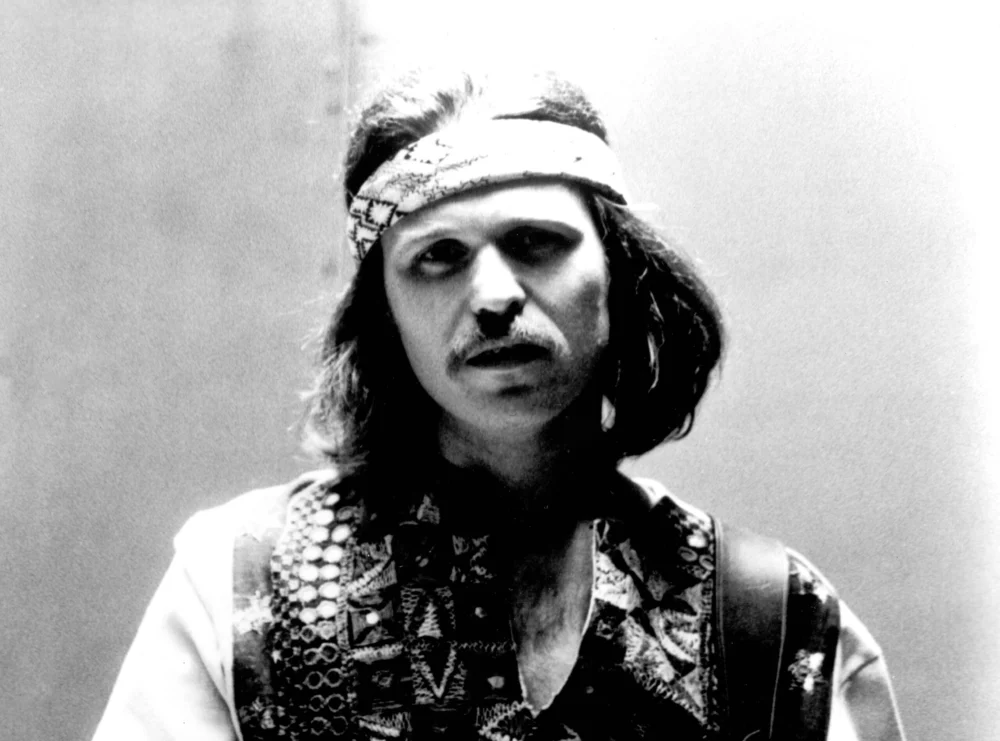
Country Joe McDonald, the electrifying frontman of Country Joe and the Fish, whose searing anti-war anthem and iconic performance at the 1969 Woodstock festival cemented his status as a vital emblem of the 1960s counterculture, passed away on Saturday at the age of 84. The news of his death was confirmed through a poignant statement released on the band’s social media channels, with sources close to his wife indicating that McDonald succumbed to complications from Parkinson’s disease in Berkeley, California.
Born Joseph Allen McDonald on January 1, 1942, in Washington, D.C., his early life was shaped by a move to El Monte, California, where his musical inclinations began to blossom. Even as a teenager, he was drawn to music, honing his skills on the trombone and performing with local dance bands on weekends. His journey took a significant turn when he enlisted in the Navy, serving from 1959 to 1962. This period, while perhaps not directly influencing his later pacifist activism, provided him with a unique perspective that would later inform the nuanced lyrics of his most famous compositions. Upon his discharge, McDonald returned to the Los Angeles area, enrolling in state college. However, the burgeoning folk music scene and the spirit of activism in the San Francisco Bay Area called to him, prompting a move in 1965. It was in Berkeley, amidst this vibrant cultural milieu, that he co-founded Country Joe and the Fish with guitarist Barry Melton, a partnership that would soon reverberate through the American musical landscape.
The genesis of the band’s name is a fascinating anecdote that speaks to the era’s political undercurrents. McDonald recounted to Classic Bands that an initial suggestion was "Country Mao and the Fish," referencing Mao Tse-tung’s analogy of revolutionaries moving like fish through water. Dissatisfied with this, the idea of "Country Joe and the Fish" emerged, with a nod to Joseph Stalin. While McDonald was indeed the central "Joe" of the moniker, the connection was deeper, stemming from his parents’ communist affiliations during his birth. This upbringing, steeped in leftist ideology and critical discourse, undoubtedly laid the groundwork for his later outspokenness against war and injustice.
The band’s debut album, "Electric Music for the Mind and Body," released in 1967, offered a glimpse into their experimental sound and lyrical leanings. While it did not feature McDonald’s most potent protest songs, likely due to prevailing fears of censorship, it did include tracks like "Superbird," a sharp satire of President Lyndon Johnson. The more incendiary material, including the iconic "I-Feel-Like-I’m-Fixin’-to-Die Rag" and the accompanying "Fish Cheer," was reserved for their subsequent releases, allowing their controversial message to gain traction and resonate with a growing anti-war sentiment.
"I-Feel-Like-I’m-Fixin’-to-Die Rag," more than any other song, became synonymous with Country Joe McDonald and the anti-Vietnam War movement. Its raw, sardonic lyrics and infectious, albeit dark, melody captured the disillusionment and anger felt by a generation witnessing the futility and human cost of the conflict. McDonald’s performance of the song at the 1969 Woodstock festival was a watershed moment. As he launched into the infamous "Fish Cheer," a call-and-response segment that compelled the massive audience to chant the F-word, the raw power of collective defiance and protest was palpable. This performance, broadcast to millions, became an indelible image of the era’s upheaval.
McDonald’s brilliance lay in his ability to articulate the complex emotions surrounding war with unflinching honesty and a unique perspective. In a 2016 interview with Street Spirit, he elaborated on the singular nature of his signature song: "The important thing about the ‘Fixin’ to Die Rag’ was that it had a new point of view that did not blame soldiers for war. It just blamed the politicians and it blamed the manufacturers of weapons. It didn’t blame the soldiers. Someone who was in the military could sing the song, and the attitude is, ‘Whoopee, we’re all going to die.’ Most peace songs of the era blamed the soldiers for the war." This crucial distinction allowed soldiers themselves, and those who supported them, to connect with the song’s anti-war message without feeling personally indicted.
The "Fish Cheer" itself had already gained a significant following and notoriety. McDonald had faced charges of inciting lewd behavior for its inclusion in a performance in Massachusetts, a testament to its provocative nature and the establishment’s discomfort with its message. By the time of Woodstock, a substantial portion of the audience was primed to participate, eager to express their dissent through McDonald’s cathartic and unifying chant.
McDonald’s journey to becoming a prominent voice of protest was deeply rooted in his upbringing and early experiences. He described his move to Berkeley in 1965, following the Free Speech Movement, as a pivotal moment. "I came up here from southern California and got miraculously tapped into the folk music thing that was happening here at that time," he recalled. His initial encounter with Barry Melton at the University of California folk festival sparked a creative partnership that quickly evolved beyond a duo. With the addition of other musicians and the establishment of Rag Baby, a bi-weekly publication focused on the burgeoning folk scene, McDonald immersed himself in the Bay Area’s vibrant cultural landscape.
The lyrical depth and socio-political consciousness of "Fixin’-to-Die Rag" were, in McDonald’s own words, a direct product of his formative years. "The only reason I could write those lyrics was having grown up in a socialist family," he explained. "My parents were members of the Communist Party when I was born, but later became disenchanted with them. And then they became part of the Progressive Party and the left socialist parties that were around. I read the leftist newspapers and I was familiar with the basic tenets of socialism about the industrial complex that generates war. So I was able to write lyrics about the warmakers that profit from war, and I was able to write a lyric from the point of view of the soldier because I had been in the military." This unique synthesis of personal experience, family ideology, and direct observation of military life provided him with the authentic voice that resonated so powerfully with audiences.
Furthermore, McDonald spoke of a sense of personal detachment from his parents’ political fervor, which paradoxically fueled his artistic expression. "I felt disenchanted from my parents, in a way. As far as politics, we didn’t have a very good relationship, so it was easy for me to say: ‘Come on mothers throughout the land, pack your boys off to Vietnam.’ And that sarcasm was a really nice thing, and GIs love sarcasm." This nuanced approach, blending sharp critique with a touch of dark humor, was a hallmark of his songwriting and contributed to its broad appeal.
Following the dissolution of Country Joe and the Fish in 1971, McDonald continued his prolific career, releasing dozens of solo albums. His artistic compass remained fixed on important social and environmental issues. He consistently addressed themes of environmental degradation and civil rights in his subsequent work, demonstrating a sustained commitment to activism that extended far beyond the Vietnam War era. A powerful testament to this enduring dedication was his performance of "Fixin’-to-Die Rag" fifty years after its initial writing, at an anti-nuclear protest at Livermore Laboratory, coinciding with the 70th anniversary of the Hiroshima bombing. This act underscored his belief that the song’s message of questioning authority and holding warmakers accountable remained profoundly relevant.
In a 2016 interview, McDonald reflected on the passage of time and his continued relevance. "I find the concept of 50 years incomprehensible," he admitted, a sentiment many artists of his generation might share. "But it’s indisputable because I have children and some of those children have children and I know that the math is right. And I just finished an album and the title of it is ’50’ because it’s 50 years since the first album. It’s called ‘Goodbye Blues.’ I didn’t die, so there you are. I’m still alive and I’m still doing something. Filling a need helps a lot, and it keeps me sane." This statement reveals a man who, despite his iconic status, remained grounded and driven by a desire to contribute and connect.
McDonald’s approach to activism was pragmatic and deeply empathetic. He articulated a philosophy of "morale-boosting" for causes he believed in. "I grew up in a family of radical socialists, and quite honestly, I really get bored with the theory and speechifying of various movements and philosophies from the left," he confessed. "It doesn’t mean I don’t support them. But as an entertainer, I know that you can lose your audience. I’ve been doing this for a long, long time, and I consider myself a morale-booster for these causes. I don’t do it if I don’t support the cause and the ideas and the people that are doing it. It’s really quite remarkable what people are doing in many movements. I like to support these movements, because they are sometimes not mainstream and no one else is supporting them, and so I feel an obligation to do it. As an activist, I like to give a voice and to support people and movements that don’t have mainstream support and visibility. And I realize that my name has a certain notoriety and that my presence can be a morale-booster." This perspective highlights his understanding of the power of his platform and his commitment to amplifying the voices of the marginalized and underrepresented.
While details about his immediate family were not fully disclosed at the time of his passing, McDonald had spoken in interviews about being a father to five children. He is survived by his wife, Kathy, who was a constant presence and support throughout his life and career. Country Joe McDonald leaves behind a profound legacy, not only as a musician and performer but as a conscience of a generation, a fearless advocate for peace, and an enduring voice for social justice. His music and his message continue to inspire, reminding us of the power of art to challenge the status quo and to foster a more compassionate and just world.
