
 By Isnaini Azizah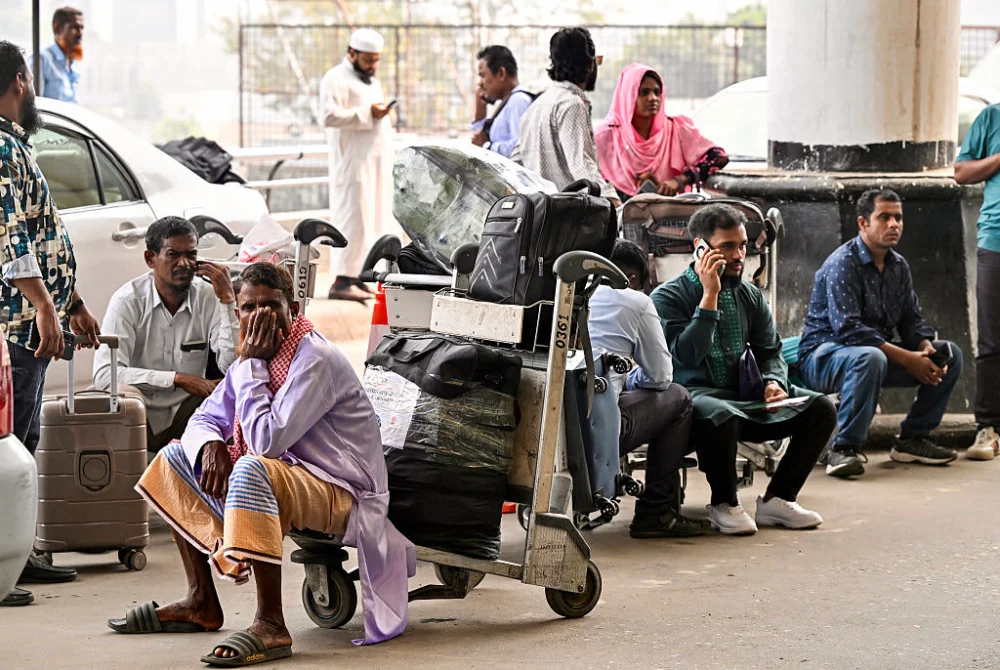
Zoey Gong, a 30-year-old Chinese medicine food therapist, was preparing for a routine journey from Paris to Shanghai with a scheduled layover in Dubai, United Arab Emirates. However, her plans, like those of millions of others, were shattered when a joint U.S. and Israeli military operation targeted Iran last Saturday. Stranded and desperate to reach her destination, Gong was forced to navigate a collapsing aviation network, eventually paying $1,600 for a replacement ticket—more than double the cost of her original fare. Her experience is a microcosm of a much larger, more volatile reality: the global tourism industry, valued at an staggering $11.7 trillion by the World Travel & Tourism Council (WTTC), is currently under siege from a series of geopolitical "black swan" events spanning from the Persian Gulf to the Caribbean and the Mexican coast.
The escalation of hostilities in the Middle East has transformed Dubai International Airport (DXB), the world’s busiest hub for international passenger traffic, into the epicenter of a logistical nightmare. The initial U.S.-Israeli strikes on Iran on February 28, 2026, triggered a rapid-fire sequence of retaliatory attacks. Iran’s response has been wide-ranging, with missiles and drones targeting locations in the United Arab Emirates, Qatar, Jordan, Israel, and Cyprus. This "back-and-forth" military exchange has effectively paralyzed the region’s airspace, leaving airlines with almost no safe corridors to repatriate travelers or maintain scheduled service.
According to data from the aviation analytics firm Cirium, more than 20,000 flights have been grounded since the conflict began, leaving over a million passengers stranded across the globe. The impact is not merely local; because Dubai serves as a primary "super-connector" between the West and the East, a closure in UAE airspace sends shockwaves through flight schedules in London, New York, Singapore, and Sydney. Henry Harteveldt, a veteran airline executive and founder of Atmosphere Research Group, described the situation as an "aviation quagmire." He noted that while the COVID-19 pandemic was a health-driven global shutdown, the current crisis is the most chaotic geopolitical event the industry has faced since the September 11 attacks, when U.S. airspace was closed entirely. Unlike 9/11, however, the current disruptions are geographically widespread and involve multiple active war zones.
The safety crisis has extended beyond the runways. In Dubai, the luxury hospitality sector—long considered a safe haven for the global elite—has seen the war literally arrive at its doorstep. Over the weekend, debris from intercepted drones and missiles rained down near the Fairmont The Palm, a flagship property for the Accor group. While the company confirmed that four people were injured, they noted that no guests or staff were among the casualties. More dramatically, the iconic Burj Al Arab, often cited as the world’s only "seven-star" hotel, suffered a fire earlier this week after being struck by debris from an Iranian drone. These incidents have shattered the perception of the UAE as a neutral, untouchable sanctuary, leading to a massive surge in travel insurance inquiries. Squaremouth, an online insurance marketplace, reported an 18-fold increase in demand for "cancel for any reason" (CFAR) policies this week, as travelers realize that standard policies often exclude acts of war.
The maritime industry is equally embattled. MSC Cruises’ MSC Euribia, a massive vessel carrying over 6,300 passengers, has been stuck in Dubai as the company struggles to find safe flight paths for guest repatriation. MSC has announced the cancellation of its remaining winter sailings from Dubai, citing the impossibility of ensuring passenger safety. The cruise line is currently exploring chartering flights from alternative hubs like Abu Dhabi or Muscat, Oman, but the "aviation quagmire" mentioned by Harteveldt makes these pivots exceptionally difficult to execute.
While the Iran-Israel-U.S. conflict is the most visible threat to global travel, it is part of a broader pattern of instability that has plagued 2026. The year began with a dramatic military intervention in South America. On January 3, U.S. forces conducted an operation in Venezuela that resulted in the capture of President Nicolás Maduro and his wife, Cilia Flores. The ensuing political vacuum and security concerns led to the immediate closure of airspace across the Caribbean. This stranded thousands of holiday travelers at high-end resorts and luxury home rentals, turning New Year’s vacations into indefinite periods of confinement.

In February, the focus shifted to North America. Violence erupted in Mexico following a military operation that resulted in the death of a high-profile cartel leader. The subsequent unrest, characterized by road blockades and arson attacks, forced the grounding of flights in major tourism hubs like Puerto Vallarta (PVR) and Guadalajara. For an economy like Mexico’s, where tourism accounts for nearly 9% of the GDP and international visitors spent $35 billion last year, the timing is catastrophic. Major U.S. carriers, including Delta Air Lines, Alaska Airlines, and Southwest Airlines, have already begun slashing service to Puerto Vallarta. Delta, for instance, cut its April schedule to the city, maintaining only minimal service from Los Angeles and Atlanta.
These cascading crises have forced travel executives to abandon the optimistic forecasts they held at the start of the year. In January, CEOs from Delta and United Airlines were predicting record-breaking earnings for 2026, driven by a surge in "premium" travel demand from wealthy consumers. Now, those projections are being revised in the face of skyrocketing operational costs. United Airlines CEO Scott Kirby recently addressed the financial toll, noting that jet fuel prices have surged 60% since the strikes on Iran began. For an airline like United, where fuel represents roughly 20% of total operating expenses, such a spike is devastating. Kirby warned that these costs would inevitably be passed on to consumers in the form of higher airfares.
The logistical adjustments required to keep planes in the air are also driving up costs. Australian carrier Qantas told CNBC that its direct flight from Perth to London, a flagship long-haul route, can no longer fly its standard path. The flight must now divert to Singapore for refueling to avoid Middle Eastern airspace. While this allows the airline to pick up additional passengers in Singapore, the extra flight time, fuel consumption, and landing fees significantly erode the profitability of the route.
Despite the chaos, some executives remain hopeful about the industry’s underlying resilience. Scott Kirby noted that while the Middle East is a "no-go" zone, demand for travel in other regions remains high. Travelers are rerouting their trips rather than canceling them entirely. For example, bookings for United flights from Australia to the U.S. have jumped as passengers seek trans-Pacific alternatives to traditional Eurasian routes.
However, the shadow of the upcoming 2026 FIFA World Cup looms large. Set to be hosted across Canada, Mexico, and the United States, the tournament is intended to be a global celebration of sport and unity. The current instability in Mexico and the aggressive U.S. foreign policy in Venezuela and Iran have raised serious questions about security and fan mobility. If the current trend of airspace closures and cartel-related violence continues, the logistical planning for the world’s largest sporting event could be thrown into total disarray.
On the ground in Mexico, the impact is already being felt by small business owners. Victor Razo, the manager of the Rivera del Rio hotel in Puerto Vallarta, reported that bookings are down approximately 10% compared to last year. To combat the decline, the hotel has slashed rates by 10% to 20% to entice travelers ahead of the busy spring break and Holy Week periods. "We’ve had to offer promotions given what happened," Razo said. While he maintains that the hotel remains safe and that the situation is not as dire as the early days of the COVID-19 pandemic, the "leading indicators" suggested by industry analysts like Brett Snyder and Courtney Miller point to a rocky road ahead.
As the world watches the escalating conflict in the Middle East, the travel industry stands as a poignant reminder of global interconnectedness. A missile fired in the Gulf can result in a canceled hotel reservation in Mexico or a stranded therapist in Paris. For now, travelers are advised to exercise extreme caution, invest in comprehensive insurance, and remain flexible as the "aviation quagmire" of 2026 continues to evolve. The dream of a record-breaking year for global tourism has been replaced by a fight for stability in an increasingly fragmented world.
