
 By Isnaini Azizah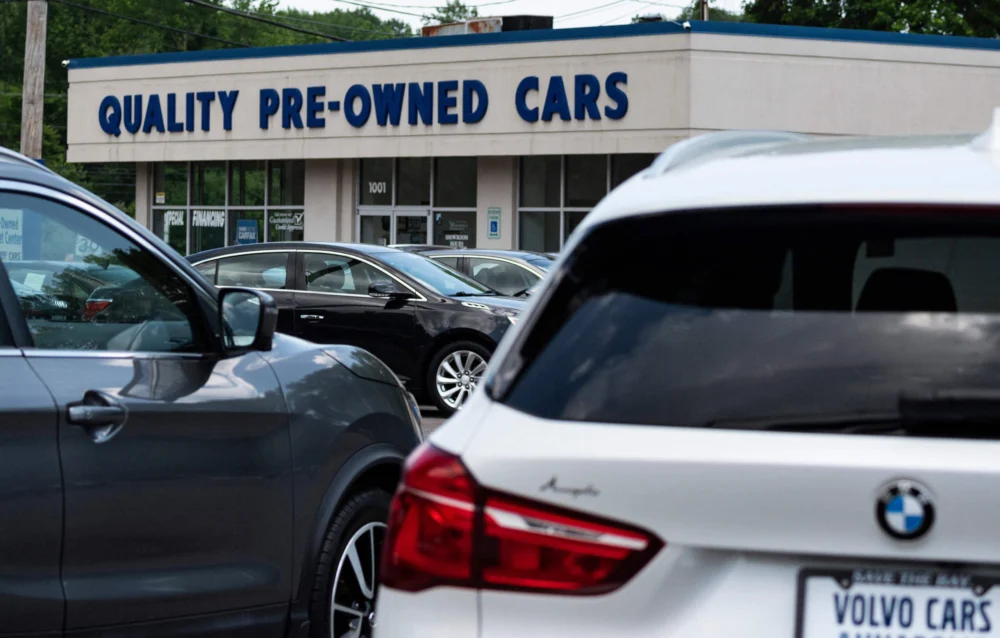
In a move that signals a tightening market for pre-owned automobiles, a closely watched barometer for used vehicle pricing jumped significantly last month as automotive retailers across the United States scrambled to bolster their inventories. This aggressive restocking comes ahead of what many industry analysts and dealership principals expect to be a robust spring selling season, historically the most lucrative period for the used car trade. According to the latest data released by Cox Automotive, the Manheim Used Vehicle Value Index—a definitive metric that tracks the prices of used vehicles sold at wholesale auctions throughout the country—rose to 212.3 in February. This represents a 4% increase compared to the same period a year earlier and a 0.8% uptick from January. Perhaps most notably, this surge pushes the index to its highest level since September 2023, suggesting that the deflationary trend seen throughout much of late 2024 and 2025 may be reaching a plateau or reversing.
The Manheim Index is considered the "gold standard" for the automotive industry because it applies a complex statistical smoothing process to account for shifts in mileage, seasonal fluctuations, and the specific mix of vehicle types sold at auction. When the index moves, it usually serves as a leading indicator for what consumers will eventually see on the windshield stickers of local dealerships within six to eight weeks. The February jump indicates that dealers are no longer content to sit on lean inventories; instead, they are engaging in more competitive bidding to ensure their lots are full when buyers arrive with tax refund checks in hand. Jeremy Robb, the chief economist at Cox Automotive, noted that the momentum began early in the year and accelerated as February progressed. Since the start of 2026, the industry has observed consistently solid demand at Manheim auctions, characterized by higher sales conversion rates. This metric is crucial because it indicates a high "appetite" from dealers to buy, meaning they are willing to meet or exceed the floor prices set by sellers rather than letting vehicles go unsold.
The driving force behind this optimism is the anticipated influx of liquidity into the American household. For many consumers, particularly those in the subprime or near-prime credit tiers who often dominate the older used car market, a federal tax refund is the single largest financial windfall they receive all year. This lump sum is frequently used as a down payment for a reliable vehicle, which in turn allows buyers to qualify for better financing terms or to afford a more modern, lower-mileage car than they otherwise could. Robb emphasized that this "tax refund season" optimism has managed to offset a variety of broader economic concerns that might otherwise dampen consumer spending. However, the economic landscape is not without significant headwinds. The ongoing conflict in Iran has introduced a new layer of volatility into global markets, casting a shadow over the domestic recovery. Geopolitical instability in the Middle East has historically led to spikes in crude oil prices, and the current situation is no exception. As gas prices climb, the cost of ownership for internal combustion engine vehicles rises, which can quickly erode consumer confidence and shift demand toward more fuel-efficient models or even delay purchases altogether.
The war in Iran introduces specific risks to the U.S. economy that could, in the words of Robb, "put a damper on consumer appetite in the short run." There is a delicate psychological balance at play; while a $3,000 tax refund encourages a consumer to visit a dealership, a $1.00 per gallon increase in gasoline prices might make them reconsider the purchase of a mid-sized SUV or a heavy-duty truck. Robb suggested that while the impact of these geopolitical tensions might be felt acutely during the early weeks of March, the underlying momentum of the refund season is likely to reassert itself as the month continues. This tug-of-war between seasonal demand and macroeconomic shocks is currently the primary focus for market analysts trying to predict the trajectory of the 2026 automotive market.
To understand why used car prices remain stubbornly high by historical standards, one must look back at the systemic shocks the industry has endured over the last half-decade. The image of a sparsely populated car dealership in Annapolis, Maryland, in May 2021 remains a potent symbol of the era when a global computer chip shortage decimated new vehicle production. During that period, the scarcity of new cars forced millions of would-be new-car buyers into the used market, driving prices to astronomical record highs. While the "panic buying" of the pandemic era has subsided and inventory levels have improved, the market is now dealing with the "echo" of those production halts. Because fewer new cars were manufactured between 2021 and 2023, there is now a corresponding shortage of three-to-five-year-old "off-lease" vehicles entering the used market today. This supply-side constraint acts as a floor for pricing, preventing a return to the pre-2020 "normal."
Currently, the average listing price for a used vehicle stands at approximately $25,533 as of January. While this is a welcome relief from the 2022 peak, when average prices soared above the $28,000 mark, it is still significantly higher than the $18,000 to $20,000 range that was common in the late 2010s. For the average American household, the "affordability crisis" in the automotive sector remains a pressing issue. High interest rates have further compounded the problem; even as vehicle prices have moderated slightly from their all-time highs, the cost of financing those vehicles has risen, often keeping monthly payments at near-record levels. This has created a bifurcated market where higher-income buyers can still afford late-model used cars, while lower-income buyers are forced toward older, higher-mileage vehicles that carry greater risks of mechanical failure and higher maintenance costs.
Despite these challenges, Cox Automotive’s outlook for the remainder of the year remains cautiously upward. At the beginning of 2026, the firm projected that wholesale prices on the Manheim Index would likely end the year about 2% higher than they were in December 2025. This forecast suggests a market that is stabilizing rather than crashing. The 0.8% month-over-month increase in February is a significant component of that projected growth. If the spring selling season meets expectations, we may see further upward pressure on prices through May before the typical summer slowdown begins. Dealers are essentially "betting" on the consumer right now. By paying more at auction in February, they are locking in higher cost bases for their inventory, a gamble that only pays off if retail buyers are willing to accept those higher prices in March and April.
The broader implications for the U.S. economy are also noteworthy. Used car prices have been a major driver of the Consumer Price Index (CPI) over the last few years. When used car prices spiked during the pandemic, they contributed significantly to the overall inflation rate. Conversely, the cooling of the used car market in 2024 and 2025 helped the Federal Reserve in its mission to bring inflation back toward its 2% target. If the current trend of rising wholesale prices continues and is passed on to consumers, it could represent a renewed "pro-inflationary" force that the central bank will have to monitor closely.
Furthermore, the shift in inventory dynamics reflects a change in how dealerships operate in the post-pandemic world. Many have moved toward more sophisticated data-driven models for procurement, using real-time auction data to decide exactly which makes and models are trending in their specific geographic regions. In the current environment, "compact" and "mid-size" cars are seeing renewed interest as fuel costs become a concern, whereas just a year ago, the focus was almost entirely on larger SUVs and crossovers. The ability of a dealer to pivot their inventory in response to a geopolitical event, such as the conflict in Iran, is now a prerequisite for survival in a volatile market.
In conclusion, the February jump in the Manheim Used Vehicle Value Index serves as a clear signal that the used car market is entering a new phase of activity. Driven by the seasonal infusion of tax refund cash and a strategic push by dealers to secure inventory, prices are moving upward for the first time in several months. While the shadow of international conflict and the resulting rise in energy costs provide a cautionary note, the underlying demand for personal transportation in the United States remains a powerful economic engine. For consumers, the message is clear: the window of "bargain" pricing that characterized the end of 2025 may be closing, and those looking to purchase a vehicle this spring should be prepared for a competitive and potentially more expensive marketplace. As we move through March, the industry will be watching the "sales conversion rates" at auctions and the "days’ supply" on retail lots to see if the spring fever of February translates into a sustained fever pitch for the rest of the year.
