
 By Isnaini Azizah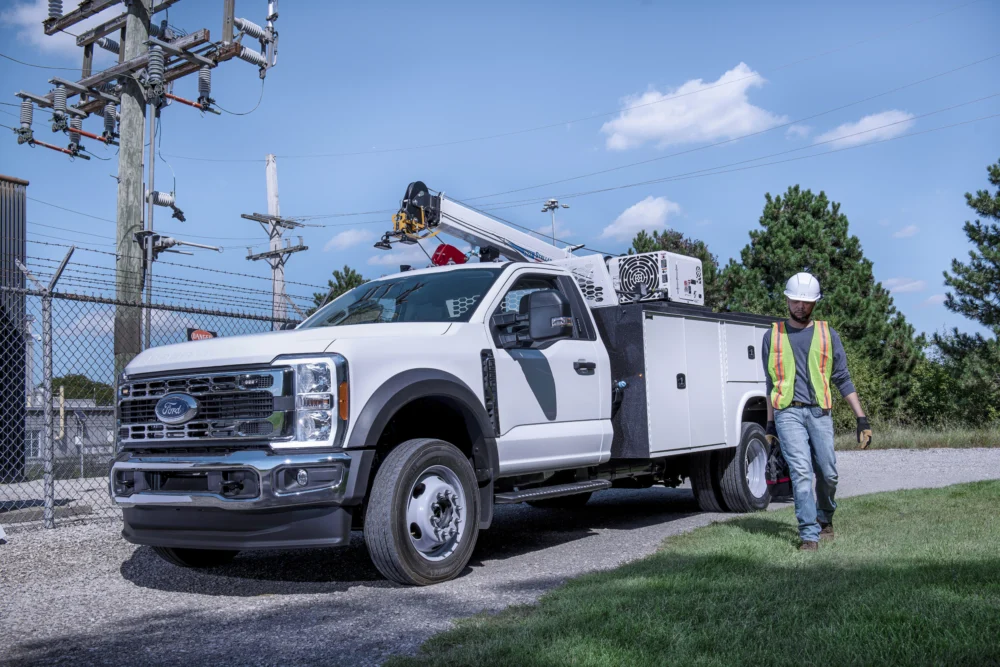
In a strategic move designed to solidify its dominance in the commercial vehicle sector, Ford Motor Company has officially unveiled Ford Pro AI, a sophisticated artificial intelligence system integrated into its Ford Pro commercial business unit. This announcement, made in Detroit, marks a significant milestone in the company’s "Ford+" transformation plan, which seeks to transition the legacy automaker from a traditional manufacturer of hardware into a high-margin, software-driven enterprise. By leveraging the vast quantities of data generated by its connected vehicle fleet, Ford aims to provide commercial clients with unprecedented insights into their operations, ultimately driving efficiency, reducing costs, and boosting the automaker’s own recurring software revenue.
The core of the Ford Pro AI platform lies in its immense processing power and data ingestion capabilities. According to the company, the system is engineered to monitor and analyze more than 1 billion data points every single day, harvested from its global network of connected commercial vehicles. This data stream is not merely a collection of GPS coordinates; it encompasses a granular array of metrics ranging from driver behavior—such as seatbelt usage and harsh braking—to critical vehicle health indicators, fuel consumption patterns, and route optimization variables. By synthesizing this massive dataset, Ford Pro AI provides fleet managers with a comprehensive, real-time dashboard of their entire operation, allowing for proactive decision-making that was previously impossible in the era of analog fleet management.
The primary objective of this technological leap is to empower Ford’s rapidly expanding base of paid commercial subscribers. As of the end of the last fiscal year, Ford Pro reported a 30% year-over-year increase in paid subscriptions, reaching a total of 840,000. These subscribers, ranging from small local plumbing businesses to massive government agencies and global logistics firms, are increasingly looking for ways to maximize "uptime"—the amount of time a vehicle is on the road and generating revenue rather than sitting in a repair shop. Ford Pro AI addresses this need by utilizing predictive analytics to identify potential mechanical failures before they occur, allowing for scheduled maintenance that minimizes disruption to the business.
Kevin Dunbar, the General Manager for Ford Pro Intelligence, emphasized the essential nature of this technology during a recent media briefing. He noted that for commercial clients, vehicle performance is directly tied to the bottom line. "Helping them maximize their vehicles’ uptime, increase productivity, and lower costs isn’t just good business—it’s essential for all of us," Dunbar stated. He further characterized the Ford Pro team as the architects of the future of fleet operations, suggesting that the integration of AI is not just an incremental update but a fundamental shift in how the industry functions.
The Ford Pro division has emerged as the "crown jewel" of the company’s financial portfolio, often outperforming the traditional internal combustion engine (ICE) business (Ford Blue) and the electric vehicle division (Ford Model e) in terms of profit margins. In the previous fiscal year, Ford Pro reported a staggering $66 billion in revenue and $6.8 billion in earnings before interest and taxes (EBIT), maintaining a healthy 10.3% profit margin. This financial strength provides the capital necessary to invest in advanced technologies like Ford Pro AI, which in turn creates a "moat" around the business by increasing customer switching costs through integrated software solutions.
Ford CEO Jim Farley has been vocal about the necessity of diversifying Pro’s revenue streams. While the sale of Super Duty trucks and Transit vans remains the foundation of the business, the long-term growth engine is expected to be software and physical services. Farley recently indicated that the company is "rapidly approaching" its target of having software and services account for 20% of Ford Pro’s total earnings. The launch of Ford Pro AI is a direct catalyst for reaching this goal, as it adds a layer of high-value intelligence to the existing telematics subscriptions that customers already pay for. By bundling AI capabilities into its telematics offerings, Ford is enhancing the value proposition of its software, making it an indispensable tool for modern fleet operators.
Technologically, Ford Pro AI is built upon the robust infrastructure of Google Cloud, representing a deep collaboration between the Detroit automaker and the Silicon Valley tech giant. By using Google’s advanced machine learning models and cloud computing scale, Ford is able to process its proprietary data with high speed and accuracy. At launch, the system operates in a prompted, read-only format, allowing fleet managers to ask questions about their data and receive actionable insights in a conversational manner. However, Dunbar hinted that this is only the beginning. Ford is actively exploring ways to expand the system’s capabilities, potentially moving toward autonomous scheduling and automated logistics adjustments as the AI matures.
The enrichment of data through Ford Pro AI also has significant implications for driver safety and insurance. By monitoring seatbelt use and driving habits, the system allows companies to implement safety training programs tailored to specific driver needs. Over time, this data can be used to negotiate lower insurance premiums for fleets that demonstrate a consistent record of safe operation. Furthermore, in the context of the global transition to electric vehicles, Ford Pro AI plays a crucial role in managing "range anxiety" and charging infrastructure. For customers operating the electric F-150 Lightning or E-Transit, the AI can optimize routes based on charging station availability and real-time battery depletion rates, ensuring that the transition to electrification does not compromise operational efficiency.
The broader context of this launch involves a competitive landscape where traditional rivals like General Motors and Stellantis are also racing to capture the lucrative commercial software market. GM’s "Envolve" business and Stellantis’ "Pro One" initiative are both vying for the same fleet managers. However, Ford’s deep-rooted history in the commercial space—anchored by the decades-long dominance of the F-Series—gives it a massive head start in terms of the sheer volume of data it can collect. The "1 billion data points" mentioned by Ford is a testament to the scale of its connected fleet, a scale that provides a superior training ground for its AI models compared to competitors with smaller active bases.
Market analysts view the development of Ford Pro AI as a critical component of Ford’s valuation. Historically, automakers have been valued as cyclical, low-margin manufacturing companies. By shifting toward a model where a significant portion of profits comes from high-margin, recurring software subscriptions, Ford is attempting to earn a "tech-style" valuation multiple from Wall Street. The 30% growth in subscribers is a key metric that investors are watching closely, as it signals that the market is receptive to Ford’s digital offerings.
Furthermore, the integration of AI into the Super Duty large truck business—a segment that is vital for infrastructure, construction, and heavy-duty logistics—ensures that Ford remains at the center of the American economy. As the U.S. continues to invest in infrastructure projects, the demand for efficient, high-tech fleet management will only increase. Ford Pro AI positions the company not just as a provider of the trucks that build roads and bridges, but as the operating system that manages the entire process.
In conclusion, the launch of Ford Pro AI represents more than just a new feature for fleet managers; it is a manifestation of Ford’s broader corporate identity shift. By harnessing the power of Google Cloud and its own proprietary data, Ford is delivering a tool that addresses the most pressing challenges of the commercial sector: cost, productivity, and uptime. As the system evolves from its current read-only format into a more proactive and integrated assistant, it will likely become the backbone of the Ford Pro ecosystem. For Jim Farley and the leadership team in Dearborn, the success of Ford Pro AI is intrinsically linked to the future profitability of the company, proving that in the modern automotive era, the data under the hood is just as important as the engine. The 840,000 current subscribers are merely the beginning of what Ford envisions as a global network of intelligent, connected, and highly efficient commercial enterprises powered by Ford Pro Intelligence.
