
 By admin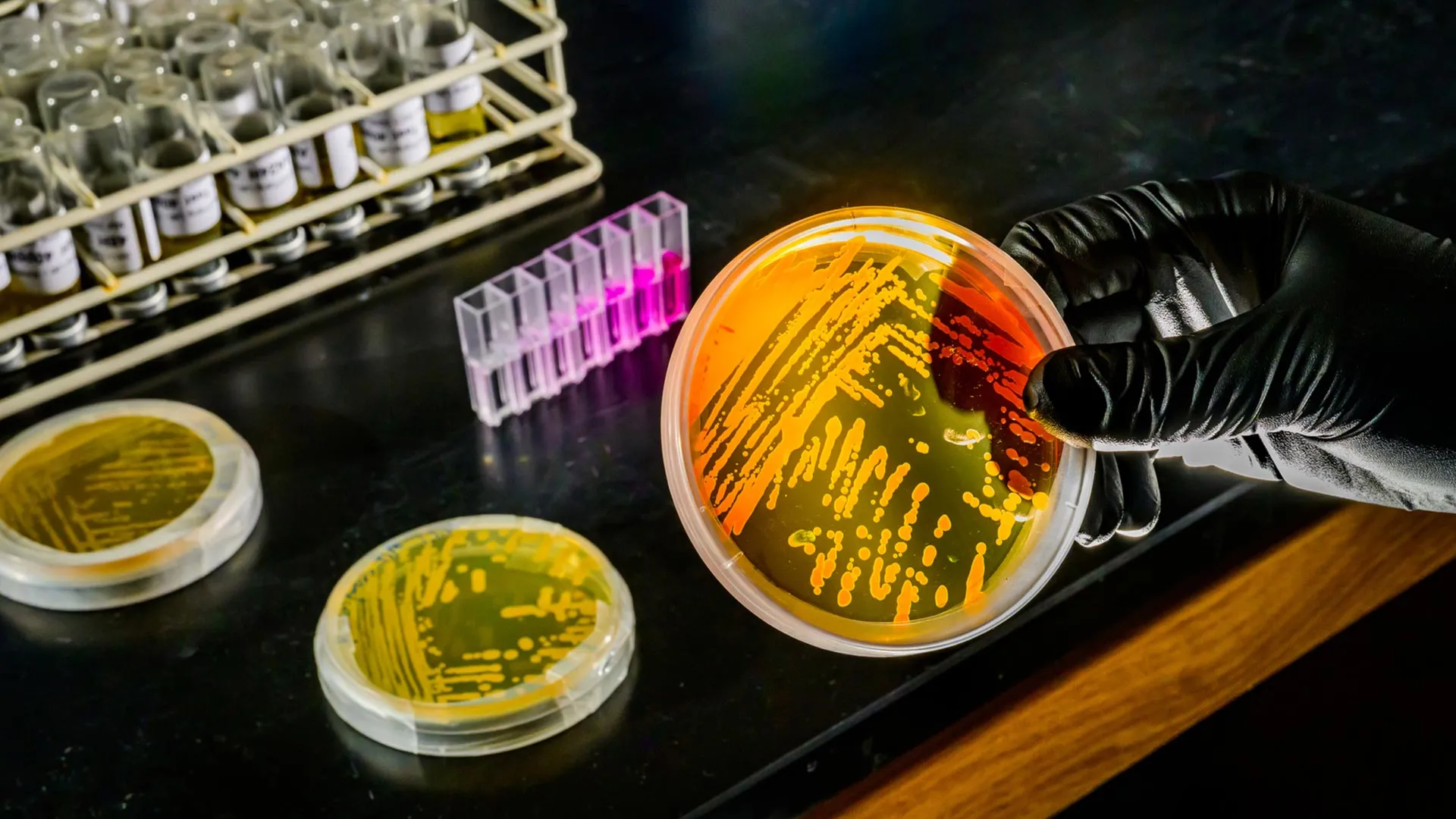
The profound implications of these findings, which shed new light on the intricate mechanisms governing ocean health in a changing world, were recently detailed in a study published in the prestigious Proceedings of the National Academy of Sciences. This publication marks a significant milestone in our understanding of deep-sea microbial ecology and its potential role in modulating the impacts of climate change on marine ecosystems.
The Deep Ocean: A Warming Frontier Under Threat
For decades, the deep ocean was largely considered a stable, insulated realm, shielded from the rapid climatic shifts occurring at the surface. However, a growing body of scientific evidence unequivocally demonstrates that this perception is fundamentally flawed. The ocean acts as a massive heat sink, absorbing over 90% of the excess heat generated by human-induced greenhouse gas emissions. While much of this heat initially accumulates in surface waters, marine heat waves are becoming more frequent, intense, and prolonged, driving thermal anomalies deeper into the water column. Furthermore, a complex interplay of ocean currents, mixing processes, and the sheer volume of absorbed heat ensures that warming signals are penetrating to depths of 1,000 meters or more, and in some regions, even to the abyssal plains.
This deep-sea warming carries with it a cascade of potential disruptions to the ocean’s delicate equilibrium. Elevated temperatures can lead to increased stratification, where warmer, lighter surface waters become more resistant to mixing with cooler, denser deep waters. This stratification can restrict the vertical exchange of gases and nutrients, potentially leading to widespread deoxygenation in subsurface waters – a phenomenon already observed in many parts of the global ocean. Deoxygenation, in turn, can create "dead zones" where most marine life cannot survive, threatening biodiversity and altering biogeochemical cycles. Moreover, deep-sea warming can directly impact the metabolic rates of deep-sea organisms, from microbes to megafauna, potentially stressing ecosystems that have evolved under highly stable thermal conditions for millennia. The stability of carbon sequestration, a vital oceanic service that locks away vast amounts of atmospheric carbon dioxide, could also be compromised if deep-sea processes are significantly altered.
Microbes: The Unsung Architects of Ocean Nutrient Cycles
At the very heart of the ocean’s productivity and chemical balance lie its microbial communities. Often invisible to the naked eye, these microscopic organisms – including bacteria, archaea, and phytoplankton – form the foundational bedrock of nearly all marine food webs and are the primary drivers of essential biogeochemical cycles. Among these critical players, Nitrosopumilus maritimus and its closely related archaeal counterparts stand out. These ammonia-oxidizing archaea (AOA) constitute a substantial portion, often estimated at around 30%, of marine microbial plankton. Their sheer abundance across vast expanses of the global ocean underscores their ecological significance.
Many scientists now consider these archaea not merely contributors but essential architects of ocean chemistry. Their pivotal role stems from their unique metabolic capability: ammonia oxidation. This process is the initial, rate-limiting step in nitrification, a fundamental component of the ocean’s nitrogen cycle. In simple terms, these microbes convert ammonia (a waste product of decomposition and excretion) into nitrite, which is then further oxidized to nitrate by other microbes. Nitrogen, in various chemical forms, is a primary limiting nutrient for photosynthetic organisms (phytoplankton) in many parts of the ocean.
By converting nitrogen into different chemical forms in seawater, these microbes effectively regulate the availability of bioavailable nitrogen, thereby controlling the growth and productivity of microbial plankton. Since these tiny organisms, primarily phytoplankton, form the base of the entire marine food chain – sustaining everything from zooplankton to fish, marine mammals, and seabirds – the activity of ammonia-oxidizing archaea ultimately serves as a crucial determinant of overall ocean biodiversity and ecosystem health. Any significant disruption to their function could reverberate throughout the entire marine biome, with potentially catastrophic consequences for fisheries, carbon cycling, and the planet’s climate regulation capacity.
Deep-Sea Warming and the Crucial Role of Iron
The insights from this new research delve into a fascinating intersection of deep-sea warming and trace metal availability. "Ocean-warming effects may extend to depths of 1,000 meters or more," emphasized University of Illinois Urbana-Champaign microbiology professor Wei Qin, a lead author on the study. "We used to think that deeper waters were mostly insulated from surface warming, but now it is becoming clear that deep-sea warming can change how these abundant archaea use iron – a metal they depend on heavily – potentially affecting trace metal availability in the deep ocean."
Iron, though present in minute concentrations, is a micronutrient of paramount importance in the ocean. It serves as a crucial cofactor for numerous enzymes involved in fundamental metabolic processes, including photosynthesis, nitrogen fixation, and respiration. In vast regions of the global ocean, particularly the High-Nutrient, Low-Chlorophyll (HNLC) zones, the scarcity of iron limits primary productivity, despite the abundance of other essential macronutrients like nitrogen and phosphorus. Consequently, the availability of iron directly influences microbial growth, phytoplankton blooms, and ultimately, the ocean’s capacity to absorb atmospheric carbon dioxide. The intricate dynamics of iron cycling – its input from dust, hydrothermal vents, and continental margins, its complex speciation in seawater, and its uptake by marine organisms – are therefore critical for understanding ocean productivity and biogeochemistry. Any alteration in how key microbes acquire and utilize this precious resource could have far-reaching implications.
Experimental Breakthrough: Microbes Adapt to Warmth and Iron Scarcity
To unravel the adaptive mechanisms of Nitrosopumilus maritimus, the research team, co-led by Professor Qin and University of Southern California global change biology professor David Hutchins, undertook a series of meticulously controlled laboratory experiments. Recognizing the pervasive challenge of trace metal contamination in such studies, the researchers employed stringent clean-room techniques and specialized culturing methods to ensure the purity of their samples and the accuracy of their iron measurements. They exposed pure cultures of Nitrosopumilus maritimus to a range of experimental conditions, varying both temperature and the concentration of available iron. This careful design allowed them to isolate and observe the specific responses of the microbes to these critical environmental stressors.
The results were striking and profoundly significant. The experiments demonstrated that when temperatures increased under conditions where iron was limited, Nitrosopumilus maritimus exhibited a remarkable adaptive response: the microbes required less iron for their metabolic functions and, crucially, utilized the available iron with greater efficiency. This finding indicates an inherent plasticity in the organisms’ metabolism, allowing them to adjust and cope with the dual challenges of higher temperatures and reduced iron availability. This metabolic "retooling" could involve changes in gene expression, leading to the production of more efficient iron-scavenging proteins, alterations in enzyme structures to function optimally with less iron, or shifts in overall metabolic pathways to conserve iron resources. Such an adaptive capacity suggests a greater resilience than previously assumed for these keystone microbes in the face of environmental change.
Global Modeling: Scaling Up the Local Findings
The implications of these laboratory observations were further amplified by integrating them with sophisticated global ocean biogeochemical modeling. Professor Qin explained, "We coupled these findings with global ocean biogeochemical modeling by Alessandro Tagliabue from the University of Liverpool." Tagliabue, a renowned expert in ocean biogeochemistry, brought critical modeling expertise to the study, allowing the team to extrapolate the laboratory-derived insights to a global scale. This coupling of empirical data with predictive models is essential in modern oceanography, enabling scientists to move beyond localized observations and project potential future scenarios for the vast and interconnected global ocean.
The modeling results painted an unexpectedly optimistic picture for the future role of these microbes. They suggested that deep-ocean archaeal communities, despite facing warmer and potentially more iron-limited conditions, "may maintain or even enhance their role in nitrogen cycling and primary production support across vast iron-limited regions in a warming climate." This projection is a significant counterpoint to many dire predictions regarding the impacts of climate change on ocean ecosystems. It implies that the adaptive capabilities of Nitrosopumilus maritimus could buffer some of the negative consequences of deep-sea warming, potentially preserving crucial nitrogen cycling functions and supporting the base of the marine food web in regions where productivity might otherwise decline. If these microbes can continue to drive nitrogen cycling efficiently, it could help sustain phytoplankton growth, which in turn influences carbon uptake from the atmosphere, providing a potential negative feedback loop that could partially mitigate climate change effects.
The Road Ahead: An Ocean Expedition to Validate Findings
While laboratory experiments and modeling provide powerful insights, the ultimate test of these findings lies in the real-world ocean environment. To that end, Professor Qin and Professor Hutchins are set to embark on a crucial follow-up expedition later this summer. They will serve as co-chief scientists aboard the research vessel Sikuliaq, a state-of-the-art ice-capable research ship operated by the University of Alaska Fairbanks for the National Science Foundation.
The ambitious expedition will trace a fascinating and ecologically diverse path, commencing from Seattle, traversing the dynamic waters of the Gulf of Alaska, and then continuing into the expansive, often nutrient-poor subtropical gyre, with a planned stop in Honolulu, Hawaii. This route will allow the researchers to sample a wide range of oceanographic conditions, from productive coastal regions to vast oligotrophic (nutrient-scarce) open ocean environments, providing an ideal natural laboratory to test their hypotheses.
Accompanying Qin and Hutchins will be a multidisciplinary team of 20 additional researchers, pooling expertise from various fields of oceanography, microbiology, and biogeochemistry. Their primary objective is to examine natural archaeal populations in situ – directly in their oceanic habitats. This vital step aims to confirm the experimental results obtained in the controlled conditions of the laboratory and to gain a more comprehensive understanding of how complex environmental factors, particularly temperature changes and the availability of trace metals like iron, interact to shape microbial activity and community structure in the deep ocean. By studying these processes in their natural context, the scientists hope to validate the adaptive capabilities observed in pure cultures and to ascertain their ecological significance on a larger scale, providing invaluable data for refining future climate models and ocean management strategies.
Professor Qin is also affiliated with the Carl R. Woese Institute for Genomic Biology, a testament to the interdisciplinary nature of this cutting-edge research. The comprehensive scope and potential impact of this work have garnered significant support from a consortium of prestigious scientific funding bodies, including the National Science Foundation, the Simons Foundation, the National Natural Science Foundation of China, the University of Illinois Urbana-Champaign, and the University of Oklahoma. This collaborative support underscores the global importance of understanding the intricate dance between marine microbes and a changing climate, offering both a warning of the challenges ahead and a hopeful glimpse into the ocean’s capacity for resilience.
