
 By Isnaini Azizah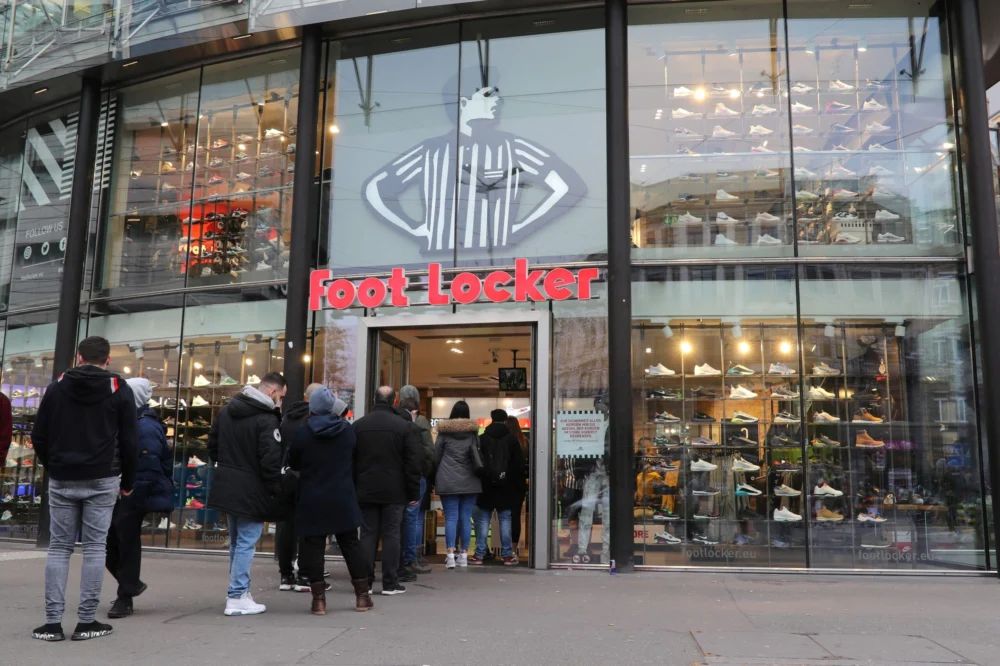
Dick’s Sporting Goods reported a robust holiday quarter on Thursday, surpassing Wall Street’s expectations for both revenue and earnings, yet the retailer’s shares faced pressure as it issued a cautious profit outlook for the year ahead. The primary driver of this tempered guidance is the ongoing, complex integration of Foot Locker, the sneaker giant that Dick’s acquired six months ago for $2.5 billion. While the merger has significantly expanded the company’s market share and global footprint, the immediate financial burden of restructuring a legacy business is weighing heavily on the bottom line.
For the fourth fiscal quarter ended January 31, Dick’s reported a net income of $128.3 million, or $1.41 per share. This represented a sharp 57% decline from the $299.97 million, or $3.62 per share, recorded in the same period a year earlier. This drop in profitability, however, was anticipated by the company as it navigates the friction of a massive merger. On the top line, the story was one of explosive growth; sales surged to $6.23 billion, a 60% increase compared to $3.89 billion in the prior year’s quarter. This spike was largely inorganic, fueled by the inclusion of Foot Locker’s vast retail operations which were not part of the company’s portfolio a year ago.
Despite the quarterly beat, the company’s forecast for fiscal 2026 left investors wanting more. Dick’s expects adjusted earnings per share to fall between $13.50 and $14.50. This range sits notably below the $14.67 per share that analysts surveyed by LSEG had been modeling. The conservative guidance reflects the reality that while the "heavy lifting" of the Foot Locker acquisition is underway, the costs associated with "rightsizing" the business are far from over.
The acquisition of Foot Locker was a strategic gamble intended to cement Dick’s Sporting Goods as the dominant force in the athletic footwear and apparel market. By bringing Foot Locker, Champs Sports, Kids Foot Locker, and WSS under its umbrella, Dick’s transformed into one of the world’s largest distributors for powerhouse brands like Nike, Adidas, and New Balance. This consolidated scale provides Dick’s with immense negotiating leverage at a time when major athletic brands have been increasingly prioritizing direct-to-consumer (DTC) channels over traditional wholesale partners. By controlling a larger share of the "shelf space" that these brands rely on to reach suburban and urban consumers alike, Dick’s has made itself an indispensable partner in the retail ecosystem.
However, the Foot Locker business that Dick’s inherited was one in need of significant repair. For years, Foot Locker had struggled with a retail footprint heavily concentrated in aging shopping malls, a declining relationship with Nike (which has since been partially mended), and a glut of slow-moving inventory. Dick’s management has been transparent about the "costly work" required to modernize this fleet. In an interview with CNBC’s Sara Eisen, Executive Chairman Ed Stack noted that the company is "basically done" with the initial phase of rightsizing. Stack used a domestic metaphor to describe the process, stating, "In retail, you’re never really done cleaning out the garage. Anything else going forward is normal course of business."
That "cleaning" process has been expensive. The company expects the total cost of clearing stale inventory and shuttering unproductive stores to range between $500 million and $750 million. Approximately $390 million of those expenses were already recognized in fiscal 2025, with the remainder expected to hit the books in the current fiscal year. The store closure strategy has been aggressive; in fiscal 2025 alone, Dick’s shuttered 57 underperforming locations across the Foot Locker family of brands.
A key component of the turnaround strategy is the "Fast Break" pilot program. Currently being tested in 11 Foot Locker locations, Fast Break is Dick’s attempt to reinvent the sneaker shopping experience. The program focuses on enhanced brand storytelling, a more curated and streamlined product assortment, and a modernized in-store presentation that moves away from the "cluttered" look of traditional mall-based footwear stores. According to management, the pilot has already delivered "standout performance," prompting plans to expand the model to more locations later this year.
This pivot is particularly interesting given the history of Foot Locker’s previous leadership. Before the acquisition, former CEO Mary Dillon—a retail veteran known for her successful tenure at Ulta Beauty—had launched a "Lace Up" transformation plan. That strategy also sought to move Foot Locker away from malls and into "off-mall" community power centers while refreshing the brand’s digital presence. It remains to be seen how much of the "Fast Break" initiative is an evolution of Dillon’s original vision versus a complete strategic pivot by the Dick’s leadership team.
The broader retail landscape provides a challenging backdrop for this integration. Consumers have become increasingly selective with their discretionary spending amid persistent inflation and high interest rates. While the demand for high-end performance running shoes and "sneakerhead" culture remains resilient, the middle-market consumer is under pressure. Dick’s is banking on the idea that by the back-to-school shopping season—traditionally the second-most important period for retailers after the December holidays—Foot Locker will see a meaningful "inflection" in both comparable sales and profitability. For the full fiscal year, Dick’s is forecasting Foot Locker’s comparable sales to grow between 1% and 3%.
Analysts are closely watching the relationship between Dick’s and Nike. Historically, Foot Locker’s fortunes were tethered to Nike’s product pipeline. When Nike shifted its focus to DTC a few years ago, Foot Locker suffered. Now, as Nike signals a strategic "re-engagement" with wholesale partners to move inventory and reach broader audiences, the combined Dick’s-Foot Locker entity stands to benefit. The merger allowed Dick’s to tap into a different customer demographic—one that is typically younger, more urban, and more focused on "streetwear" than the traditional "sports-parent" demographic that frequents Dick’s Sporting Goods’ big-box suburban stores.
Furthermore, the acquisition provided Dick’s with an immediate international platform. While Dick’s has historically been a domestic powerhouse, Foot Locker has a significant presence in Europe and Asia. This global reach offers a long-term growth lever that Dick’s did not previously possess, though it also introduces complexities related to international supply chains and varied regional consumer preferences.
Despite the near-term earnings drag, management remains bullish on the long-term synergies. By combining the back-end operations, logistics, and data analytics of both companies, Dick’s aims to create a more efficient machine. The integration of loyalty programs and digital apps is also a high priority, as the company seeks to create a seamless experience for consumers who might buy their baseball cleats at Dick’s and their limited-edition Jordans at Foot Locker.
In the fourth quarter, the 60% jump in sales served as a proof of concept for the scale of the new entity, even if the bottom line told a more painful story of transition. The $128.3 million in net income reflects the "trough" of the integration cycle, where the costs of closing stores and liquidating old stock are at their peak. As these one-time costs fade and the "Fast Break" model scales, the company expects the margin profile of the Foot Locker business to eventually align more closely with the core Dick’s Sporting Goods brand.
As the retail sector moves into the middle of the year, the focus for investors will shift from the costs of the merger to the execution of the turnaround. The back-to-school season will be the first true litmus test for whether the "new" Foot Locker can recapture the imagination of the American consumer. If the 1% to 3% comparable sales growth target is met, it will validate Ed Stack’s "cleaning the garage" strategy. If sales remain sluggish, however, the $2.5 billion acquisition may be viewed as a heavy anchor rather than a powerful sail.
In summary, Dick’s Sporting Goods is currently a tale of two trajectories. Its core business remains strong, evidenced by the holiday beat, but its future is now inextricably linked to the successful rehabilitation of Foot Locker. The weak guidance for fiscal 2026 is a acknowledgment of the friction inherent in large-scale retail mergers, but the company’s leadership remains confident that the short-term pain will lead to a dominant, multi-brand platform capable of weathering the shifting tides of the global athletic market. For now, the "garage" is being cleaned, the "Fast Break" is being run, and the market is waiting to see if the resulting entity can sprint past its competitors in the years to come.
