
 By admin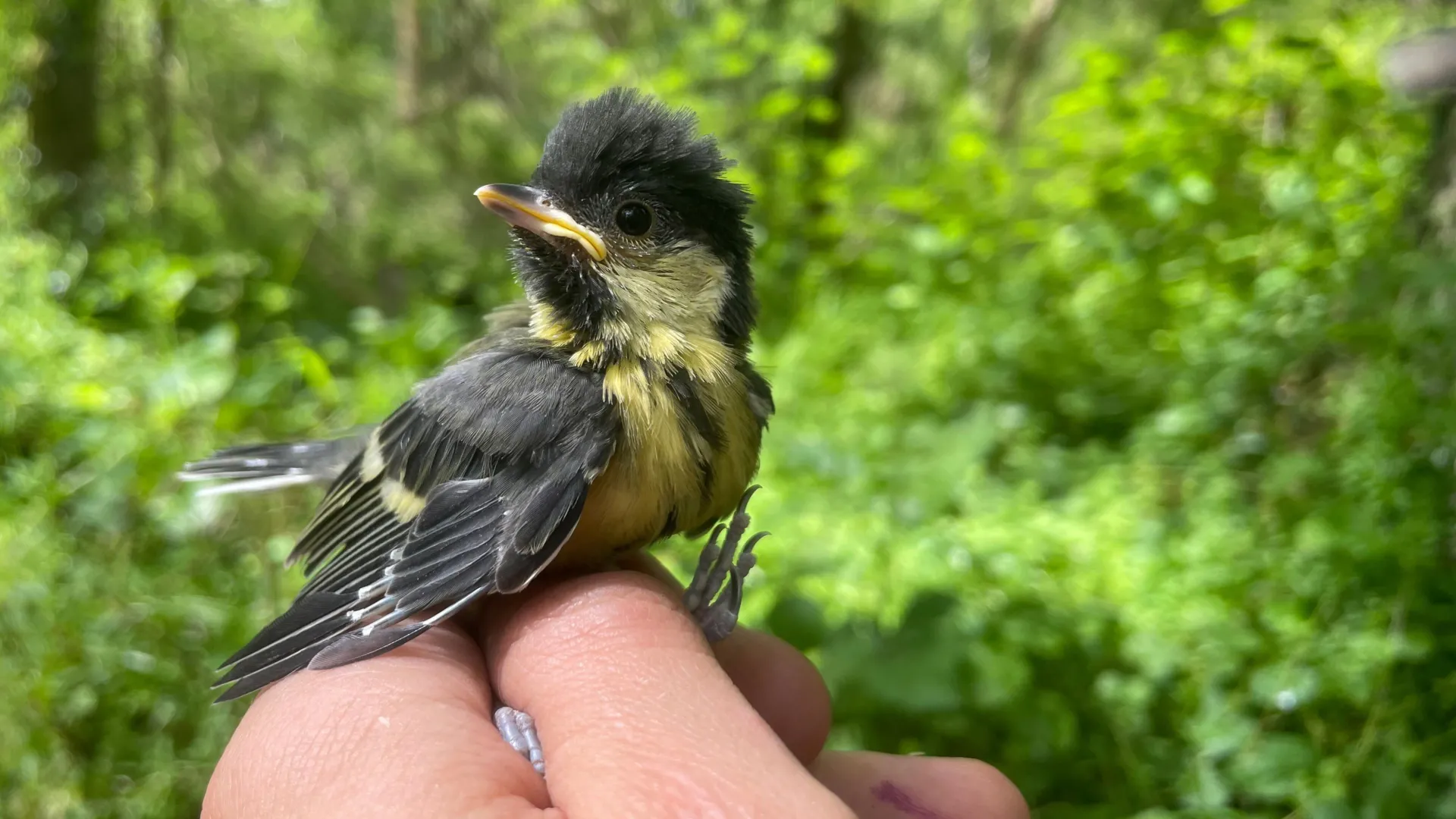
This groundbreaking research, conducted by the University of Oxford’s Department of Biology, sheds critical light on the complex interplay between climate change, extreme weather events, and avian population dynamics. The findings, derived from an unparalleled 60-year dataset, underscore the vulnerability of juvenile birds to unpredictable climatic conditions and highlight potential adaptive strategies that could mitigate some of these impacts. While the study focuses specifically on great tits ( Parus major) in the UK, its implications extend to numerous other species grappling with a rapidly changing global climate, offering vital insights for conservationists and policymakers alike.
Unraveling Decades of Data from Wytham Woods
The robustness of these findings stems from an unusually long and comprehensive dataset, a true treasure trove for ecological research. Scientists meticulously analyzed 60 years of continuous records pertaining to more than 80,000 individual wild great tits inhabiting Oxford’s Wytham Woods. This venerable research site, often referred to as one of the most studied woodlands in the world, has been the subject of continuous ecological monitoring since 1947, providing an unparalleled window into long-term population trends and ecological processes. The great tit population in Wytham Woods has been individually marked and monitored, with researchers tracking their breeding success, survival, and movement patterns through systematic nest box checks and bird ringing.
This rich biological information was then meticulously paired with detailed daily weather records collected over the same six-decade period. By cross-referencing individual bird data with precise meteorological observations, researchers could pinpoint how often extreme weather events—defined as the coldest, wettest, and hottest days—occurred during critical stages of chick development. This allowed them to measure the direct influence of these extremes on crucial developmental benchmarks, particularly the body mass of nestlings when they fledged (left their nest). Fledging body mass is not merely an arbitrary metric; it is a well-established and vital predictor of a young bird’s subsequent survival chances, reflecting its overall health, development, and energy reserves for the demanding period immediately after leaving the nest and its first winter. Heavier, healthier fledglings are generally more robust, better able to forage independently, and more likely to survive to adulthood and contribute to the next generation.
Cold and Rain: A Double Threat to Nestling Survival
The study’s revelations painted a clear picture of the detrimental effects of adverse weather. It found that severe cold spells during the first week after hatching are particularly harmful to newly emerged chicks. These tiny, vulnerable creatures, lacking fully developed feathers and efficient thermoregulatory systems, are highly susceptible to hypothermia. During such cold snaps, their diminutive bodies must expend a disproportionate amount of energy simply to maintain core body temperature, diverting precious resources away from crucial growth and development. This energetic trade-off can severely stunt their early growth, leading to smaller body sizes and weaker physiological states.
As chicks mature and grow older, the primary weather threat shifts from cold to heavy rainfall. While older chicks are better equipped to handle cold, torrential downpours present a different set of challenges. Both types of extreme weather – severe cold and heavy rain – were found to significantly reduce the body mass of great tit nestlings at fledging, by as much as 3%. While a 3% reduction might seem minor, for a small bird like a great tit, whose adult weight averages around 16-19 grams, even a fraction of a gram can represent a substantial deficit in fat reserves and muscle development, critically impacting their chances of survival in the wild.
The impact becomes even more alarming when intense heat occurs simultaneously with heavy rain. This synergistic combination of stressors exacerbates the negative effects, leading to a much more severe reduction in fledging mass. In these particularly challenging conditions, fledging mass can plummet by up to 27%. This drastic reduction is especially pronounced for broods that hatch later in the breeding season, suggesting that the late spring and early summer periods, often characterized by more volatile weather patterns, pose greater risks. The reasons for this amplified effect are multifaceted: high temperatures can lead to dehydration and heat stress, while rain can still hinder foraging efforts, creating a compounding effect that overwhelms the chicks’ ability to cope and parents’ ability to provide adequate care.
The Ecological Implications: A Race Against Time
Devi Satarkar, the lead researcher from the Department of Biology at the University of Oxford, provided crucial context to these findings. "In the Wytham population, great tits have adjusted to warmer springs by breeding earlier to track peak abundance of their main prey, caterpillars," Satarkar explained. This phenomenon is a classic example of phenological plasticity, where organisms alter their life cycle timing in response to environmental cues. Great tits typically time their breeding to coincide with the "caterpillar peak" – a period of superabundance of defoliating caterpillars, which are the primary food source for their protein-hungry nestlings. As springs have warmed, this caterpillar peak has shifted earlier, prompting the birds to follow suit.
Satarkar highlighted the complex trade-offs involved in this adaptation: "This overall earlier laying is beneficial, buffering them against many impacts of extreme weather — but it also exposes them to cold spells early in the season. Even small early-life deficits can have large implications for survival." This statement encapsulates a critical ecological dilemma: while adjusting breeding phenology can offer advantages in a changing climate, it often comes with new vulnerabilities. Early nesters might avoid the worst of late-season heatwaves or droughts, but they risk encountering unseasonably cold snaps or late frosts that can be equally devastating, particularly for the most vulnerable, newly hatched chicks. As climate change continues to intensify the frequency and severity of extreme weather events, Satarkar warns, "It will only get tougher for birds to keep up." This emphasizes the growing challenge for species to adapt quickly enough to the rapid pace of environmental change.
Understanding the Mechanisms: Why Weather Matters So Much
The study meticulously investigated the biological and ecological reasons behind the observed impacts. For newly hatched chicks, the primary challenge during cold spells is their underdeveloped thermoregulation system. Lacking a full complement of insulating feathers and the physiological capacity to efficiently generate and retain body heat, they are ectothermic to a large degree, relying heavily on parental brooding and nest insulation. When temperatures drop, they must burn through precious energy reserves just to stay warm, leaving fewer resources for essential growth processes like tissue development and bone formation. This energy deficit in early life can lead to irreversible developmental setbacks, known as "carry-over effects," impacting their health and performance throughout their lives.
Bad weather also profoundly affects the quantity and quality of food chicks receive. Extreme cold and heavy rain can severely limit how often parent birds can leave the nest to forage. Inclement weather makes flying more energetically costly and hazardous, and parents may spend more time brooding their young to keep them warm rather than searching for food. Simultaneously, heavy rainfall can literally knock caterpillars off plants, making them less accessible or even washing them away, thereby reducing the main food source that growing chicks rely on to meet their exceptionally high energy demands. Caterpillars are not only abundant but also rich in protein and fats, crucial for rapid growth. A reduction in this vital food source, coupled with reduced parental foraging efficiency, creates a severe nutritional bottleneck for the developing nestlings.
The Unexpected Upside: Mild Heat Can Boost Growth
One of the more surprising and nuanced findings of the study was that warmer extremes were, in some contexts, linked to heavier fledging weights during the nestling stage. High temperatures are often intuitively associated with heat stress and negative outcomes for wildlife. However, in this specific context, the "warmer periods" observed in Oxfordshire appeared to be relatively mild, especially when contrasted with the scorching heatwaves commonly experienced in southern Europe or other arid regions.
Devi Satarkar elaborated on this intriguing discovery: "Extreme weather events are affecting wild bird populations in complex ways. The level of warmth we see in these heat extremes in Oxfordshire might boost growth because it can increase insect activity and visibility — making caterpillars easier to find — while letting parents forage more and reducing nestlings’ thermoregulatory costs." In essence, temperatures around 16-17°C, while technically "extreme" compared to the historical average for cooler periods, are still within a comfortable range for insect activity. Warmer conditions can accelerate insect development and make them more active, thus increasing their availability and visibility for foraging parent birds. Furthermore, when the ambient temperature is mild, nestlings do not need to expend as much energy on thermoregulation, freeing up metabolic resources for growth. Parents, in turn, can spend less time brooding and more time foraging, bringing more food to the nest. An additional, often overlooked benefit is the high water content in caterpillars, which can help nestlings stay hydrated during warmer spells, contrasting sharply with hotter, drier regions where dehydration is a major threat.
Satarkar explicitly drew a distinction: "This contrasts sharply with hotter regions like the Mediterranean, where similar events can exceed 35°C and harm nestlings." This highlights the critical importance of geographical context and the specific thresholds at which environmental factors switch from beneficial to detrimental. What constitutes a "warm extreme" in a temperate UK woodland is vastly different from a "heatwave" in a Mediterranean climate, and the ecological responses are equally divergent.
Early Breeding: A Shield Against Unpredictable Weather
The study strongly reinforced the adaptive advantage of early breeding. Broods that hatch earlier in spring tend to capitalize on a more favorable window of opportunity, benefiting from occasional warm spells when caterpillar abundance is at its peak and temperatures generally remain within safe, growth-promoting limits. These early nesters often experience a "sweet spot" of optimal conditions, leading to healthier, heavier fledglings.
Conversely, birds that breed later in the season face progressively tougher conditions. Their fledglings were observed to be approximately one-third lighter, even though the warmest days they experienced reached similar temperatures of about 16-17°C. This suggests that other factors, such as declining food availability as the season progresses, or an increased likelihood of encountering the more detrimental combination of heat and heavy rain, contribute to their reduced success. Later broods might also face increased competition for resources, or parents might be in poorer physiological condition after an initial breeding attempt.
Over longer periods, the cumulative effects of extreme cold and rainfall were found to slightly reduce the odds that young birds would survive to adulthood. This long-term impact on recruitment into the breeding population is critical for the stability of the species. In contrast, the mild warm extremes, as discussed, could have small but significant positive effects on overall survival. The overarching conclusion from this extensive dataset is clear: breeding earlier within a season appears to be a crucial strategy, shielding many birds from the worst consequences of increasingly unpredictable weather patterns. This temporal shift in breeding strategy acts as a critical buffer, though it is not without its own risks, as identified by Satarkar regarding early-season cold spells.
Informing Conservation in a Changing World
As climate change continues to intensify the frequency, duration, and intensity of weather extremes globally, the insights gleaned from studies like this become indispensable for effective conservation. Scientists emphasize the growing importance of monitoring small-scale environmental conditions, often referred to as microclimates, and understanding subtle habitat differences. Microclimates refer to localized atmospheric conditions that differ from those in the surrounding area, influenced by factors like vegetation cover, topography, and proximity to water. For instance, a nest box placed on the north side of a dense conifer might experience significantly cooler and more stable temperatures than one on the south side of a deciduous tree, even within the same woodland.
This type of granular research can directly inform and guide targeted conservation strategies. Examples include strategic nestbox placement, ensuring boxes are situated in areas that offer better insulation from cold, protection from heavy rain, or shade from intense sun. Furthermore, woodland management practices can be adapted to create more resilient habitats. This might involve planting specific tree species that provide better canopy cover and shelter, managing undergrowth to enhance insect populations, or creating varied woodland structures that offer a range of microclimates for birds to choose from. Such interventions can help create refugia, areas where vulnerable chicks are better protected during critical stages of their development, enhancing their chances of survival.
Looking ahead, researchers plan to continue their invaluable monitoring of the great tit population in Wytham Woods. A key question for future inquiry is to understand how these observed weather effects may shift as global temperatures continue their upward trajectory. Specifically, there is a pressing need to determine at what point the "mild heatwaves" that currently offer some benefits might cross a critical threshold and become genuinely harmful, mirroring the detrimental effects seen in hotter regions. This ongoing research will be vital for developing dynamic conservation strategies that can adapt to the evolving challenges posed by a rapidly changing climate, ensuring the long-term viability of species like the great tit and countless others. The Wytham Woods great tit study stands as a testament to the power of long-term ecological monitoring in unraveling the intricate tapestry of life and its responses to environmental change.
