
 By admin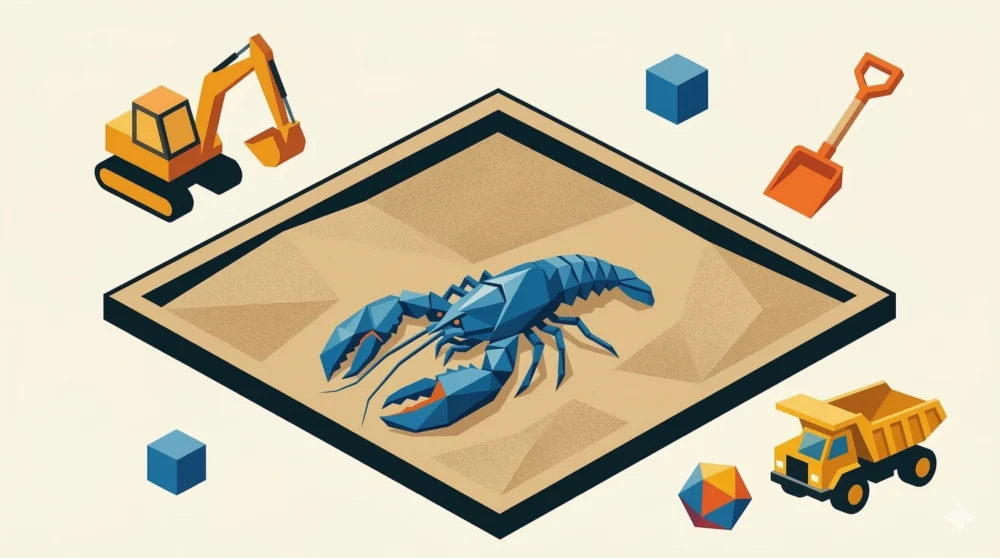
The nascent yet rapidly evolving landscape of AI agents is undergoing a significant transformation, moving beyond mere novelty to address the critical challenge of enterprise deployment. This crucial shift is underscored by a strategic partnership between NanoClaw, an open-source AI agent platform developed by Gavriel Cohen, and Docker, the industry-standard containerization platform. This collaboration aims to empower teams to run AI agents within Docker Sandboxes, a move designed to dismantle one of the most significant hurdles to widespread enterprise adoption: ensuring agents have the necessary operational freedom without compromising the security and stability of surrounding systems.
The implications of this announcement are profound, particularly for Chief Information Officers (CIOs), Chief Technology Officers (CTOs), and platform leaders who are grappling with the complex question of how to integrate autonomous AI agents into their existing infrastructure. It’s no longer sufficient for an agent to simply write code, answer queries, or automate a single task. The more pressing concern for enterprise decision-makers revolves around the agent’s ability to safely connect to live data streams, modify critical files, install new software packages, and operate seamlessly across diverse business systems without exposing the host machine, adjacent workloads, or other agents to undue risk. This is precisely the problem NanoClaw and Docker assert they are solving together.
This integration represents a substantial leap forward in agent security, moving beyond theoretical arguments to a tangible infrastructure-level solution. NanoClaw, from its inception, positioned itself as a security-first alternative within the burgeoning "claw" ecosystem, a category of agent frameworks promising extensive autonomy across both local and cloud environments. The project’s foundational principle has consistently been that many existing agent systems rely too heavily on software-level security measures while operating in close proximity to the host machine. By partnering with Docker, NanoClaw is pushing this security paradigm down to the infrastructure layer, embedding robust isolation mechanisms.
Gavriel Cohen, in a candid interview, elaborated on the partnership: "The partnership with Docker is integrating NanoClaw with Docker Sandboxes. The initial version of NanoClaw used Docker containers for isolating each agent, but Docker Sandboxes is the proper enterprise-ready solution for rolling out agents securely." This progression is vital because the paramount concern in enterprise agent deployment is effective isolation. Unlike traditional applications, AI agents exhibit dynamic and often mutable behavior. They possess the capacity to alter their operating environments, install dependencies, create and modify files, initiate new processes, and establish connections with external systems. Such capabilities inherently challenge many of the assumptions underpinning conventional containerized workflows, which often rely on immutability and predictable execution.
Cohen eloquently articulated the core challenge: "You want to unlock the full potential of these highly capable agents, but you don’t want security to be based on trust. You have to have isolated environments and hard boundaries." This statement directly addresses the broader dilemma confronting enterprises that are actively experimenting with agents in production-like environments. As agents become more powerful and versatile, their need for access intensifies. They require tools, memory, external connectivity, and the autonomy to execute actions on behalf of users and teams. However, each enhancement in an agent’s capability amplifies the criticality of its containment. A compromised or malfunctioning agent must be strictly prevented from breaching the host environment, exposing sensitive credentials, or accessing the state of other agents.
The strain that AI agents place on conventional infrastructure is a recognized challenge. Mark Cavage, President and COO of Docker, acknowledged that this reality necessitated a re-evaluation of some of the foundational assumptions within standard developer infrastructure. "Fundamentally, we had to change the isolation and security model to work in the world of agents," Cavage stated. "It feels like normal Docker, but it’s not." He further explained the obsolescence of the previous model: "Agents break effectively every model we’ve ever known. Containers assume immutability, but agents break that on the very first call. The first thing they want to do is install packages, modify files, spin up processes, spin up databases – they want full mutability and a full machine to run in."
This perspective offers a clear framework for enterprise technical decision-makers. The true promise of AI agents lies not in their ability to function as static software with a conversational interface, but in their capacity to undertake open-ended work. However, open-ended tasks are precisely what introduce novel security and governance complexities. An agent capable of installing packages, rewriting entire file trees, initiating database processes, or accessing credentials is undeniably more operationally valuable than a passive assistant. Conversely, it also presents a greater security risk if deployed within an inadequately secured environment.
Docker’s solution, Docker Sandboxes, leverages MicroVM-based isolation while maintaining the familiar Docker packaging and workflow paradigms. The companies report that NanoClaw can now be integrated into this infrastructure with a single command, providing teams with a more secure execution layer without necessitating a complete overhaul of their existing agent stack. Cavage summarized the value proposition succinctly: "What that gets you is a much stronger security boundary. When something breaks out – because agents do bad things – it’s truly bounded in something provably secure."
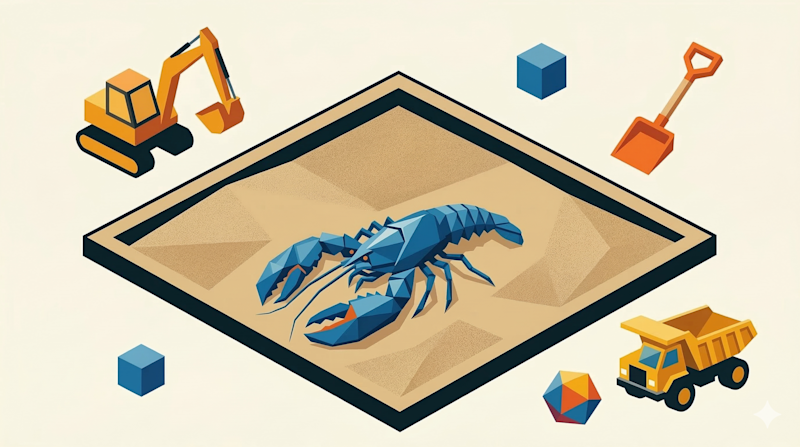
This emphasis on containment over trust aligns perfectly with NanoClaw’s original vision. In previous discussions of the project, NanoClaw was characterized as a more streamlined and auditable alternative to broader, more permissive agent frameworks. Its appeal extended beyond its open-source nature to its inherent simplicity, which facilitates easier comprehension, enhanced security, and greater adaptability for production environments. Cavage broadened this perspective beyond any single product, asserting, "Security is defense in depth. You need every layer of the stack: a secure foundation, a secure framework to run in, and secure things users build on top." This approach is likely to resonate strongly with enterprise infrastructure teams who prioritize operational resilience, auditability, and layered control over the novelty of cutting-edge models. While AI agents may continue to draw upon the intelligence of advanced models, their operational success hinges on the surrounding system’s ability to absorb errors, miscalculations, or adversarial actions without escalating a single compromised process into a widespread incident.
The NanoClaw-Docker partnership also reflects a broader industry trend in how vendors are conceptualizing large-scale AI agent deployment. The emerging paradigm is not a singular, all-encompassing AI system, but rather a multitude of bounded agents operating collaboratively across various teams, communication channels, and task domains. "What OpenClaw and the claws have shown is how to get tremendous value from coding agents and general-purpose agents that are available today," Cohen remarked. "Every team is going to be managing a team of agents."
Cohen further elaborated on this concept, painting a vision that leans more towards organizational systems design than the consumer-centric assistant model that still dominates much of the AI discourse. "In businesses, every employee is going to have their personal assistant agent, but teams will manage a team of agents, and a high-performing team will manage hundreds or thousands of agents," Cohen predicted. This perspective offers a more pertinent enterprise lens than the typical consumer framing. In a real-world organization, agents are likely to be intrinsically linked to distinct workflows, data repositories, and communication interfaces. Finance departments, customer support, sales engineering, developer productivity teams, and internal operations units will each likely leverage unique automations, possess different memory capacities, and operate under distinct access privileges. A secure multi-agent future therefore depends less on generalized intelligence and more on clearly defined boundaries: delineating access permissions, specifying which processes can interact with which file systems, and establishing protocols for handling agent failures or compromises.
NanoClaw’s platform design is intrinsically built around this concept of orchestration. Positioned above foundational models like Claude Code, the platform incorporates persistent memory, scheduled tasks, messaging integrations, and sophisticated routing logic. This enables agents to be assigned work across a variety of channels, including WhatsApp, Telegram, Slack, and Discord. Notably, the platform claims that this can all be configured without the need for custom agent code, all while ensuring each agent remains isolated within its own containerized runtime. Cohen highlighted a practical objective of the Docker integration: to simplify the adoption of this deployment model. "People will be able to go to the NanoClaw GitHub, clone the repository, and run a single command," he explained. "That will get their Docker Sandbox set up running NanoClaw." The ease of this setup is crucial, as many enterprise AI deployments falter when transitioning from promising demonstrations to stable, production-ready systems. Security features that prove overly burdensome to deploy or maintain are often bypassed in practice. A packaging model that reduces friction without compromising containment boundaries is therefore far more likely to achieve widespread adoption within organizations.
This partnership is also noteworthy for its nature, eschewing a purely commercial alliance or a financially engineered enterprise bundle. "There’s no money involved," Cavage stated. "We found this through the foundation developer community. NanoClaw is open source, and Docker has a long history in open source." This organic origin may actually strengthen the announcement, as credible infrastructure integrations often arise from technical compatibility before commercial alignment. Cohen recounted that the relationship began when a Docker developer advocate successfully integrated NanoClaw into Docker Sandboxes, demonstrating the efficacy of the combination. "We were able to put NanoClaw into Docker Sandboxes without making any architecture changes to NanoClaw," Cohen said. "It just works, because we had a vision of how agents should be deployed and isolated, and Docker was thinking about the same security concerns and arrived at the same design." For enterprise buyers, this origin story suggests that the integration was not artificially manufactured by a go-to-market strategy but rather stems from genuine architectural synergy.
Docker is also careful to position NanoClaw not as its sole supported framework, but as a significant early adopter within its official packaging. Cavage indicated the company’s intention to engage broadly across the AI agent ecosystem. This implies that Docker perceives a wider market opportunity in providing secure runtime infrastructure for AI agents, while NanoClaw benefits from a more recognizable enterprise foundation for its security capabilities.
The deeper significance of this announcement lies in its shift of focus from model capabilities to runtime design, a domain that is increasingly becoming the battleground for enterprise AI adoption. The AI industry has spent the past two years demonstrating the growing sophistication of models in reasoning, coding, and orchestrating tasks. The subsequent phase is dedicated to proving that these systems can be deployed in ways that satisfy the stringent requirements of security teams, infrastructure leaders, and compliance officers. NanoClaw has consistently argued that agent security cannot be an afterthought tacked onto the application layer. Docker, through this partnership, is echoing a similar sentiment from the runtime perspective. "The world is going to need a different set of infrastructure to catch up to what agents and AI demand," Cavage asserted. "They’re clearly going to get more and more autonomous."
This evolving need for specialized infrastructure could become the central narrative in the ongoing AI revolution. Enterprises require not only more capable AI agents but also more robust and secure environments in which to deploy them. For organizations currently exploring AI agents, the NanoClaw-Docker integration offers a tangible blueprint for what this secure environment might entail: an open-source orchestration layer at the top, MicroVM-backed isolation at the bottom, and a deployment model fundamentally designed around containment rather than implicit trust. In essence, this partnership represents more than a mere product integration; it is an early indicator of how enterprise agent infrastructure may evolve, prioritizing bounded autonomy that can withstand the rigors of real-world production systems over unconstrained autonomy.
