
 By admin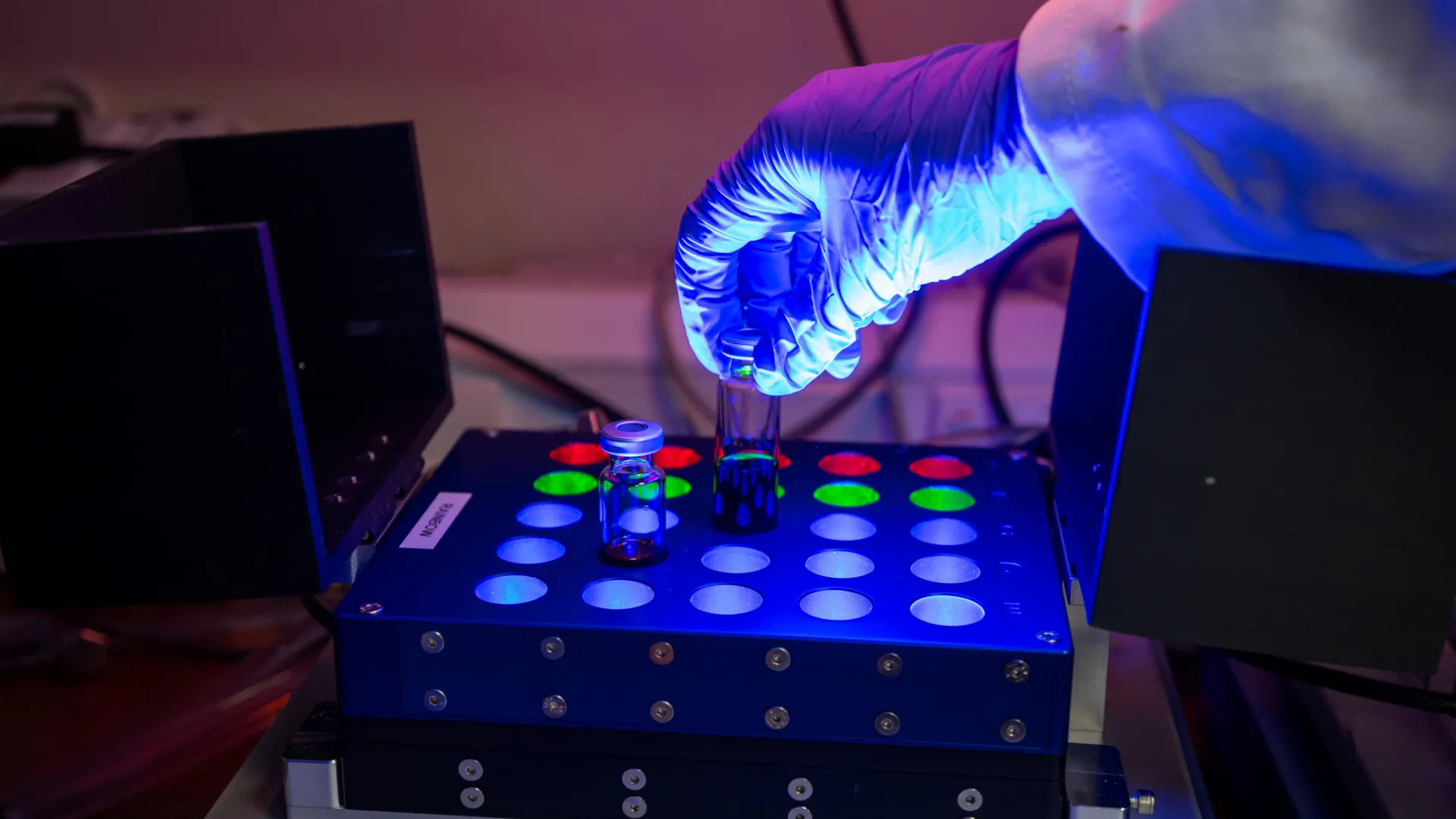
The groundbreaking study, published on March 12 in the prestigious journal Nature Synthesis, introduces what the research team has aptly termed an "anti-Friedel-Crafts" reaction. This nomenclature immediately signals a departure from conventional methodologies. Traditional Friedel-Crafts chemistry, a cornerstone of organic synthesis for over a century, typically necessitates the use of powerful, often corrosive chemicals, or expensive and environmentally impactful metal catalysts, along with harsh laboratory conditions such as elevated temperatures or pressures. These stringent requirements mean that such reactions are usually relegated to the very early stages of drug manufacturing. Following these initial steps, a cascade of many additional chemical transformations and purification processes are required to ultimately yield the desired final medicine, adding considerable time, cost, and complexity.
The new Cambridge method fundamentally reorients this established process. By circumventing the need for harsh reagents and conditions, it empowers researchers to introduce crucial modifications to complex drug molecules much later in the development pipeline. This shift from early-stage, foundational synthesis to late-stage, precise adjustment represents a paradigm change, promising to streamline what has historically been a protracted and resource-intensive endeavor.
LED Powered Reaction Forms Key Chemical Bonds Under Mild Conditions
In a stark contrast to reliance on heavy metal catalysts or aggressive acids, the innovative reaction developed at Cambridge is activated simply by an LED lamp operating at ambient temperature. When this gentle light source triggers the reaction, it initiates a self-sustaining chain process that efficiently forms essential carbon-carbon bonds. These crucial linkages are formed under exceptionally mild conditions, critically, without the need for toxic or costly reagents that are typically associated with such transformations.
In practical terms, this elegant approach offers an unprecedented level of flexibility to medicinal chemists. Instead of being forced to dismantle a nearly complete complex molecule and laboriously rebuild it piece by piece to test a minor structural alteration – a process that can consume months of invaluable research time and resources – chemists can now adjust these intricate structures near the very end of the drug development process. This capability is particularly impactful for "late-stage functionalization," a critical phase where drug candidates are fine-tuned for optimal efficacy, selectivity, and pharmacokinetic properties.
"We’ve found a new way to make precise changes to complex drug molecules, particularly ones that have been exceptionally difficult to modify in the past," explained David Vahey, the first author of the study and a PhD researcher at St John’s College, Cambridge. He elaborated on the immense time savings this offers: "Scientists can spend months rebuilding large parts of a molecule just to test one small change. Now, instead of doing a multistep process for hundreds of molecules, scientists can start with their ‘hit’ molecule and make small modifications later on."
Vahey further underscored the transformative potential: "This reaction lets scientists make precise adjustments much later in the process, under mild conditions and without relying on toxic or expensive reagents. That opens chemical space that has been hard to access before and gives medicinal chemists a cleaner, more efficient tool for exploring new versions of a drug." This "chemical space" refers to the vast universe of possible molecular structures, many of which remain unexplored due to synthetic challenges. By making previously difficult modifications accessible, the Cambridge technique allows chemists to probe novel areas of this space, potentially uncovering drugs with superior properties.
Faster Drug Discovery With Less Waste and Enhanced Precision
The implications of this breakthrough extend far beyond mere convenience. Reducing the number of synthesis steps inherently translates to a significant decrease in overall chemical use, a substantial cut in energy consumption, and a consequent shrinking of the environmental footprint associated with drug development. These tangible benefits contribute directly to the principles of green chemistry and sustainable manufacturing, which are increasingly vital for the pharmaceutical industry. Beyond environmental gains, the time saved for researchers translates into accelerated drug discovery timelines, potentially bringing life-saving medicines to patients faster.
A cornerstone of the new technique’s utility is its remarkable selectivity. It allows chemists to modify one specific part of a complex molecule without inadvertently disturbing or reacting with other sensitive functional groups or chiral centers present elsewhere in the structure. This exquisite precision is paramount in drug design, as even minor structural changes can profoundly influence how a medicine interacts with biological targets in the body, its overall biological behavior, or whether it produces undesirable side effects. In the highly competitive and regulated pharmaceutical landscape, maintaining this precision is non-negotiable.
At its fundamental core, this breakthrough addresses a pervasive and long-standing chemical challenge: the efficient and selective formation of carbon-carbon bonds. These robust covalent bonds form the very backbone of countless organic substances, ranging from everyday materials like fuels and plastics to the incredibly complex biological molecules that underpin life itself, including all pharmaceutical drugs. The ability to forge these bonds under mild, selective conditions is a holy grail in synthetic chemistry.
Furthermore, the technique exhibits what chemists describe as "high functional-group tolerance." This technical attribute signifies its ability to selectively modify one specific region of a molecule while leaving other reactive or sensitive functional groups – such as alcohols, amines, carboxylic acids, or halogens – completely untouched. This characteristic makes the reaction particularly invaluable for late-stage optimization, a crucial phase in drug discovery where scientists fine-tune lead molecules to enhance their potency, selectivity, metabolic stability, and other pharmacological properties. By avoiding heavy metals, harsh reaction conditions, and lengthy, multi-step synthesis pathways, the approach is poised to significantly reduce toxic waste generation and lower overall energy consumption in pharmaceutical manufacturing processes. These environmental benefits are not merely desirable; they are increasingly becoming essential as the global chemical industry strives to reduce its ecological impact and meet stringent sustainability targets.
Inspired by Sustainable Chemistry and Collaborating with Industry
The intellectual genesis of this innovative work is deeply rooted in the philosophy of sustainable chemistry. David Vahey conducts his research within the group led by Professor Erwin Reisner at Cambridge. Professor Reisner’s team has garnered international recognition for their pioneering work in developing chemical systems inspired by natural photosynthesis. Their extensive research endeavors explore ingenious ways to harness sunlight to convert abundant waste materials, water, and the greenhouse gas carbon dioxide into useful chemicals and sustainable fuels, embodying the principles of a circular economy.
Professor Reisner, who holds the distinguished position of Professor of Energy and Sustainability in the Yusuf Hamied Department of Chemistry and served as the lead author of the study, emphasized the dual significance of the work. He highlighted its contribution to expanding the synthetic toolkit available to chemists under practical, real-world conditions, while simultaneously propelling the industry towards greener, more environmentally responsible manufacturing techniques. "This is a new way to make a fundamental carbon-carbon bond, and that’s why the potential impact is so great," Reisner stated. "It also means chemists can avoid an undesirable and inefficient drug modification process."
The researchers rigorously tested the efficacy of the reaction on a broad spectrum of drug-like molecules, demonstrating its versatility and robustness. Crucially, they also showed that the technique could be readily adapted for continuous flow systems, which are increasingly favored in industrial chemical production for their efficiency, safety, and scalability. The practical viability and environmental advantages for large-scale pharmaceutical manufacturing were further evaluated through a vital collaboration with AstraZeneca, a leading global pharmaceutical company. This partnership underscores the industry’s keen interest in adopting more sustainable and efficient synthetic methods.
Professor Reisner articulated the broader challenge that innovations like this address: "Transitioning the chemical industry to a sustainable industry is arguably one of the most difficult parts of the whole energy transition." This statement highlights the immense scale and complexity of decarbonizing and de-toxifying one of the world’s largest and most essential industrial sectors, where chemical reactions are at the very heart of production.
Breakthrough Emerges From a Failed Experiment: The Serendipitous Path to Discovery
Remarkably, like many famous scientific breakthroughs throughout history – from the accidental discovery of X-rays by Wilhelm Conrad Röntgen and penicillin by Alexander Fleming to the unexpected side effects leading to Viagra and modern weight loss medications – this pivotal discovery began with an unexpected laboratory result.
"Failure after failure, then we found something we weren’t expecting in the mess – a real diamond in the rough. And it is all thanks to a failed control experiment," Vahey recounted, shedding light on the often circuitous and challenging nature of scientific research. He had initially been testing a specific photocatalyst to drive a reaction. In a crucial control experiment, he intentionally removed the photocatalyst to observe the baseline reactivity. To his astonishment, he discovered that the reaction worked just as effectively, and in some instances, even better, without the supposed catalyst.
At first glance, the unusual product formed in the absence of the photocatalyst appeared to be a mistake, an anomaly to be dismissed. However, instead of ignoring this perplexing result, the researchers made the critical decision to investigate it further. According to Professor Reisner, recognizing the significance of unexpected findings, rather than discarding them as errors, is a hallmark of truly innovative scientific discovery. "Recognizing the value in the unexpected is probably one of the key characteristics of a successful scientist," he affirmed, emphasizing the blend of observation, curiosity, and critical thinking required.
AI Helps Predict New Chemical Reactions and Accelerate Research
The modern scientific landscape is increasingly data-rich, and the Cambridge team leverages this to their advantage. "We generate enormous amounts of data, and increasingly we use artificial intelligence to help analyze it," Reisner explained. He highlighted the synergy between human intellect and computational power: "We have an algorithm that can predict reactivity. AI helps because we don’t need chemists to do endless trial and error, but an algorithm will only follow the rules it has been given. It still takes a human being to look at something that appears wrong and ask whether it might actually be something new."
In this particular instance, it was David Vahey’s acute observational skills and intellectual courage that allowed him to recognize the profound potential importance of the unexpected result and diligently pursue its implications. "David could have dismissed it as a failed control," Reisner reflected. "Instead, he stopped and thought about what he was seeing. That moment, choosing to investigate rather than ignore it, is where discovery happens." This anecdote powerfully illustrates that while AI can sift through vast datasets, the spark of human intuition, the willingness to question the expected, remains indispensable for true breakthroughs.
Following the elucidation of the underlying chemistry behind this novel reaction, the team further enhanced their discovery by collaborating with Trinity College Dublin to introduce sophisticated machine learning models. These models were trained to predict precisely where the reaction would occur on entirely new molecules that had never before been subjected to experimental testing in the laboratory. By learning intricate patterns from known chemical reactions and their outcomes, the AI system can simulate possible reaction pathways and predict products before any physical experiments are performed. This computational foresight allows researchers to identify promising molecules more quickly, with significantly less trial and error, thereby reducing both time and resource expenditure.
For David Vahey, the discovery provides scientists with an invaluable new capability that will undoubtedly reshape aspects of drug discovery and development. He articulated the forward-looking perspective: "What industry and other researchers do with it next – that’s where the future impact lies." Reflecting on the demanding nature of scientific endeavor, he added: "For us, the lab is mostly average to bad days. The good days are very good days." Professor Reisner echoed this sentiment, emphasizing the profound satisfaction of breakthrough moments: "As a chemist, you only need one or two good days a year – and those can come from a failed experiment." This sentiment underscores the enduring human element in scientific pursuit, where perseverance through countless challenges can culminate in moments of profound insight, often stemming from the most unexpected of circumstances, akin to the many accidental scientific discoveries that have shaped our world.
