
 By admin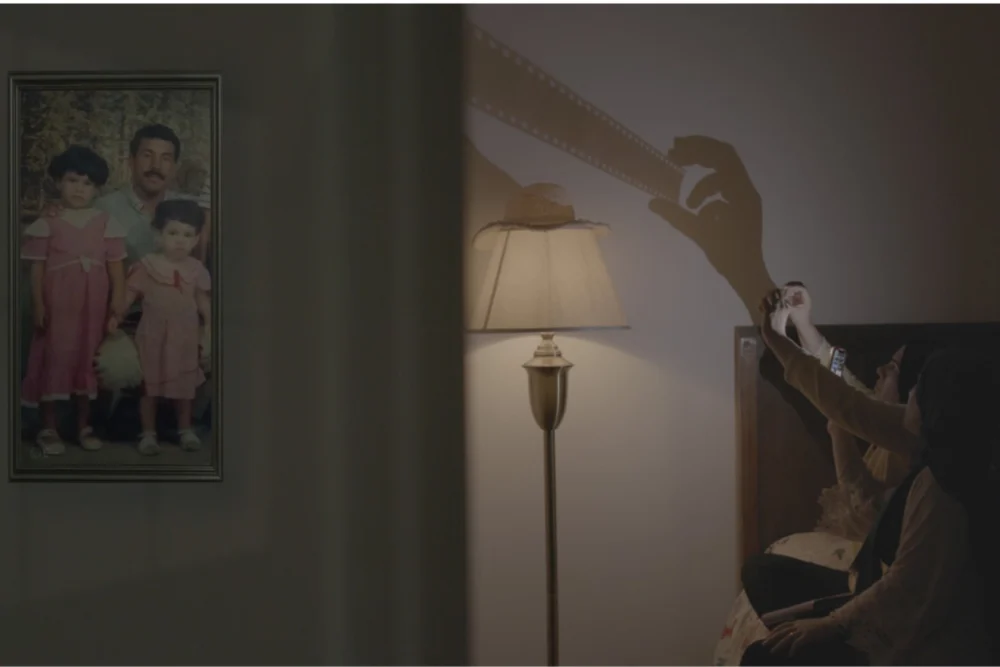
In the intimate and unflinching gaze of her sophomore feature, "My Father Killed Bourguiba," Tunisian filmmaker Fatma Riahi embarks on a profound excavation of her family’s history, centering on her father’s pivotal, yet ultimately failed, role in a clandestine plot to overthrow Habib Bourguiba, Tunisia’s revered first president. This deeply personal documentary, produced by Riahi herself in co-production with Dora Bouchoucha and Lina Chaabane of the Tunisian outfit Nomadis Images, known for their impactful works like "The Voice of Hind Rajab" and "Aisha Can’t Fly Away," alongside Omar Ben Ali of SVP Production, is poised to make its mark at the Pitching Forum of the Thessaloniki International Documentary Festival, scheduled to run from March 5th to 15th. The film transcends a mere historical account, transforming into a powerful exploration of how her father’s political choices, and their subsequent ramifications, including his lengthy imprisonment, irrevocably shaped Riahi’s family life and, by extension, the trajectory of her own existence.
"My Father Killed Bourguiba" is more than just a film; it is a cathartic journey for the director, a meticulous unraveling of familial archives that brings to light the story of a father who was an active participant in a daring conspiracy to unseat the regime of Habib Bourguiba. Bourguiba, a towering figure in Tunisia’s post-independence narrative, served as the nation’s first president, guiding it through decades of modernization and nation-building after its liberation from French colonial rule. The audacious plot, conceived by Riahi’s father and his fellow ideologues, aimed to achieve their political objectives through a military coup in November 1987. The film’s evocative title itself is a poignant reminder of the unintended consequences of political upheaval, stemming from a five-year-old sister’s innocent, yet fateful, misstatement to a prison guard.
The coup, however, never materialized as planned. Just a day before the planned overthrow, on November 7, 1987, Prime Minister Zine El Abidine Ben Ali orchestrated his own swift and bloodless coup, deposing Bourguiba and placing him under effective house arrest. This dramatic shift in power had profound and immediate repercussions for Riahi’s family. Two months later, her father, Mabrouk, and his co-conspirators were apprehended and incarcerated by the newly established Ben Ali administration. This arrest marked a seismic turning point, ushering in an era of sustained fear and harassment for Riahi and her family. They found themselves unwillingly thrust into a political maelstrom, victims of a conflict they had not chosen but were inexorably linked to through their father’s convictions. The regime’s retaliatory measures, a form of collective punishment, cast a long shadow over their lives for years to come.
Drawing upon a rich tapestry of personal mementos – including cherished family photographs and intimate letters exchanged with her father during his incarceration over three decades ago – Riahi endeavors to comprehend the motivations behind his radical political stance. Simultaneously, she embarks on a poignant reflection on the enduring impact of those choices, not only on the young girl she once was but also on the woman she has evolved into. Speaking candidly with Variety during her visit to Thessaloniki, Riahi, whose directorial debut, "A Haunted Past," premiered at the International Documentary Film Festival Amsterdam (IDFA) in 2018, articulated a nuanced perspective on her latest work. While acknowledging the film’s deep entanglement with the political landscape of that era, she emphasized that "My Father Killed Bourguiba" is not, at its core, a political film. Instead, it serves as a deeply humanistic exploration of personal history and its intricate connection to national narratives.
"I grew up navigating the space between two seemingly diametrically opposed ideologies: the political vision that my father fervently believed in, and the one championed by Bourguiba," Riahi explained. "Rather than seeking to reconcile this inherent contradiction, the film has provided me with a platform to embrace its complexity and sit with its inherent ambiguities." Through this process of confronting and grappling with divergent viewpoints, Riahi expresses a profound hope that her own journey, and by extension the film’s narrative, might offer a pathway for others to come to terms with the deep-seated divisions that continue to fracture Tunisian society today. "Perhaps," she mused, "this exploration will foster a greater sense of mutual understanding and acceptance, even among those who hold differing views and originate from diverse perspectives."
Habib Bourguiba, often lauded as the "father of Tunisia," presided over the nation for an impressive thirty years following its declaration of independence from France. While recognized for his progressive policies and his instrumental role in modernizing the country, Bourguiba was also widely perceived as an authoritarian figure, a despot whose grip on power was absolute. In stark contrast, Riahi’s father, Mabrouk, was a key member of the "Security Group," an ideologically more conservative faction deeply committed to dismantling the Bourguiba regime through revolutionary means.
The historical backdrop against which this personal drama unfolds is crucial to understanding its significance. Bourguiba’s rule, while credited with significant advancements in education, women’s rights, and secularization, was also characterized by a concentration of power and a suppression of dissent. The "Security Group," and individuals like Mabrouk, represented a segment of Tunisian society that felt marginalized by Bourguiba’s increasingly entrenched authority and sought a more radical shift in the nation’s political direction. Their clandestine efforts, however, were ultimately overshadowed by a more immediate and successful power play.
The attempted coup by Mabrouk and his allies was preempted by Zine El Abidine Ben Ali’s own meticulously planned seizure of power. Ben Ali, then serving as Prime Minister, effectively orchestrated a palace coup, ushering in a new era of authoritarian rule that would last for over two decades. The swiftness of Ben Ali’s ascent and the subsequent suppression of any perceived opposition meant that individuals like Mabrouk, who had dared to challenge the established order, became targets of the new regime.
The years following Mabrouk’s imprisonment were marked by persistent state surveillance and intimidation directed at his family. Riahi vividly recalls the pervasive sense of unease and the constant awareness of being under scrutiny, a direct consequence of her father’s political actions. This period of systematic harassment and the accompanying psychological toll underscored the profound and far-reaching impact of her father’s choices, a burden she carried as a child and adolescent. Despite the immense personal cost and the emotional turmoil, the Riahi family maintained a stoic silence regarding their ordeal for many years, a silence dictated by the pervasive climate of fear and repression.
"I seldom spoke about what our family endured, except within a very select circle of trusted friends," Riahi admitted. "Silence became a shield, a necessary adaptation shaped by the omnipresent fear." This ingrained reticence persisted even after her father’s passing in 2005, leaving a complex legacy of unspoken truths and unresolved pain.
The transformative moment that finally fractured this long-held silence arrived in 2011 with the eruption of the Jasmine Revolution, a popular uprising that ultimately toppled the Ben Ali regime. In the ensuing years, Tunisia embarked on a path of reconciliation and accountability, establishing a Truth and Dignity Commission. In the summer of 2017, Riahi and her sister were summoned to testify before this commission, joining the ranks of thousands of other individuals who had been targeted, harassed, and persecuted for their political beliefs and affiliations under the Ben Ali government. This experience, Riahi revealed, was "the decisive moment that triggered me into making this film."
"It marked the first time I articulated my family’s story publicly, speaking into a camera, before a room full of strangers, and even in front of my own sister, about that deeply impactful period of our family’s history," she recounted. The act of recounting how her family suffered under Ben Ali’s policy of collective punishment, she explained, led her to "discover the profound power of confession." This realization ignited a desire to share more, to break free from the constraints of silence and to confront the past in a meaningful way.
However, "My Father Killed Bourguiba" extends its reach beyond a mere confrontation with the past; it actively engages with the present and the future. Riahi’s own journey into motherhood has prompted a deeper contemplation of what she will impart to her two children. She recognizes the profound responsibility that comes with shaping their worldview, understanding that, for better or worse, her own choices will inevitably influence the course of their lives, mirroring the way her father’s decisions irrevocably shaped hers.
"My primary aim is to avoid perpetuating trauma, fear, or sadness onto my children," she stated. "I engage in conversations with my eldest son about the revolution, about Tunisia, and about his grandfather, but I approach these discussions with careful selectivity." Simultaneously, Riahi acknowledges the indirect involvement of her children in this historical narrative, albeit symbolically. "Through this film, my children are indirectly connected to this past, even if only in a symbolic sense," she continued. "At times, I experience a sense of internal conflict regarding this, but I also perceive it as a positive development. The act of learning history, practicing honesty, and being encouraged to question the past can equip them with greater awareness, diminish their fear, and ultimately make them less prone to silence than we were."
The Thessaloniki International Documentary Festival, from March 5th to 15th, provides a vital platform for "My Father Killed Bourguiba" to resonate with international audiences, sparking dialogues about historical memory, political consequence, and the enduring power of personal narratives in shaping both individual lives and national identities. The film’s selection for the Pitching Forum underscores its potential to ignite conversations and foster a deeper understanding of Tunisia’s complex socio-political landscape and the universal human experiences of family, loss, and resilience.
