
 By Isnaini Azizah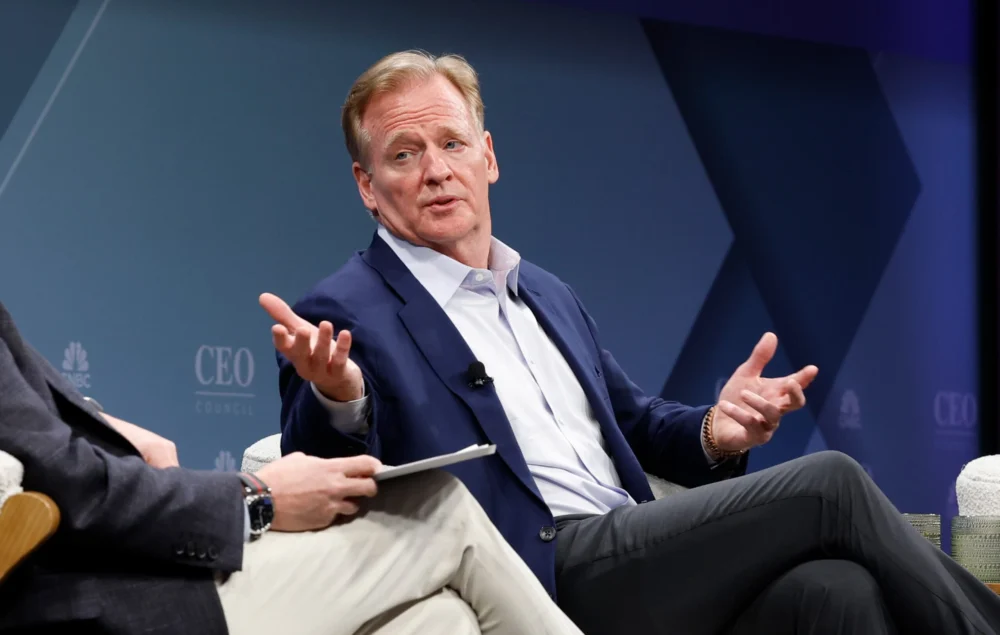
The high-stakes chess match between the National Football League and its longest-standing media partners has entered a critical new phase, as the league moves to solidify its broadcast future amidst a period of unprecedented corporate consolidation. Sources familiar with the matter indicate that the NFL and the newly formed Paramount Skydance entity are currently locked in advanced negotiations to renew the league’s cornerstone Sunday afternoon package on CBS. This deal, which is beginning to take a definitive shape, represents more than just a simple contract extension; it is a recalibration of the entire sports media economy, signaling that the "NFL Tax" is set to rise significantly for the world’s largest media conglomerates.
At the heart of these discussions is a substantial price hike that would see CBS’s annual commitment skyrocket. Currently, the network pays an average of approximately $2.1 billion per year for the rights to broadcast Sunday afternoon American Football Conference (AFC) games. However, according to individuals privy to the private negotiations, the "bid-ask spread"—the gap between what the league wants and what the network is offering—has found a midpoint in the range of a 50% to 60% increase. If finalized at these levels, Paramount Skydance would see its annual payments surge to more than $3 billion, a staggering figure that underscores the NFL’s status as the only "must-have" content in an increasingly fragmented television landscape.
In exchange for this massive capital infusion, the NFL is prepared to offer Paramount Skydance long-term stability. The league has reportedly agreed to eliminate the 2029-30 opt-out clause that was baked into the original 11-year agreement signed in 2021. That original deal was intended to run through the 2033-34 season, but the opt-out gave the NFL a "get out of jail free" card to test the open market midway through the term. By removing this clause, the NFL effectively guarantees CBS its Sunday window for the next eight years, providing the network with the foundational programming it needs to support both its linear broadcast business and its Paramount+ streaming aspirations.
The urgency behind these negotiations is largely driven by corporate structural changes within Paramount itself. Following Skydance Media’s high-profile acquisition of Paramount Global—a deal valued at roughly $8 billion and approved by the FCC in mid-2025—a "change-of-control" provision was triggered in the NFL’s media contract. This provision granted the league the unilateral right to terminate its deal with CBS as early as 2027. Recognizing the existential threat that losing the NFL would pose to the newly merged company, Paramount CEO David Ellison has moved aggressively to secure the league’s partnership. Speaking at the CNBC CEO Council in Arizona, Commissioner Roger Goodell appeared alongside industry titans, signaling a collaborative tone even as the league exerts its considerable leverage.
David Ellison, in recent public remarks, has been careful not to tip his hand regarding the specifics of the dollar amounts, yet his commitment to the league remains unwavering. "We have a phenomenal relationship with the NFL, and we anticipate that continuing for the foreseeable future," Ellison told reporters earlier this month. "They are one of our most important partners, and we plan for them to stay one of our most important partners." This sentiment is backed by cold, hard financial projections. Paramount’s adjusted EBITDA for 2026 is projected at $3.6 billion, but that figure is expected to transform dramatically if the company’s subsequent merger with Warner Bros. Discovery (WBD) passes regulatory muster. Paramount CFO Dennis Cinelli recently informed investors that a combined Paramount-WBD entity would boast an adjusted EBITDA projection of $18 billion, providing the massive balance sheet necessary to absorb a $3 billion annual NFL bill.
The Paramount-CBS deal is widely viewed as the first domino to fall in a broader restructuring of the NFL’s media portfolio. Industry analysts expect the league to turn its attention toward Fox next. The logic is simple: Fox and CBS operate similar Sunday afternoon packages, and the league prefers to establish a pricing benchmark with one before moving to the other. Fox currently pays roughly $2.2 billion per year for its National Football Conference (NFC) package. While Fox CEO Lachlan Murdoch has stated that the company has not yet engaged in "material conversations" regarding a renewal, he acknowledged the necessity of the partnership during the Morgan Stanley Technology, Media & Telecom Conference, noting that Fox would "certainly look to continue that mutually beneficial relationship."
However, the aggressive price increases sought by the NFL are creating a sense of trepidation among other media partners, specifically Disney (ESPN/ABC) and NBCUniversal (Comcast). The landscape has shifted since the 2021 deals were signed. Over the last few seasons, the NFL has aggressively boosted the quality of its "Thursday Night Football" package on Amazon Prime Video, often at the perceived expense of the traditional "primetime" windows. Executives at NBC and Disney have privately grumbled that the relative strength of "Sunday Night Football" and "Monday Night Football" has been diluted as the league chases streaming growth with Amazon.
The financial math for Disney is particularly daunting. ESPN already pays a premium $2.7 billion annually for "Monday Night Football" and its expanded Super Bowl rotation rights. A 50% increase would push Disney’s annual bill north of $4 billion. Given Disney’s ongoing efforts to streamline its costs and transition ESPN to a full direct-to-consumer model, sources suggest the company might "balk" at such a steep escalation. The tension highlights a growing rift between the NFL’s desire for exponential revenue growth and the fiscal realities of traditional media companies facing cord-cutting and a soft advertising market.
The "downstream implications" of these NFL negotiations are already being felt across the wider sports world. As the NFL sucks more oxygen—and capital—out of the room, other professional leagues are finding themselves in a precarious position. The National Hockey League (NHL), for instance, currently has broadcast deals with Disney and Warner Bros. Discovery that are set to expire after the 2028 season. NHL Commissioner Gary Bettman is reportedly eager to secure a renewal before the NFL completely drains the budgets of his primary broadcast partners. However, Bettman’s path is complicated by the very merger that is facilitating the CBS deal; he likely cannot ink a new long-term agreement with WBD until the Paramount-Skydance-WBD consolidation is fully finalized and the new company’s balance sheet is settled.
The "rebalancing" of sports portfolios is becoming a common theme among media executives. Lachlan Murdoch’s admission that Fox would have to look at its other sports holdings once the "NFL Tax" is paid suggests that mid-tier sports rights could see a decline in value. This sentiment was echoed by Mark Lazarus, CEO of Versant (the parent company of NBCUniversal and CNBC). Lazarus noted that he is "prepared for the sports landscape to be shifting," suggesting that the exorbitant cost of the NFL might force major networks to let go of rights for the NHL or Major League Baseball (MLB). This, in turn, could create an opening for cable-heavy entities or smaller streaming platforms to pick up premium sports content that was previously out of their price range.
As the NFL continues to prove its dominance, the 2026 Super Bowl at Levi’s Stadium serves as a reminder of the league’s cultural and commercial peak. With viewership numbers continuing to break records—aided by the league’s savvy embrace of both linear broadcast and digital platforms—the NFL remains the "North Star" of the media industry. For Paramount Skydance, paying the $3 billion entry fee is not just about football; it is about survival in a consolidated media world where content is king, but the NFL is the emperor.
While the final signatures have yet to be placed on the contract, the trajectory is clear. The NFL is leveraging corporate mergers and change-of-control clauses to bypass its own opt-out dates and secure a massive revenue boost years ahead of schedule. For the fans, the result will be a continued presence of the league on familiar channels like CBS, but for the media industry, it marks the beginning of a lean era where every dollar spent on the gridiron is a dollar taken away from other sports and entertainment ventures. The era of the $3 billion-a-year network deal has arrived, and the rest of the media world is now forced to play by the NFL’s rules.
