
 By admin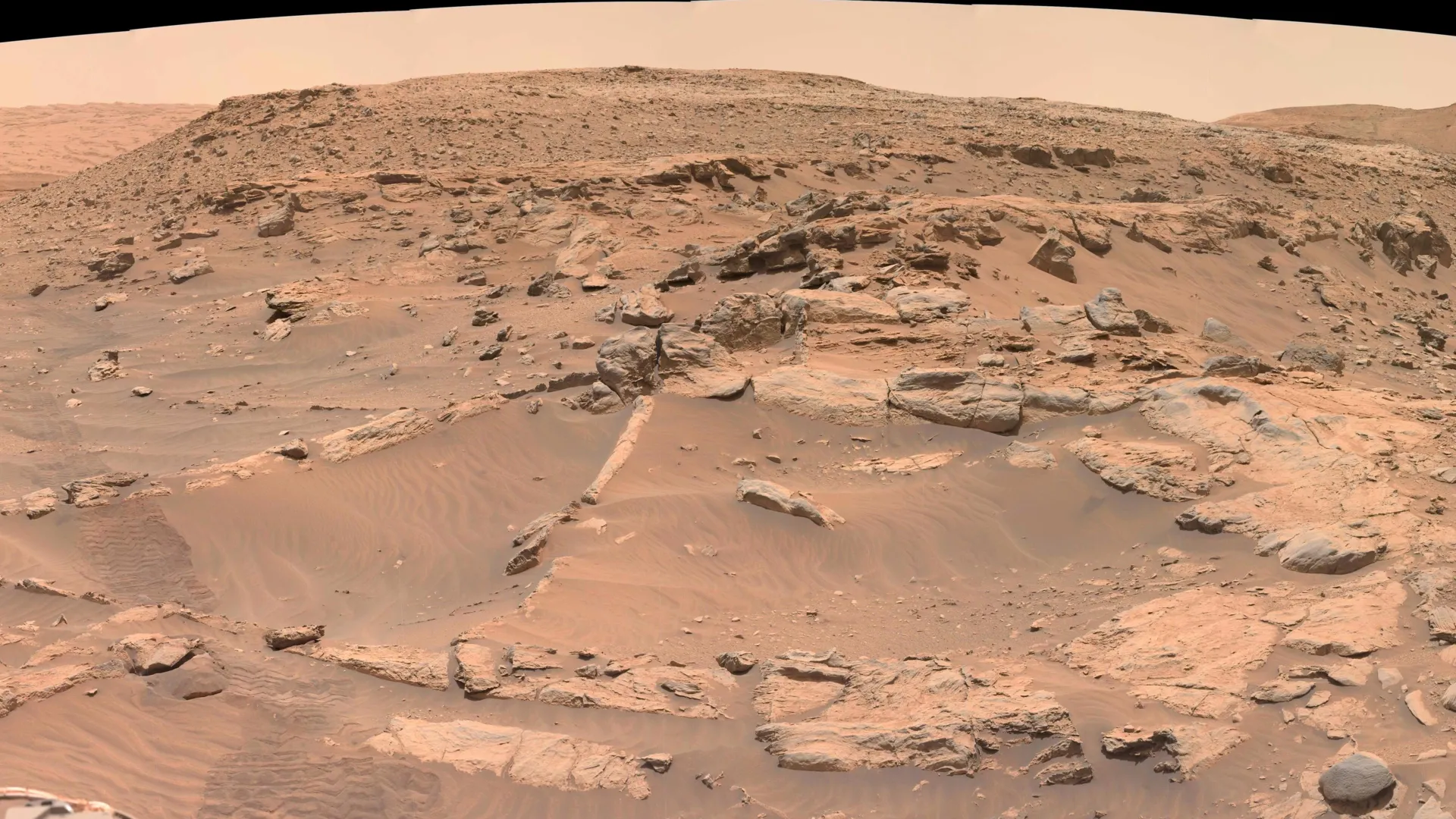
The groundbreaking research, meticulously detailed and published in the prestigious Journal of Geophysical Research – Planets, zeroes in on ancient sand dunes nestled within the vast expanse of Gale Crater. This particular region, a focal point of investigation for NASA’s intrepid Curiosity rover since its landing in 2012, has consistently yielded invaluable data about Mars’ past. According to the study’s comprehensive analysis, these ancient dunes did not merely lie dormant. Billions of years ago, they underwent a profound transformation, slowly hardening into resilient rock formations through an intricate process of interaction with groundwater persistently moving beneath the Martian surface. This lithification, driven by subsurface hydrological activity, created a unique geological archive, preserving critical evidence of a more dynamic and potentially life-friendly past.
Gale Crater: A Window into Mars’ Ancient Past
To fully appreciate the significance of these findings, it is essential to understand the context of Gale Crater. A massive impact basin spanning approximately 154 kilometers (96 miles) in diameter, Gale Crater is distinguished by a towering central mound known as Mount Sharp (officially Aeolis Mons). Scientists believe the crater formed between 3.5 and 3.8 billion years ago. Its unique geological layering, exposed on the flanks of Mount Sharp, acts as a stratigraphic "time capsule," offering an unparalleled opportunity to study Mars’ environmental evolution through billions of years. The Curiosity rover was specifically designed to explore this region, with its primary mission objectives including assessing whether Mars ever had environmental conditions favorable for microbial life, characterizing the geology and climate, and preparing for future human exploration.
Prior to this study, Curiosity had already uncovered compelling evidence of ancient lakes, rivers, and stream beds within Gale Crater, confirming that Mars once boasted a warmer, wetter climate capable of sustaining significant bodies of liquid water on its surface. These discoveries pointed to a period when the planet’s atmosphere was likely thicker, enabling water to exist stably without immediately evaporating or freezing. However, as Mars lost its magnetic field and much of its atmosphere over eons, it was widely believed that the surface water quickly disappeared, leaving behind a barren, arid landscape. The NYUAD team’s research now adds a critical chapter to this narrative, suggesting that even as the surface desiccated, pockets of subsurface habitability may have persisted, offering a potential refuge for nascent life.
Unraveling the Martian Subsurface: Methodology and Earth Analogues
The investigative work was spearheaded by Dimitra Atri, a distinguished Principal Investigator at NYUAD’s Space Exploration Laboratory, in close collaboration with research assistant Vignesh Krishnamoorthy. Their approach was multi-faceted, leveraging the high-resolution data transmitted by the Curiosity rover and augmenting it with comparative studies of terrestrial environments. To gain a deeper understanding of the processes that unfolded on Mars, the team meticulously compared the Martian observations with similar rock formations found in the arid deserts of the United Arab Emirates. These Earth analogues, formed under strikingly comparable geological and climatic conditions, provided a crucial framework for interpreting the Martian data.
The UAE deserts, with their vast expanses of ancient sand dunes, sabkhas (salt flats), and evaporite deposits, offer a natural laboratory for studying how water interacts with sand and sediment in extremely arid environments. NYUAD researchers, with their geographical proximity and expertise in desert geology, were uniquely positioned to conduct these comparative analyses. By studying the lithification processes and mineral signatures in these terrestrial environments, the team could draw robust parallels to the Martian phenomena observed by Curiosity, thereby strengthening their hypotheses about subsurface water flow on the Red Planet. This comparative planetology approach is a cornerstone of modern planetary science, allowing scientists to test models and interpretations against observable processes on Earth.
The Hydrological Mechanism: Seepage, Capillary Action, and Mineral Preservation
The team’s meticulous analysis paints a detailed picture of the subsurface hydrological activity within Gale Crater. It suggests that water, likely originating from a nearby Martian mountain – specifically, the lower slopes of Mount Sharp – gradually seeped into the ancient sand dunes. This infiltration would have occurred through myriad tiny fractures and pore spaces within the sediment, driven by gravity and possibly pressure gradients from higher elevations. As this moisture moved upwards through the porous sand, a process often facilitated by capillary action, it left behind a distinct chemical signature.
Crucially, the moving water deposited various minerals, most notably gypsum. Gypsum, a hydrated calcium sulfate mineral, is abundant in desert environments on Earth, often forming when mineral-rich water evaporates. Its presence on Mars is a strong indicator of past water interaction. The significance of these deposited minerals, particularly gypsum, extends beyond merely confirming the presence of water. These minerals possess a remarkable ability to capture and preserve traces of organic material, acting as microscopic time capsules. Organic molecules, the building blocks of life, can become entrapped within the crystal lattice of minerals like gypsum, shielding them from destructive radiation and other environmental factors over geological timescales. As a result, such mineral deposits are considered exceptionally promising targets for future missions explicitly tasked with searching for definitive evidence of ancient life or its biosignatures.
Astrobiological Implications: Extending Mars’ Habitable Window
"Our findings show that Mars didn’t simply go from wet to dry in a straightforward manner," articulated Dimitra Atri, underscoring the profound implications of their discovery. "Even after its vast lakes and rivers disappeared from the surface, small amounts of water continued to move underground, creating protected environments that could have supported microscopic life for extended periods." This statement represents a significant re-evaluation of Mars’ habitability timeline. Instead of a sharp, rapid desiccation, the planet’s transition appears to have been more complex, characterized by lingering pockets of subsurface moisture that offered potential havens for microbial ecosystems.
The concept of "protected environments" is central to astrobiology. The Martian surface today is a harsh, unforgiving place, constantly bombarded by harmful solar and cosmic radiation, experiencing extreme temperature fluctuations, and suffering from an almost non-existent atmosphere. However, even a few meters beneath the surface, conditions become considerably more stable. Subsurface environments offer shielding from radiation, more moderate and consistent temperatures, and protection from desiccation. If water persisted in these subterranean reservoirs, even in small quantities, it could have provided stable niches for extremophiles – microorganisms capable of thriving in extreme conditions – for potentially millions, if not billions, of years longer than previously thought. Such life forms might have been chemoautotrophs, deriving energy from chemical reactions rather than sunlight, similar to those found deep within Earth’s crust.
New Clues About Mars’ Evolution and Future Exploration
The discovery of persistent subsurface water activity fundamentally reshapes our understanding of how Mars evolved over billions of years. It suggests a more gradual and heterogeneous process of planetary desiccation, where localized hydrological cycles continued long after the global surface water receded. This nuanced perspective strengthens the burgeoning idea that underground environments are not merely interesting geological features but potentially some of the most viable and best-preserved places to look for signs of past life on the planet.
For future Mars missions, these findings carry immense weight. The current generation of rovers, like NASA’s Perseverance, are primarily designed to collect surface and shallow subsurface samples for eventual return to Earth. The European Space Agency’s ExoMars Rosalind Franklin rover, with its sophisticated drill capable of reaching two meters below the surface, is specifically designed to investigate these very subsurface environments. The NYUAD research provides crucial guidance for selecting future landing sites and drilling targets, prioritizing areas where mineral deposits indicative of ancient groundwater activity are abundant. Accessing these protected subsurface zones, shielded from the sterilizing effects of surface radiation, significantly increases the chances of finding preserved organic molecules or even fossilized microbial life. Moreover, understanding the distribution and persistence of subsurface water could have profound implications for future human exploration, as these reservoirs could potentially serve as a source of in situ resources for astronauts.
NYUAD’s Contribution to Global Space Exploration
This pioneering work was made possible through the robust support of the NYUAD Research Institute and was meticulously carried out at NYUAD’s Center for Astrophysics and Space Science. The center stands as a beacon of advanced research, continuously striving to deepen scientific understanding of the universe. Concurrently, it plays a vital role in bolstering the United Arab Emirates’ rapidly expanding footprint in the global space exploration arena. The UAE, having successfully launched its Hope Probe to Mars and with ambitious plans for future lunar and asteroid missions, views scientific research of this caliber as foundational to its national vision for space.
The project further benefited from significant collaborative efforts, notably involving James Weston from NYUAD’s Core Technology Platform, whose expertise likely contributed to advanced data analysis or instrumentation, and the distinguished research group led by PanÄe Naumov, whose specialized knowledge in fields such as geochemistry or mineralogy would have been instrumental in interpreting the complex chemical signatures found in the Martian and terrestrial samples. Such international and interdisciplinary collaboration underscores the complex nature of modern space science, where diverse expertise converges to unravel the universe’s most enduring mysteries.
In conclusion, the NYUAD team’s discovery marks a pivotal moment in our quest to understand Mars. By revealing a more prolonged and complex history of subsurface water activity, it not only extends the potential window for Martian habitability but also refocuses our search for extraterrestrial life on the shielded, stable environments beneath the planet’s desolate surface. This research provides a powerful impetus for future missions, guiding humanity closer to answering one of the most profound questions: Are we alone in the universe?
