
 By admin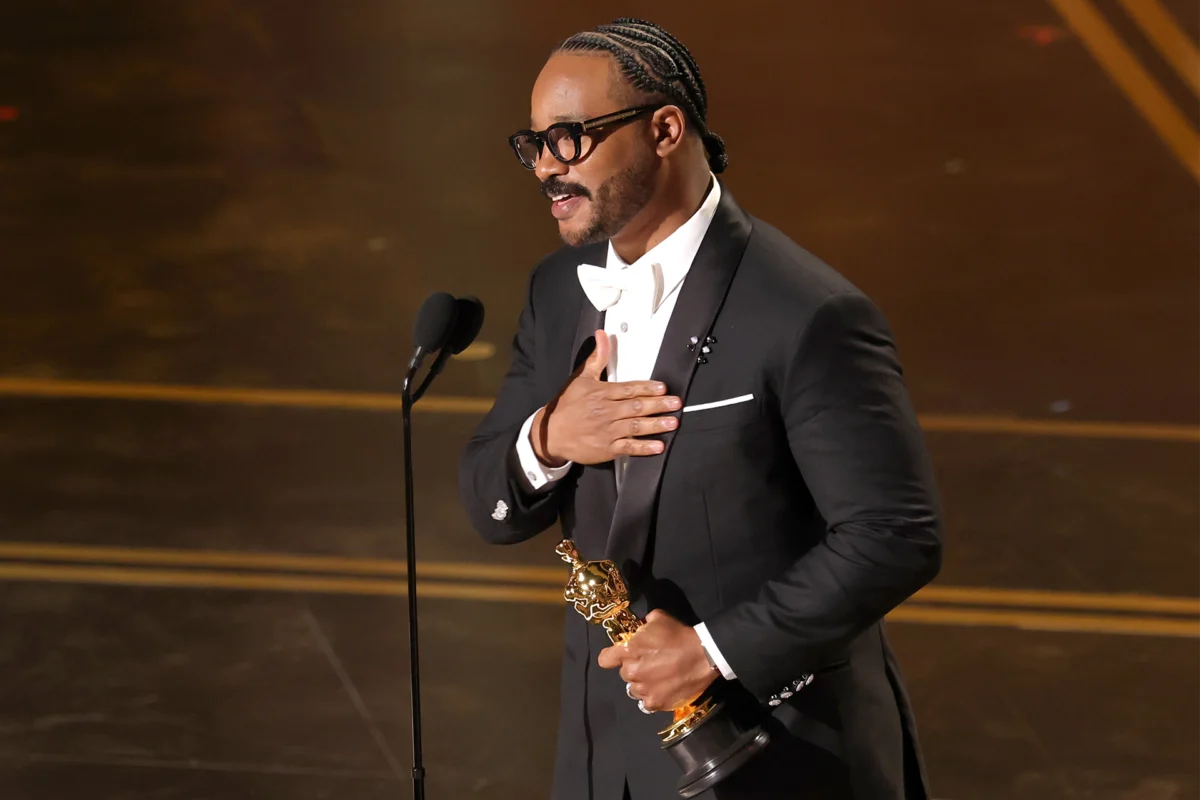
The closing of the final envelope at the 98th Academy Awards served as a powerful punctuation mark to an Oscar season that consistently underscored a fundamental truth: even the most seemingly dominant narrative can undergo a seismic shift by the time Academy voters cast their ballots. In a conclusion that defied early predictions and solidified the unpredictable nature of Hollywood’s highest honors, the night ultimately saw Paul Thomas Anderson’s sweeping epic, "One Battle After Another," emerge as the Academy’s resounding favorite, eclipsing the record-breaking 16 nominations of "Sinners." This triumph for Anderson, a filmmaker long overdue for his Oscar moment, capped a months-long campaign that began subtly in September, as industry buzz and critical enthusiasm coalesced around the director’s masterful cinematic achievement.
For Paul Thomas Anderson, a director celebrated for his indelible contributions to cinema with acclaimed works such as "Boogie Nights," "Magnolia," and "There Will Be Blood," this night represented a career-defining pinnacle. "One Battle After Another" not only secured the coveted Best Picture award but also garnered a total of six Oscars from its thirteen nominations, including Best Director and Best Adapted Screenplay. The film’s technical prowess was recognized with an award for editing, and it propelled Sean Penn to his third Academy Award for acting. In a groundbreaking moment for the industry, the Academy also bestowed its inaugural Casting Oscar upon Cassandra Kulukundis, acknowledging the crucial, often unsung, role of casting directors in cinematic success.
Despite the clear victor in "One Battle After Another," the path to this outcome was far from a foregone conclusion. As the ceremony approached its final category, the Best Picture race remained a nail-biting contest. Warner Bros., holding sway over the two defining films of the season – "One Battle After Another" and "Sinners" – presented an outcome that felt genuinely like a toss-up. Ultimately, the film that had meticulously built the strongest momentum through the precursor awards circuit carried the night, a testament to the sustained campaigning and voter engagement it had cultivated.
However, the narrative of any Oscar season is rarely confined to a single winner. One of the evening’s most emotionally resonant moments arrived with Michael B. Jordan’s triumphant win for Best Actor in "Sinners." This victory etched Jordan’s name into history as only the sixth Black man to receive this prestigious award, joining the esteemed ranks of Sidney Poitier, Denzel Washington, Jamie Foxx, Forest Whitaker, and Will Smith. In a deeply moving acceptance speech, Jordan paid heartfelt homage to these pioneers, acknowledging their indelible impact on the industry and paving the way for future generations.
Throughout much of the evening, an air of cautious anticipation permeated the Dolby Theatre. As category after category concluded without a win for "Sinners," a palpable tension mounted. Text messages buzzed across industry circles, with voters and observers alike speculating whether the season’s most nominated film might fall short of its anticipated haul. This arc, the near-monumental success tempered by a crucial miss in the top category, may ultimately define this Oscar season as much as any single win.
While "Sinners" ultimately did not clinch the Best Picture award, and the Academy faces its 99th year without a Black winner in the Best Director category, the film’s indelible mark on Oscars history is undeniable. The closing images of the night, featuring Michael B. Jordan, Ryan Coogler, and Autumn Durald Arkapaw standing together, their statuettes glinting, represented a powerful symbol of progress and achievement that transcended individual accolades.
Autumn Durald Arkapaw’s win for Best Cinematography in "Sinners" was nothing short of historic. She shattered multiple barriers, becoming the first woman, the first Black person, and the first Filipina to win in this category. Her achievement also marked her as the 22nd Black woman to win an Oscar overall, underscoring a significant moment for representation in Hollywood. This milestone also signified that a woman has now achieved an Oscar win in every non-gendered category, a testament to evolving inclusivity within the Academy.
Placed within a broader context, Arkapaw’s victory reflects a profound shift unfolding across the film industry. In recent years, Black women have made significant inroads in key creative roles, with Hannah Beachler earning acclaim for production design and Ruth E. Carter for costume design. Cinematography now joins this distinguished list. Notably, each of these groundbreaking achievements came through films directed by Ryan Coogler, highlighting the filmmaker’s profound influence, which extends beyond compelling storytelling to actively reshaping opportunities and fostering talent behind the camera.
Ryan Coogler’s own win for Original Screenplay was particularly poignant. In his acceptance speech, he called upon his cast to stand, a gesture of profound respect and acknowledgment for their collaborative efforts. It was as if Coogler, sensing the evening’s eventual trajectory, seized this singular opportunity to express his deep admiration and love for the team that had so spectacularly shattered records on the Oscar stage. His win also made him only the second Black screenwriter to win for Original Screenplay, following Jordan Peele’s historic win for "Get Out" in 2017.
The acting categories delivered additional watershed moments and historic firsts. Jessie Buckley, for her captivating performance in Chloë Zhao’s "Hamnet," became the first Irish winner of the Best Actress award. This triumph further solidified the enduring power of literary adaptations as a fertile ground for Oscar recognition, a trend observed throughout the season. Buckley’s win also marked the seventh Best Actress performance directed by a woman, with Zhao becoming the first female director to achieve this feat twice, following her previous success with Frances McDormand in "Nomadland" (2020).
As is the custom with every awards year, the season also witnessed its share of profound heartbreaks and dashed expectations. Earlier in the season, Timothée Chalamet was widely considered a strong contender for his performance in "Marty Supreme." However, by the time the final ballots were tallied, the 20-something star, despite widespread acclaim, left the ceremony without an Oscar. His film also went home empty-handed, a disappointing outcome for its creative force, Josh Safdie, who had garnered four nominations for producing, directing, writing, and editing.
The intricate dance of awards campaigns has always been a delicate blend of artistic merit and personal charisma. As Oscar watchers often remark, with a touch of wry humor, the race can sometimes feel like a 51% performance and a 49% popularity contest, akin to a high school prom king or queen election. This balance, however, doesn’t always apply with uniform predictability.
Sean Penn, already a two-time Oscar winner for his roles in "Mystic River" and "Milk," did not attend the ceremony but achieved a remarkable milestone, becoming only the fourth male performer to secure three acting Oscars, joining the legendary ranks of Daniel Day-Lewis, Jack Nicholson, and Walter Brennan. While his performance in "One Battle After Another" garnered significant industry admiration, his win inevitably reignited conversations about long-overdue recognition for veteran actors such as Delroy Lindo and Stellan Skarsgård, both first-time nominees in their seventies who continue to await their maiden Oscar.
If any single win embodied the unpredictable spirit of the Academy, it was Amy Madigan’s supporting actress victory for the horror film "Weapons." Her win instantly ascended into the pantheon of delightful Oscar surprises, perhaps rivaling the unexpectedness of Marisa Tomei’s win for "My Cousin Vinny" in 1992. Madigan was the sole nominee for her film, had missed a key BAFTA nomination when eligible, and logged the least screen time among the contenders. Her ultimate triumph spoke volumes about the Academy’s occasional willingness to embrace instinct and genuine surprise over established momentum.
The documentary race delivered another late-season twist. "Mr. Nobody Against Putin," a poignant examination of Vladimir Putin’s crackdown on free expression during the Russo-Ukrainian war, unexpectedly triumphed over the widely favored "The Perfect Neighbor." The latter, acquired by Netflix out of Sundance, had enjoyed significant industry buzz but struggled to dominate the major precursor circuit, ultimately ceding ground to the more politically charged and thematically urgent "Mr. Nobody Against Putin."
In other notable wins, "KPop Demon Hunters" etched its own piece of history by securing both Best Animated Feature and Best Original Song. This dual victory propelled Netflix to tie its own record of seven Oscars in a single year, mirroring its impressive 2021 haul which included wins for "Mank" and "Ma Rainey’s Black Bottom."
The craft categories also saw a clear winner, with "Frankenstein" amassing three Oscars for its outstanding achievements in production design, costume design, and makeup and hairstyling. A heartwarming moment not captured by the televised broadcast occurred when director Guillermo del Toro enthusiastically stood to encourage the audience to applaud the "KPop Demon Hunters" team. The Oscar-winning filmmaker, a staunch advocate for animation, delivered a brief yet powerful reminder of the camaraderie that continues to define the film community.
Even the ceremony’s statistical anomalies underscored the season’s unpredictable nature. In a rare occurrence for the Academy, only the seventh tie in its history, "The Singers" and "Two People Exchanging Saliva" shared the award for Best Live-Action Short Film. A studio executive wryly commented in the lobby to Variety, "If you needed any other proof that only 200 people vote in the shorts, there you go." This marked the first Oscar tie since 2013, when "Zero Dark Thirty" and "Skyfall" shared the award for sound editing. The most iconic tie remains the 1968 Best Actress race, where Katharine Hepburn for "The Lion in Winter" and Barbra Streisand for "Funny Girl" were both honored.
Looking back, the 2025-2026 awards season unfolded much like the Oscars themselves: a little unpredictable, a touch more emotional, and occasionally contradictory. The 2026 Oscars marked a record-breaking night for horror films, with the genre collectively securing eight Academy Awards. "Sinners" led the charge with four wins, "Frankenstein" claimed three craft prizes, and Amy Madigan’s win for "Weapons" contributed to the genre’s dominant performance. This total surpasses the previous record of five wins, all earned by "The Silence of the Lambs" in 1991.
Variety‘s final predictions accurately forecast 18 out of the 24 categories, achieving a respectable 75% success rate. However, the overarching lesson of this season may be far simpler and more profound. For all the intricate statistics, precursor awards, and carefully constructed narratives that shape the race, the Academy, in its inimitable way, consistently reminds everyone that the cinematic story isn’t truly complete until the final envelope is opened. The season has now concluded, offering a moment to rest and anticipate the newer, even greater cinematic endeavors that lie on the horizon.
