
 By admin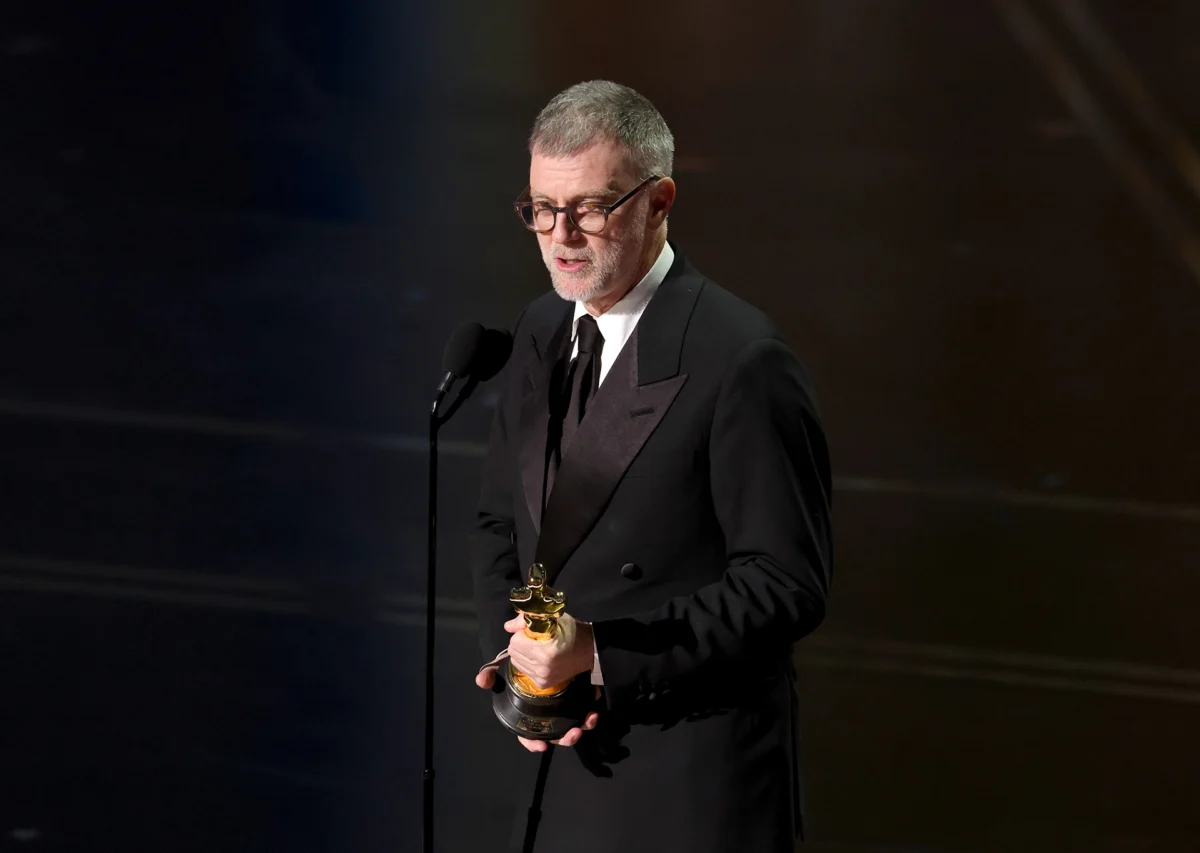
This time last year, Michael De Luca and Pam Abdy, the co-heads of Warner Bros. Motion Picture Group, found themselves navigating a tempest of persistent rumors suggesting their imminent departure. The narrative painted them as architects of costly gambles on films deemed too risky, a perception that cast a shadow over their leadership. However, the 98th Academy Awards on Sunday night provided a resounding counter-narrative, transforming skepticism into a triumphant validation. The studio’s remarkable showing, anchored by the critical and commercial darlings Sinners, directed by Ryan Coogler, and Paul Thomas Anderson’s One Battle After Another, two films that had previously fueled Hollywood’s rumor mill, culminated in a dominant sweep of the prestigious ceremony. One Battle After Another emerged as the night’s biggest winner, amassing an impressive six Oscars, including the coveted Best Picture and Best Director awards for Anderson, a filmmaker long overdue for such accolades. Complementing this success, Coogler’s Sinners secured four statuettes, notably including the Best Original Screenplay award for Coogler himself and a Best Lead Actor Oscar for the powerhouse performance of Michael B. Jordan.
The jubilation was palpable. "It’s the greatest night of my life," De Luca exclaimed, his voice filled with emotion, at the Governors Ball following the awards spectacle. He further elaborated on the significance of the wins, stating, "Paul was very overdue. He’s made so many masterpieces. And Ryan will be back." This sentiment underscored the deep respect and admiration De Luca and Abdy hold for the talent they champion.
Throughout the nearly four-hour telecast, De Luca and Abdy were showered with acknowledgments, their names invoked more frequently than any divine entity. From Coogler to Jordan, a chorus of filmmakers and actors expressed their gratitude, with Jordan particularly highlighting their commitment to "betting on original ideas and original artistry." This outpouring of appreciation served as a testament to their revitalized approach to filmmaking at Warner Bros., one that prioritized creative vision and artistic integrity.
Yet, beneath the veneer of Oscar glory, a more complex and uncertain future loomed. David Zaslav, the CEO of Warner Bros. Discovery, whose prior engagement in interviewing De Luca and Abdy’s potential replacements last spring had fueled the earlier rumors, remained conspicuously absent from the celebratory acknowledgments. The colossal $110 billion sale of WBD to Paramount, orchestrated by Zaslav, cast a long shadow over the festivities, as the industry braces for the inevitable wave of thousands of layoffs that will accompany such a significant consolidation. Adding to the apprehension is the involvement of David Ellison, Paramount’s chairman, whose well-publicized ties to the Trump administration have raised concerns among some about the future of artistic freedom within the studio system.
This anxiety was vividly articulated by veteran actress Jane Fonda at the Vanity Fair after-party. Sporting a "no mergers" pin, Fonda unequivocally voiced her apprehension regarding Ellison’s potential influence on creative expression. "The Paramount merger is problematic because in order to get permission to do the merger they felt they had to cave to what Trump wanted," she stated, further elaborating on her fears: "The mergers are gonna be bad for workers. A lot of people are going to lose their jobs… We’re going to have political control over what we do."
For De Luca and Abdy, however, Oscar night represented a profound vindication of their artist-centric strategy. The studio’s remarkable haul of 11 Oscars, which also included a win for Amy Madigan’s compelling performance in Weapons, solidified their commitment to nurturing creative talent. This approach was meticulously crafted when they were tasked with revitalizing Warner Bros. in 2022, inheriting a studio grappling with the fallout from its previous ownership under AT&T. During the COVID-19 pandemic, Warner Bros. had controversially opted to release its entire film slate simultaneously on HBO Max, a decision aimed at bolstering the nascent streamer and recouping investment, but one that drew sharp criticism from acclaimed directors like Christopher Nolan and Denis Villeneuve for its perceived disregard for the theatrical experience and lack of consultation.
De Luca and Abdy, seasoned producers who had previously orchestrated a significant turnaround at MGM, positioning the studio for its lucrative $8 billion sale to Amazon, brought with them an invaluable network of established relationships within the talent community. De Luca, in particular, had a history of championing emerging artists; he had given Paul Thomas Anderson his career-defining breakthrough in the 1990s when he was New Line Cinema’s production chief, greenlighting Boogie Nights after other studios had passed. Upon their arrival at Warner Bros., the duo recognized the imperative to compete with the burgeoning dominance of Netflix and other streaming services. Their strategy centered on offering more substantial budgets and greater creative autonomy to filmmakers.
This philosophy was put into practice with exceptional boldness. For Ryan Coogler’s Sinners, they not only backed a historical horror film with a significant $90 million budget but also negotiated a groundbreaking deal that would return the copyright to Coogler after 25 years. Similarly, they invested a substantial $130 million in Paul Thomas Anderson’s One Battle After Another, demonstrating an unwavering belief in his directorial vision. Their commitment to ambitious filmmaking extended to other projects as well, with significant investments made in Emerald Fennell’s Wuthering Heights and Maggie Gyllenhaal’s The Bride!
"It’s a relationship-based business, and Michael De Luca and Pam Abdy resurrected the creative community’s relationship to the studio," observes Peter Newman, head of NYU Tisch School of the Arts’ MBA/MFA program. He further probes the potential implications of the impending merger: "But David Zaslav nearly lost his patience with what they were doing. Will David Ellison really be on board if Mike and Pam are handing out $100 million to auteur directors?" This question encapsulates the central tension: will the new regime, shaped by financial imperatives and potentially political considerations, continue to support the high-risk, high-reward artistic endeavors that have defined De Luca and Abdy’s tenure?
Initially, De Luca and Abdy’s daring approach yielded promising box office returns. Sinners and Weapons were among the biggest hits of 2025, and the studio also found success with titles such as A Minecraft Movie and The Conjuring: Last Rites. However, more recent releases have presented a more sobering financial reality. One Battle After Another, despite its critical acclaim and Oscar success, grossed just under $210 million domestically and is projected to incur a loss of approximately $100 million, a figure exacerbated by the traditional studio split of theatrical revenue. The Bride!, on the other hand, proved to be a significant disappointment, earning a mere $21 million against its $90 million production budget, with studio sources estimating a total loss of around $90 million once marketing expenses are factored in.
"The movie business is about taste, timing and a gambler’s luck," Newman muses. "Mike and Pam were on a heck of a hot streak, but those can’t last forever." This observation highlights the inherent volatility of the film industry, where even the most well-intentioned and artistically driven projects are subject to the unpredictable tides of audience reception and market forces.
Despite the recent financial setbacks, David Ellison has reportedly expressed admiration for both Sinners and One Battle After Another, specifically commending Michael B. Jordan’s performance in the latter. However, a source close to Ellison’s business philosophy indicates a pragmatic approach, stating that he would not entertain projects that would "lose $100 million out of the gate" and is unlikely to be swayed by political considerations in his decision-making. This suggests a potential divergence from the more artist-first, risk-tolerant approach championed by De Luca and Abdy.
On Oscar night, De Luca and Abdy undeniably held the hottest hand in Hollywood, a moment of triumph that was, for some, tinged with the prescient awareness that such favorable circumstances might be fleeting. Paul Thomas Anderson, accepting his long-awaited Oscar for writing One Battle After Another after 11 previous nominations without a win, wryly quipped, "You make a guy work hard for one of these." This sentiment resonates beyond his personal journey, reflecting the arduous path of creative endeavor in a studio system increasingly defined by economic pressures.
Should the proposed Paramount deal for Warner Bros. be finalized, the landscape for ambitious filmmakers like Anderson and Coogler could become even more challenging. The prospect of navigating a consolidated entity, potentially with a more risk-averse and politically influenced leadership, raises significant questions about the future of original storytelling and the kind of bold, artist-driven cinema that has defined the recent resurgence of Warner Bros. Motion Picture Group. The hard-won victories of Oscar night, while deeply meaningful, may serve as a poignant reminder of a creative era that, for some, feels like it is on the cusp of profound transformation.
Marc Malkin and Matt Donnelly contributed to this report.
