
 By admin
In a move that signals a significant maturation of its travel strategy, Capital One has officially debuted a comprehensive, all-in-one travel application designed to centralize every aspect of the modern traveler’s itinerary. Released on March 18, 2026, the new platform represents the culmination of a multi-year effort to transition the bank from a traditional financial services provider into a dominant player in the global travel industry. By bringing technology, talent, and supplier relationships entirely in-house, Capital One is making a bold play to compete directly with established giants like American Express and JPMorgan Chase in the premium travel space.
The launch of the app is the centerpiece of what Sarah Kaplan Moore, Capital One’s Head of Travel, describes as a "fully integrated travel ecosystem." According to Moore, the objective is to provide a seamless, end-to-end journey that eliminates the friction often found between booking, rewards redemption, and the actual physical experience of traveling. "Our goal is to build a fully integrated travel franchise that supports our customers from the moment they begin dreaming of a trip to the moment they return home," Moore stated. This holistic approach aims to unify the digital planning phase with the physical airport and lodging experience, creating a closed-loop system where data and convenience drive customer loyalty.
A New Standard in Mobile Travel Management
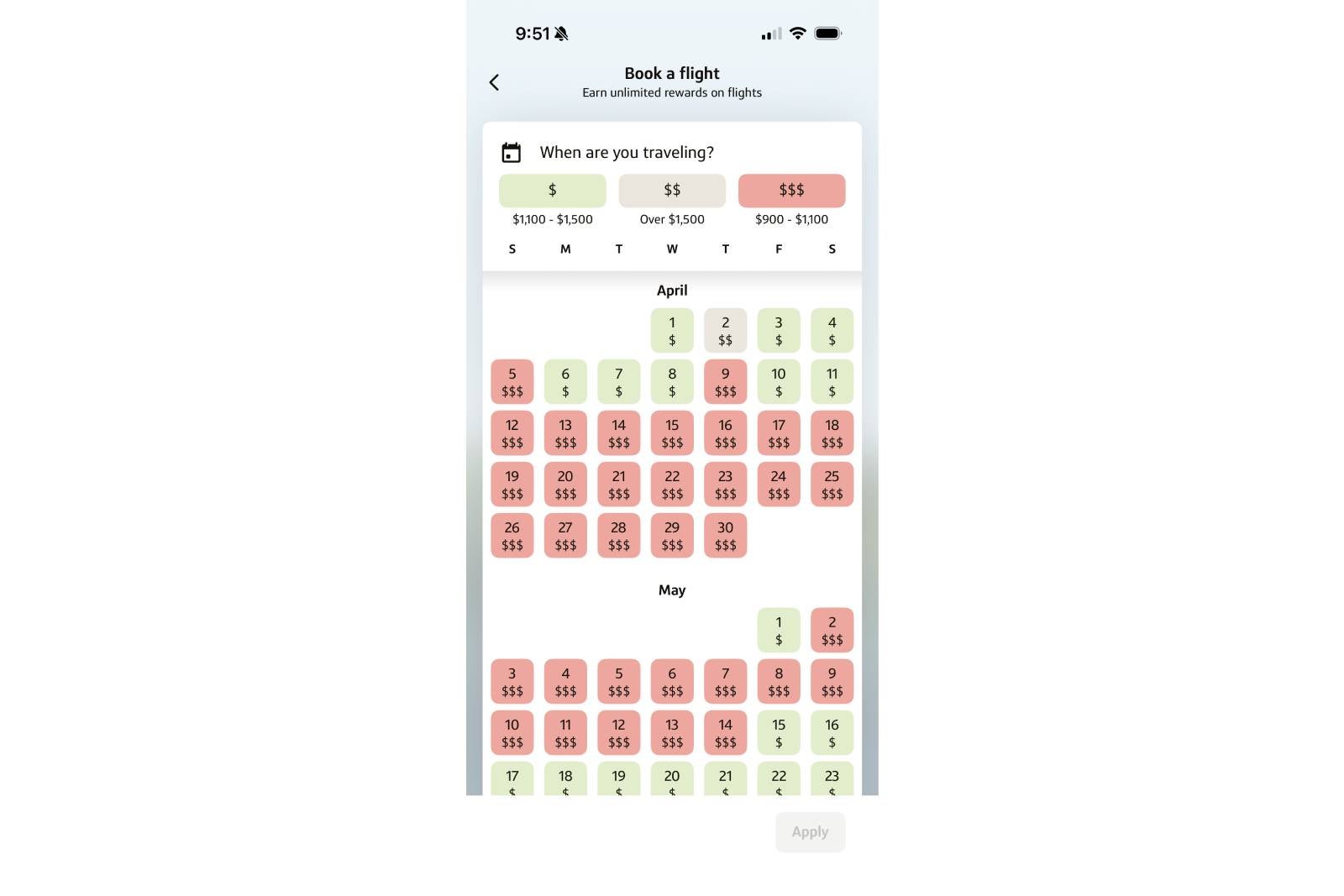
Available now for both iOS and Android users, the Capital One Travel app is far more than a simple mobile interface for a web portal. It is a data-rich environment that leverages advanced analytics to help travelers make more informed decisions. One of the most praised features during early testing is the color-coded calendar system. When searching for flights or hotels, users are presented with a visual representation of pricing trends. Utilizing a system of dollar signs ($ to $$$) and corresponding colors, the app allows users to see at a glance which dates offer the best value, effectively democratizing the kind of fare-prediction data that was once the exclusive domain of third-party aggregators.

Beyond visual aesthetics, the app’s functionality dives deep into the granular details of travel. For flight bookings, the interface provides a comprehensive guide to fare types. In an era where "basic economy" can mean vastly different things across different carriers, Capital One’s app uses intuitive icons—such as a green circle for included carry-ons or a currency symbol for checked bag fees—to ensure travelers are never surprised by hidden costs at the airport. Furthermore, the app includes a robust flight disruption assistance feature, offering users a proactive layer of protection against the increasingly common delays and cancellations that plague the modern aviation industry.
To incentivize early adoption, Capital One is offering a limited-time promotion: users who book their first hotel, vacation rental, or car rental through the app before April 15 can receive $50 off any booking of $200 or more. This promotional push is intended to migrate existing Venture and Venture X cardholders onto the mobile platform, where the bank can more effectively showcase its expanding suite of services.
The Strategic Shift: Bringing Travel In-House
For years, many major banks relied on white-label partnerships with third-party travel agencies or tech firms like Hopper to power their booking portals. Capital One’s decision to build its own "fully integrated travel franchise" marks a departure from this industry norm. By owning the technology stack and the supplier relationships, Capital One gains greater control over the customer experience and the underlying data. This shift allows for more personalized recommendations, faster resolution of customer service issues, and the ability to offer exclusive inventory that might not be available on broader market platforms.
This move follows a series of strategic acquisitions and investments by the bank, including its high-profile acquisition of the luxury concierge platform Velocity Black. By integrating these high-touch services into a scalable mobile app, Capital One is positioning itself to serve both the budget-conscious traveler looking for a $200 hotel deal and the high-net-worth individual seeking a bespoke vacation package. The app allows users to toggle seamlessly between booking flights, hotels, car rentals, and full-scale vacation packages, all while viewing their available rewards balances in real-time.

Bridging the Digital and Physical: The Lounge Network
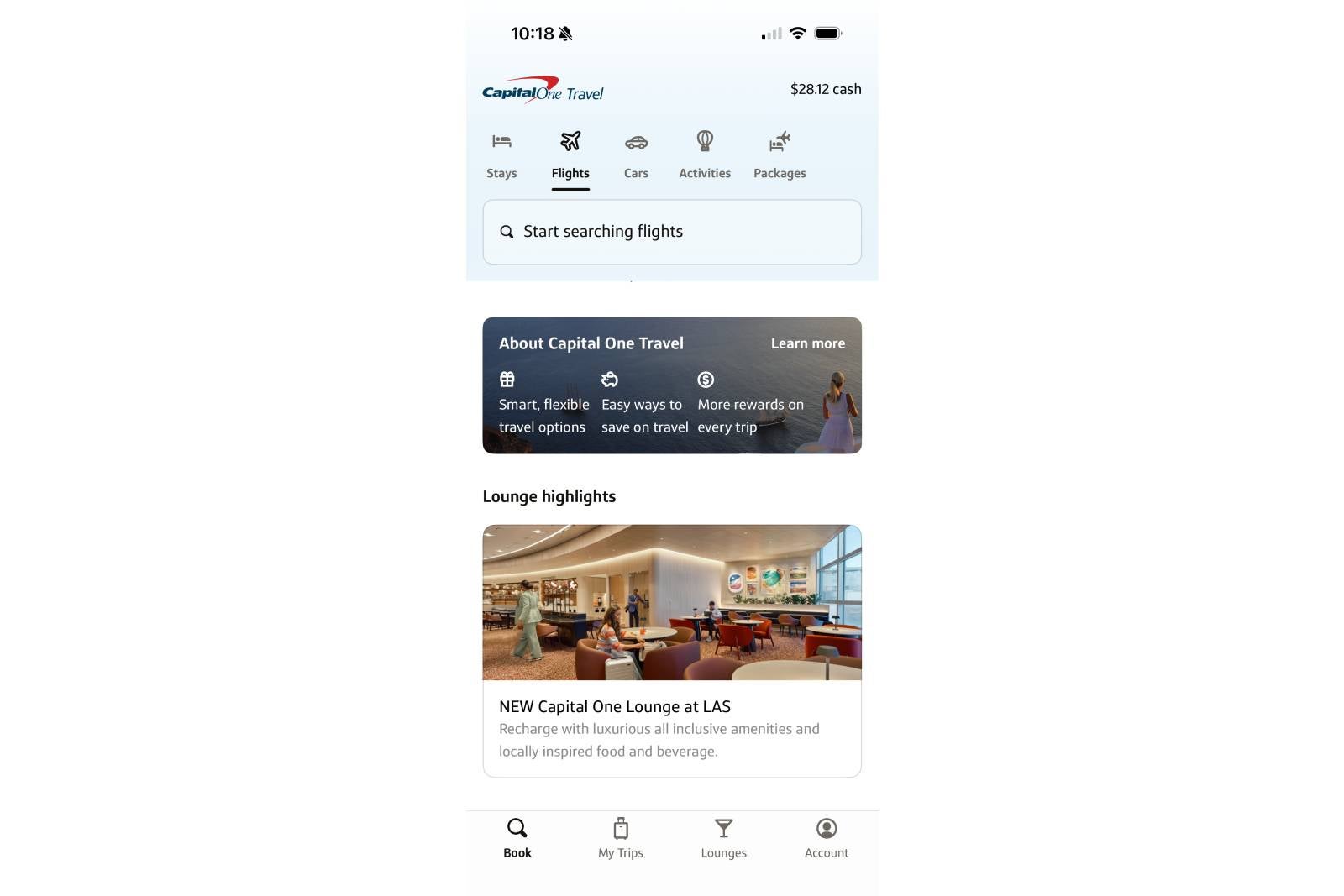
Perhaps the most innovative aspect of the new app is its integration with Capital One’s physical airport footprint. As airport terminal congestion becomes a primary pain point for travelers, Capital One has invested heavily in its own network of luxury lounges and dining concepts. The new app provides real-time data on lounge capacity and wait times, a feature that is becoming essential for travelers navigating busy hubs.
The Capital One Lounge network currently includes flagship locations at:
- Dallas/Fort Worth International Airport (DFW): Located in Terminal D, this was the first of the bank’s lounges to set the standard for high-end airport hospitality.
- Washington Dulles International Airport (IAD): Situated in the Main Terminal, serving a massive volume of international and domestic travelers.
- Denver International Airport (DEN): Located in Concourse A, known for its locally inspired design and craft beverage program.
- John F. Kennedy International Airport (JFK): The newest addition, located in Terminal 4, which serves as a major gateway for international travel.
In addition to traditional lounges, Capital One has introduced "Capital One Landings," a unique dining-focused concept developed in partnership with world-renowned chef José Andrés. These locations offer a tapas-style culinary experience that deviates from the standard buffet fare found in most airport clubs. Current Landings are operational at New York’s LaGuardia Airport (LGA) and Ronald Reagan Washington National Airport (DCA), with a third location slated to open at Charlotte Douglas International Airport (CLT) in the near future.
By allowing app users to check wait times for these exclusive spaces, Capital One is solving a major industry hurdle: lounge overcrowding. This transparency allows cardholders to plan their airport arrival time more effectively, further cementing the "seamless journey" promised by the bank’s leadership.
The Venture X Value Proposition
The primary beneficiaries of this new ecosystem are holders of the Capital One Venture X Rewards Credit Card and the Venture X Business card. These premium cards have become the cornerstone of Capital One’s travel identity. Cardholders receive unlimited access to Capital One Lounges, and the app serves as their digital key and concierge.
The access policy remains competitive but focused on rewarding high-engagement users. While cardholders get complimentary access, guests can enter for $45. However, Capital One has implemented a spend-based incentive: cardholders who spend at least $75,000 on their Venture X or Venture X Business card in a calendar year earn the ability to bring up to two complimentary guests to Capital One Lounges and one guest to a Capital One Landing. For those without a premium Capital One card, the lounges remain accessible for a fee of $90, though the app’s capacity-tracking feature ensures that premium cardholders are prioritized during peak times.
Market Context and Future Outlook
Capital One’s aggressive expansion into travel comes at a time when the "premiumization" of the credit card market is at an all-time high. Competitors like American Express, with its storied Centurion Lounge network, and Chase, with its rapidly expanding Sapphire Lounge by The Club collection, have long used travel perks to justify high annual fees. Capital One’s differentiator appears to be its tech-first approach. By focusing on a "fully integrated" app that combines fare prediction, rewards management, and real-time lounge data, the bank is appealing to a younger, more tech-savvy demographic that values efficiency as much as luxury.
Industry analysts suggest that the next phase of this strategy will likely involve deeper integration with hotel partners and perhaps even the launch of Capital One-branded boutique stays, further closing the loop on the "end-to-end" journey. For now, the launch of the travel app stands as a significant milestone. It transforms the smartphone into a powerful travel assistant that doesn’t just book a trip, but manages the entire experience.
As the travel industry continues to recover and evolve in a post-pandemic world, the demand for integrated solutions is higher than ever. Travelers are increasingly wary of the fragmented nature of booking on one site, tracking flights on another, and managing rewards on a third. Capital One’s new app is a direct response to this fatigue. By providing a "pleasant flight booking experience" and combining it with tangible, real-world benefits like lounge access and disruption assistance, Capital One is not just issuing credit cards; it is building a comprehensive travel brand.
The success of this initiative will ultimately depend on the app’s ability to maintain its "smooth execution" as user volume scales. However, with its current feature set—ranging from the color-coded pricing calendars to the José Andrés-curated dining wait times—Capital One has set a high bar for what a modern travel portal should look like. As the bank continues to play with new features and expand its physical footprint, the line between a financial institution and a travel agency will continue to blur, much to the benefit of the modern traveler.
