
 By admin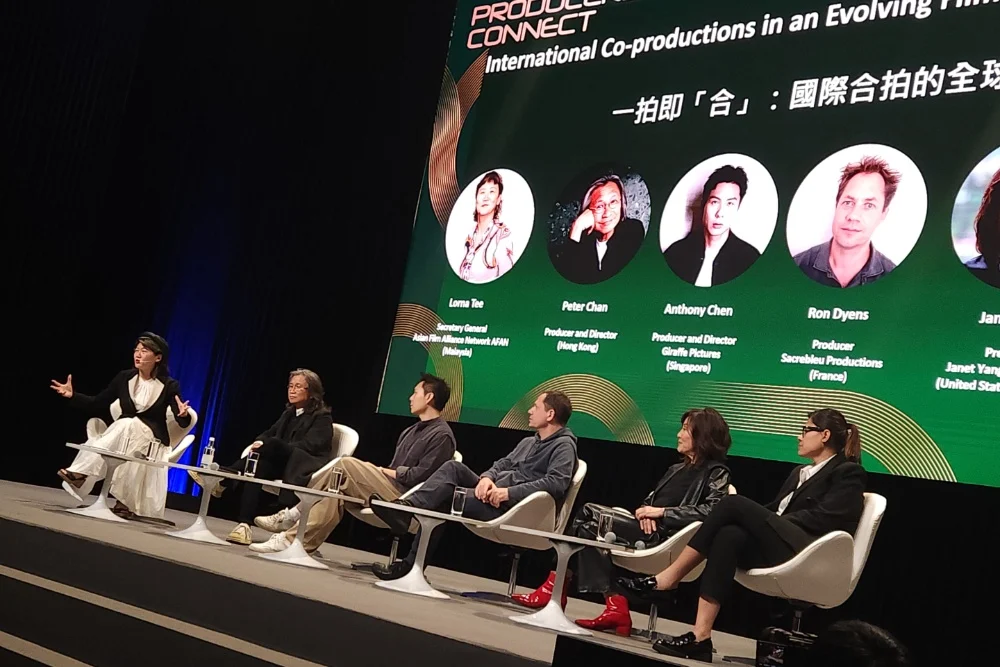
Renowned Asian filmmaker Peter Chan Ho-sun, a titan of the industry whose career spans critically acclaimed dramas and sweeping epics, delivered a sobering prognosis on the future of filmmaking at the Hong Kong FilMart co-production panel. Chan boldly declared that artificial intelligence (AI) represents not a danger to niche art-house cinema, but rather an existential threat to the very foundation of the commercial blockbuster. "I think we’re at the worst times," Chan stated, drawing parallels to the uncertainty he witnessed in Hollywood during the late 1990s. "Those days of the blockbusters are gone. We’re experiencing now what I learned when I went to Hollywood in the late 90s. Nobody knows anything." He elaborated on the confluence of factors contributing to this precarious landscape, citing fragmented markets, the rise of vertically integrated short dramas, the burgeoning influence of AI, and the ongoing closure of cinema venues. "With the fragmented [markets], with the vertical short dramas, with AI, and with cinemas closing. I think we’re at the worst times," he reiterated, painting a grim picture for the future of large-scale commercial filmmaking.
Chan, whose directorial oeuvre includes beloved films like "Comrades: Almost a Love Story" and the visually stunning "Dragon," possesses a deep understanding of both intimate human stories and grand cinematic spectacles. This unique perspective informs his stark assessment of AI’s impact. "I don’t think AI is an enemy to auteur film. But AI would be an enemy to mediocre blockbusters," Chan asserted, drawing a clear distinction between genuine artistic endeavors and formulaic commercial products. He went on to express a strong conviction about the timeline for this disruption: "Basically, AI can replace any blockbuster or commercial film in three years, I believe." This bold prediction suggests a rapid technological advancement and adoption within the film industry, potentially reshaping production, distribution, and consumption models at an unprecedented pace.
The panel, skillfully moderated by Lorna Tee, secretary general of the Asian Film Alliance Network, delved into a multifaceted discussion on the evolving landscape of international co-productions. Beyond Chan’s prescient AI warning, the conversation explored the strategic necessity of co-productions in cultivating multiple home territories for films, the paradigm shift in marketing strategies that now prioritize a more personal and authentic connection with audiences, and the surprising but significant trend of American viewers embracing films with subtitles. These themes underscore the industry’s ongoing adaptation to a globalized and increasingly diverse entertainment market.
Sharmin Yusof, CEO of Malaysia’s SKOP Productions, provided a concrete example of the challenges faced by local film industries and the strategic solutions being implemented. "After the pandemic, we had a significant decrease in terms of cinema audiences [in Malaysia]," Yusof shared. He detailed the performance of their latest film, "Blood Brothers," which, despite a respectable MYR78 million ($19.8 million) gross, represented a ceiling of only 4 million admissions. This limited domestic audience potential led SKOP Productions to strategically expand their reach. "There’s only a certain ceiling that we can hit in Malaysia, so we have decided to expand into Indonesia, and also Thailand," Yusof explained, highlighting the crucial role of co-productions and regional market penetration in achieving greater commercial viability. This strategy acknowledges the limitations of individual national markets and emphasizes the power of collaborative ventures to tap into broader audiences.
The discussion then shifted to the inherent advantages of co-productions in the realm of animation. Oscar-winning producer Ron Dyens, known for his work on films like "Flow," articulated why animation is particularly conducive to collaborative international efforts. "I think it’s easier for animation to create this type of worldwide stories. It’s easier to do co-production because you can split the work," Dyens explained. He contrasted this with the complexities of live-action co-productions: "When you do co-production in live action, you need to respect also the place to shoot because of the background, the culture, the language. But in animation you can do the layout in one country, you can do the animation in another country, you can do the compositing in another country." This logistical flexibility in animation production allows for a more efficient and cost-effective division of labor across different geographical locations, fostering a truly global creative pipeline.
Peter Chan further elaborated on the historical impetus behind co-productions, particularly within the context of Hong Kong cinema. "Co-productions were born out of the necessity of the fact that HK cinema was no longer self-sufficient," he stated. Chan traced this evolution to a shift in the industry’s role: "In terms of returns, audience, the changing of the landscape of Hong Kong film industry which [stopped being] a supplier for Chinese language films across Southeast Asia and even East Asia." To counter this, a strategic approach was adopted: "You need to put in elements from different countries so they feel that the film belongs to that country. We ended up making movies that had more than one domestic market, which was very important." This strategy of embedding diverse cultural elements into films not only broadened their appeal but also fostered a sense of ownership and relevance across multiple national audiences, effectively creating "multiple domestic markets" for a single film.
However, the growing complexity and scale of international co-productions were also acknowledged. Singaporean filmmaker Anthony Chen, a proponent of a more mindful approach to collaboration, observed a trend towards an ever-increasing number of participating countries. "I’m starting to see co-production films where there are more and more countries involved from 9, 10, 11 or 12 countries," he noted. While acknowledging that this can inflate budgets, Chen also pointed to potential downsides: "Of course, it inflates the budget. But I also see a lot of excess and waste." He advocated for a "more prudent, ethical" model of co-production that avoids overburdening directors and respects the integrity of the creative process, rather than forcing compromises driven by logistical or financial demands. This highlights a critical tension between the ambition of global reach and the practicalities of maintaining creative control and efficiency.
The panel’s discussion on the impact of streaming services on co-productions revealed a divided opinion. Janet Yang, president of the Academy of Motion Picture Arts and Sciences from 2022 to 2025, offered a compelling perspective on the undeniable influence of streamers in shaping audience habits, particularly in the United States. "I think the streamers have helped people get used to watching subtitles," Yang observed. She believes that this has significantly eroded previous barriers to international film consumption. "I think a lot of the barriers to crossing boundaries between nations has dissolved, really. I have seen huge changes. The fact that a non-English language film could win best picture as in ‘Parasite,’ was mind-boggling," Yang remarked, referencing the historic Academy Award win as a watershed moment for global cinema. This sentiment suggests a fundamental shift in audience openness and a growing appreciation for diverse storytelling.
Peter Chan, however, expressed a more critical view of the streaming model, specifically decrying the over-reliance on data analytics in content creation and marketing. He cautioned that this data-driven approach could lead to a misrepresentation of films and hinder effective promotion. "Big data. That’s one of the dirtiest words I’ve ever heard for creative people," Chan declared, highlighting his concern that quantitative metrics can overshadow qualitative artistic vision. He elaborated on the potential negative consequences: "A lot of these so-called big data could actually end up killing the film. Because you’re trying to make the campaign as commercial as it can be, and the film might not necessarily be about that." This critique underscores the potential for data analytics to stifle creativity and lead to marketing campaigns that are misaligned with the actual content of the film, ultimately alienating audiences.
Sharmin Yusof echoed Chan’s sentiment regarding the importance of authenticity in film marketing. He stressed the resurgence of a more personal and tactile approach to audience engagement. "You know, like there is a sincerity, there’s a truth, there’s an honesty in the film. people are interested to be more involved with the movie," Yusof stated, emphasizing the value of genuine connection. He pointed to the re-emergence of traditional marketing methods that had been sidelined for years. "We stopped doing road tours for a decade, before the pandemic. Now, the road tour marketing has come back because people are there. They turn up for you, they want to meet the cast, they want to hear you talk. On-ground activations get you closer to the audience. To make sure that they know you appreciate them and also to get them more involved behind the scenes," Yusof explained. This return to grassroots marketing signifies a recognition that genuine human interaction and a sense of community remain vital components of successful film promotion.
Janet Yang offered a forward-looking perspective on the future of film marketing, identifying the individual creator and personal branding as key elements. "For me, the future looks like a lot more of personal branding," Yang stated, pointing to the immense influence of platforms like YouTube. "YouTube is already the largest media company in the world," she observed, indicating the decentralization of media power. Yang concluded that artists will increasingly need to forge their own paths and establish self-sufficient ecosystems. "And I think it will become more and more incumbent upon artists to carve their own path and become their own ecosystem in a way. Make things. Own them. Distribute them on our own," she advised, suggesting a future where creators have greater autonomy over their work from conception to audience reach. This paradigm shift emphasizes self-reliance and direct engagement with audiences, potentially bypassing traditional industry gatekeepers. The confluence of these discussions at Hong Kong FilMart paints a complex and dynamic picture of the global film industry, grappling with the disruptive forces of AI and streaming while rediscovering the enduring power of human connection and authentic storytelling.
