
 By admin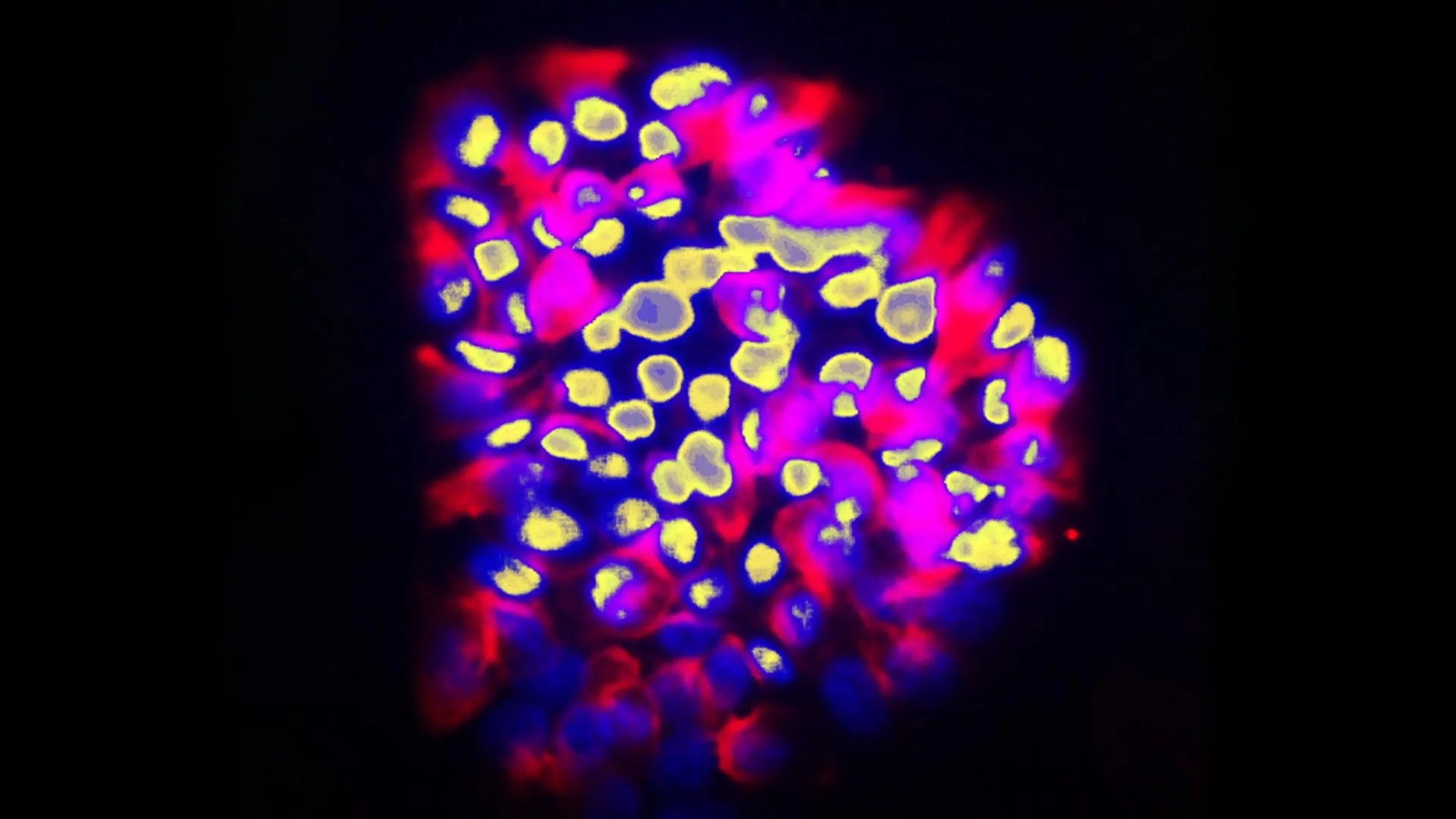
Metastasis, the process by which cancer cells detach from a primary tumor, travel through the bloodstream or lymphatic system, and form secondary tumors in distant organs, is the most lethal aspect of cancer. It is responsible for over 90% of cancer-related deaths, particularly in aggressive forms such as colon, breast, and lung cancers. Despite decades of intensive research, the precise molecular mechanisms that confer metastatic potential on certain cancer cells while others remain confined to the original tumor site have remained elusive. This lack of understanding presents a formidable challenge for clinicians, who often face the agonizing task of treating patients whose cancer has already disseminated, making curative outcomes significantly harder to achieve. The UNIGE team’s endeavor directly addresses this critical unmet need, providing a potential roadmap to identify high-risk patients earlier and tailor interventions more effectively.
Cancer as a Distorted Development Process: A Paradigm Shift
Traditional views often describe cancer as a chaotic proliferation of "anarchic cells," implying a loss of all regulatory control. However, Professor Ariel Ruiz i Altaba, who leads the study in the Department of Genetic Medicine and Development at the UNIGE Faculty of Medicine, offers a more nuanced and insightful perspective. "Cancer should rather be understood as a distorted form of development," he explains. This paradigm shift suggests that cancer isn’t merely a random breakdown of cellular machinery but rather a perverse re-activation of ancient, tightly regulated biological programs that are normally active only during embryonic development or tissue repair.
Genetic mutations and epigenetic changes — alterations in gene expression without changes to the underlying DNA sequence — can conspire to unlock these dormant developmental pathways. For instance, processes like the epithelial-mesenchymal transition (EMT), crucial for embryonic development and wound healing, can be hijacked by cancer cells to acquire migratory and invasive properties. Similarly, the re-emergence of stem-cell-like characteristics within tumor cells, often referred to as "cancer stem cells," can confer enhanced self-renewal capacity, resistance to therapy, and metastatic potential. Rather than being entirely random, cancer, from this perspective, appears to follow structured, albeit corrupted, biological rules. "The challenge is therefore to find the keys to understanding its logic and form. And, in the case of metastases, to identify the characteristics of the cells that will separate from the tumor to create another one elsewhere in the body," Professor Ruiz i Altaba elaborates. This approach underscores the importance of looking beyond individual mutations to the complex interplay of gene networks that govern cellular behavior.
Tracking Metastatic Cancer Cells: Overcoming Methodological Hurdles
The clinical reality of metastasis is stark: by the time circulating tumor cells (CTCs) are detected in the blood or lymphatic system, the disease has often already begun its insidious spread, making intervention significantly more complex. While significant progress has been made in understanding the specific mutations that initiate tumor formation, no single genetic alteration has been found to definitively explain why some cancer cells acquire the ability to break away, migrate, and establish secondary colonies, while others remain tethered to the primary tumor. This inherent complexity has historically been a major barrier to developing effective predictive and therapeutic strategies.
A fundamental methodological challenge in studying metastasis lies in the contradictory requirements of analysis: to fully characterize the molecular identity of a cell, it must typically be destroyed, yet to observe its functional behavior, such as migration and metastatic potential, it must remain alive and intact. "The difficulty lies in being able to determine the complete molecular identity of a cell — an analysis that destroys it — while observing its function, which requires it to remain alive," explains Professor Ruiz i Altaba.
To circumvent this dilemma, the UNIGE researchers devised an ingenious strategy. They painstakingly isolated individual tumor cells from primary colon cancers and then cloned them, generating genetically identical populations of cells. These clonal cell lines were then subjected to a rigorous two-pronged evaluation: first, in vitro assays in the lab to assess their migratory and invasive capabilities through controlled biological filters, mimicking the extracellular matrix barriers cancer cells must overcome. Subsequently, these clones were introduced into a sophisticated mouse model, allowing the researchers to observe their behavior in vivo — specifically, their ability to migrate within a living organism and ultimately generate metastases. This meticulous approach, as highlighted by Arwen Conod, a key contributor to the study, provided an unprecedented opportunity to link precise molecular profiles to observable metastatic phenotypes, thereby bridging the gap between genetic makeup and functional behavior.
Unveiling Gene Signatures Linked to Cancer Spread
The experimental rigor paid off significantly. The team meticulously analyzed the activity of hundreds of genes across approximately thirty distinct cell clones, all derived from just two primary colon tumors. This extensive molecular profiling revealed something profound: clear, reproducible gene expression patterns that were intricately linked to each cell’s observed ability to move, invade, and spread. Crucially, the researchers discovered that metastatic potential was not dictated by the profile of a single isolated cell, but rather by the complex interplay and communication within groups of related cancer cells. This finding underscores the importance of the tumor microenvironment and cellular heterogeneity in driving metastatic progression, moving beyond a simplistic view of metastasis as an inherent property of individual cells.
These gene signatures are not just random collections of activated or deactivated genes. They likely represent the activation of specific biological programs that empower cancer cells for their metastatic journey. This could include the re-expression of genes involved in epithelial-mesenchymal transition (EMT), which confers motility and invasiveness; changes in cell adhesion molecules, allowing detachment from the primary tumor; altered metabolic pathways to survive the harsh conditions of circulation; and mechanisms for evading immune surveillance. The identification of such comprehensive patterns, rather than isolated genetic mutations, provides a more holistic and accurate picture of metastatic capability, offering a richer set of targets for therapeutic intervention.
MangroveGS: An AI Tool for Predicting Metastasis Risk
Armed with these potent gene signatures, the researchers embarked on the next ambitious phase: integrating this biological knowledge into a sophisticated artificial intelligence system. The resulting tool, named "Mangrove Gene Signatures (MangroveGS)," represents a significant technological advancement in predictive oncology. As Aravind Srinivasan, another key member of the research team, explains, "The great novelty of our tool, called ‘Mangrove Gene Signatures (MangroveGS)’, is that it exploits dozens, even hundreds, of gene signatures. This makes it particularly resistant to individual variations." This ability to analyze multiple, interconnected gene signatures simultaneously is a critical differentiator from conventional biomarker approaches that often rely on one or a few genes. By leveraging this complex network of genetic signals, MangroveGS can discern subtle yet powerful patterns that single gene markers might miss, thereby increasing its robustness and reliability across diverse patient populations and tumor heterogeneities.
After an intensive training period on vast datasets, the MangroveGS model demonstrated remarkable predictive capabilities. It was able to predict metastasis and colon cancer recurrence with nearly 80% accuracy, a performance level that significantly outperforms existing methods, which often struggle with the inherent variability of cancer. What’s even more compelling is the versatility of these identified gene signatures. The patterns initially derived from colon cancer cells proved highly effective in predicting metastatic risk in other major cancer types, including stomach, lung, and breast cancer. This cross-cancer applicability suggests that there may be common, fundamental molecular programs underpinning metastasis across different tumor origins, opening avenues for broader therapeutic strategies.
Toward More Personalized Cancer Care: A Future of Precision Oncology
The development of MangroveGS is not merely an academic exercise; it carries profound implications for the future of personalized cancer care. The tool is designed for practical clinical application, capable of working directly with tumor samples collected in hospitals. The process is streamlined: cells are analyzed, their RNA is sequenced to capture the gene expression patterns, and a comprehensive metastasis risk score is quickly generated. This crucial information can then be shared securely with doctors and patients via an encrypted platform, enabling timely and informed decision-making.
Professor Ariel Ruiz i Altaba envisions a future where this technology will fundamentally reshape treatment paradigms. "This information will prevent the overtreatment of low-risk patients, thereby limiting side effects and unnecessary costs, while intensifying the monitoring and treatment of those at high risk," he states. For patients with a low predicted risk of metastasis, MangroveGS could spare them from aggressive, debilitating treatments like chemotherapy or extensive surgery, which carry significant side effects and financial burdens, without compromising their prognosis. Conversely, patients identified as high-risk could receive more aggressive initial therapies, closer monitoring, or be prioritized for novel experimental treatments, potentially leading to earlier intervention and improved outcomes. This stratified approach promises not only better patient quality of life but also more efficient allocation of healthcare resources.
Furthermore, MangroveGS offers a transformative opportunity for optimizing clinical trials. "It also offers the possibility of optimizing the selection of participants in clinical trials, reducing the number of volunteers required, increasing the statistical power of studies, and providing therapeutic benefits to the patients who need it most," Professor Ruiz i Altaba adds. By precisely identifying patients with specific metastatic profiles or high-risk disease, researchers can design more focused and effective trials, accelerating the development and approval of new drugs. This targeted approach means fewer patients are exposed to ineffective treatments, and those who stand to benefit most receive access to cutting-edge therapies more quickly.
While the MangroveGS tool represents a monumental step forward, it is important to acknowledge that the path to widespread clinical implementation involves rigorous validation. Large-scale prospective clinical trials will be essential to confirm its accuracy and utility across diverse patient populations and healthcare settings. Regulatory hurdles, ethical considerations regarding data privacy, and the seamless integration of such sophisticated AI tools into existing diagnostic workflows will also need to be carefully addressed. However, the potential impact is undeniable. By providing a powerful new lens through which to understand and predict cancer metastasis, the UNIGE team’s work offers not just a tool, but a new hope for precision medicine in oncology, bringing us closer to a future where the deadly spread of cancer can be anticipated, understood, and ultimately, overcome.
