
 By admin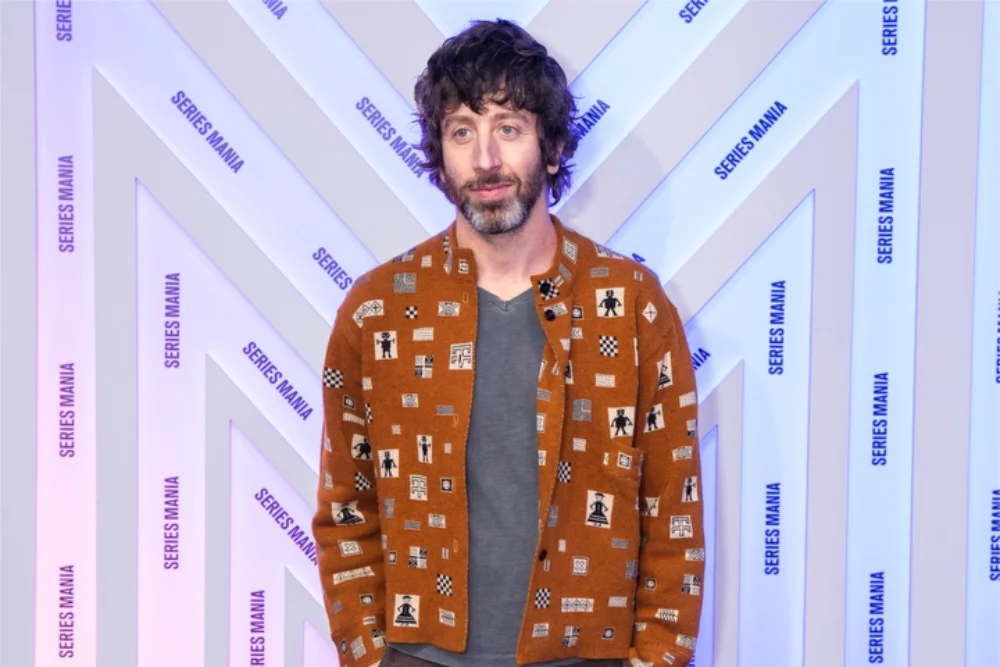
The trajectory of Simon Helberg’s career, now indelibly linked to the iconic character of Howard Wolowitz on the global phenomenon "The Big Bang Theory," could have been drastically different had he not reconsidered his initial reluctance to join the beloved sitcom. In a candid revelation during a masterclass at the Series Mania festival in France, Helberg disclosed that he almost definitively turned down the opportunity, citing a prior commitment and a perceived saturation of "nerd" roles in his burgeoning career.
"I went: ‘Thank you, I don’t need to do another pilot. I played enough nerds and now I work with Aaron Sorkin’," Helberg recounted, referencing his role on the critically acclaimed, though short-lived, NBC drama "Studio 60 on the Sunset Strip." At the time, the opportunity to work with celebrated writer Aaron Sorkin, known for his sharp dialogue and intricate narratives in shows like "The West Wing" and films such as "The Social Network," held immense professional cachet. Helberg felt he was on a more prestigious path, and the prospect of another pilot, especially after a previous unsuccessful attempt with the "Big Bang Theory" characters, seemed less appealing.
"I didn’t really care," Helberg admitted about his initial dismissal of the "Big Bang Theory" offer. "They already had another pilot the previous year, very dark and without our characters. This time, it was clear it went very well – they wanted me to test and I said no." The series’ creators, Chuck Lorre and Bill Prady, however, were persistent. It was Lorre’s personal call that finally prompted Helberg to seek counsel from Sorkin himself. "Chuck Lorre called, so I asked Aaron Sorkin for permission," Helberg explained. "He wrote me an email that I still have: ‘You ungrateful piece of… Just kidding’." This humorous, albeit pointed, endorsement from Sorkin was enough to sway Helberg, opening the door to what would become a defining role in his career.
The experience of shooting the pilot episode of "The Big Bang Theory" was, in retrospect, a profoundly different and remarkably positive one for Helberg. He vividly remembers the atmosphere, particularly the presence of legendary sitcom director James Burrows. "James Burrows, the god of sitcoms, was directing," Helberg recalled. "I kept hearing these laughs going on and on and on. The audience laughed for a minute and a half, and he had to calm everyone down." This level of audience engagement and sustained laughter was an immediate indicator of the show’s potential. Helberg also noted the warm reception he received from the studio audience, recognizing him from his earlier role as a recurring character on "Sabrina the Teenage Witch." "When I entered the show, there was applause. It was so strange: ‘Here he is, the guy from ‘Sabrina the Teenage Witch’!’ We were connecting with something people really wanted. It was hitting some nerve in the zeitgeist." This palpable connection with the audience suggested that the show was tapping into a cultural current, a sentiment that would prove to be remarkably prescient.
Howard Wolowitz, the character Helberg embodied for twelve seasons, quickly evolved into a fan favorite, a status cemented not only by his intellectual prowess (albeit in a highly specific domain) but also by his famously eccentric and often questionable fashion choices. His signature tight-fitting shirts, often adorned with vibrant patterns and bold graphics, coupled with his distinctive bowl cut and ever-present scarf, became synonymous with the character. Helberg himself acknowledged the theatricality of Wolowitz’s attire. "I remember thinking: ‘This is over the top’," he said. "But he’s peacocking! If you are wearing fluorescent jeans, it just has to work for you." While Helberg has since distanced himself from such flamboyant sartorial choices, he humorously admitted to still taking measures to conceal his neck. "I pass on turtlenecks now, but I still hide my neck. It’s hideous over there," he joked, adjusting his scarf.
Beyond the visual gags, Helberg delved into the psychological underpinnings of Howard Wolowitz. "He thought of himself as the center of attention, the leader of the pack, the funny one in the group and a relentless lothario," Helberg explained. "That was not exactly who I was, but he was fun to play because he was very confident." This confident, often overbearing persona, contrasted with Helberg’s own disposition, provided fertile ground for comedic exploration. Wolowitz’s unshakeable self-assurance, even when confronted with social awkwardness or romantic rejection, was a key element of his appeal.
A significant aspect of "The Big Bang Theory"’s writing, Helberg emphasized, was its meticulous attention to detail and the absence of improvisation. "None of the dialogues were improvised," he stated unequivocally. This often surprises those outside the industry, including many within Hollywood. "A lot of people are shocked when I tell them, even in Hollywood. They assumed these were our jokes. Not a word of it. These writers knew the characters inside and out." The precision of the writing, crafted by a dedicated team of scribes who deeply understood the nuances of each character, was instrumental in the show’s consistent comedic impact and its ability to resonate with a broad audience. This dedication to the script allowed for the intricate scientific and pop culture references that became a hallmark of the series.
Over the course of its impressive 12-season run, "The Big Bang Theory" achieved a rare feat in television: it allowed for significant character development and narrative evolution. Howard Wolowitz, in particular, underwent a remarkable transformation, evolving from a somewhat sleazy and socially inept aspiring ladies’ man into a devoted husband and a caring father. "It’s such a rare thing to get 12 years to tell a story," Helberg reflected. "This character started as a sleazy guy, so the writers wrote good sleazy jokes, then other writers decided to make it smarter and bring women in who added another dimension. It was the luxury of having almost 300 episodes." This extended narrative canvas enabled the writers to explore different facets of Wolowitz’s personality, allowing him to mature and develop meaningful relationships, particularly with his wife Bernadette Rostenkowski-Wolowitz, played by Melissa Rauch.
Despite the show’s immense success and the deep connection Helberg forged with his character and the cast, the decision to end "The Big Bang Theory" in 2019 felt like the right one. "Saying goodbye to the show felt right. It was like graduating high school," Helberg mused. "I had a great experience there, but I didn’t want to stay there! We felt like it was time. There wasn’t anything else to do with this world. We were good." This sentiment reflects a mature understanding of storytelling and the importance of concluding a narrative arc while its creative energy is still high, rather than overstaying its welcome. The show had explored its premise thoroughly, and bringing it to a satisfying conclusion allowed the characters and the audience to move on.
Helberg’s journey to Hollywood stardom was not a straight line, and his early aspirations leaned towards music. "I wanted to be a musician first," he revealed at Series Mania. "I even got into playing jazz, which wasn’t that cool for a guy like me – with braces. But I was probably one of the funnier people in jazz. I always enjoyed making people laugh." This early inclination towards performance and humor, even within a different artistic discipline, foreshadowed his future success in comedy. His musical background later proved invaluable in his role as Cosme McMoon in the 2016 film "Florence Foster Jenkins," where he shared the screen with Meryl Streep. "I really embellished my piano abilities. I told them I can play anything," he confessed with a smile, underscoring his ability to adapt and leverage his diverse skill set. Ultimately, however, it was the allure of acting and the desire for recognition that guided his path. "I guess I wanted to see my name up [in lights], have people in front of me and wear a scarf. And get free water," he quipped, offering a humorous glimpse into the ambitions of a young performer.
Before "The Big Bang Theory" catapulted him to global fame, Helberg honed his comedic craft in the web series "Derek and Simon: The Show," which he co-created with Derek Waters and Bob Odenkirk. The series, featuring a roster of future comedic stars like Bill Hader and Zach Galifianakis, chronicled the misadventures of two twenty-something aspiring actors in Los Angeles navigating the complexities of relationships and careers. "It was like ‘Girls,’ but with guys. And ‘Guys’ does not have the same ring to it," Helberg quipped, drawing a parallel to the popular HBO series. He lauded Bob Odenkirk’s early support and belief in their vision. "But Bob Odenkirk was our hero, he was at the vanguard of underground, rock ‘n’ roll comedy, and he believed in us." This early collaborative spirit and dedication to creating original comedy laid the groundwork for his later success.
The enduring legacy of "The Big Bang Theory" is undeniable, as evidenced by the sheer volume of fans eager to attend Helberg’s masterclass at Series Mania. The venue, one of the largest at the festival, struggled to accommodate the overwhelming demand, with a line of dedicated fans snaking through the event, a testament to the show’s lasting impact. Yet, Helberg’s current artistic pursuits are driven by a desire for new challenges and the embrace of the unknown. "These days he’s interested in throwing himself into new worlds and ‘being scared’," the article states. This deliberate pursuit of challenging roles reflects a maturing artist seeking to expand his creative boundaries.
This willingness to embrace the unconventional and the risky was particularly evident in his decision to lie about his French citizenship to secure a role in Leos Carax’s musical "Annette." Describing the experience of making the film, Helberg remarked, "It felt like ‘making a short film in collage: raw and risky’." His fabricated claim of an ongoing citizenship application led to a rather unusual exchange with a consulate official. "I said: ‘I’m in the process [of getting French citizenship].’ Because who isn’t in a process? Right before I got the stamp, there was this final chat, and the lady [in the consulate] said something about ‘a little man and a black hat.’ I blurted: ‘Charlie Chaplin?’ My wife went: ‘He’s kidding.’ ‘Napoleon?’ I don’t know what this questions was even about, but boom, I have the passport now and I love it.” This anecdote highlights Helberg’s adventurous spirit and his willingness to go to great lengths for a creative opportunity.
In his latest project, "The Audacity," Helberg portrays a Silicon Valley prodigy grappling with the consequences of early success and the development of an AI therapy bot designed for lonely teenagers. He elaborated on the character’s complexities: "Even though he has a lonely teenage daughter at home whom he completely neglects," he said. The character’s flaws and their attempts at virtue resonate with audiences. "These characters are pretty flawed, but they are trying to be virtuous to some extent. But we see how that gets interrupted by selfishness, and that’s what we can relate to. You see where they get corrupted." Helberg finds the exploration of such flawed characters compelling, noting that "You always look for what makes a character good and what they are after. And people in Silicon Valley are after efficiency, which lacks humanity and can be horribly depressing. Martin neglects his daughter, sure, but maybe he will save future father-daughter relationships with his bot?" This suggests a nuanced portrayal of a character whose personal failings are juxtaposed with his professional aspirations, raising questions about the nature of progress and human connection in the digital age.
The masterclass concluded with a touching moment of recognition: Helberg met the French voice actor who has been dubbing his performances for years. "I am so sorry you had to spend so many hours learning me!" Helberg exclaimed. The anecdote ended with a humorous flourish: "And off he goes, to do more dialogue from ‘The Audacity.’ We keep him in a small room over there." This lighthearted exchange underscored the global reach of his work and the collaborative nature of filmmaking and television production across different cultures. The event served as a comprehensive retrospective of Helberg’s career, from his near-miss with a career-defining role to his ongoing exploration of complex characters in new and exciting projects.
