
 By admin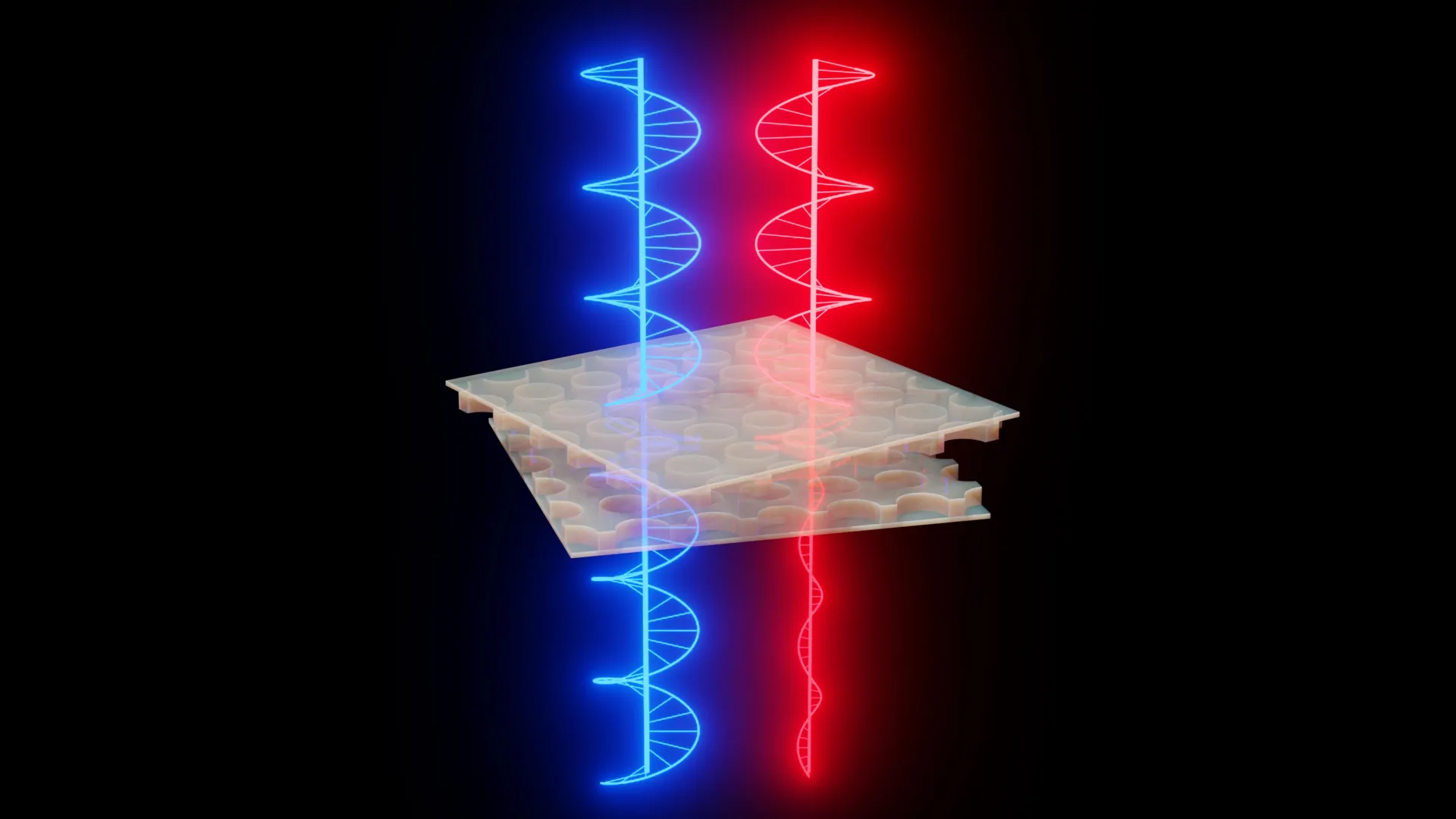
The ambitious project was spearheaded by graduate student Fan Du, working under the expert guidance of Eric Mazur, the Balkanski Professor of Physics and Applied Physics at Harvard University. Their team meticulously designed a reconfigurable twisted bilayer photonic crystal system, a structure whose optical properties can be adjusted in real-time through the integration of a sophisticated micro-electromechanical system (MEMS). This real-time tunability represents a paradigm shift from traditional, static optical components, paving the way for revolutionary advances in fields as diverse as chiral sensing, high-speed optical communication, and the intricate realm of quantum photonics.
Professor Mazur emphasized the pervasive importance of chirality across numerous scientific disciplines. "Chirality is very important in many fields of science — from pharma to chemistry, biology, and of course, physics and photonics," he stated. He further highlighted the practical implications of their research, noting, "By integrating twisted photonic crystals with MEMS, we have a platform that is not only powerful from a physics standpoint but also compatible with the way modern photonics are manufactured." This dual advantage of fundamental scientific insight coupled with practical manufacturing feasibility underscores the transformative potential of their work.
Unpacking the Concept of Chirality: A Fundamental Asymmetry
To fully appreciate the significance of this Harvard breakthrough, it is essential to understand the concept of chirality itself. At its core, chirality describes objects that cannot be superimposed on their mirror images, much like a human’s left and right hands. This intrinsic asymmetry is not merely an abstract concept; it profoundly influences the physical, chemical, and biological properties of matter.
In the realm of optics, chirality extends to light itself and its interaction with materials. Light, as an electromagnetic wave, can exhibit a helical propagation pattern, leading to what is known as circular polarization. This helical motion can be either clockwise (right-circular polarization) or counter-clockwise (left-circular polarization). While these differences in "handedness" might seem subtle, they are far from trivial and play critical roles in a vast array of scientific and technological applications, from fundamental investigations into molecular structure to advanced data encryption.
Why Chirality Commands Attention in Science and Medicine
The seemingly minor distinction between mirror-image forms can have profound, even life-altering, consequences, particularly in chemistry and medicine. Molecules that are enantiomers—mirror images of each other—often behave very differently within biological systems. A classic and sobering example is the drug thalidomide, introduced in the 1950s. One enantiomer of thalidomide was effective in treating morning sickness in pregnant women, while its mirror image, tragically, caused severe birth defects. This historical lesson underscored the critical importance of separating and controlling molecular chirality in pharmaceutical development.
Beyond pharmaceuticals, chirality is crucial in understanding protein folding, enzyme activity, and the precise recognition processes fundamental to life itself. In materials science, chiral structures can lead to unique properties, such as enhanced light-harvesting capabilities or novel catalytic functions. Scientists often employ chiral light to probe and differentiate such molecules, as the interaction between chiral light and chiral matter is highly sensitive to their respective handedness. However, traditional tools for manipulating and detecting light polarization, such as wave plates and linear polarizers, are often fixed in their capabilities, limited in their operational range, and lack the dynamic tunability required for advanced applications.
Photonic Crystals: Orchestrating Light at the Nanoscale
The foundation of the Harvard device lies in photonic crystals. These are nanoscale materials meticulously engineered to control the behavior of light. By creating periodic structures with dimensions comparable to the wavelength of light, photonic crystals can manipulate light in ways analogous to how semiconductor crystals control electrons. They can create "photonic bandgaps," frequency ranges where light is forbidden to propagate, enabling precise control over light’s transmission, reflection, and absorption. These sophisticated structures, small enough to fit on the tip of a pin, are already integral to various modern technologies, including advanced computing, high-precision sensing, and high-speed data transmission.
Mazur’s group has pushed the boundaries of this field by drawing inspiration from "twistronics," a revolutionary concept that first gained widespread attention through research on twisted bilayer graphene. In twistronics, stacking two layers of a 2D material and rotating them by a slight angle relative to each other can unlock entirely new electronic properties, often leading to emergent phenomena like superconductivity. Applying this powerful idea to optics, the Harvard researchers demonstrated that by stacking two patterned silicon nitride layers and precisely rotating them, they could create novel optical properties that are absent in a single layer or in untwisted configurations.
The team’s findings, detailed in their seminal study published in the prestigious journal Optica, conclusively demonstrate that this twisted bilayer structure intrinsically introduces an asymmetry between left and right, making it exceptionally effective for controlling optical chirality. This geometric chirality, induced by the precise relative rotation of the layers, allows for an unprecedented level of interaction with and control over the handedness of light.
The Harvard Device: A Tunable Revolution with MEMS Control
The new Harvard device represents a significant leap over the limitations of traditional, static optical components by being fully tunable. Unlike conventional systems that rely on fixed wave plates or polarizers, this novel platform can continuously adjust its response to different types of chiral light without the need to replace any physical parts. This dynamic reconfigurability is a game-changer for applications requiring flexibility and precision.
The extraordinary flexibility of the device stems directly from its ingenious bilayer design. When the two intricately patterned photonic crystal layers are brought into close proximity and rotated relative to each other, the resulting structure acquires a geometrically chiral configuration. This geometric chirality is the key to its ability to selectively detect and manipulate the handedness of incoming light. Crucially, the strong optical interactions between these twisted layers lead to dramatically different transmission behaviors for left- and right-circularly polarized light, even under "normal incidence"—a scenario where polarized light hits perpendicular to the surface. Achieving a robust chiral response at normal incidence is particularly advantageous, simplifying optical setups and enhancing the practicality of the device for on-chip integration.
The integration of a micro-electromechanical system (MEMS) is central to the device’s dynamic capabilities. MEMS technology involves the fabrication of microscopic mechanical devices, often on silicon chips, capable of precise, actuated movements. By leveraging the MEMS system to meticulously control both the twist angle between the layers and the minuscule spacing separating them, the researchers were able to demonstrate that the device could be tuned to achieve near-perfect selectivity in distinguishing the handedness of light. This level of precise, real-time control over optical chirality was previously unattainable in a compact, integrated platform.
Paving the Way for Future Applications: Sensing, Communications, and Quantum Frontiers
Beyond serving as a compelling proof of concept, the Harvard study meticulously outlines a broader design strategy for creating future twisted bilayer photonic crystals with unparalleled control over optical chirality. The implications for practical applications are vast and transformative.
One of the most immediate and impactful applications lies in chiral sensing. Future systems built upon this technology could be finely tuned to detect specific molecules at different wavelengths, revolutionizing drug discovery, environmental monitoring, and medical diagnostics. Imagine highly sensitive, on-chip sensors capable of rapidly identifying specific enantiomers of a drug in a complex mixture, or detecting trace amounts of chiral biomarkers for early disease diagnosis. This could accelerate the development of safer and more effective pharmaceuticals and enable new forms of chemical analysis.
The technology also holds immense promise for optical communication systems. As data traffic continues to surge, there is an ever-growing demand for more efficient and secure ways to transmit information. Devices leveraging this dynamic control of light’s handedness could function as sophisticated light modulators, enabling precise, on-chip control of light polarization. This could lead to advancements in polarization-division multiplexing, enhancing the capacity of optical fibers, or even paving the way for novel secure communication protocols that exploit the chiral properties of light.
Perhaps one of the most exciting, albeit nascent, areas of application is quantum photonics. The ability to precisely control the "handedness" of single photons could be crucial for manipulating quantum states of light, a fundamental requirement for building next-generation quantum computers and developing highly sensitive quantum sensors. Chiral light could be used to selectively excite or detect chiral quantum emitters, or to encode quantum information in novel ways, pushing the boundaries of quantum information science and engineering.
The compatibility of this MEMS-integrated photonic crystal platform with existing modern photonics manufacturing techniques, as highlighted by Professor Mazur, is a critical factor for its widespread adoption and future commercialization. This means that the transition from laboratory prototype to scalable industrial application could be smoother and faster than for technologies requiring entirely new fabrication infrastructures.
The paper, "Dynamic Control of Intrinsic Optical Chirality via MEMS-Integrated Photonic Crystals," represents a collaborative effort and was co-authored by Haoning Tang, Yifan Liu, Mingjie Zhang, Beicheng Lou, Guangqi Gao, Xuyang Li, Alsyl Enriquez, and Shanhui Fan, underscoring the interdisciplinary nature and collective expertise driving this significant scientific advancement. The Harvard team’s work not only deepens our fundamental understanding of light-matter interactions but also provides a versatile and tunable platform that is poised to reshape various high-tech industries in the coming years.
