
 By Titik Puspa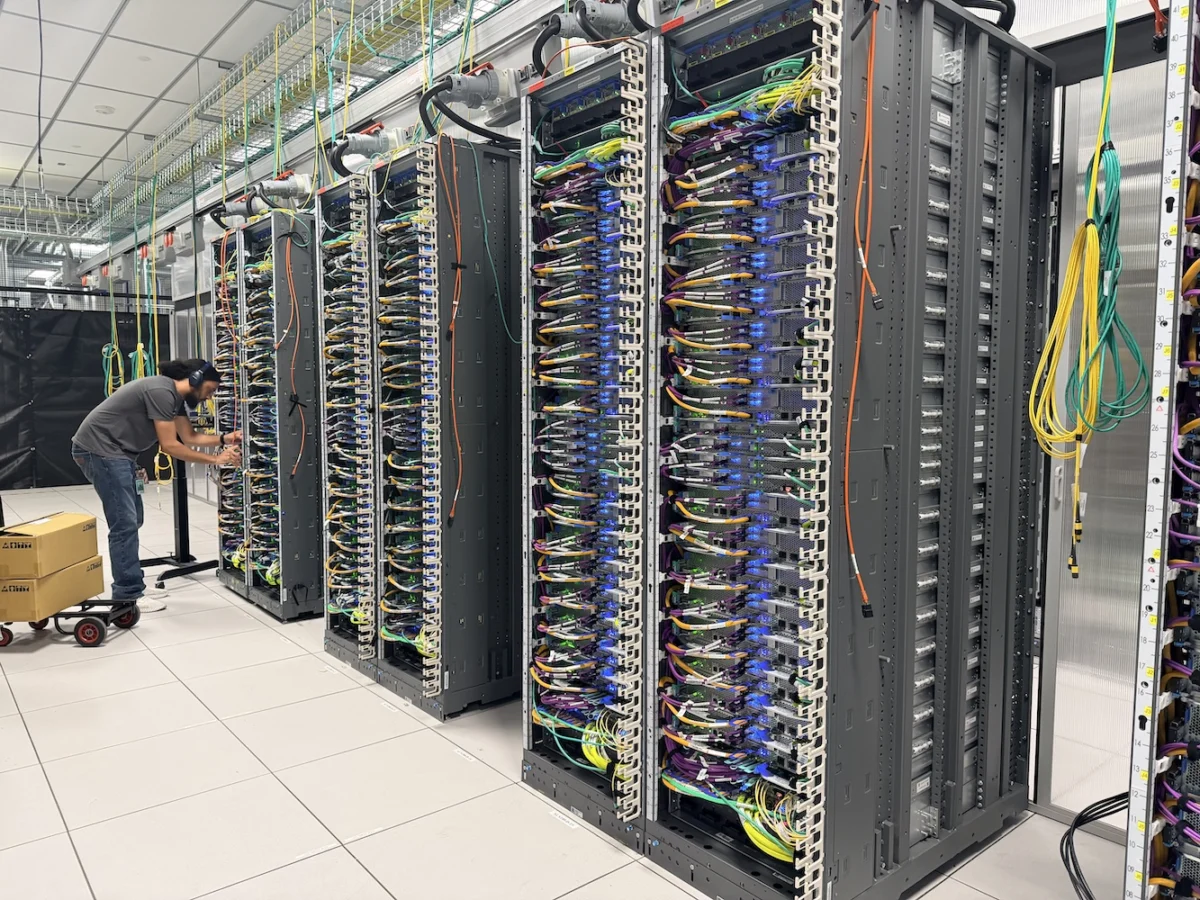
Shortly after Amazon CEO Andy Jassy announced AWS’s groundbreaking $50 billion investment deal with OpenAI, a significant move poised to reshape the AI landscape, Amazon extended a rare and exclusive invitation: a private tour of the very chip development lab at the heart of this strategic partnership. This facility, nestled in Austin, Texas, is where Amazon’s proprietary Trainium chips are born, technology that industry experts are closely watching for its potential to dramatically lower the cost of AI inference and, crucially, to challenge Nvidia’s near-monopoly in the high-performance computing sector.

My journey into the engine room of AWS’s AI ambitions began with a brief flight, with Amazon covering the lion’s share of travel expenses, embodying their principle of frugality even in such high-profile excursions. Upon arrival in Austin, a city rapidly becoming a beacon for technological innovation and often dubbed "Austin’s Silicon Valley," I was welcomed by the key figures steering this ambitious chip design endeavor. My guides for the day were Kristopher King, the lab’s director, and Mark Carroll, director of engineering. Doron Aronson, the PR representative who orchestrated the visit, also joined us, adding a crucial layer of context to the technical deep dive.
The significance of this lab cannot be overstated, especially in light of the recent $50 billion investment and partnership with OpenAI. This deal designates AWS as the exclusive provider for OpenAI’s new AI agent builder, Frontier. This exclusivity is particularly noteworthy, as the success of agent-based AI could become a cornerstone of OpenAI’s future business model. However, the landscape is not without its complexities. Reports from the Financial Times suggest that Microsoft, a long-standing partner of OpenAI, may contest this exclusivity, arguing that it potentially violates their own agreement which grants them access to all of OpenAI’s models and technology.

The allure for OpenAI in partnering with AWS is multifaceted, but a primary driver is the substantial commitment of computing power. As part of the deal, AWS has pledged to supply OpenAI with a staggering 2 gigawatts of computing capacity powered by Trainium chips. This is a monumental undertaking, especially considering that Trainium chips are already in high demand, with Anthropic and Amazon’s own Bedrock service consuming them at a rate that outpaces Amazon’s current production capabilities. The sheer scale of this demand underscores the critical role Trainium plays in the AI ecosystem. To date, across all three generations of Trainium chips, an impressive 1.4 million units have been deployed. Notably, Anthropic’s highly capable Claude AI runs on over a million of the latest Trainium2 chips, a testament to its performance and reliability.
While Trainium was initially conceived with a focus on accelerating AI model training—a priority that was paramount a couple of years ago—its capabilities have evolved significantly. Today, it is equally optimized and deployed for AI inference, the process of actually running AI models to generate responses. Inference is currently the most significant performance bottleneck in the AI industry, making efficient inference chips a highly sought-after commodity. A prime example of Trainium’s prowess in this area is its role in Amazon’s Bedrock service. Trainium2 chips now handle the majority of inference traffic on Bedrock, a crucial platform that empowers Amazon’s vast enterprise customer base to build and deploy AI applications leveraging a multitude of models.

"Our customer base is just expanding as fast as we can get capacity out there," Kristopher King stated, highlighting the insatiable demand for AI compute. He further elaborated on the potential of Bedrock, suggesting it could one day rival the scale of EC2, AWS’s foundational cloud compute service, a bold prediction underscoring the transformative impact of their AI infrastructure.
The recent unveiling of the Trainium3 chip, released in December, marks a significant leap forward. Coupled with newly developed Neuron switches, this integrated system represents a paradigm shift in AI hardware. Mark Carroll elaborated on the transformative nature of this combination: "What that gives us is something huge." The Neuron switches enable every Trainium3 chip to communicate seamlessly with every other chip in a mesh configuration, drastically reducing latency. "That’s why Trainium3 is breaking all kinds of records," Carroll emphasized, particularly in terms of "price per power," a critical metric for cost-effective AI deployment. In an era where AI systems process trillions of tokens daily, such optimizations translate into substantial performance gains and cost savings.

The innovative work of Amazon’s chip design team has not gone unnoticed by industry giants. In 2024, Apple publicly lauded their efforts. In a rare display of transparency from the typically secretive tech behemoth, Apple’s director of AI spoke glowingly of the team’s previous creations. They highlighted the use of Graviton, a low-power, ARM-based server CPU and the team’s first breakout chip. Apple also recognized Inferentia, a chip specifically engineered for inference, and gave a nod to Trainium, which was relatively new at the time. This external validation underscores Amazon’s consistent strategy: identify market needs, then develop in-house solutions that offer competitive pricing and performance.
A historical hurdle for widespread adoption of alternative AI chips has been the significant switching costs associated with re-architecting applications designed for Nvidia’s dominant GPU architecture. However, the AWS chip team has made substantial strides in mitigating this challenge. They proudly announced that Trainium now fully supports PyTorch, a widely adopted open-source framework for building AI models, including many hosted on Hugging Face, a popular repository for open-source models. Carroll explained that the transition to Trainium typically requires "basically a one-line change, and then recompile, and then run on Trainium." This simplified migration path is a strategic move by Amazon to systematically erode Nvidia’s market dominance.

Adding further momentum to their AI hardware offensive, AWS announced a partnership with Cerebras Systems this month. This collaboration integrates Cerebras’s inference chip onto servers running Trainium, promising an unparalleled combination of high-performance and low-latency AI capabilities. Amazon’s ambitions, however, extend beyond just the chips themselves. They are also meticulously designing the server infrastructure that houses these advanced components. Beyond the intricate networking, the team has developed "Nitro," a sophisticated hardware-software combination that provides advanced virtualization technology. This allows for multiple software instances to run independently on the same server. Furthermore, they have implemented state-of-the-art liquid cooling technology and custom-designed server sleds, all aimed at optimizing both cost and performance.
The genesis of Amazon’s custom chip design unit can be traced back to January 2015, when the cloud giant acquired Israeli chip designer Annapurna Labs for approximately $350 million. This acquisition laid the foundation for a team that has now dedicated over a decade to designing cutting-edge chips for AWS. The Annapurna legacy is deeply ingrained in the team’s culture, with their distinctive logo prominently displayed throughout the office space.

The lab itself is situated in a sleek, modern building in Austin’s upscale "The Domain" district, a vibrant area known for its shops and restaurants, reflecting the city’s burgeoning tech scene. Inside, the offices exhibit a typical tech corporate aesthetic, featuring cubicles, collaborative spaces, and conference rooms. However, tucked away on a high floor, the actual engineering lab offers panoramic views of the city. This space, roughly the size of two large conference rooms, is a testament to the hands-on nature of chip development. It’s a noisy, industrial environment, filled with the hum of powerful equipment and the whirring of cooling fans, evoking a blend of a high school shop class and a high-tech Hollywood set. The engineers, however, are clad in casual jeans, a stark contrast to the traditional white lab coats often associated with such advanced facilities.
It’s important to note that this facility is not a manufacturing plant. The cutting-edge Trainium3 chips are manufactured by TSMC, widely regarded as the leader in 3-nanometer chip fabrication, with other components produced by Marvell. The Austin lab is where the critical "bring-up" process takes place – the crucial stage where newly manufactured chips are tested and validated. Kristopher King explained the intensity of this process: "A silicon bring-up is when you get the chip for the first time, and it’s like a big overnight party. You stay here, like a lock-in." This phase, following approximately 18 months of meticulous design work, involves activating the chip for the first time to confirm it functions precisely as intended. The team even documented a portion of the Trainium3 bring-up, sharing it on YouTube, offering a glimpse into the challenges and triumphs of this demanding process.

As King alluded, bring-up events are rarely without their challenges. For Trainium3, an initial hurdle arose when the dimensions for attaching the air-cooling heat sink to the prototype chip were miscalculated, preventing its activation. Undeterred, the team swiftly adapted. "Immediately got a grinder and just started grinding off the metal," King recounted. To preserve the celebratory atmosphere of the bring-up and avoid disrupting the team, they discreetly moved their grinding operations to a conference room. This anecdote perfectly encapsulates the spirit of silicon bring-up: relentless problem-solving and a dedication to overcoming obstacles, often through the night.
The lab’s ingenuity extends to specialized equipment. A welding station, operated by hardware lab engineer and master welder Isaac Guevara, showcases the precision required for micro-component assembly. Guevara demonstrated the delicate art of welding tiny integrated circuit components under a microscope, a task so intricate that even senior director Mark Carroll admitted his inability to perform it, much to the amusement of the assembled engineers. The lab is also equipped with a comprehensive suite of both custom-built and commercial tools for rigorous testing and analysis of chip performance and potential issues. Signal engineer Arvind Srinivasan provided a demonstration of how the lab meticulously tests each minute component on the chip, highlighting the granular level of scrutiny applied.

However, the undisputed stars of the lab are the "sleds" – the custom-designed trays that house the Trainium AI chips, Graviton CPU chips, and all supporting circuitry. A dedicated wall showcases each generation of these sleds, illustrating the evolutionary progress of Amazon’s hardware. These sleds, when integrated into racks with custom-designed networking components, form the powerful systems that underpin the success of solutions like Anthropic’s Claude. A particularly notable sled, displayed at the AWS re:Invent conference in December, exemplifies the sophisticated engineering involved.
The recent surge in attention on Amazon’s chip division, particularly following the substantial investment in OpenAI, has amplified the pressure on the team. Amazon CEO Andy Jassy has become a vocal advocate for the lab’s output, frequently highlighting its achievements with palpable pride. In December, he announced that Trainium had already become a multi-billion-dollar business for AWS and singled it out as one of his most exciting technological developments. He also prominently featured the chip in his announcement of the OpenAI agreement, underscoring its strategic importance.

This external validation fuels an internal drive, with the engineering team working around the clock, often for weeks on end, during critical bring-up events. Their goal is to swiftly resolve any issues, ensuring that the chips are ready for mass production and deployment in data centers. "It’s very important that we get as fast as possible to prove that it’s actually going to work," Carroll stated, expressing confidence in their progress: "So far, we’ve been doing really well."
Beyond the main lab, the team operates its own private data center for quality assurance and testing. Located a short distance away, this facility is intentionally separate from AWS’s public data centers and does not run customer workloads. It is housed in a co-location facility, ensuring dedicated resources for their internal testing protocols. Security is paramount, with stringent protocols governing entry to the building and access to Amazon’s secure area. The data center environment itself is intense, characterized by the deafening roar of the cooling systems, necessitating mandatory earplugs, and an atmosphere thick with the metallic tang of heated components. It is a space designed for function over comfort, a testament to the demanding nature of high-performance computing.

Within this data center, rows upon rows of servers are populated with sleds integrating Amazon’s latest custom silicon: the Graviton CPU, the liquid-cooled Trainium3, and the Amazon Nitro system. The liquid cooling system operates on a closed loop, meaning the coolant is reused, contributing to a reduced environmental impact, as highlighted by the engineers. A current Trn3 UltraServer configuration is a striking example, featuring multiple sleds stacked above and below, with Neuron switches positioned in the center. Hardware development engineer David Martinez-Darrow was observed performing maintenance on a sled, illustrating the ongoing work required to keep these systems at peak performance.
The team’s dedication and the strategic importance of their work are undeniable. The deep dive into the Austin chip lab reveals a sophisticated operation that is not only capable of designing world-class AI hardware but is also actively disrupting the established order. The Trainium chips, powered by this dedicated engineering team, are poised to play a pivotal role in democratizing access to powerful AI compute, fostering innovation, and fundamentally reshaping the future of artificial intelligence. The recent partnership with OpenAI, bolstered by the capabilities of Trainium, is a clear signal that Amazon is not just a consumer of AI but a formidable architect of its underlying infrastructure.
