
 By Titik Puspa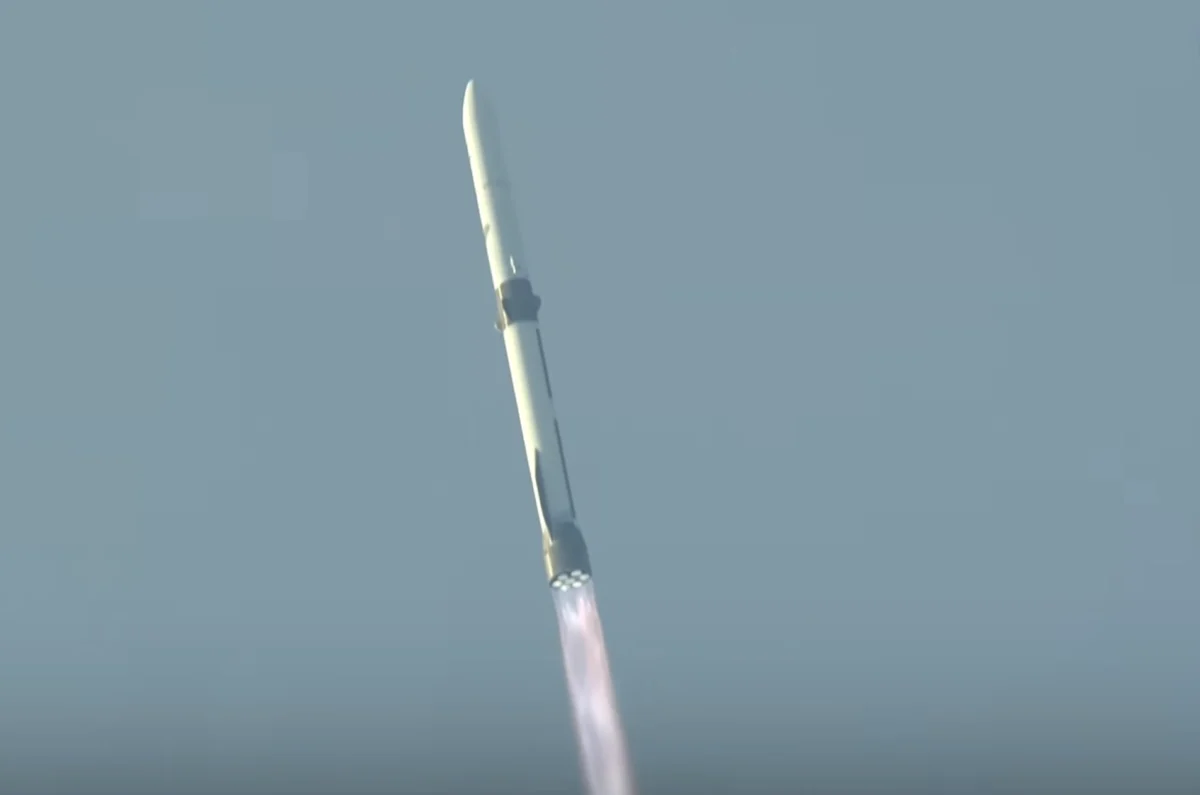
In a monumental leap for private spaceflight, Blue Origin has successfully achieved the first-ever reuse of its powerful New Glenn rocket, marking a pivotal moment in Jeff Bezos’s ambitious space venture and escalating its competitive edge against rivals like SpaceX. This groundbreaking feat occurred on Sunday, during the third operational flight of the New Glenn heavy-lift launch system, less than a year and a half after its inaugural launch in January 2025. The successful demonstration of reusability is not merely a technical triumph but a critical economic enabler for Blue Origin, directly addressing the cost efficiencies that have propelled SpaceX to its dominant position in the global orbital launch market.
The economic imperative for reusable launch vehicles cannot be overstated. For decades, the high cost of expendable rockets has been a significant barrier to more frequent and ambitious space missions. SpaceX, under the leadership of Elon Musk, revolutionized the industry by mastering the art of recovering and reflying its Falcon 9 rocket boosters. This capability has allowed SpaceX to offer significantly lower launch costs, making space more accessible for commercial satellites, scientific payloads, and even human spaceflight. Blue Origin’s successful demonstration of New Glenn reusability signals its intent to directly challenge this established paradigm and capture a larger share of the burgeoning space economy.
While New Glenn has already proven its capability to deliver commercial payloads to orbit – with Sunday’s mission being its second successful commercial deployment – the strategic implications of its reusability extend far beyond routine satellite launches. Blue Origin envisions New Glenn as a cornerstone for ambitious lunar missions, including vital support for NASA’s Artemis program, which aims to return humans to the Moon. Furthermore, the rocket is poised to play a crucial role in deploying and maintaining the vast satellite constellations planned by both Blue Origin itself and its parent company, Amazon, for global internet connectivity. In a related development, Blue Origin is diligently preparing its first robotic lunar lander for an anticipated launch later this year, underscoring its multi-faceted approach to lunar exploration and exploitation.
The specific booster that achieved this historic second flight on Sunday was the very same one that powered the second New Glenn mission in November 2025. During that prior mission, this reusable booster successfully propelled two robotic NASA spacecraft toward Mars, a testament to its robust performance and reliability. Following its primary mission, the booster executed a controlled descent and was successfully recovered aboard a drone ship positioned in the ocean. On Sunday, history repeated itself as the same booster once again performed a controlled landing on a drone ship approximately ten minutes after liftoff, confirming its readiness for future missions and validating Blue Origin’s reusability architecture.
The primary objective of Sunday’s launch was to deliver a crucial communications satellite into orbit for AST SpaceMobile, a leading provider of mobile satellite services. At the time of publication, the New Glenn upper stage was still in the process of maneuvering the satellite to its precise orbital destination. TechCrunch will provide further updates as the mission progresses and more details become available regarding the satellite’s successful deployment and any additional data gleaned from the flight.
The development of New Glenn has been a long and arduous journey for Blue Origin, stretching over more than a decade. The rocket is designed as a two-stage vehicle, with the first stage, the booster, being the reusable component. It stands at an impressive 322 feet (98 meters) tall, making it one of the most powerful launch vehicles ever constructed. Its first stage is powered by nine BE-3U engines, each producing over 2.3 million pounds of thrust, while the second stage utilizes a single BE-3U engine optimized for vacuum operations. This colossal thrust capability allows New Glenn to lift substantial payloads into low Earth orbit (LEO) and beyond, including geosynchronous transfer orbit (GTO) and translunar injection (TLI).
The successful demonstration of reusability for the New Glenn booster is a direct response to the technological and economic advantages pioneered by SpaceX. The Falcon 9, SpaceX’s workhorse rocket, has undergone extensive iterative improvements to its recovery and refurbishment processes. This continuous refinement has led to a high flight rate for the Falcon 9, enabling SpaceX to offer competitive pricing and secure a dominant share of the commercial launch market. Blue Origin’s ability to replicate this success with New Glenn is crucial for its long-term viability and its aspirations to become a major player in the space industry.
Beyond its commercial ambitions, Blue Origin’s New Glenn rocket is strategically positioned to support national security space missions, scientific endeavors, and deep space exploration. The sheer payload capacity of New Glenn opens up possibilities for launching larger and more complex satellites, advanced space telescopes, and potentially even components for future space habitats. The company’s long-term vision includes not only launching payloads but also developing capabilities for in-space servicing, orbital debris removal, and eventually, enabling human expansion beyond Earth.
The path to reusability for rockets is fraught with engineering challenges. These include designing engines and structures that can withstand the extreme forces of launch and reentry, developing sophisticated guidance and control systems for precision landings, and establishing efficient refurbishment processes to prepare boosters for subsequent flights. Blue Origin has invested heavily in these areas, drawing upon the expertise of its highly skilled engineering team and leveraging lessons learned from its suborbital New Shepard program. The successful recovery of the New Glenn booster on Sunday is a testament to the efficacy of their design and operational strategies.
The competitive landscape in the commercial space launch sector is intensifying. Alongside SpaceX and Blue Origin, other companies such as United Launch Alliance (ULA) with its Vulcan Centaur, and emerging players from Europe and Asia, are vying for market share. However, the demonstrated reusability of New Glenn gives Blue Origin a significant competitive advantage, particularly for missions requiring substantial payload capacity at a more economical price point. This could be instrumental in securing contracts for large satellite constellations, interplanetary missions, and future government space programs.
The implications of this reusable New Glenn extend to the broader goals of space exploration and utilization. By reducing launch costs, Blue Origin can facilitate more frequent and ambitious scientific missions, enabling researchers to study the cosmos, explore our solar system, and search for extraterrestrial life. Furthermore, the availability of powerful, reusable launch vehicles is a prerequisite for establishing a sustainable presence in space, including the construction of orbital infrastructure, lunar bases, and potentially even asteroid mining operations.
The successful recovery of the booster on a drone ship is a critical step in the reusability cycle. This method, pioneered by SpaceX, involves the rocket booster landing vertically on a specially equipped vessel at sea. This approach provides flexibility in launch trajectory and landing location, crucial for missions that do not require immediate recovery at a land-based site. Blue Origin’s proficiency in this recovery technique further enhances its operational capabilities and reduces the logistical complexities associated with returning boosters to shore.
Looking ahead, Blue Origin plans to increase the flight cadence of New Glenn, aiming to conduct multiple launches per year. This will be essential to meet the growing demand for launch services and to further refine its reusability processes. The company’s ongoing development of lunar landers and other space technologies suggests a comprehensive strategy to become a vertically integrated space company, capable of providing a wide range of services from launch to in-space operations. The successful reuse of New Glenn is not just an achievement; it is a foundational step towards realizing these ambitious goals and shaping the future of space exploration and commerce.
The data from the New Glenn’s third flight, particularly regarding the booster’s performance during ascent and recovery, will be meticulously analyzed by Blue Origin’s engineers. This analysis will inform future improvements to the rocket’s design, operational procedures, and refurbishment protocols. The company’s commitment to iterative development and continuous improvement is a hallmark of successful aerospace ventures, and the lessons learned from this reusable flight will undoubtedly contribute to the long-term success of the New Glenn program.
The implications of this milestone resonate beyond the aerospace industry. A more accessible and affordable space environment can spur innovation across a multitude of sectors, from telecommunications and Earth observation to advanced manufacturing and scientific research. By lowering the barrier to entry for space-based applications, Blue Origin, through its New Glenn rocket, is contributing to a future where space is not just a frontier for exploration but a domain for sustained human activity and economic growth. The company’s dedication to reusable launch technology is a key driver in this transformative vision.
